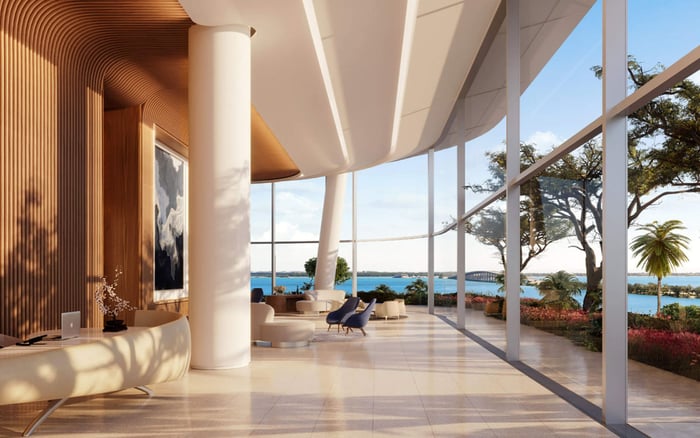
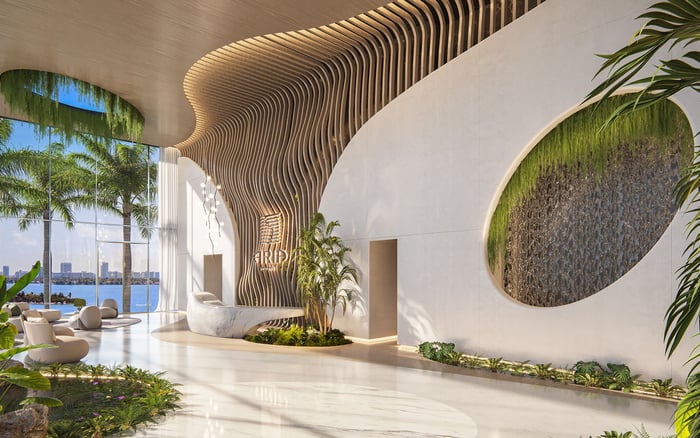
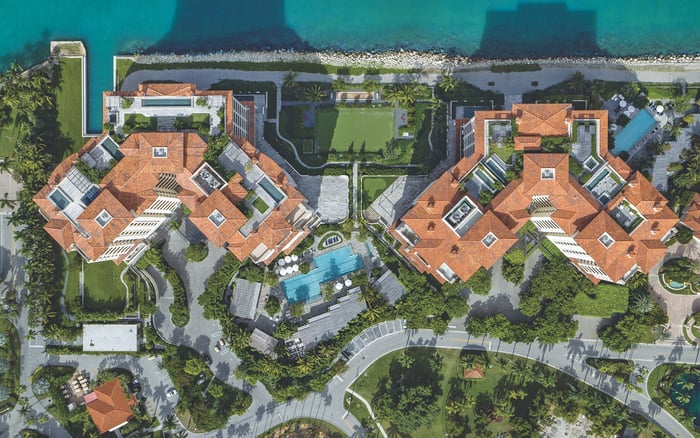
For Miami luxury condo buyers, the most persuasive view is not always the one from the terrace. Daily access across causeways, bridges, valet queues, school runs, airport timing, dining patterns, and weekend movement can shape value as powerfully as a postcard skyline. This editorial explores why route friction increasingly belongs at the center of a refined condo search.
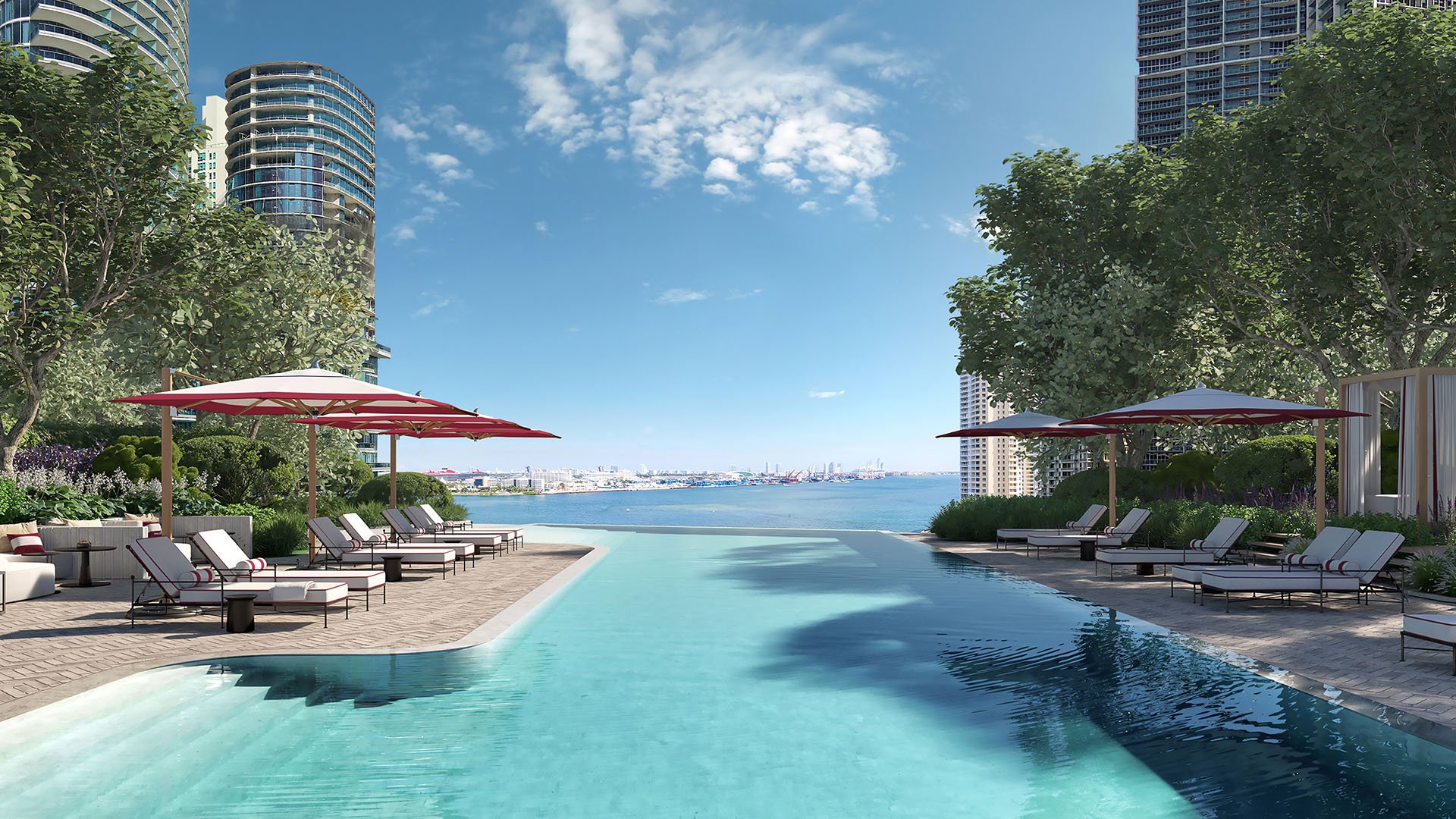
In Miami condo searches, the view has long carried emotional weight. A sweep of bay, ocean, skyline, or sunset can define the first impression of a residence. Yet seasoned buyers often become more pragmatic after the second showing. They begin asking a quieter, more consequential question: how does life actually move from here?
That question is especially relevant in a city shaped by water, islands, bridges, causeways, school schedules, valet timing, dinner reservations, airport departures, and weekend rituals. A cinematic terrace can lose some of its power if every necessary outing feels uncertain. Conversely, a slightly less dramatic outlook can become far more compelling when the building supports a smoother daily rhythm.
For the ultra-premium buyer, convenience is not a secondary amenity. It is a form of privacy, control, and time preservation. In that sense, causeway bottlenecks can become as important as floor height, exposure, or designer finishes.
A view is immediate. Access reveals itself over time. That distinction can distort decision-making during a search, particularly when buyers are touring under ideal conditions. A residence may be shown in the middle of the day, on a calm weekday, with easy parking and little pressure on the route. The lived reality may be different.
Luxury buyers increasingly evaluate how a building performs during ordinary but important moments: leaving for a morning meeting, returning from dinner, coordinating with drivers, receiving guests, reaching a private club, or getting children to school. These moments are not glamorous, but they define the ownership experience.
In areas such as Brickell and Edgewater, vertical living can offer extraordinary urban energy, but the buyer still needs to study how the surrounding streets behave at the times that matter. In island and beach settings, the calculus often shifts from neighborhood density to bridge dependency. Search labels such as Miami Beach, Sunny Isles, Waterview, and Aventura may capture lifestyle intent, but they do not answer the practical question of daily flow.
The best purchase is rarely about choosing access instead of beauty. It is about refusing to separate them too early.
A causeway can be more than a route. It can be a filter between the private life a buyer imagines and the city they need to access. For some owners, that separation is precisely the appeal. Water crossings can create a sense of arrival, remove a residence from the intensity of the mainland, and support a calmer residential character. For others, the same separation becomes a source of friction.
The distinction depends on use. A second-home buyer with flexible timing may accept a slower route in exchange for serenity. A primary resident with fixed office hours, school commitments, or frequent evening plans may not. A frequent traveler may care less about the postcard angle from the primary bedroom and more about how predictable the trip feels before an early flight.
This is where ultra-luxury search strategy becomes personal. Two buyers can view the same residence and reach opposite conclusions. One sees a protected island atmosphere. The other sees a daily pinch point. Neither is wrong. The right answer depends on rhythm.
Access friction does not always appear as a line item. It accumulates as hesitation. Owners may skip a dinner because returning feels inconvenient. Guests may arrive late. A driver may need extra staging time. A quick errand may become an event. Over months, these small frictions can change how often the residence is enjoyed.
That matters because luxury real estate is not only purchased for ownership. It is purchased for use. A condominium that encourages spontaneous living can feel more valuable than one that requires constant calculation. Buyers who recognize this early tend to make more durable decisions.
There is also a psychological dimension. When a buyer knows a route is reliable, the home feels larger than its interior square footage. The city becomes more accessible. Clubs, restaurants, marinas, schools, offices, and airports feel integrated into the residence. When the route feels fragile, the home can become isolated, even if it is visually spectacular.
This is why a practical route test can be as revealing as a sunset showing.
The most useful test is not complicated. Visit the building at the times you expect to live there. If weekday mornings matter, tour the approach then. If weekend beach traffic matters, experience it before committing. If evening dining is central to your lifestyle, assess the return route after dinner hours rather than relying on an afternoon impression.
Buyers should also study the final minutes of arrival. The building may be well located, but the last sequence can shape daily comfort: turning movements, valet choreography, guest drop-off, service access, and the ease of entering or exiting during busy periods. A building with refined service can soften exterior friction, but it cannot erase every route constraint.
For families, the test should include school patterns. For executives, it should include office timing and airport movement. For seasonal owners, it should include guest circulation and weekend plans. For collectors, yacht owners, or buyers with multiple residences, it should include the transitions between home, marina, club, and plane.
The goal is not to eliminate inconvenience entirely. Miami is a dynamic coastal city, and desirable settings often involve tradeoffs. The goal is to understand whether the tradeoff fits your life.
There are moments when the view should remain the priority. A buyer who spends long periods at home, entertains primarily in-residence, or values visual calm above urban access may correctly choose the more dramatic outlook. A rare exposure, a wide terrace, or a deeply private water perspective can justify compromises elsewhere.
The key is intention. If the residence is meant to be a retreat, route friction may be acceptable. If it is meant to function as a daily command center, access deserves more weight. Problems arise when buyers pay for retreat-level scenery but expect command-center convenience.
This is also where resale thinking becomes more nuanced. A spectacular view can attract attention quickly, but a smooth ownership experience supports conviction. Future buyers often ask the same practical questions, especially if they are moving from another sophisticated urban market and are accustomed to evaluating logistics.
In a disciplined search, the view should be admired, then tested against the week the buyer actually lives.
A strong Miami condo search begins with three layers. First, define the emotional non-negotiables: water, skyline, privacy, terrace depth, light, and architectural character. Second, define the movement non-negotiables: daily routes, school access, office patterns, dining zones, airport needs, marina access, and guest arrival. Third, compare buildings only after both layers are clear.
This prevents the classic mistake of falling in love with an image before understanding the experience. It also helps buyers decide where to compromise. A slightly lower floor may be acceptable if the building saves meaningful time. A more dramatic view may be worth it if the home is used primarily as a sanctuary. A quieter setting may be ideal if the buyer has flexible hours.
For South Florida’s most selective buyers, the winning residence is not simply the one with the best panorama. It is the one where beauty, access, service, and daily rhythm align.
Why would a buyer choose access over a better view? Because daily convenience can shape the ownership experience more consistently than scenery. A beautiful view matters less if every outing feels difficult.
Are causeway bottlenecks always a negative? No. Some buyers value the separation and privacy that come with island or beach access, especially for retreat-style living.
How should I test a building’s access? Visit during the times you will actually use the residence. Morning, evening, weekend, and guest-arrival patterns can all feel different.
Does this apply only to waterfront condos? No. Any condominium search should consider route quality, but it becomes especially important when bridges or limited approaches are part of daily life.
Should second-home buyers care as much about bottlenecks? It depends on how they use the property. Flexible owners may prioritize serenity, while frequent hosts or travelers may still need predictable movement.
Can building service offset access friction? Strong valet, security, and arrival management can help. They cannot fully solve broader route constraints outside the property.
Is a skyline view less valuable than an ocean view? Not universally. Value depends on the buyer’s priorities, the residence’s exposure, privacy, terrace experience, and how the home lives day to day.
What is the biggest mistake buyers make? Touring only at convenient times. A midday showing may not reveal the access patterns that matter most to ownership.
Do practical access concerns affect resale? They can. Future buyers often evaluate the same lifestyle frictions, especially at the higher end of the market.
What is the best way to shortlist comparable options for touring? Start with location fit, delivery status, and daily lifestyle priorities, then compare stacks and elevations to validate views and privacy.
To compare the best-fit options with clarity, connect with MILLION.
If branded residences are on your mind — as a home or as an allocation — we would be glad to share what we are seeing, privately.
Begin a quiet conversation