For South Florida luxury buyers, airport access is not a logistical afterthought. It is an early filter that can clarify neighborhood fit, touring priorities, privacy needs, staff planning, and future resale appeal before the first property visit is scheduled.
In South Florida luxury real estate, the first tour is often treated as the emotional starting point. A view opens, a lobby impresses, a terrace changes the tempo of the day. Yet for buyers whose lives are shaped by frequent travel, the more disciplined starting point comes earlier: airport access.
This is not simply a matter of convenience. It is a question of rhythm. A residence that feels serene during a weekend showing may feel very different when a household is returning late, hosting visiting family, coordinating staff, or moving between business commitments and seasonal stays. Even the most beautiful address can lose force if every departure introduces too much friction.
For the ultra-premium buyer, airport access should not sit behind architecture, amenities, and water views as an afterthought. It should be one of the first filters used to shape the shortlist, especially before time is spent on private tours that may be visually persuasive but operationally misaligned.
The right airport-access strategy begins with an honest travel profile. Some buyers travel weekly for business. Others use a South Florida residence as a seasonal base, with family and guests arriving in waves. Some care most about commercial flight options. Others prioritize private aviation, ground privacy, and the ability to move quickly from plane to residence without unnecessary exposure.
A buyer comparing Brickell, Miami Beach, Sunny Isles, Fort Lauderdale, West Palm Beach, and Boca Ratón should not assume that the most glamorous setting is automatically the most functional. The better question is this: how will the home perform when the calendar is tight, the weather is imperfect, the household is full, and the arrival window matters?
This is where the shortlist becomes more exacting. Instead of touring every attractive property within a favored price band, the buyer can separate addresses that suit the way they actually travel from those that simply photograph well. In a market where premium inventory is highly nuanced, that distinction is valuable.
Many buyers begin with distance on a map. It is useful, but incomplete. Airport access is a lived experience, not a straight line. The quality of the route, predictability of movement, building arrival sequence, valet flow, elevator privacy, and staff coordination can all influence whether an address feels effortless or demanding.
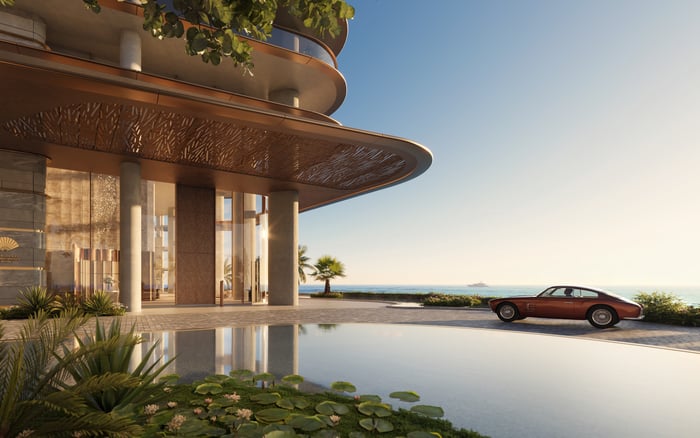
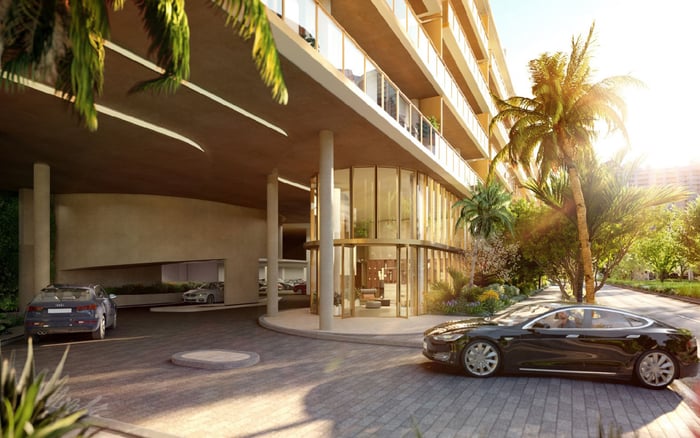
For high-service residences, the transition from vehicle to private space matters. A discreet arrival is very different from a crowded drop-off. A gracious porte cochere can soften the experience, but only if the building’s daily rhythm supports it. Similarly, a residence may be geographically appealing yet less convenient if access depends on routes that feel inconsistent during peak movement periods.
The most sophisticated buyers evaluate the full chain: aircraft to car, car to lobby, lobby to residence, and residence to daily life. When that chain is smooth, the property feels larger than its floor plan because the experience around it has been selected with discipline.
South Florida’s luxury geography rewards clarity. Waterfront calm, urban immediacy, resort-style living, and private residential enclaves each carry a different travel logic. A buyer who wants walkable dining and office proximity may accept a different arrival pattern than a buyer seeking a quiet beachfront retreat. A family with school, staff, and visiting relatives may weigh access differently from a couple using the residence as a polished seasonal base.
This is why airport access should be discussed alongside lifestyle, not after it. If mornings are structured around departures, the home should support that cadence. If arrivals are often late, the building should feel secure, composed, and easy to navigate. If guests are frequent, the residence should allow hosting without making every transfer feel overly orchestrated.
The point is not to choose the closest home to an airport. The point is to choose the home whose access pattern complements the broader life being built around it.
Before the first tour, buyers should ask practical questions. How often will the household travel? Who travels most frequently? Are arrivals more often weekday or weekend, morning or evening, planned or last-minute? Will family members, staff, drivers, or security personnel need coordinated access? Does the household value speed above all else, or is privacy the greater priority?
These answers can meaningfully reshape the property list. A residence that looks ideal online may fall away if it adds complexity to every travel day. Conversely, an address that seemed less obvious may become more compelling when its access profile supports the owner’s actual pattern of movement.
This early filtering also protects the emotional integrity of the search. Once a buyer falls in love with a residence, practical compromises can be rationalized. By resolving airport access first, the buyer reduces the risk of choosing beauty over usability.
Airport access also belongs in the resale conversation. Luxury buyers often have international, bi-coastal, or seasonal lives. A future purchaser may be evaluating not only finishes and views, but also how efficiently the residence connects to the broader world. A home that supports easy movement can appeal to a wider range of serious buyers, especially those who value discretion and time.
That does not mean airport access overrides architecture, service, or setting. It means it should be weighed as part of the property’s long-term desirability. In the upper tier of the market, the strongest homes tend to combine emotional appeal with practical elegance. They are beautiful, but they also work.
This is particularly important for buyers who expect their needs to evolve. A residence selected for a quieter seasonal rhythm today may later need to support more frequent travel, family visits, or business use. Choosing with airport access in mind creates optionality.
A refined shortlist is not a smaller dream. It is a better instrument. When airport access is addressed early, tours become more meaningful because each residence has already passed a critical lifestyle test. The buyer can focus on proportion, exposure, finish quality, service culture, and the emotional intelligence of the space.
This approach also supports discretion. Fewer tours mean fewer unnecessary movements, fewer scheduling complications, and less noise around the search. For buyers operating at a high level, time and privacy are not secondary benefits. They are part of the value proposition.
The best first tour is not the first property that catches the eye. It is the first property that already makes sense.
Should airport access matter before I choose a neighborhood? Yes. For frequent travelers, airport access can determine whether a neighborhood feels effortless or inconvenient over time.
Is the closest residence always the best choice? No. Route quality, privacy, arrival sequence, and household logistics can matter as much as physical distance.
Should airport access affect a second-home search? Yes. A second home should feel easy to enter and leave, especially when visits are short or seasonal.
How should families evaluate airport access? Families should consider guest arrivals, staff coordination, luggage, children, and the timing of regular travel days.
Does airport access matter for resale? It can. Future luxury buyers often value homes that support efficient movement and a low-friction lifestyle.
Should private aviation needs change the shortlist? They can. Buyers who prioritize private aviation may focus more heavily on privacy, transfer flow, and arrival discretion.
Can a waterfront property still be practical for frequent travel? Yes, if the route and building arrival experience fit the household’s actual travel patterns.
When should I test airport access? Ideally before touring, then again during the times of day that most closely match your real travel schedule.
Should airport access outweigh views and amenities? Not necessarily. It should be balanced with the emotional and architectural qualities that make the home desirable.
What is the best way to refine a shortlist around airport access? Begin with your travel profile, then evaluate neighborhoods and buildings through the lens of time, privacy, and ease.
When you're ready to tour or underwrite the options, connect with MILLION.
If branded residences are on your mind — as a home or as an allocation — we would be glad to share what we are seeing, privately.
Begin a quiet conversation