A discreet buyer’s guide to deciding when a cold plunge room should shape the floor plan, wet-zone planning, privacy, service access, and resale logic of a South Florida luxury residence.
A cold plunge room is not a decorative amenity to place wherever a buyer finds extra square footage. In a South Florida luxury residence, it touches some of the most consequential parts of a plan: water management, circulation, privacy, mechanical comfort, sound, and the way a home transitions from entertaining to recovery.
The right question is not simply whether a residence has room for a plunge. The sharper question is whether the floor plan allows the plunge to feel native to the home. When properly located, it becomes part of a larger wellness sequence, often near a gym, sauna, steam shower, spa bath, pool access, or terrace. When forced into the wrong corner, it can feel like an afterthought and create friction every time it is used.
For buyers comparing Brickell, Miami Beach, Sunny Isles, and other high-demand coastal settings, the cold plunge decision belongs early in the process. A residence that seems generous on paper may still be poorly suited to a dedicated plunge room if wet areas are isolated, service access is awkward, or the most private zones are reserved only for bedrooms.
A cold plunge should influence the floor plan when it is part of a daily ritual rather than an occasional novelty. If the intent is regular use after training, beach time, golf, tennis, or sauna, the room needs to be convenient, private, and easy to maintain. That usually favors adjacency to a primary bath, fitness room, cabana bath, spa corridor, or outdoor living area rather than a remote storage space.
It should also affect the plan when guests or staff may move through the home at the same time. A plunge near the main entertaining space may look impressive, but it can feel exposed. A plunge buried inside the primary suite may be serene, but impractical for family or wellness staff. The best solution depends on who will use it, when they will use it, and whether the home is meant to feel like a private retreat, a social residence, or both.
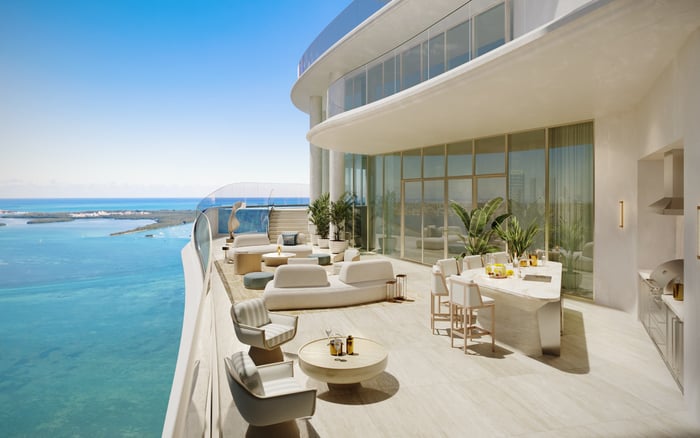
In a penthouse, the issue can become more nuanced. A dramatic terrace connection may be tempting, but the buyer still needs a logical path for towels, changing, drainage strategy, and discreet maintenance. On a balcony, the planning conversation becomes even more sensitive because outdoor living space is visible, exposed, and often governed by building rules.
The most successful floor plans treat a cold plunge as part of a wet-zone ecosystem. The plunge should relate to a shower, changing area, towel storage, water-resistant surfaces, and ideally a place to sit before and after use. This is not about overbuilding. It is about reducing the small inconveniences that make an amenity less enjoyable over time.
A buyer walking a residence should study the route from the plunge to the nearest bath, closet, elevator, terrace door, or fitness area. If that route crosses a formal living room, dining area, art wall, or delicate flooring, the plan may not be ideal. If the route is short, private, and easy to clean, the plunge has a stronger chance of feeling integrated.
Ventilation and humidity planning also matter. A room that contains water should not feel like a sealed closet. Buyers should look for the possibility of fresh air, mechanical support, or adjacency to spaces already designed to handle moisture. In new-construction residences, the conversation can begin earlier, while finish selections and room programming are still flexible. In resale residences, the buyer should be more conservative and verify what can be changed before assuming a conversion is simple.
In a condominium, the cold plunge question starts with permission, feasibility, and building infrastructure. Even when a unit has the space, the association, structural conditions, waterproofing requirements, and mechanical limitations may shape what is realistic. Buyers should not treat every den, staff room, or oversized bath as automatically convertible.
In a single-family estate, the owner may have more control, but the best plans still respect hierarchy. A plunge near the gym can be ideal for a fitness-focused household. A plunge near the pool pavilion can support entertaining and outdoor recovery. A plunge within the primary suite can feel intensely private, but it should not compromise the calm of the bedroom or create a service burden in the most intimate part of the home.
Townhouse living sits between those two worlds. Vertical circulation becomes important. If the wellness area is on one level and the bedrooms are several floors away, the amenity may be less convenient than it first appears. Elevator access, laundry proximity, and the placement of secondary baths can determine whether the plunge feels effortless or inconvenient.
A cold plunge room can strengthen a residence when it feels adaptable. The smartest layouts do not sacrifice an essential bedroom, a proper office, or the only flexible family room unless the buyer has a clear long-term reason. Future buyers may appreciate wellness, but they will still judge proportion, flow, storage, and light.
The most elegant approach is often a room that can read in more than one way: wellness suite today, spa bath extension tomorrow, massage room, meditation room, gym lounge, or refined cabana space. That flexibility protects the plan from feeling too specialized.
For South Florida’s luxury audience, restraint is part of the appeal. A cold plunge room should not compete with the view, the architecture, or the social rhythm of the home. It should make the residence feel more complete, more private, and more intelligently composed.
Should every luxury buyer prioritize a cold plunge room? No. It matters most when wellness is part of the buyer’s daily lifestyle and the floor plan can support it gracefully.
Where is the best place for a cold plunge room? The strongest locations are usually near a gym, spa bath, cabana bath, sauna, pool area, or private outdoor space.
Can a den become a cold plunge room? Sometimes, but only if the building, structure, waterproofing, ventilation, and service access can support the change.
Is a cold plunge better indoors or outdoors? Indoors offers privacy and climate control, while outdoors can feel resort-like if the plan protects circulation and views.
Should a plunge be inside the primary suite? It can work beautifully for a private owner ritual, but it may be less practical for guests, family, or service access.
What is the biggest floor-plan mistake? Placing the plunge where users must cross formal rooms, delicate finishes, or highly visible entertaining areas while wet.
Does a cold plunge replace a pool? No. A plunge is a recovery and ritual space, while a pool usually serves leisure, exercise, entertaining, and outdoor living.
Are condo plunges more complicated than estate plunges? Often, because condominium rules, shared infrastructure, and structural limitations can narrow what is possible.
Should buyers ask about this before making an offer? Yes. If the plunge is important, feasibility should be discussed before the buyer relies on a future renovation.
What makes a cold plunge room feel truly luxurious? Privacy, quiet circulation, appropriate materials, good ventilation, towel storage, and a natural connection to the wellness routine.
If you'd like a private walkthrough and a curated shortlist, connect with MILLION.
If branded residences are on your mind — as a home or as an allocation — we would be glad to share what we are seeing, privately.
Begin a quiet conversation