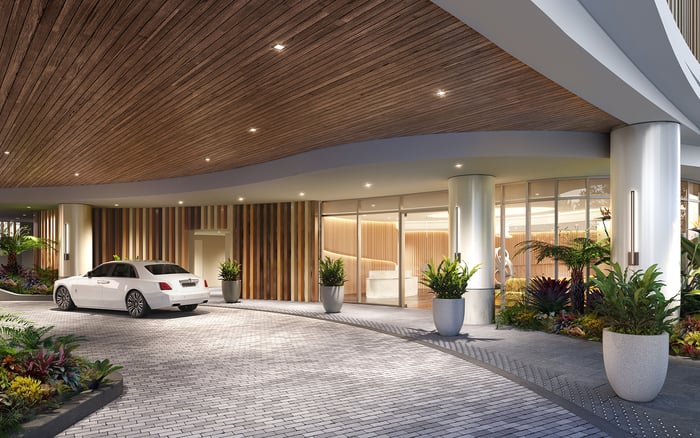
Pre-construction purchasing can be less about timing the market and more about shaping the residence. For design-driven buyers, the earliest phase of a new tower is often the only window to request thoughtful floor plan modifications, align MEP constraints with lifestyle needs, and reserve the right orientation before inventory tightens. This MILLION Luxury editorial lays out a practical, buyer-oriented strategy for pursuing layout flexibility at Alba West Palm Beach while managing approvals, timelines, and resale implications.
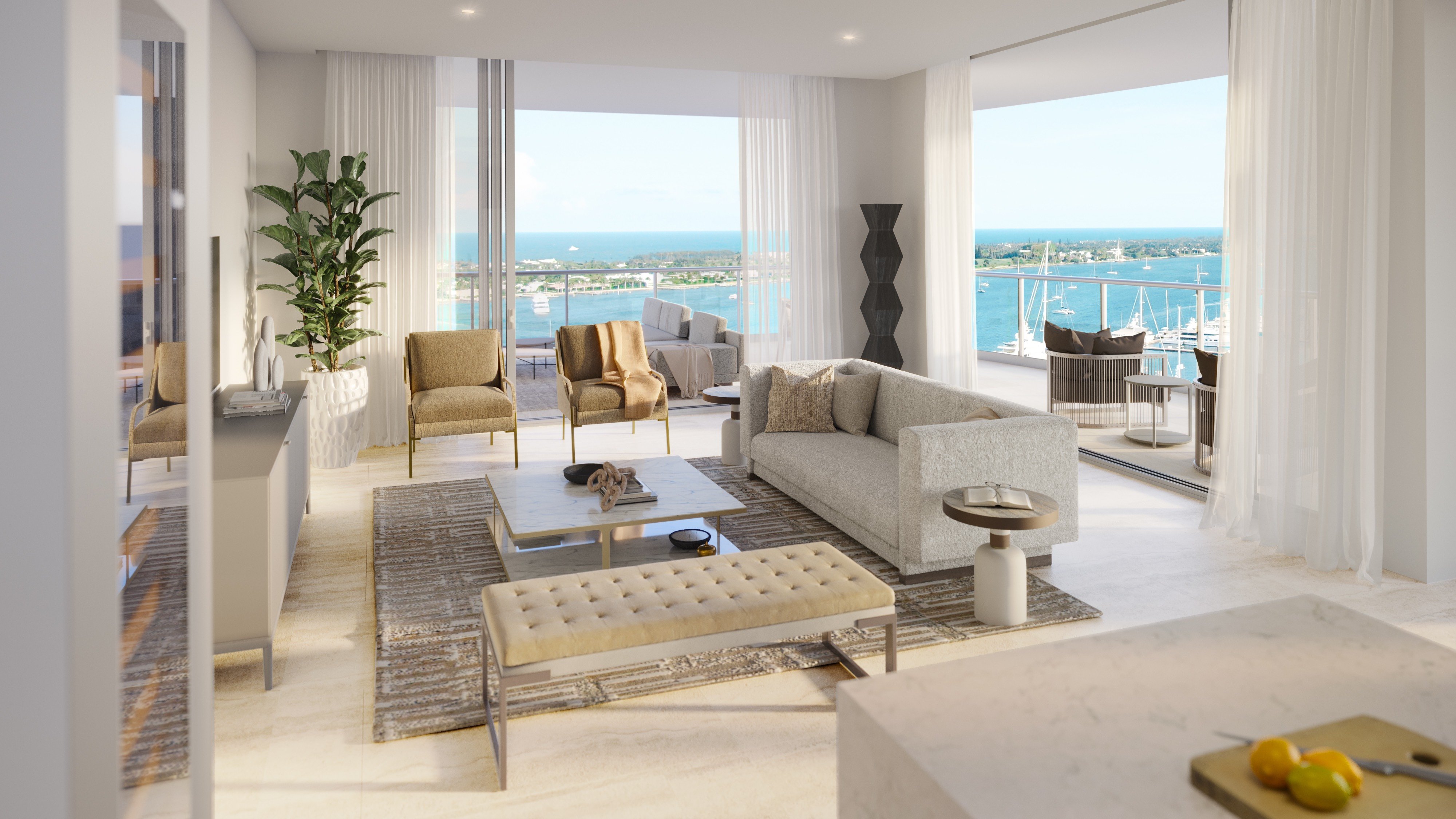
A luxury residence is experienced in motion: how you enter, where keys land, how the kitchen meets the view, how guests circulate, and where a door breaks a gallery wall. Buying pre-construction is not simply a bet on newness; at its best, it is a controlled opportunity to shape that daily choreography before concrete pours and risers lock key decisions into place.
For buyers considering Alba West Palm Beach, the strategic advantage is the early phase itself. Developers typically finalize a “standard” plan set designed to work broadly, then may consider a narrow range of modifications for qualified purchasers-always within clear constraints and firm timelines. As construction advances, that window compresses quickly.
The most sophisticated approach treats modifications as personal value-engineering: tightening circulation, improving storage, and protecting privacy. It is rarely about making a unit bigger. It is about making the layout feel inevitable.
Before discussing modifications, select the right underlying plan. In pre-construction, a floor plan isn’t just a drawing-it’s a relationship to structure, façade, and building systems. Many of the most consequential “modifications” are secured by choosing the right residence type, orientation, and configuration from the outset.
A few buyer-led considerations tend to drive satisfaction more than later revisions:
Entry sequence and sightlines: If the first read is a powder room door or a mechanical closet, correcting it later can be difficult. Favor plans where the entry presents as a clean, gallery-like moment.
Kitchen location relative to living: Some buyers want an open, social kitchen; others prefer partial separation. If plumbing pins the core kitchen to a specific wall, later changes may be more cosmetic than functional.
Bedroom privacy: If a primary suite shares a wall with the living room media zone, acoustics become a daily negotiation.
Outdoor relationship: Even without changing balcony footprint, door placement and furniture clearances determine whether outdoor space functions as a true room.
This is why serious buyers often compare new offerings across the broader South Florida ecosystem before committing. A Brickell buyer drawn to a more urban plan logic might evaluate 2200 Brickell for its city-first lifestyle, while a Miami Beach buyer prioritizing ocean orientation and resort cadence may look at 57 Ocean Miami Beach. The point isn’t cross-shopping for entertainment-it’s training your eye to recognize when a plan is fundamentally right.
In a new high-rise, favorable modifications typically fall into a few categories that respect structure, egress, and primary MEP routes. The closer your request stays to those boundaries, the more likely it is to receive an elegant approval.
Commonly pursued, high-impact modifications include:
Refining interior partitions: Adjusting non-structural walls to improve proportion, widen an opening, or establish a cleaner axis.
Upgrading storage and utility: Reworking closets for true couture storage, adding a linen program that genuinely serves the baths, or improving pantry utility.
Rebalancing “back of house” zones: Enhancing laundry placement, adding a pocket door to reduce visual clutter, or improving service circulation.
Kitchen usability tweaks: Reorienting an island, adjusting appliance paneling layouts, or creating a concealed coffee and prep niche.
Door strategy: Pocket doors, wider openings, and improved swing clearance can make a residence feel materially larger.
Requests that tend to be least feasible are those that move plumbing stacks, relocate primary mechanical shafts, or compromise fire-rated corridors and egress. Many buyers ultimately find the “best” change isn’t fighting the plan-it’s redirecting effort into millwork, lighting, and detailing that elevates the existing geometry.
A floor plan modification is not a casual design preference. It is a scope change that can affect schedule, liability, and future maintenance. The best protection is to formalize the process early and treat it with discipline.
Practical steps experienced buyers take:
Request the modification policy in writing. Confirm what is permitted, when submittals are due, and whether review fees apply.
Engage the right professional team early. Your interior architect or designer should be fluent in condominium constraints and able to draw precisely-not conceptually.
Use a clear drawing package. Redlined plans are rarely sufficient. Provide dimensioned plans, reflected ceiling notes if relevant, and a concise written scope.
Clarify who builds what. Determine whether the developer will deliver certain changes, or whether they must be executed post-closing.
Align on change order economics. Pre-construction changes can carry premiums; the value is predictability and integration, not bargain pricing.
A useful mindset: you’re not only asking for a better plan-you’re negotiating risk allocation. The more legible, code-aware, and schedule-respecting the request, the easier it is for a development team to approve.
In pre-construction, timing is often your primary leverage. Early commitments matter because they reduce downstream conflicts between your requests and site realities.
A buyer-oriented timeline framework:
Reservation to contract: Prioritize plan selection over changes. Confirm your preferred stack and exposure support your lifestyle and furniture.
Immediately post-contract: Submit a prioritized “wish list.” If you request ten changes, you may get none. If you request two that matter, you often get both.
Design development window: Convert the wish list into a buildable package. This is where you demonstrate seriousness.
Construction progression: Expect constraints to tighten. Once rough-ins are coordinated, moving anything becomes complicated.
In West Palm Beach-where many buyers are second-home owners or relocating from larger homes-the temptation is to replicate a single-family program inside a tower. The smarter approach is to accept what vertical living does well, then tailor around it: clean storage, predictable circulation, and room-by-room calm.
The most luxurious residences often feel inevitable because the design is quiet. Favor modifications that increase clarity and reduce friction.
Consider these high-value moves:
Create a true “arrival.” A small adjustment that adds an entry niche for art, a console, and concealed storage can transform the first impression.
Strengthen the primary suite boundary. When feasible, add a short vestibule or door strategy that separates bedroom calm from entertaining energy.
Upgrade flexibility with a den that closes well. If your plan includes a den, prioritize acoustic separation and strong proportions so it performs as an office, library, or overflow guest space.
Consolidate wet zones and elevate dry zones. Even when plumbing cannot move, improved clearances and integrated storage can make baths feel larger.
For buyers tracking the broader Palm Beach corridor, it can be instructive to see how other new projects resolve the same planning pressures. A Flagler Drive context might lead you to compare how layouts read at Forté on Flagler West Palm Beach, or how a more hospitality-forward program shows up at Mr. C Residences West Palm Beach. The goal is to distinguish what is foundational planning-and what is simply finish-level.
Even if you plan to hold long term, the cleanest luxury strategy assumes a future buyer will evaluate your choices. Favor modifications that broaden appeal.
Resale-forward principles:
Preserve bedroom count when possible. Converting a bedroom to a dressing room can be beautiful, but it narrows the buyer pool.
Avoid irreversible eccentricity. A dramatic, niche layout may suit you perfectly, but can read “wrong” to someone else.
Keep mechanical access rational. Over-customizing around panels and access points can create maintenance issues.
Prioritize proportion and circulation. Buyers may forgive a finish preference; they rarely forgive awkward flow.
A subtle but important point: the best modifications look like they were always part of the architect’s intent. The highest compliment is when a visitor can’t tell what was standard and what was refined.
Because no project-specific modification policy is included here, every request should be treated as contingent on written approval and confirmed directly in the contract documentation.
Key questions to clarify:
What is the official modification request process and deadline?
Are any layout changes permitted, or only finish and fixture upgrades?
Will changes be delivered by the developer, or must they occur post-closing?
Is there a required design review, and who sits on it?
Are there limitations tied to floor level, unit type, or construction phase?
These questions aren’t aggressive. They’re simply the language of predictability.
In the best scenario, a pre-construction purchase lets you align a residence to your routines before you ever move in. If you entertain frequently, circulation and powder placement matter. If you value quiet, door strategy and acoustic separation matter. If you collect art, walls and lighting matter. If you travel, storage and lock-and-leave simplicity matter.
West Palm Beach continues to attract buyers seeking a refined day-to-day: proximity to the water, culture, dining, and a cosmopolitan ease that still feels residential. A well-chosen plan-quietly improved-can deliver that ease without the friction of renovating after closing.
Can you change walls in a pre-construction condo at Alba West Palm Beach? Sometimes, but typically only non-structural adjustments and only with written approval.
When is the best time to request floor plan modifications? As early as possible after contract, before construction coordination limits flexibility.
Are plumbing and kitchen locations usually movable in high-rises? Rarely; plumbing stacks and risers are major constraints in most towers.
Do modifications increase the price of the residence? They can, either through change orders or design review and implementation costs.
Should I hire a designer before closing? Yes, if you want changes; a qualified team helps you submit buildable requests.
What modifications add the most day-to-day value? Storage, circulation, door strategy, and kitchen usability improvements tend to matter most.
Can changes delay closing? They can if requests are late, complex, or require re-coordination with building systems.
Will customizations hurt resale? Potentially, if they reduce bedroom count or feel overly personalized; subtle refinements help.
Is it better to modify the plan or upgrade finishes? If the plan works, finishes may deliver more impact; if flow is wrong, fix layout first.
What should be in my modification approval package? Dimensioned drawings, a clear written scope, and alignment with deadlines and building rules.
For a tailored shortlist and next-step guidance, connect with MILLION Luxury.
If branded residences are on your mind — as a home or as an allocation — we would be glad to share what we are seeing, privately.
Begin a quiet conversation