
A practical owner-focused guide to evaluating safe-room ventilation questions at The Ritz-Carlton Residences® Sunny Isles Beach, with emphasis on documentation, power, filtration, humidity, and hurricane-season preparedness.
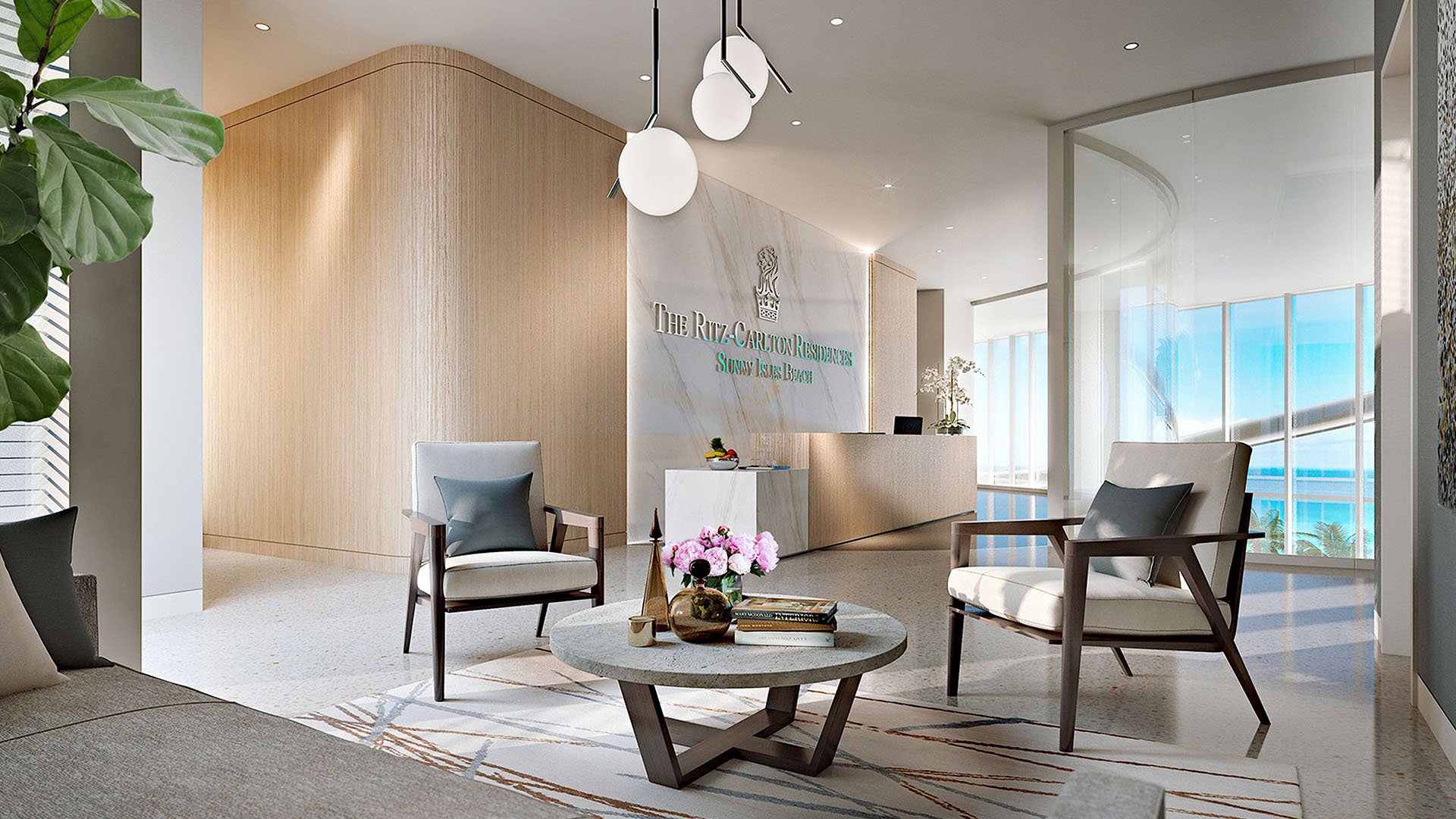
At The Ritz-Carlton Residences® Sunny Isles Beach, the safe-room conversation should begin with precision, not assumption. In South Florida, a “safe room” can mean several things: an interior area used during severe weather, a security-focused retreat, a hardened room, or simply the most protected part of a residence during a temporary emergency. Each interpretation carries different ventilation requirements, and each should be evaluated through building management, association documents, mechanical professionals, and qualified counsel where appropriate.
For full-time owners, this is not an abstract exercise. Year-round occupancy raises the standard of diligence. A seasonal owner may prioritize lock-and-leave convenience; a primary resident needs to understand how air, power, humidity, and communication systems perform when normal routines are interrupted. The question is not whether a residence has a feature by implication. The question is what is documented, serviceable, accessible, and understood before a storm watch or security concern appears.
A ventilation review is useful only after the room’s purpose is defined. A short-duration refuge for a passing squall is not the same as a room intended for extended occupancy. A windowless interior space may feel secure, but that does not automatically make it appropriate for sheltering. Likewise, a beautifully finished room can still have practical limitations if airflow, temperature control, door undercuts, transfer grilles, or return-air pathways are not clearly understood.
Owners should begin with one direct question: what space in the residence or building is intended to be used during a severe-weather or emergency event, if any? The answer may come from management protocols, condominium documents, life-safety plans, or an engineer’s review. If there is no designated area, owners can still create a household plan, but it should not be described as a code-compliant storm shelter or specialized safe room without supporting documentation.
The most important ventilation questions are practical. Does the chosen room receive conditioned supply air? Is there a return path for air movement? If the primary HVAC system shuts down, is any passive airflow available? Can doors be safely closed without making the space stuffy within minutes? How many people might occupy the room, and for how long?
Full-time owners should also ask whether filtration is part of the normal mechanical system and how often filters are replaced. Filtration is often discussed casually, but performance depends on equipment compatibility, filter type, installation quality, maintenance intervals, and airflow resistance. A higher-rated filter is not automatically better if the system was not designed for it. In a luxury residence, quiet comfort can conceal how dependent the home is on carefully balanced mechanical design.
Humidity deserves equal attention. South Florida air is warm, salt-laden, and moisture-prone. A closed refuge area without active dehumidification can become uncomfortable quickly, especially with several occupants present. For owners of oceanfront residences, the maintenance conversation should include corrosion awareness, condensate management, and routine inspection of accessible mechanical components.
Ventilation is inseparable from power. If the system depends on fans, dampers, controls, or air-conditioning equipment, owners need to know what happens during a utility interruption. Which systems, if any, are supported by building emergency power? Which are limited to life-safety functions? Are in-unit systems included, excluded, or partially supported? These questions should be answered in writing, not left to casual conversation.
The same discipline applies to access. A safe-feeling room loses value if household members cannot reach it quickly, if essential medication is stored elsewhere, or if pets, water, flashlights, chargers, and communication devices are overlooked. For high-floor owners, planning should also account for elevator status, stair use, and the practical limits of moving through a tower during a weather event.
The best time to ask technical questions is before hurricane season, not when a storm track is already being watched. Owners can request association guidance on emergency procedures, building access, generator scope, mechanical shutdown protocols, and resident communications. They can also ask a licensed mechanical contractor to review the specific residence, especially if a den, interior bedroom, service room, or closet-like space is being considered for emergency use.
Any upgraded door, lock, filtration device, battery fan, portable power unit, or air purifier should be reviewed for practical suitability. Portable equipment can be useful, but it is not a substitute for a documented storm-shelter design. Battery life, heat output, noise, charging protocol, and safe placement all matter. The owner’s goal should be a calm, written plan that can be followed without improvisation.
For Aventura and Sunny Isles Beach buyers comparing primary-residence options, this type of diligence is increasingly part of sophisticated ownership. It also matters for resale decisions, because future purchasers may ask the same questions. In a second-home scenario, the plan may be simpler, but for a full-time resident, the standard should be more complete.
The Ritz-Carlton Residences® Sunny Isles conversation belongs within a broader culture of discreet preparedness. The most refined homes are not merely beautiful when conditions are perfect. They are understood by their owners, maintained by capable professionals, and supported by clear procedures. That does not require dramatic language or unsupported claims. It requires exact questions and careful records.
Owners should maintain a concise file with emergency contacts, association guidance, equipment manuals, service dates, insurance contacts, medical needs, and the chosen refuge plan. If a room is part of that plan, the file should state why it was selected, what its ventilation limitations are, how long it is intended to be used, and what conditions would trigger relocation within the residence or building.
Does The Ritz-Carlton Residences® Sunny Isles Beach have a verified safe room? Owners should not assume a dedicated safe room exists unless building management, condominium documents, or qualified professionals confirm it in writing.
What is the first ventilation question to ask? Ask whether the intended refuge area receives conditioned supply air and has a clear return or transfer path for air movement.
Is an interior room automatically safer during a storm? Not automatically. Its suitability depends on location, construction, access, ventilation, occupancy, and duration of use.
Can portable air purifiers solve safe-room ventilation concerns? They may help with filtration, but they do not replace proper airflow, cooling, humidity control, or documented shelter design.
Should owners ask about generator support? Yes. Owners should clarify which systems are supported by emergency power and whether in-unit ventilation or cooling is included.
Why does humidity matter in a closed room? Heat and moisture can build quickly, especially in South Florida, making comfort and air quality part of any refuge plan.
When should these questions be reviewed? Review them before hurricane season, then update the plan after equipment changes, renovations, or association procedure changes.
Who should evaluate an in-residence refuge area? A licensed mechanical professional, building management, and, when appropriate, a qualified engineer can provide the most useful guidance.
Should full-time owners keep written records? Yes. Written procedures, service dates, and management guidance reduce uncertainty when conditions become stressful.
Is this only relevant to hurricane planning? No. Ventilation planning can also inform security, medical, power-interruption, and household emergency decisions.
To compare the best-fit options with clarity, connect with MILLION.
If branded residences are on your mind — as a home or as an allocation — we would be glad to share what we are seeing, privately.
Begin a quiet conversation

.jpg&width=700&height=438&fit=cover)