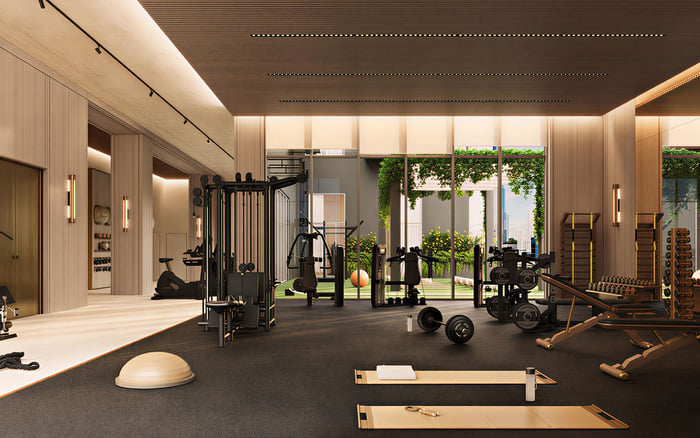
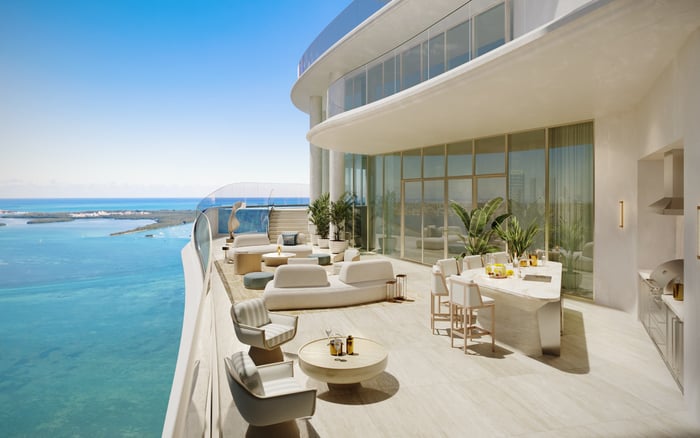
In Miami’s vertical luxury market, a rooftop pool is as much an operations system as it is an amenity. For buyers comparing The Residences at 1428 Brickell and Mercedes-Benz Places Miami, the differentiators often live in logistics: wind exposure, sun angles, staffing flow, elevator capacity, private versus social zoning, and how the deck performs at peak demand. This MILLION Luxury editorial frames the right questions to ask before you commit, focusing on day-to-day usability rather than renderings.
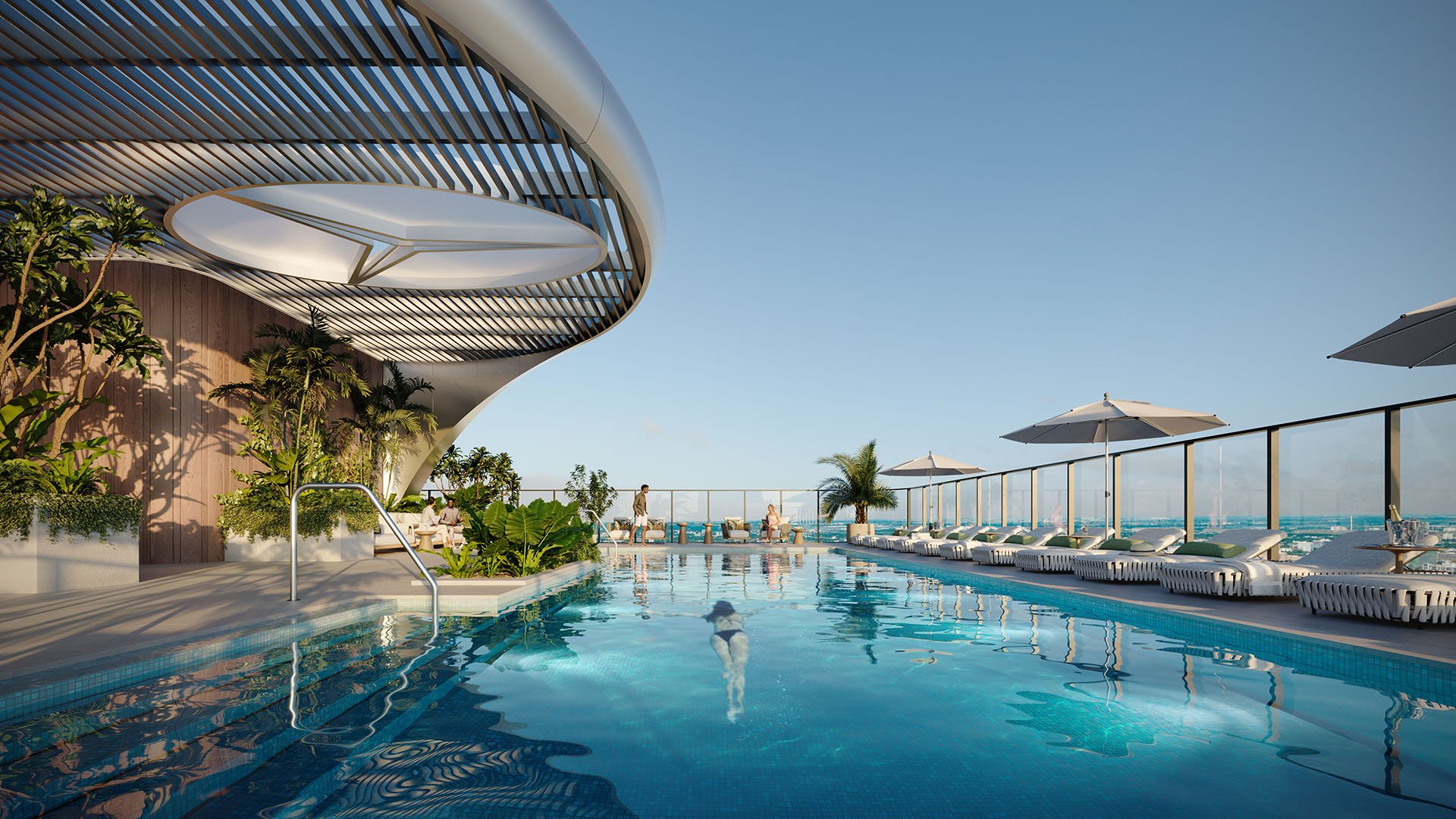
In Brickell, a rooftop pool is a signature of modern luxury-sunlight at elevation, skyline panoramas, and a clean break from the city’s pace. But for day-to-day living, the gap between “iconic” and “rarely used” is almost always logistical. The best decks are engineered as complete environments, with wind and shade strategy, circulation, and service routes resolved so the space performs on a random Tuesday as well as a holiday weekend.
For buyers weighing The Residences at 1428 Brickell against Mercedes-Benz Places Miami, it helps to treat the rooftop pool as a system. A pool deck isn’t just water and lounge chairs. It’s a micro-club with its own soundscape, staffing needs, access control, safety obligations, and maintenance cadence. The questions below are designed to surface what will shape your daily experience-not just the brochure narrative.
Rooftop conditions in Brickell can be spectacular-and punishing. Wind is the fastest way to clear a deck. At roof level, even moderate breezes can make towels, umbrellas, menus, and loose furnishings feel unmanaged. For residents, that often translates into a space that photographs beautifully but takes constant adjustment to stay comfortable.
When comparing The Residences at 1428 Brickell to Mercedes-Benz Places Miami, press for clarity on how each building plans to manage wind at the pool level. The most workable solutions typically combine architectural shielding, strategically placed glazed elements, landscaped berming where possible, and furniture that’s weighted and low-profile. If the pool edge is designed primarily for a visual infinity effect, confirm where the wind breaks actually are. The goal is a deck with multiple comfort zones-not a single exposed plane.
Also consider whether the rooftop is intended to feel like a high-energy observation platform or a protected terrace. Some buyers want an animated, social environment. Others want a controlled retreat where you can read without negotiating gusts and conversation.
South Florida sun is part of the appeal, but comfort is defined by shade that feels designed-not improvised. A rooftop pool deck without meaningful shade often becomes a short-stay amenity: arrive, take a photo, retreat. In a true luxury building, shade reads as architecture, not an accessory.
As you evaluate these two Brickell towers, look for range: cabana-style shade for longer stays, partial shade along circulation, and high-function seating that doesn’t require you to “win” one premium spot to be comfortable. A deck that forces residents to compete for the few shaded seats creates tension-and, over time, discourages use.
If you’re cross-shopping other Brickell lifestyle options, compare how different properties approach outdoor living across the building, not just on the roof. For example, 2200 Brickell is often discussed for its neighborhood position and residential character, which can influence how outdoor amenities are programmed and used.
A rooftop pool can read as either private or public based on one operational reality: who can get there, and how. In luxury residential design, elevator routing and access control often determine whether the rooftop functions as a residents’ lounge or feels like an extension of a mixed-use public realm.
Key issues to clarify when comparing The Residences at 1428 Brickell and Mercedes-Benz Places Miami:
Is rooftop access restricted by key fob and destination control, or is it adjacent to shared venues?
Is there a dedicated residential elevator bank for amenities, or do residents share with other uses?
Where is the arrival moment: directly onto the deck, or through an interior lounge that can regulate sound, temperature, and crowding?
The strongest rooftop experiences usually include a “pressure valve”-an interior layer that absorbs traffic and creates a calmer transition. It also gives staff a discreet place to manage towels, food service, and clean-up.
Luxury often shows up as the absence of friction. At a rooftop pool, friction is easy to spot: inconsistent towel supply, empty glasses that linger, food service that feels like a banquet line, or staff forced to cross primary lounging areas to complete basic tasks.
A well-run deck separates guest circulation from service circulation. Ask where back-of-house functions actually live: towel storage, trash handling, deliveries, and staging for service carts. If those functions aren’t designed in, they’ll happen in the open-and the deck will feel “busy” even when it isn’t crowded.
This is also where a building’s promise meets lived experience. A rooftop pool is a recurring operational commitment. If the design assumes resort-level staffing, the association’s ongoing budget and management culture have to support it. In the ultra-premium segment, it’s worth evaluating not only the amenity concept, but the implied operating model.
A rooftop pool is a complex assembly: structural load, waterproofing layers, drainage, expansion joints, and finishes that must perform under heat, rain, and chemical exposure. When these systems are robust, residents rarely think about them. When they aren’t, owners live with closures, repairs, and an amenity that feels intermittently unavailable.
You don’t need to be an engineer to ask the right questions. Inquire about:
Planned shutdown windows for maintenance and resurfacing
Deck drainage strategy and how quickly the area clears after storms
Slip resistance of walking surfaces when wet
Whether there are separate zones for quiet lounging versus high-traffic circulation
In Brickell-where high-rise living often means relying on shared amenities for outdoor time-consistent uptime matters. A rooftop pool that closes frequently can push residents to seek alternatives elsewhere, subtly reducing the building’s lifestyle value.
Rooftop pools can feel serene in the afternoon and disruptive at night. Sound travels in unexpected ways across towers, particularly when entertainment or social programming is part of the plan. Lighting is similarly double-edged: it can create a cinematic environment, but it can also introduce glare for nearby residences.
When comparing The Residences at 1428 Brickell and Mercedes-Benz Places Miami, look beyond the pool itself and ask how the deck is expected to function after sunset. Consider the likely resident mix, the character of the amenity suite, and whether the rooftop is positioned as a quiet refuge or a social centerpiece.
If your lifestyle leans calm, you may prefer designs that emphasize acoustic buffering, curated lighting, and rules that keep the rooftop from drifting into event-venue territory. If you enjoy hosting and social energy, a more animated atmosphere with a stronger lounge component may be the better fit.
A rooftop pool deck can feel crowded even when it isn’t full. The usual culprit is weak micro-zoning: too much seating in a single exposure, awkward furniture groupings, and insufficient separation between active and quiet uses.
A practical way to evaluate this is to picture three common moments:
A quick morning swim and coffee.
A mid-day lounge with shade, a book, and minimal interruption.
A late-afternoon social hour when the deck is near peak demand.
A well-designed rooftop can accommodate all three without forcing everyone into the same lane. Look for varied seating types, subtle partitions, and circulation paths that don’t cut through the most valuable lounge areas.
This is also why some buyers broaden their search beyond Brickell when rooftop life is a priority. In Miami Beach, for instance, the mix of ocean air, wind, and resort culture can create a different rooftop rhythm. Five Park Miami Beach is one example frequently discussed for elevated amenities and lifestyle positioning, even though the day-to-day dynamics differ from Brickell.
In the ultra-luxury market, many buyers aren’t making a starter-condo decision. They’re deciding whether a building supports family visits, multigenerational hosting, or a long-term second-home routine.
Rooftop pool logistics that matter here include:
Clear separation between adult social zones and quieter lounging
Rules and design elements that reduce slipping and improve visibility
Comfortable waiting areas for non-swimmers
Restroom proximity and whether access feels discreet
Even if you don’t have children, you’ll feel the impact of how a building anticipates different resident needs. A rooftop designed for only one type of user tends to age poorly.
Brickell is a vertical neighborhood where amenity spaces carry more weight because private outdoor space is often limited. In Surfside, Bal Harbour, and Sunny Isles, outdoor living can be oriented differently, sometimes with a stronger emphasis on beachfront conditions and resort-style operations.
For context, consider how coastal projects frame water and sun as a daily ritual. Ocean House Surfside, for example, is often evaluated by buyers who want a more residential interpretation of coastal luxury-where amenity spaces feel less scene-driven and more routine-driven. That contrast can clarify what you truly want from a rooftop pool in Brickell: a social stage, a wellness tool, or a quiet outdoor extension of home.
When you tour or review plans for The Residences at 1428 Brickell and Mercedes-Benz Places Miami, use a consistent set of questions to keep the comparison grounded:
Where are the wind breaks, and where is the calmest seating in summer?
How many distinct shade options exist, and are they first-come or reservable?
What is the elevator path from a residence to the pool at peak times?
Where does towel service live, and how is the deck kept clear during busy hours?
How is food and beverage handled without turning the deck into a service corridor?
What are the rules and typical hours for rooftop use and quiet enjoyment?
The point isn’t to “win” the comparison on paper. It’s to identify which building’s rooftop pool logistics align with how you actually live in Brickell.
Which rooftop pool is better, The Residences at 1428 Brickell or Mercedes-Benz Places Miami? “Better” depends on wind comfort, shade variety, and access control-the factors that determine daily usability.
Why do rooftop pools sometimes feel too windy in Brickell? Height amplifies airflow, so comfort hinges on shielding elements and smart deck layout.
What should I look for in rooftop pool shade design? Prioritize multiple shade types and placements so you’re not forced to compete for one zone.
How does elevator design affect rooftop pool privacy? Dedicated residential routing and key control can reduce crowding and keep the deck feeling exclusive.
Do rooftop pools require frequent closures for maintenance? They can, so ask about the planned maintenance cadence and how seasonal uptime is managed.
What creates a “crowded” feeling even when the pool deck is not full? Poor micro-zoning and circulation paths that cut through prime seating areas.
Is a rooftop pool deck appropriate for quiet lounging and reading? Yes-if the design includes calm zones buffered from social seating and service traffic.
How can I assess noise risk from a rooftop pool? Ask about nighttime use expectations, lighting design, and whether the rooftop is positioned for social programming.
What operational details signal true luxury at a rooftop pool? Discreet service paths, consistent towel flow, and a clean deck without visible back-of-house tasks.
Can comparing other neighborhoods help clarify what I want in Brickell? Yes. Contrasting Brickell with Miami Beach or Surfside can reveal whether you want “scene” or “retreat.”
To compare the best-fit options with clarity, connect with MILLION Luxury.
If branded residences are on your mind — as a home or as an allocation — we would be glad to share what we are seeing, privately.
Begin a quiet conversation