Brickell’s luxury buyer increasingly shops for more than a view: a residence that can carry a full workday with the same ease it hosts a weekend. In this comparison, ORA by Casa Tua and Colette Residences offer two distinct interpretations of WFH readiness: one ecosystem-driven, the other boutique and quiet. Here is how their in-unit specs, amenity programs, and neighborhood context translate into daily productivity, privacy, and polish.
In Brickell, luxury has always been a choreography of location, light, and service. What has changed is the buyer’s schedule. Today’s principal may split the week between boardroom, phone, and in-person dinners, with a meaningful portion of work happening at home. In that rhythm, “WFH-ready” stops being a throwaway phrase and starts operating like a true specification.
In practical terms, work-from-home readiness in a condo is the intersection of three essentials. First: infrastructure-connectivity, power management, and the simple ability to place a desk where it belongs. Second: acoustics and privacy-not only inside the residence, but across hallways, lobbies, elevators, and amenity floors. Third: logistics-services, food, and convenient options that reduce friction and protect your attention.
This is why Brickell remains a compelling nucleus for hybrid work. The district sits close to meeting destinations and offers a deep menu of nearby coworking and flex-office options when you need a change of scene. Pair that external flexibility with a building designed to carry a full day at home, and the lifestyle feels composed rather than improvised.
The clearest way to compare ORA by Casa Tua Brickell and Colette Residences Brickell is to treat them as two distinct answers to the same prompt.
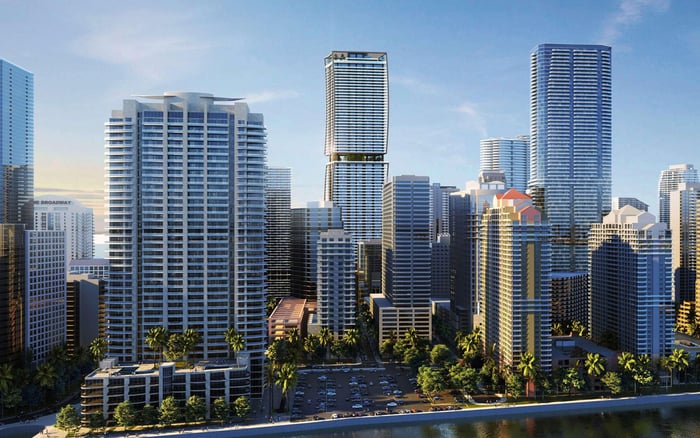
ORA, a large tower-scale project marketed at roughly 76 stories and about 540 residences, reads as an ecosystem. The branding leans hospitality-forward, and the amenity mix is framed as a place where work, social life, and daily needs can be handled without leaving the building.
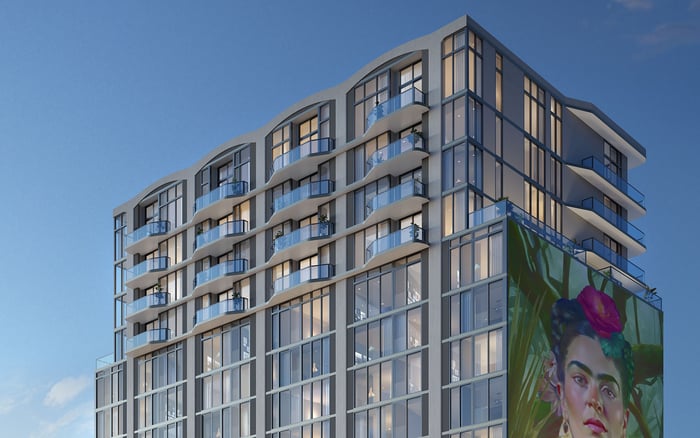
Colette, by contrast, is positioned as boutique: a five-story building with about 38 residences. That smaller scale is more than aesthetic-it changes how the building feels between 9 a.m. and 6 p.m. Remote workers often notice it first in elevator cadence, lobby energy, and the predictability of shared spaces.
Neither approach is universally superior. The right choice depends on whether you want a building that supplies a ready-made professional ecosystem, or one that prioritizes privacy, fewer touchpoints, and a calmer baseline.
A workday at home is won or lost on details that look modest on paper. Ceiling height and glass are not superficial luxuries when you spend time on video calls. Both ORA and Colette market generous ceiling heights and floor-to-ceiling glazing, which can create a bright, camera-friendly environment and allow you to place a desk without distorting the room’s proportions.
ORA is marketed with 10-foot ceilings and floor-to-ceiling windows. That combination supports flexible planning, where a workstation can live comfortably in the main living area without reading as a compromise. ORA is also marketed as pre-wired for high-speed internet and Wi‑Fi, alongside smart home technology for remote control of the home environment. For buyers who treat seamless connectivity and climate control as part of professional performance, those features land as practical reassurance.
Colette is marketed with 10'6" ceilings and floor-to-ceiling impact-resistant glass. The added volume can matter in smaller footprints, giving a work zone more air and balance. Colette also emphasizes lifestyle efficiency through building services and conveniences designed to reduce interruptions.
WFH readiness is also about time. ORA’s residential features include an in-unit washer and dryer-an underappreciated productivity advantage for anyone who values fewer midday errands.
When a building advertises “work-friendly amenities,” one question cuts through the marketing: are these spaces built for real work, or are they lounges with a desk-shaped table?
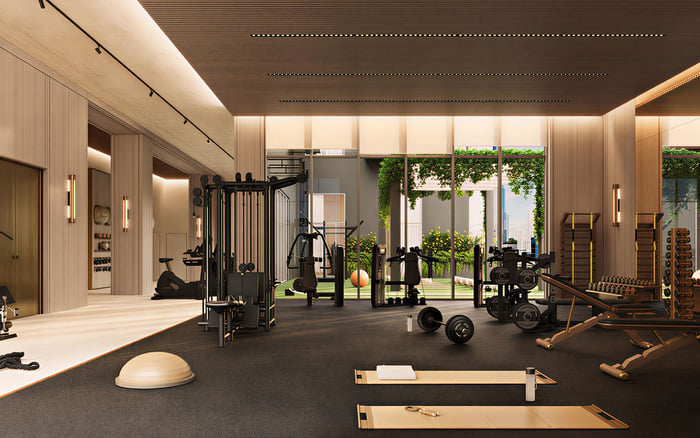
ORA puts work at the center of its amenity story. The program includes shared open workspaces plus private offices and content-creation-style rooms as part of its resident social and work lounges. It also promotes “fully wired” creative and workspace memberships geared to creators, founders, and doers-signaling an on-site work ecosystem that extends beyond the unit.
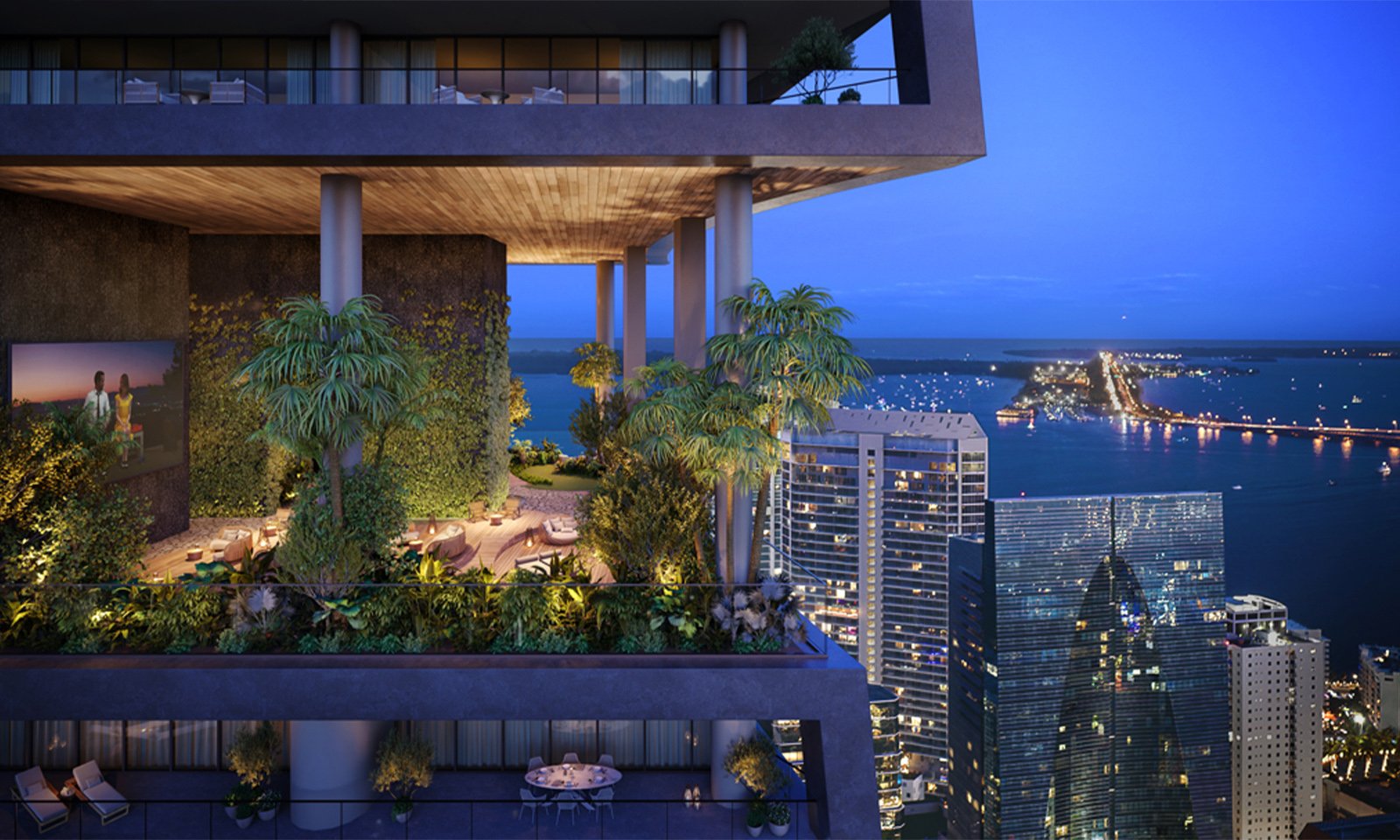
There is also an amenity zone called BOSCO, described as an elevated sky-park concept incorporating spaces intended for reading and quiet use alongside work-friendly lounge areas. For residents who need different modes across a day, quiet reading zones and lounge-style work settings can serve as a softer alternative to leaving the property.
Food access matters more than most buyers want to admit. ORA includes an on-site gourmet market and bakery concept, positioned as an in-building option for food and coffee during the day. In a hybrid schedule, that kind of convenience doesn’t just save time-it reduces decision fatigue.
Colette’s amenity mix signals a different emphasis. Its list includes a dedicated meeting space plus indoor and outdoor lounges, supporting hosted meetings and resident gatherings. A catering kitchen is associated with lounge space, useful for entertaining or small events. It isn’t a full in-building market concept, but it reads as a considered support system for residents who want a place to meet, host, and reset-without the intensity of a large amenity floor.
WFH is a privacy sport. The mental bandwidth spent navigating a crowded lobby or waiting for elevators is bandwidth you’re not spending on your work.
Colette’s boutique scale, repeatedly framed as such, is likely to resonate with buyers who value quieter common areas and lower neighbor density. With fewer residences, daily throughput tends to feel more controlled, and shared spaces can behave more like an extension of home than a public stage.
ORA’s tower scale implies materially higher resident and visitor activity. For some, that’s the point. Larger buildings can support a broader amenity program, more robust service operations, and an atmosphere that feels energized. For others, it can introduce more motion and social noise, especially at peak hours. The key is matching your work style to the building’s cadence.
In luxury living, service isn’t merely convenience-it’s a way of protecting time.
ORA is associated with a hospitality-forward service model, supported by Casa Tua branding and concierge-style services. For remote workers, a strong service layer can help manage deliveries, reservations, and daily logistics with fewer interruptions.
Colette also presents concierge and service-oriented amenities, along with a programming and services approach that can simplify daily life. If your workday is punctuated by meetings, errands, and family obligations, a well-run building can be the difference between a day that feels reactive and one that feels curated.
For hybrid workers who still drive to select meetings, Colette highlights parking provision with EV charging and valet options-a practical detail that can quietly improve a weekly routine.
Brickell’s advantage is optionality. ORA’s Brickell Avenue location is positioned as walkable to major retail and office nodes, which matters when you want to take a meeting out of the building-or simply change environments.
Colette’s South Brickell positioning keeps you near the core while maintaining a more residential feel than the most central blocks. For many principals, that “near but not in it” character can be the sweet spot: close enough for access, removed enough for calm.
Outside your building, Brickell offers multiple coworking and flex-office options, giving residents of either property a backup workspace for days when you want separation between home and work.
For recovery between calls, consider how you prefer to take breaks. The Underline linear park runs beneath the Metrorail and is designed as a walk-and-bike corridor with recreation features. For remote workers, a 15-minute reset outdoors can be as strategic as any productivity hack.
If you’re choosing between ORA and Colette with WFH as a meaningful priority, start with your operating style.
Choose the ecosystem if you want your building to function like a private club. ORA’s on-site workspaces, private offices, content-creation-style rooms, and in-building food options are oriented toward a day that can stay contained, with multiple settings available without leaving home.
Choose boutique if you want your home to feel like a retreat that happens to be in Brickell. Colette’s smaller scale and meeting-support amenities can be ideal for residents who prefer to do most deep work inside the residence, then use the building for quiet support and selective hosting.
If you’re also exploring other Brickell options with strong lifestyle infrastructure, Una Residences Brickell and The Residences at 1428 Brickell often enter the conversation for buyers who want the neighborhood’s convenience with different architectural and amenity expressions.
Which is more work-focused: ORA by Casa Tua or Colette Residences? ORA is positioned as more explicitly work-focused, with shared workspaces and private office-style rooms.
Does ORA offer dedicated coworking-style areas? Yes. ORA’s amenity program includes shared open workspaces and private offices/content-creation rooms.
Does Colette have spaces suitable for meetings? Yes. Colette includes a dedicated meeting space along with lounge areas that can support small gatherings.
How does building size affect WFH experience? Boutique buildings can feel quieter and less congested, while larger towers often support a wider range of amenities.
Are the residences designed for strong natural light on video calls? Both projects are marketed with floor-to-ceiling glazing and generous ceiling heights that support bright interiors.
Is ORA marketed with smart home and connectivity features? Yes. ORA is marketed as pre-wired for high-speed internet and Wi‑Fi and includes smart home tech for remote control.
Is there an easy in-building option for coffee or food at ORA? Yes. ORA includes an on-site gourmet market and bakery concept intended to support daytime needs.
Does Colette support hybrid workers who drive to meetings? Yes. Colette highlights parking with EV charging and valet options, which can streamline commuting.
Are there alternatives nearby if I need a separate workspace? Yes. Brickell has multiple nearby coworking and flex-office options for days you want to work outside the home.
What’s a good nearby way to take a midday break? The Underline offers a walk-and-bike corridor that can be ideal for a short reset between calls.
For a discreet conversation and a curated building-by-building shortlist, connect with MILLION Luxury.
If branded residences are on your mind — as a home or as an allocation — we would be glad to share what we are seeing, privately.
Begin a quiet conversation