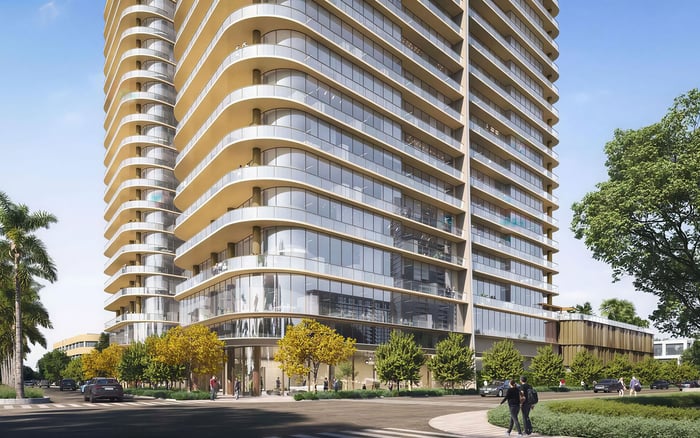
Foreign capital accelerated across South Florida in 2025, pushing international demand deeper into the region’s condo, new-construction, and $1M-plus segments. With a meaningful all-cash component and a preference for turnkey, lock-and-leave residences, global buyers are influencing everything from inventory mix to developer strategy. For local and relocating luxury purchasers, the opportunity is less about chasing headlines and more about understanding where liquidity concentrates, how buildings underwrite long-term ownership costs, and why certain neighborhoods consistently win the “second-home or rental” mandate.
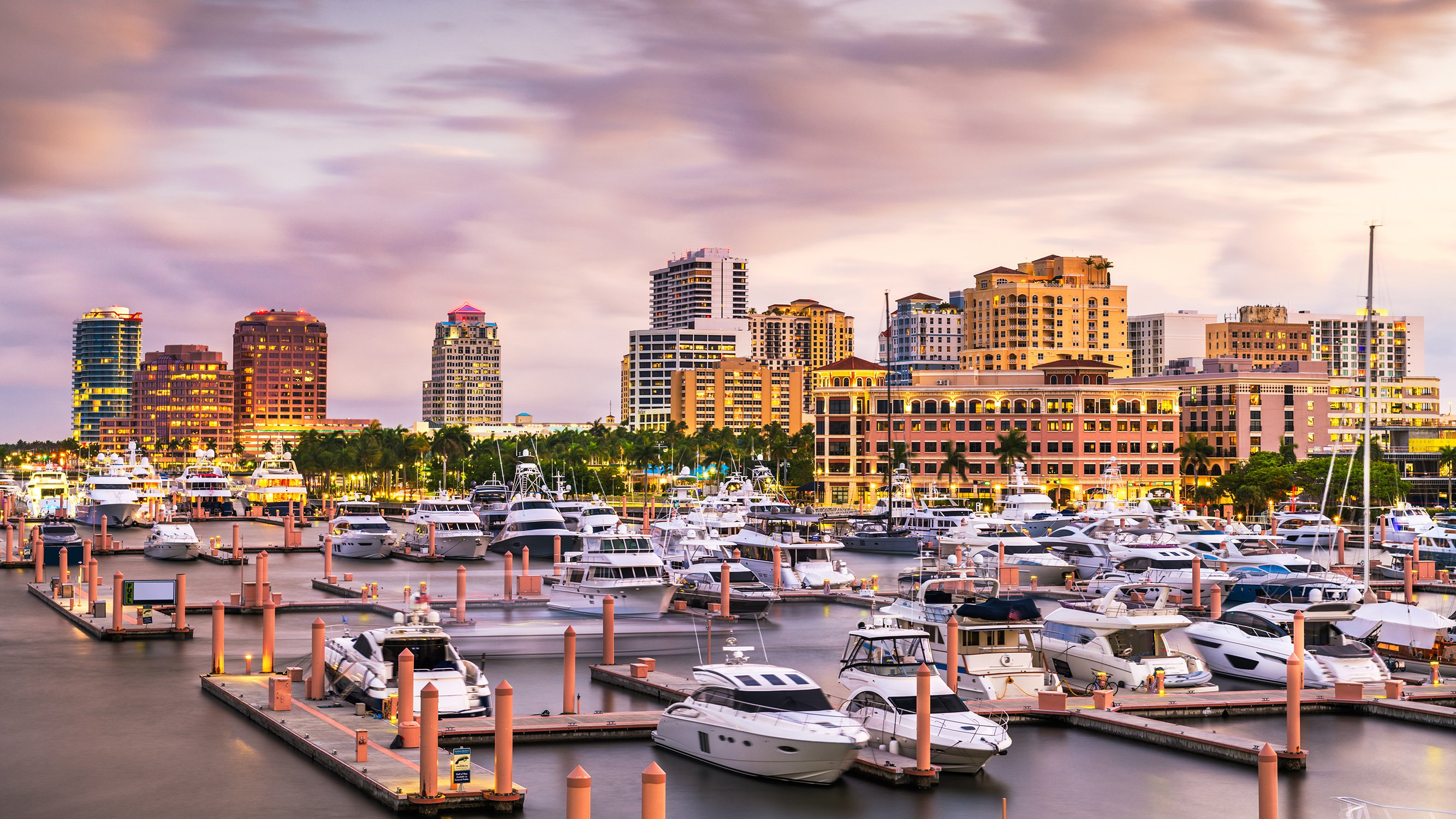
South Florida has long been international. What changed in 2025 is the scale-and the speed. Foreign buyers purchased roughly $4.4B of South Florida residential property in 2025, up 42% from 2024, and acquired about 5,300 homes, up from roughly 4,000 the year prior. In a market where decisive buyers win, that surge matters less as a headline and more as a day-to-day operating condition for sellers, developers, and sophisticated purchasers.
International buyers represented about 15% of South Florida transactions in 2025-dramatically above the approximate 2% U.S. average and about 5% statewide. Put simply, the region isn’t only competing with domestic metros; it’s competing with the world’s preferred second-home corridors. And when the product and neighborhood align, local inventory can be absorbed quickly.
For the ultra-premium audience, the signal is unambiguous: liquidity is broadening, and the buyer pool is increasingly comfortable transacting with limited in-person time. About 11% of international buyers purchased without visiting Florida, and about 65% visited two times or less before buying. That behavior favors assets that photograph well, present impeccably, and offer clean governance, strong management, and a clear ownership proposition.
The most important composition shift isn’t simply “more buyers”-it’s what they choose. International buyers disproportionately purchased condominiums, representing about 51% of their transactions. That aligns with a lock-and-leave lifestyle, full-service expectations, and a practical desire to simplify maintenance while still accessing South Florida’s waterfront and urban cores.
Use intent sharpens the bid. Roughly 71% planned to use the property as a vacation home or rental. That single data point goes a long way in explaining why turnkey condition, views, amenities, and rental flexibility often outperform purely aspirational square footage. For buyers weighing Miami Beach or Brickell options, the right building can function as a lifestyle asset while preserving optionality.
A second defining feature is the capital stack. About 51% of international purchases were all-cash in 2025. Cash doesn’t only influence pricing; it compresses timelines, reduces contingencies, and shifts leverage toward clean, ready-to-close properties. For financed buyers, the answer isn’t retreat-it’s execution: underwrite upfront, prioritize buildings with transparent documents, and focus on residences that won’t get stalled by preventable due diligence.
In Brickell, brand-forward new development continues to shape the global “Miami” image. When buyers want a vertical, walkable, hospitality-adjacent lifestyle, projects like 888 Brickell by Dolce & Gabbana can sit directly in the path of that demand, particularly for purchasers who value design language and service culture.
International demand isn’t confined to resale; it’s embedded in development absorption. Global buyers purchased about 49% of South Florida new construction, pre-construction, and condo conversion sales over an 18-month period ending July 2025. A later update described global buyers purchasing the majority of new-construction units, with buyers coming from 73 countries.
This matters because pre-construction is where pricing power is formed. When a large share of the buyer base is international, developers can calibrate inventory, finishes, and amenity programming to global expectations. It also means launches can feel less tethered to U.S. mortgage cycles than many domestic buyers assume.
For purchasers considering pre-construction, the practical takeaway is to evaluate the market like an allocator. Ask where demand is diversified, where the unit mix supports real end-user living, and where governance anticipates long-term operating costs. In Edgewater, for example, the urban waterfront has become a consistent stage for new inventory, and Aria Reserve Miami naturally fits what global buyers tend to favor: newer product, strong amenity narratives, and a location that pairs water and skyline.
Miami-Dade accounted for about 73% of South Florida foreign purchases by dollar volume-approximately $3.2B in 2025. That concentration helps explain why certain micro-markets can feel unusually tight even when broader inventory appears balanced.
It also decodes neighborhood behavior. In a globally traded city, buyers pay for clarity: a defined lifestyle identity, predictable access (airport, marina, dining), and a building that performs as a reliable base. In Miami Beach, the luxury condo conversation often narrows quickly to which buildings “hold the line” on privacy, design, and long-term desirability. When the goal is a refined oceanfront foothold, 57 Ocean Miami Beach reflects the boutique, residential-forward product that tends to resonate with second-home buyers who want discretion as much as spectacle.
At the same time, international demand isn’t limited to Miami-Dade. The coastal corridor from Hallandale through Broward remains a compelling middle ground: ocean proximity, newer towers, and relative value versus the most trophy-constrained enclaves. 2000 Ocean Hallandale Beach exemplifies the modern oceanfront ownership that can satisfy both lifestyle use and rental optionality.
Luxury inventory is evolving alongside the buyer pool. In December 2025, Miami surpassed New York City in the number of active $1M-plus listings, with Miami at about 10,591 compared to NYC at about 10,176. Without over-reading a single month, the broader implication is that South Florida has matured into a market with meaningful depth at the million-dollar threshold.
For buyers, depth is a double-edged advantage. It creates selection-then demands discernment. In a deep $1M-plus market, the spread between “good” and “great” is often governance, carrying costs, and a building’s ability to remain a destination as new supply arrives.
This is where ultra-premium strategy shifts away from chasing the newest headline and toward choosing assets that can compete through cycles. Consider how a building reads to a buyer who may visit only a few times before committing: arrival experience, security posture, service standards, and the predictability of the rules. Those elements can matter as much as the view.
As international and domestic demand concentrates in condominiums, operating costs are no longer a footnote. Condo association fees in South Florida have risen materially in recent years, driven by insurance pressures and reserve dynamics. New reserve and structural requirements for condo associations have also contributed to higher costs.
For luxury buyers, this isn’t an argument against condominium ownership. It’s a reminder that “prime” now includes financial resilience. A well-run building with transparent reserves may be more valuable than a visually stunning tower with opaque governance. When you underwrite a residence, treat monthly costs as part of the asset’s architecture.
Practical diligence priorities:
In Brickell, where density and service expectations are high, a residential-forward tower like 2200 Brickell can be a useful reference point when comparing how “boutique” versus “mega-amenity” buildings allocate costs, privacy, and day-to-day livability.
South Florida’s luxury housing story isn’t purely lifestyle. Corporate investment and executive migration continue to reinforce demand for high-quality residences near financial and business centers. A widely disclosed example is the planned roughly $1B Citadel and Citadel Securities headquarters complex in Brickell, tied to the firm’s continued expansion in Miami.
For buyers, projects of this magnitude matter because they influence long-term neighborhood gravity: office presence, retail improvements, infrastructure focus, and the intangible confidence that attracts additional capital. The result is often a stronger floor under premium urban housing-particularly in walkable districts with waterfront access.
South Florida’s international buyer base is notably concentrated in the Americas. In 2025, Colombia represented about 15% of foreign buyers, Argentina about 12%, with additional share from countries such as Mexico and Brazil. In new construction, Colombia and Mexico ranked among the top sources of international buyers for new units.
Meanwhile, domestic relocation continues to add depth. New York was the top domestic feeder state into South Florida for the sixth consecutive year, representing about 24% of out-of-state buyers.
This mix creates a specific kind of competition. International buyers often arrive with cash and decisiveness. Domestic buyers more often bring longer-term relocation intent, schools, and lifestyle permanence. For sellers and developers, that blend supports price discovery. For buyers, it means the “right” residence increasingly satisfies both profiles: a true home-and a compelling asset.
How much South Florida property did foreign buyers purchase in 2025? About $4.4B in residential property purchases, representing a sharp year-over-year increase.
How many homes did international buyers buy in 2025? Roughly 5,300 South Florida homes, up meaningfully from about 4,000 in 2024.
How large is the foreign-buyer share in South Florida compared to the U.S.? About 15% in South Florida versus roughly 2% nationally, indicating outsized global demand.
Are foreign buyers mostly paying cash? A significant share are: about 51% of international purchases were all-cash in 2025.
Do international buyers prefer condos or single-family homes? Condos are a major preference, with about 51% of international purchases being condominiums.
How do most international buyers plan to use their South Florida property? Many target flexibility: about 71% planned to use the property as a vacation home or rental.
Do foreign buyers typically visit before buying? Often minimally: about 11% bought without visiting Florida, and about 65% visited two times or less.
Which county leads foreign-buyer activity by dollar volume? Miami-Dade leads, accounting for about 73% of foreign purchases by dollar volume in 2025.
How influential are international buyers in new construction sales? They are pivotal, purchasing about 49% of new construction and related sales over an 18-month period.
What is the key diligence issue luxury condo buyers should prioritize now? Operating costs and building financial health, as condo fees have risen amid insurance and reserve pressures.
If you'd like a private walkthrough and a curated shortlist, connect with MILLION Luxury.
If branded residences are on your mind — as a home or as an allocation — we would be glad to share what we are seeing, privately.
Begin a quiet conversation