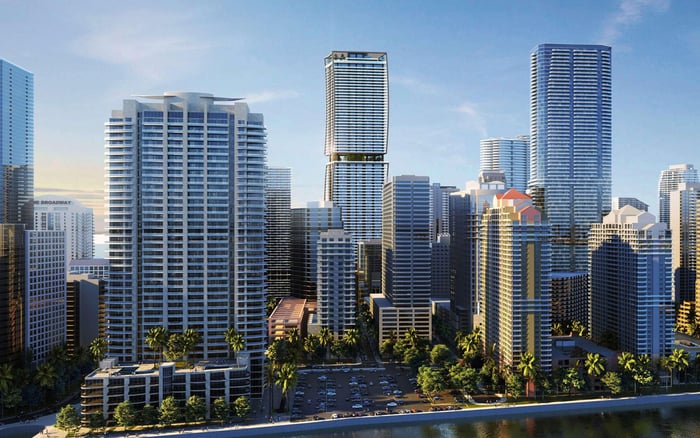
Two very different visions of Brickell luxury are taking shape: a low-rise, privacy-forward boutique building in South Brickell, and a Casa Tua-branded vertical lifestyle tower in the heart of the district. For buyers deciding between discretion and energy, the distinction is less about square footage and more about how you want Miami to feel when you close the door.
Brickell has matured into a neighborhood of distinct micro-lifestyles. Some buyers want a true home base: a quiet arrival, limited neighbors, and a terrace that lives like an extension of the living room. Others want a residence that functions like a key, arrive with a suitcase, switch on the city, and let hospitality carry the rest. That divide comes into sharp focus when comparing Colette Residences and ORA by Casa Tua. One is boutique and low-rise, designed for deliberate privacy. The other is a Casa Tua-branded high-rise centered on turnkey living, culinary programming, and a broader amenity ecosystem. Neither approach is “better.” Each simply optimizes a different expression of luxury, and Brickell is now established enough to support both.
Colette Residences is conceived as a five-story boutique condominium with 38 residences in South Brickell. Planning emphasizes indoor-outdoor living through multiple home “collections,” including Garden Residences, Terrace Residences, and Penthouses. The positioning is privacy-forward, with residences marketed to include private elevator access and foyers. Colette is marketed with approximately 10'6" ceilings and floor-to-ceiling impact glass, a combination that typically makes even restrained layouts feel airy and quietly dramatic. Interior specifications lean decisively European: Italian cabinetry and millwork brands (including CESAR and LEMA) paired with Miele appliances. Amenities are marketed at approximately 15,000 square feet, anchored by a rooftop pool and a mix of lounge and social spaces. The defining point is scale: the amenity offering is intended to feel curated rather than crowded, and the resident-to-amenity ratio is fundamentally different from a major tower. For a comparative lens within Brickell’s broader new-construction landscape, it can be helpful to look at larger-format towers such as Una Residences Brickell, where the experience is defined by height, views, and a more expansive vertical community. Colette reads as the counterpoint: fewer neighbors, fewer shared moments, more control.
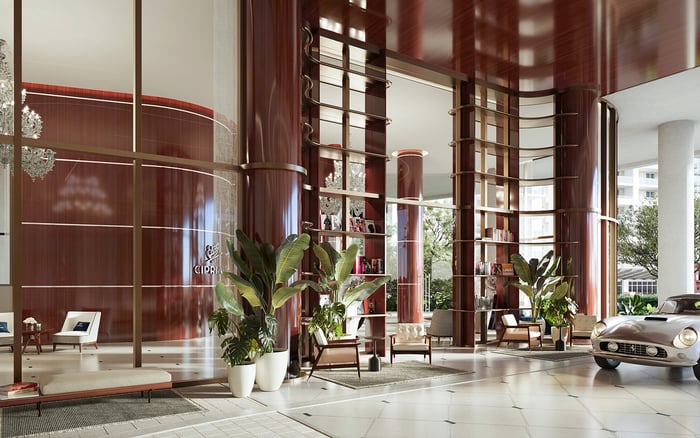
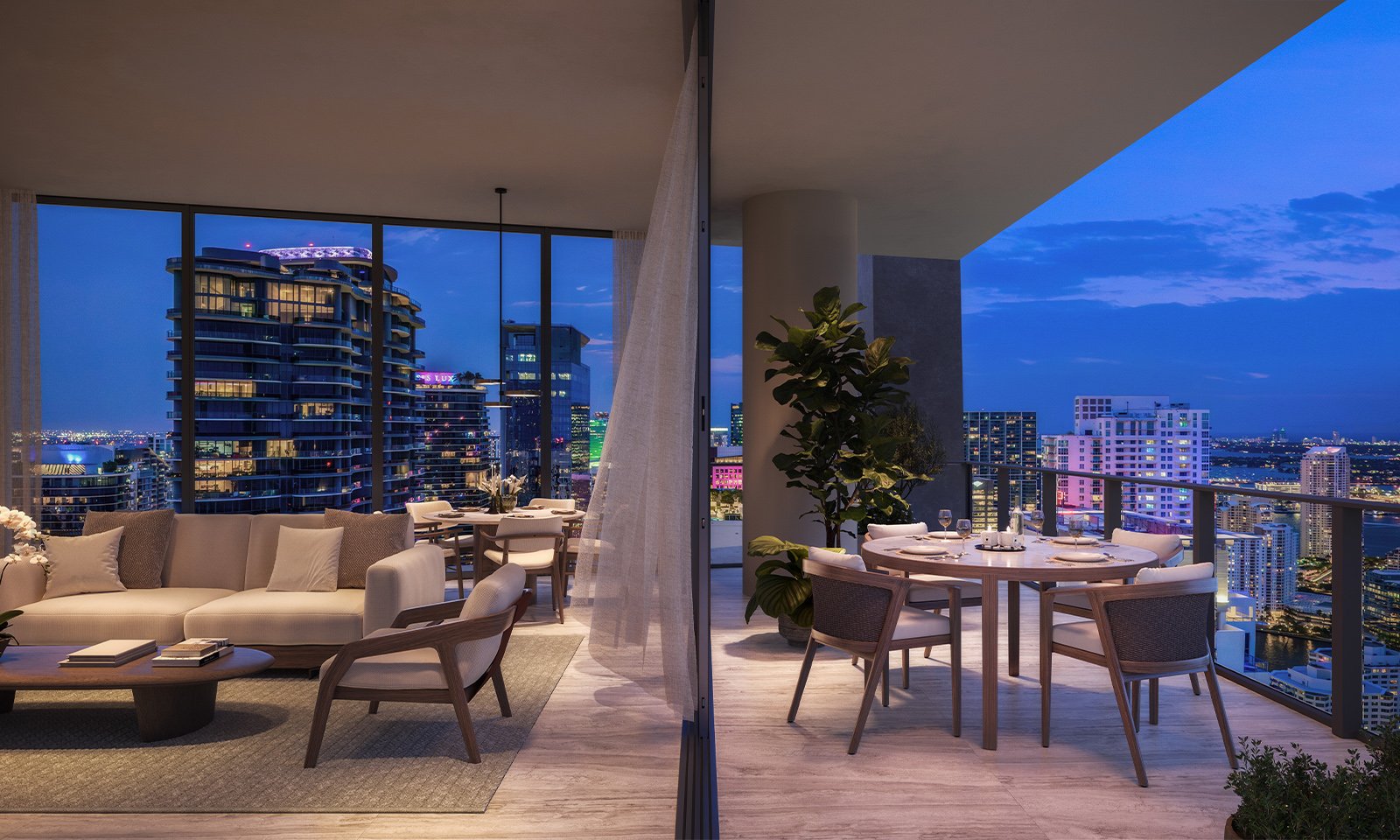
ORA by Casa Tua is planned as a 76-story tower with about 540 residences, ranging from studios to four-bedroom homes. The project is marketed with architecture by Arquitectonica and interiors by m2atelier, signaling a design-forward identity intended to read as contemporary Brickell rather than nostalgic or revivalist. ORA’s residential concept is built around convenience and flexibility. Residences are marketed as fully furnished and turnkey, with 10-foot ceilings, floor-to-ceiling windows, terraces, and an in-unit washer and dryer. That positioning changes the buyer calculus. Furnished, turnkey delivery isn’t merely an aesthetic decision; it’s an operational one, well-suited to owners who value immediacy and may use the home in cycles rather than continuously. The Casa Tua branding is central, not incidental. The project is marketed with four on-site Casa Tua culinary concepts: TERRA, UVA, FUOCO, and VENTO. In addition, ORA is marketed to include BOSCO, a landscaped sky-garden concept designed to function as an elevated outdoor park. For certain buyer profiles, ORA is also marketed as allowing short-term rentals with a minimum stay requirement. That policy dimension, more than any material finish, tends to set the building’s day-to-day rhythm. In Brickell, ORA’s “city-switch” lifestyle can be read alongside other branded, experience-first propositions such as Mercedes-Benz Places Miami, where the emphasis is on a complete ecosystem rather than a simple residence.
South Brickell is widely understood as the quieter side of Brickell, more residential in feel than the denser core. That matters because in Miami, neighborhood texture is part of the value proposition. The same distance on a map can read entirely differently in daily life. Colette’s low-rise, boutique format aligns naturally with that South Brickell character. Buyers who prize calm arrival, fewer transient dynamics, and the sense that the building behaves like an extension of a private home often find the quieter side of Brickell isn’t a compromise. It’s the point. ORA, by contrast, leans into the core’s velocity. A high-rise with hundreds of residences, hospitality programming, and a flexible-use posture tends to suit owners who want the neighborhood to function as an amenity. For many, that is a contemporary definition of luxury: not retreat, but access.
In ultra-prime condominiums, “privacy” is rarely a single feature. It’s a system, how you arrive, how you move, and how many people share the same spaces. Colette’s marketing emphasis on private elevator access and foyers speaks to one of the most coveted kinds of privacy: a frictionless transition from city to home. Combined with a 38-residence scale, the building is predisposed to quieter common areas and more predictable circulation. ORA’s proposition is different. Vertical living can be exceptionally private inside the residence, but it is inherently more social in the shared experience. With about 540 residences planned, the building’s identity will be shaped by amenity programming, arrivals, and the cadence of residents and guests. If your daily priority is minimal shared moments, the boutique building generally wins. If your priority is an activated social environment, and the ability to host with the neighborhood as backdrop, the high-rise ecosystem typically aligns more naturally.
Turnkey, furnished delivery is a meaningful differentiator in Miami’s luxury market. ORA’s marketing places this at the center, pairing it with 10-foot ceilings, floor-to-ceiling windows, terraces, and practical in-unit laundry. For second-home owners, business travelers, and those who want to land in Miami without a multi-month furnishing process, turnkey becomes a form of time wealth. It can also be an operational advantage when paired with flexible use policies. Colette’s marketing leans toward the opposite pleasure: the sense of a bespoke home defined by terraces, collection-based layouts, and privacy-first access. When a building is small, customization and ownership identity can feel more durable, because your home isn’t one of hundreds. In Brickell, buyers comparing branded towers may also look at 888 Brickell by Dolce & Gabbana as another example of how fashion and lifestyle branding can become a primary driver of residential desirability. The distinction here is that ORA’s branding is hospitality-led, with culinary programming as the signature.
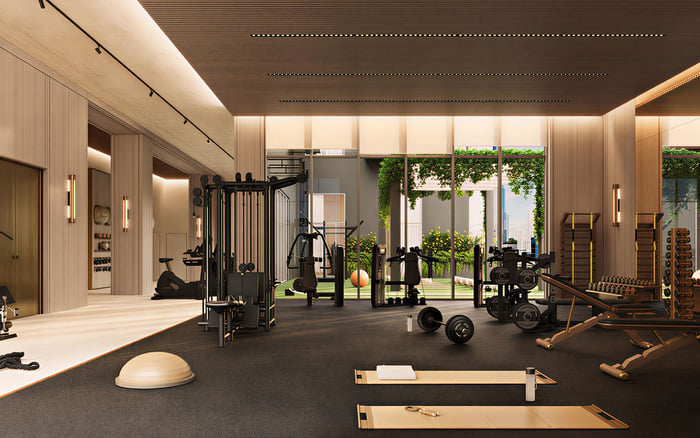
Colette is marketed with approximately 15,000 square feet of amenities and a rooftop pool, alongside lounge and social spaces. In a boutique building, amenities often function like private rooms: available when you want them, and rarely operating like a public venue. ORA’s amenities are marketed as a layered lifestyle environment. BOSCO, the elevated sky-garden concept, is emblematic of an amenity designed to become a destination within the building, not simply a convenience. This is a useful way to think about “value” in amenity packages. Some buyers value amenity square footage. Others value amenity certainty: the ability to use the pool, lounge, or outdoor space without managing crowds.
1. Primary-home privacy buyer, Colette
If your ideal Brickell life centers on quiet arrival, fewer neighbors, and a home that reads as a retreat, Colette’s boutique scale and privacy-forward access are the clearest match. The indoor-outdoor emphasis across its residence collections supports the idea of living expansively without relying on the building’s public spaces.
2. Second-home “arrive and live” buyer, ORA by Casa Tua
If you want to land in Miami and skip the setup phase, ORA’s fully furnished, turnkey positioning is designed for you. The combination of terraces, full-height glazing, and a building-wide hospitality identity leans into a managed, ready-on-arrival lifestyle.
3. Culinary-and-hosting lifestyle buyer, ORA by Casa Tua
For owners who treat dining and entertaining as the center of daily life, four on-site Casa Tua culinary concepts create a built-in social engine. This is less about cooking at home and more about living inside a curated set of reservations, lounges, and gathering spaces.
4. Indoor-outdoor terrace maximalist, Colette
If your non-negotiable is meaningful private outdoor space that functions as a real room, Colette’s terrace-forward planning and collection structure is aimed directly at that preference. Boutique scale also tends to make terrace living feel more intimate, because neighboring sightlines are often less intense than in major towers.
5. Flexibility and short-term use buyer, ORA by Casa Tua
If you want optionality, ORA is marketed as allowing short-term rentals with a minimum stay requirement. For some owners, this is an investment and utilization feature. For others, it is simply a way to keep a Miami residence economically efficient between stays.
First, ask how you want to feel at the threshold. If “quiet” is the defining word, boutique buildings in South Brickell tend to deliver a more residential cadence. Second, be honest about usage patterns. If your Miami life is cyclical, turnkey and flexible-use positioning can reduce friction and increase enjoyment. If you are building a long-term home base, privacy systems and neighbor count often matter more than programming. Third, decide whether your luxury is internal or external. Colette’s promise is that the residence itself, through ceiling height, glazing, and terrace emphasis, becomes the destination. ORA’s promise is that the building’s lifestyle ecosystem becomes part of your everyday identity. Buyers often tour Brickell to compare these philosophies against established benchmarks such as Cipriani Residences Brickell, where branded service and tower living set a familiar reference point. The best choice is the one that matches your real routine.
Is South Brickell meaningfully different from the Brickell core? Yes. It is commonly experienced as quieter and more residential, with a calmer daily rhythm.
How many residences are planned at Colette Residences? Colette is planned as a boutique building with 38 residences.
What is Colette’s overall building scale? Colette is planned as a five-story condominium, which tends to limit density and traffic.
What types of layouts are offered at Colette? Plans are marketed as 2 to 4 bedroom residences plus penthouses, with an indoor-outdoor focus.
What interior features are marketed at Colette? Highlights include approximately 10'6" ceilings, floor-to-ceiling impact glass, and Italian cabinetry with Miele appliances.
How tall is ORA by Casa Tua planned to be? ORA by Casa Tua is planned as a 76-story tower with about 540 residences.
Are ORA residences marketed as furnished? Yes. ORA is marketed as fully furnished and turnkey, with terraces and in-unit washer and dryer.
What makes ORA’s lifestyle concept distinct? It is marketed with four Casa Tua culinary concepts on-site and a signature BOSCO sky-garden.
Does ORA allow short-term rentals? ORA is marketed as allowing short-term rentals with a minimum stay requirement.
Which is better for long-term quiet living: Colette or ORA? Buyers prioritizing discretion and low-density living often gravitate to boutique formats like Colette.
For tailored guidance, speak with MILLION Luxury.
If branded residences are on your mind — as a home or as an allocation — we would be glad to share what we are seeing, privately.
Begin a quiet conversation