A service-first look at Banyan Tree Residences West Palm Beach and why affluent buyers in today’s West Palm Beach market may prioritize hospitality polish, wellness, and operational ease over simply owning the largest floor plan.
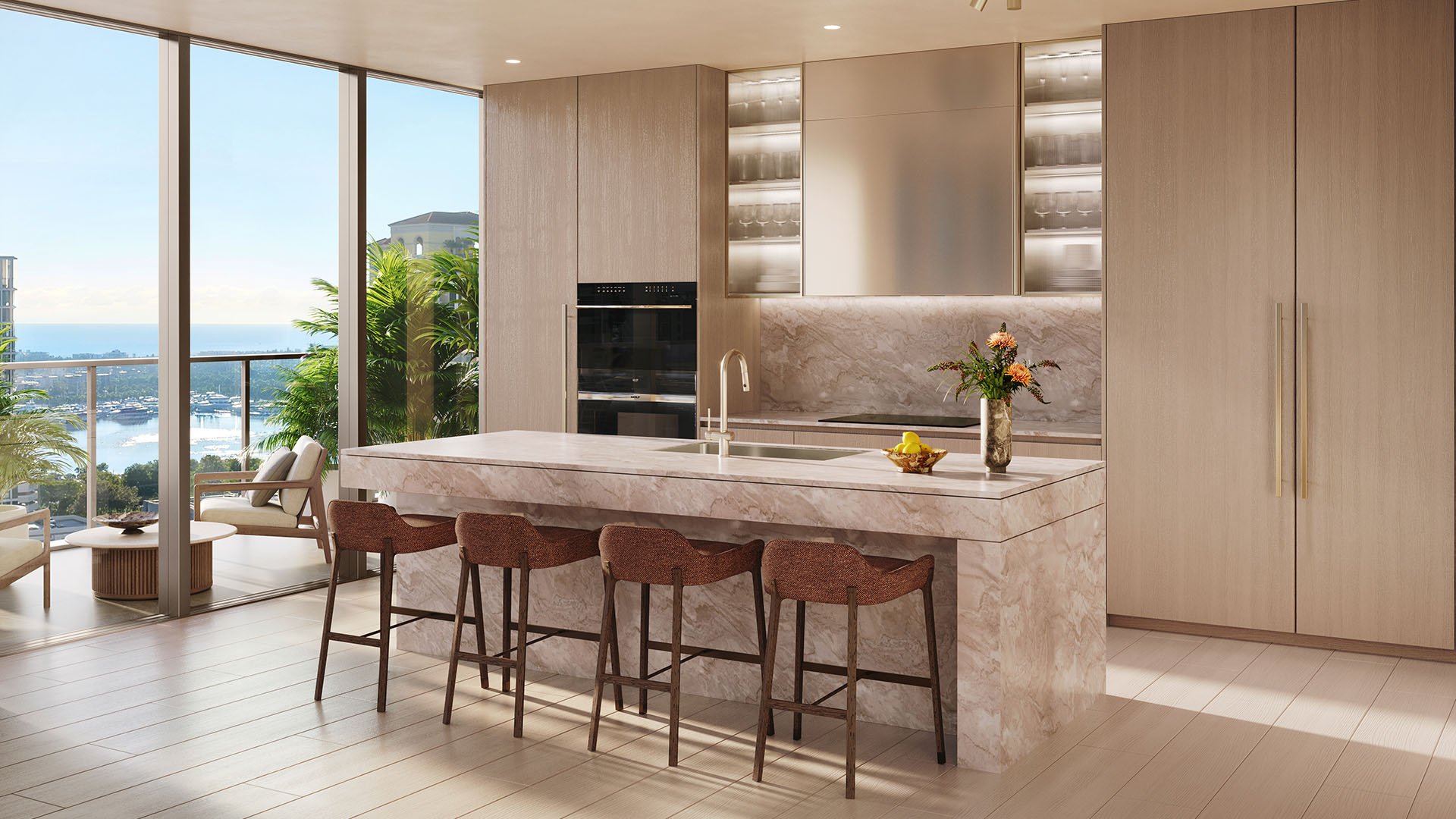
In the upper tier of South Florida real estate, size still matters. But for a growing share of buyers, it is no longer the first filter. The more pointed question is how a residence lives day to day. Does it reduce friction? Does it feel intuitively cared for? Does arriving home feel more like checking into a private retreat than managing a large asset?
That is where Banyan Tree Residences West Palm Beach sets itself apart. The project is best understood not as a conventional luxury condominium with hospitality layered on top, but as a hospitality-branded residence where service is part of the organizing idea. In a market increasingly defined by polished new development, that distinction matters.
For buyers already familiar with the rhythms of top-tier hotels and resorts, Banyan Tree carries a recognizable service identity. The brand is associated with privacy, wellness, calm design language, and curated experience. Translated into residential life, that means the value proposition is less about pursuing the absolute largest footprint and more about choosing a home that feels managed, discreet, and consistently elevated.
This is especially relevant in West-palm-beach, where luxury development has moved beyond simple square-foot bragging rights. Buyers now have options across the waterfront and core residential districts, from Alba West Palm Beach to Forté on Flagler West Palm Beach, and the most compelling differentiators are increasingly experiential rather than merely dimensional.
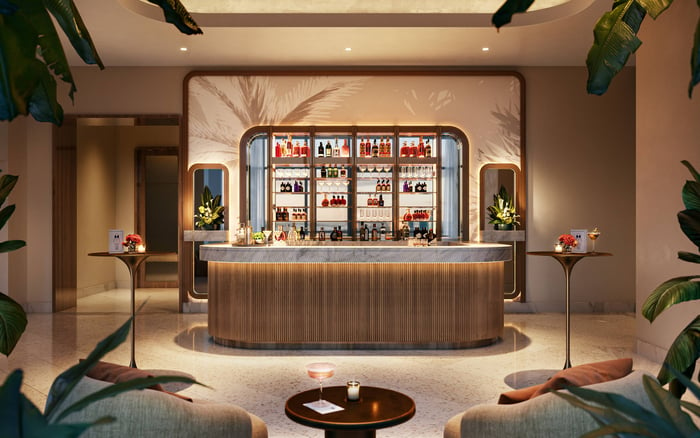
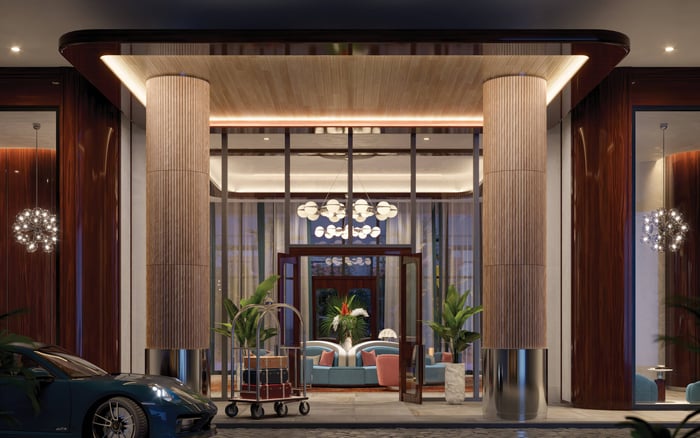
The essential appeal here is hospitality polish. In practical terms, that means concierge coordination, service access, and the kind of managed living that removes the minor frictions affluent owners tend to resent most. It also suggests an environment shaped by lounge spaces, dining-oriented gathering areas, private-club sensibility, and a wellness-forward atmosphere rather than a simple amenity checklist.
That point is subtle but important. Many upscale buildings offer concierge desks. Fewer are conceived around service standards as a core part of the residential product. Banyan Tree’s positioning suggests that the resident experience is meant to feel closer to hotel-style living, where support is not incidental but embedded.
For the right buyer, this can be more persuasive than a larger residence with more rooms to furnish, maintain, secure, and supervise. A grand floor plan has undeniable appeal, but it also creates obligations. Hospitality-branded living answers a different aspiration: ownership without operational drag.
Comparable branded projects elsewhere in South Florida underscore the same buyer shift. In Miami, The Residences at Mandarin Oriental, Miami and St. Regis® Residences Brickell similarly speak to purchasers who want service culture woven into everyday life, not treated as a decorative add-on.
The most intuitive buyer for Banyan Tree Residences West Palm Beach is not necessarily the person seeking the maximum possible square footage. It is the buyer who values being looked after.
Think of the owner who travels frequently, divides time between cities, entertains selectively, and wants a residence that performs smoothly in their absence. Think of someone who has already experienced the hidden labor of a large home: staffing, vendor coordination, maintenance oversight, and the steady decision-making that follows any substantial property. That buyer may not want less luxury. They may simply want luxury with fewer moving parts.
This is also why wellness matters in the conversation. Banyan Tree’s broader brand identity is tied to relaxation, privacy, and restorative living. When that is reflected in residential programming and shared spaces, it creates a proposition that feels more complete than a tower selling only finishes and views. Wellness in this context is not a trend accent. It is part of the operating philosophy.
For some buyers, especially Second-home purchasers, that combination is highly attractive. A residence can function as a private base in Palm Beach County while avoiding the staff-heavy demands of a standalone estate. In that sense, the project aligns with a broader preference for high-touch simplicity.
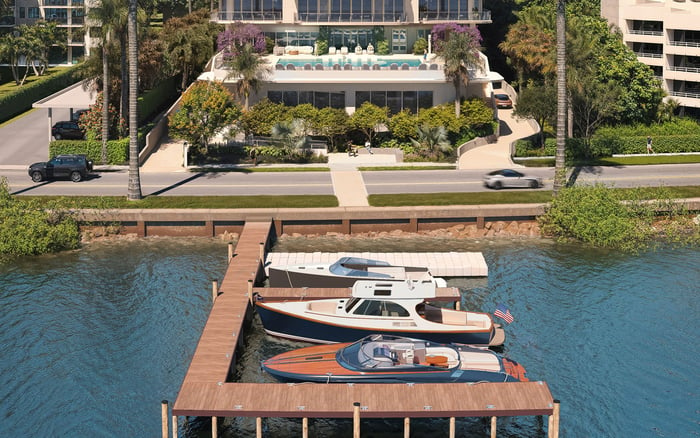
West Palm Beach has evolved into one of the most closely watched luxury markets in South Florida. New residential product, upgraded lifestyle offerings, and growing buyer attention have created a setting where branded residences feel increasingly natural. In a competitive environment, the projects that stand out are often the ones with a clearly defined lifestyle thesis.
Banyan Tree’s thesis is not difficult to read. It is about trust in a global hospitality name, confidence in service standards, and the promise of a home that feels curated rather than merely delivered. That can resonate strongly in a market where buyers are comparing not just layouts, but operating models.
The local comparison set reinforces the point. A buyer surveying Mr. C Residences West Palm Beach or The Ritz-Carlton Residences® West Palm Beach is already thinking in terms of service character, brand discipline, and the mood of ownership. That is the lane Banyan Tree enters, and it does so with a wellness-led hospitality identity that feels distinct.
The development collaboration also adds institutional weight to the story, reinforcing that this is not a casual branding exercise but part of a serious high-end residential effort in Palm-beach county’s evolving luxury landscape.
At this level of the market, buyers are rarely deciding between luxury and non-luxury. They are deciding between different definitions of luxury.
One definition favors scale: larger rooms, more formal spaces, and the visible status of square footage. Another favors orchestration: a residence that anticipates needs, supports a fluid lifestyle, and delivers consistency through service. Banyan Tree Residences West Palm Beach is tailored to the latter.
That does not mean space becomes irrelevant. It means space is no longer the sole or even primary expression of value. For many affluent households, the higher luxury is freedom from logistics. It is the ability to arrive in town and have life already arranged. It is confidence that privacy will be respected, daily needs can be coordinated, and wellness remains integrated into the rhythm of home.
This perspective is increasingly important in the New Project conversation across South Florida. Buyers with global experience often recognize that branded hospitality residences can offer a more refined form of ownership than raw size alone. In purely practical terms, a beautifully run home can outperform a larger but less coherent one.
For those evaluating the Banyan Tree Residences West Palm Beach proposition, that is the key lens. The question is not whether it competes on magnitude. The question is whether it offers a superior way to live. For a particular class of buyer, the answer may well be yes.
What is the main appeal of Banyan Tree Residences West Palm Beach? Its appeal centers on hospitality-led living, with service, wellness, and operational ease taking priority over raw square footage.
Is this positioned like a typical luxury condo? Not exactly. It is better understood as a branded residence where hotel-style living is part of the core concept.
Who is the ideal buyer for this project? The strongest fit is an affluent buyer who values convenience, privacy, and a managed lifestyle over the responsibilities of a large home.
Why does the Banyan Tree name matter here? The brand brings a global hospitality identity associated with service, wellness, and a curated residential experience.
Does the project focus on wellness? Yes. Wellness is part of the broader concept, including spaces or programming tied to relaxation and preventive health.
Why is West Palm Beach a strong location for branded residences? The city is part of a fast-evolving luxury development wave, making it fertile ground for service-oriented, high-end residential concepts.
Is larger square footage no longer important to luxury buyers? It still matters, but many buyers now rank service quality, ease of ownership, and day-to-day livability just as highly.
How is hospitality polish different from standard concierge service? Here, service appears to be part of the building’s organizing philosophy rather than an accessory added to a conventional condo model.
Could this work for a second-home owner? Yes. Buyers who split time between cities often value a residence that remains easy to manage while they are away.
What should buyers compare most carefully? They should compare not only floor plans and finishes, but also brand culture, service depth, and the overall ease of ownership.
When you're ready to tour or underwrite the options, connect with MILLION.
If branded residences are on your mind — as a home or as an allocation — we would be glad to share what we are seeing, privately.
Begin a quiet conversation