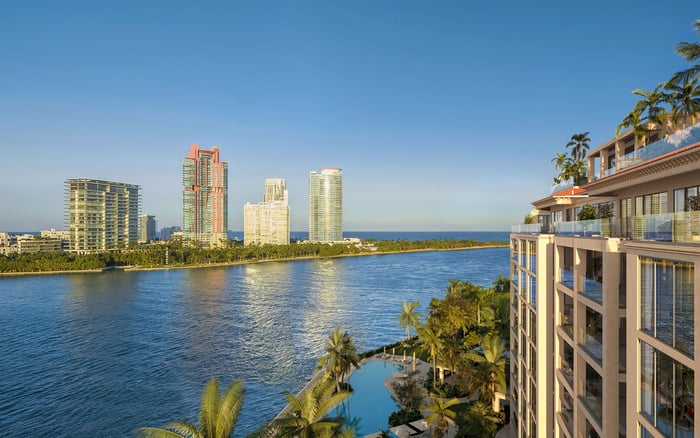
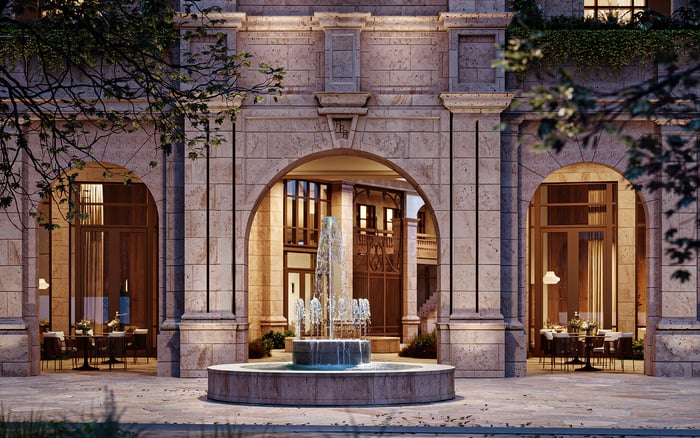
A MILLION editorial on why South Florida’s most coveted residences continue to command attention as both lifestyle statements and long-duration stores of wealth.

In South Florida, a trophy residence is not simply the most expensive home in a given ZIP code. It is a property that cannot be easily replicated: a rare stretch of oceanfront, a true bayfront estate with direct boating access, a branded sky residence with architectural distinction, or a historically significant home in a tightly protected neighborhood. Prestige matters, but permanence matters just as much.
For sophisticated buyers, that distinction is critical. The luxury assets that tend to hold relevance across cycles are often those with the fewest true substitutes. In South Florida, that usually means finite waterfront land, exceptional design authorship, privacy, and a location with enduring global recognition. The market’s upper tier can behave differently from the broader housing landscape, but resilience is not guaranteed. It depends on basis, supply, insurance, building quality, association health, and the depth of the next buyer pool.
Florida’s tax structure remains part of the appeal. The Florida Constitution limits state taxation of the income of natural persons, and the Florida Department of Revenue confirms that Florida’s estate tax was eliminated for decedents dying after December 31, 2004. Those advantages may matter most when the purchase supports true Florida residency and a broader planning strategy, not merely seasonal use.
The visual drama of a trophy property is easy to understand. The harder question is what sustains value after the initial excitement fades. In Florida, the answer is usually scarcity.
Oceanfront land is finite. So is deep-water frontage in established neighborhoods. So are penthouse positions with protected water views in the best buildings. Once an asset combines one of those unrepeatable characteristics with a proven location, its long-term value proposition becomes less about trend and more about replacement difficulty.
That is why oceanfront residences in Miami Beach and Surfside continue to hold unusual prestige, while still requiring exacting due diligence. The same logic extends to limited-edition offerings like The Perigon Miami Beach, where the appeal is tied not merely to finishes, but to scarce positioning within one of the region’s most visible coastal corridors.
For buyers assessing long-term value, this matters more than raw square footage. Additional interior space can be created elsewhere. True frontage cannot.
Certain South Florida submarkets function almost like blue-chip categories in their own right, but each must be underwritten on its own facts. Miami Beach remains the obvious reference point for oceanfront and bayfront ownership, particularly for buyers seeking immediate international recognition. Its cachet is rooted in waterfront orientation, hospitality-level service expectations, and a concentration of architect-led residential product.
Brickell and Greater Downtown Miami occupy a different but equally compelling position. Here, prestige is expressed vertically. New branded and highly amenitized towers have expanded the definition of the trophy asset, attracting buyers who want global-city energy alongside private-residence discretion. Projects such as 888 Brickell by Dolce & Gabbana and The Residences at 1428 Brickell reflect how branding, architecture, and service can function as status signals. In Brickell, the draw is not classic estate land, but elevated lifestyle infrastructure, skyline prominence, and proximity to the city’s financial core.
Coral Gables, by contrast, offers prestige through heritage and restraint. Its appeal is inseparable from estate neighborhoods, mature landscaping, and a cultivated sense of permanence. Historic-preservation controls in parts of the city can reinforce that value proposition by limiting inappropriate alterations and preserving architectural scarcity. Buyers drawn to this setting are often prioritizing legacy and neighborhood continuity over headline visibility. That helps explain the interest around refined, context-sensitive projects such as Ponce Park Coral Gables.
Fisher Island belongs in a category of its own. Limited access, social privacy, and a deeply constrained supply profile continue to distinguish it from mainland luxury. In the trophy conversation, exclusivity of access can matter just as much as square footage or finish level.
In a scarcity-led market, the search itself becomes part of the strategy. MILLION helps buyers move beyond broad public discovery by curating South Florida trophy and luxury properties through a tailored, discreet process. That can include public listings, new-development opportunities, and select off-market or pre-market inventory where available, with a focus on privacy, building quality, waterfront logic, and long-term usability rather than spectacle alone.
Not all trophy assets are valued in the same way, even when their pricing tiers overlap.
Prestige condominiums derive long-term value from a combination of building identity, service culture, view security, reserve strength, and authorship. Branded residences have become especially important in Miami because they signal service standards and global recognition to a broad buyer pool. For some purchasers, the predictability of management and the ease of lock-and-leave ownership justify a premium.
Waterfront estates are the purest expression of scarcity. Their appeal is grounded in land, frontage, privacy, and boating utility. These properties often trade less on operational convenience and more on the fundamental difficulty of reproducing the site.
Historic estates occupy a third lane. In places like Coral Gables, preservation can support long-term value because character itself becomes a protected asset. That does not make ownership passive or effortless, but it can create a powerful moat around architectural distinction.
For investors and end users alike, the central question is simple: what exactly are you paying to secure that others may not be able to buy easily later?
Trophy acquisitions are emotional, but the best ones are not irrational. South Florida’s top-end market benefits from a rare overlap of prestige drivers and financial logic: tax efficiency, global relevance, international buyer depth, and continued demand for primary and seasonal residences among buyers with substantial balance-sheet flexibility.
Current data supports the need for selectivity. According to MIAMI Realtors, Miami-Dade $1 million-plus single-family sales rose 19.83% year over year in March 2026 and $1 million-plus condo sales rose 9.77%. Yet the same release showed a split inventory picture: 5.7 months of single-family supply and 13 months of existing condo supply. That is not a reason to avoid condos; it is a reason to distinguish prime waterfront, well-capitalized, or new-construction product from more commoditized inventory.
Carrying costs matter. Property taxes can materially influence the economics of ownership, especially when assessed values rise with market momentum. For qualified primary residents, the Florida Department of Revenue notes that the homestead exemption may reduce taxable value by as much as $50,000 and qualify a property for Save Our Homes assessment limits. For 2026, the Save Our Homes annual cap is 2.7%, according to the Department’s January 2026 publication. Nonresident and investment buyers should not assume those benefits.
There is also a newer layer of diligence around condominium stock. Florida DBPR confirms that many residential condominium and cooperative buildings with three or more habitable stories are subject to milestone inspections and structural-integrity reserve studies. In practical terms, a newer or better-capitalized building may offer a stronger resale story than an older address with unresolved future costs, even if both sit in the same prestige band.
Insurance and resilience belong in the same conversation. The Florida Office of Insurance Regulation’s July 2025 Property Insurance Stability Report showed signs of market stabilization, but South Florida premiums and coastal risk remain material underwriting inputs. Miami-Dade County’s sea-level-rise materials also make clear that elevation, flood exposure, storm hardening, and adaptation planning should be treated as value factors, not afterthoughts.
The strongest trophy assets in South Florida are not necessarily those generating the most immediate yield. Often, they are the properties that preserve optionality, status, and scarcity over long holding periods. A buyer may use the residence as a primary home, a seasonal base, a family legacy asset, or a store of wealth. The common denominator is not income production. It is irreplaceability.
That is why the top of the market continues to reward selectivity. Buyers who focus on timeless location, constrained supply, resilient construction, and durable buyer demand are usually better positioned than those chasing novelty alone. In a region where market cycles can be dramatic, the assets that remain desirable across cycles are the ones anchored by fundamentals that cannot be manufactured.
For readers, this is the clearest lens through which to view Florida trophy assets: not as indulgences detached from value, but as rare holdings where prestige, utility, and scarcity can reinforce one another over time. This article is general editorial information and should not be treated as legal, tax, insurance, or investment advice.
What makes a home a trophy asset in South Florida? It is usually defined by irreplaceable location, design pedigree, amenities, provenance, privacy, or view security rather than price alone.
Why does waterfront matter so much for long-term value? Oceanfront, bayfront, and boating access are finite, which can give true waterfront homes a scarcity premium that is difficult to reproduce.
Are trophy condos as valuable as trophy estates? They can be, but the value drivers differ. Condos rely more on branding, service, views, reserve strength, and building identity, while estates rely more on land and frontage.
Which South Florida areas remain core prestige markets? Miami Beach and Coral Gables remain central, while Brickell and Fisher Island continue to attract buyers seeking distinct versions of prestige.
Why do branded residences command attention? Branding can signal service standards, exclusivity, and global recognition, all of which matter to buyers seeking predictable ownership.
Do taxes influence trophy-home demand in Florida? Yes, but benefits depend on residency, ownership structure, and use. Homestead-related benefits should not be assumed for investment or seasonal ownership.
Are older luxury condos riskier today? They require closer review because reserves, maintenance obligations, milestone inspections, and potential assessments can materially affect ownership costs.
Is a trophy property mainly a lifestyle purchase or an investment? In most cases, it is both. Buyers often treat these residences as personal-use assets with long-duration value potential.
Does financing matter at the top of the market? Absolutely. Specialized lending, liquidity, cash execution, and exit timing can all influence value and negotiability.
What should buyers prioritize first? Start with irreplaceability, then test the asset against carrying costs, insurance, resilience, building documentation, and future buyer depth.
To access South Florida’s most limited trophy and luxury properties with discretion, connect with MILLION for a private shortlist shaped around scarcity, privacy, architecture, waterfront logic, and long-term fit.
If branded residences are on your mind — as a home or as an allocation — we would be glad to share what we are seeing, privately.
Begin a quiet conversation