For a certain class of South Florida buyer, luxury begins before the front door. This editorial short list looks at towers where gated access, discreet lobbies, private elevator service, and garage-to-residence circulation matter more than theatrical amenity decks.
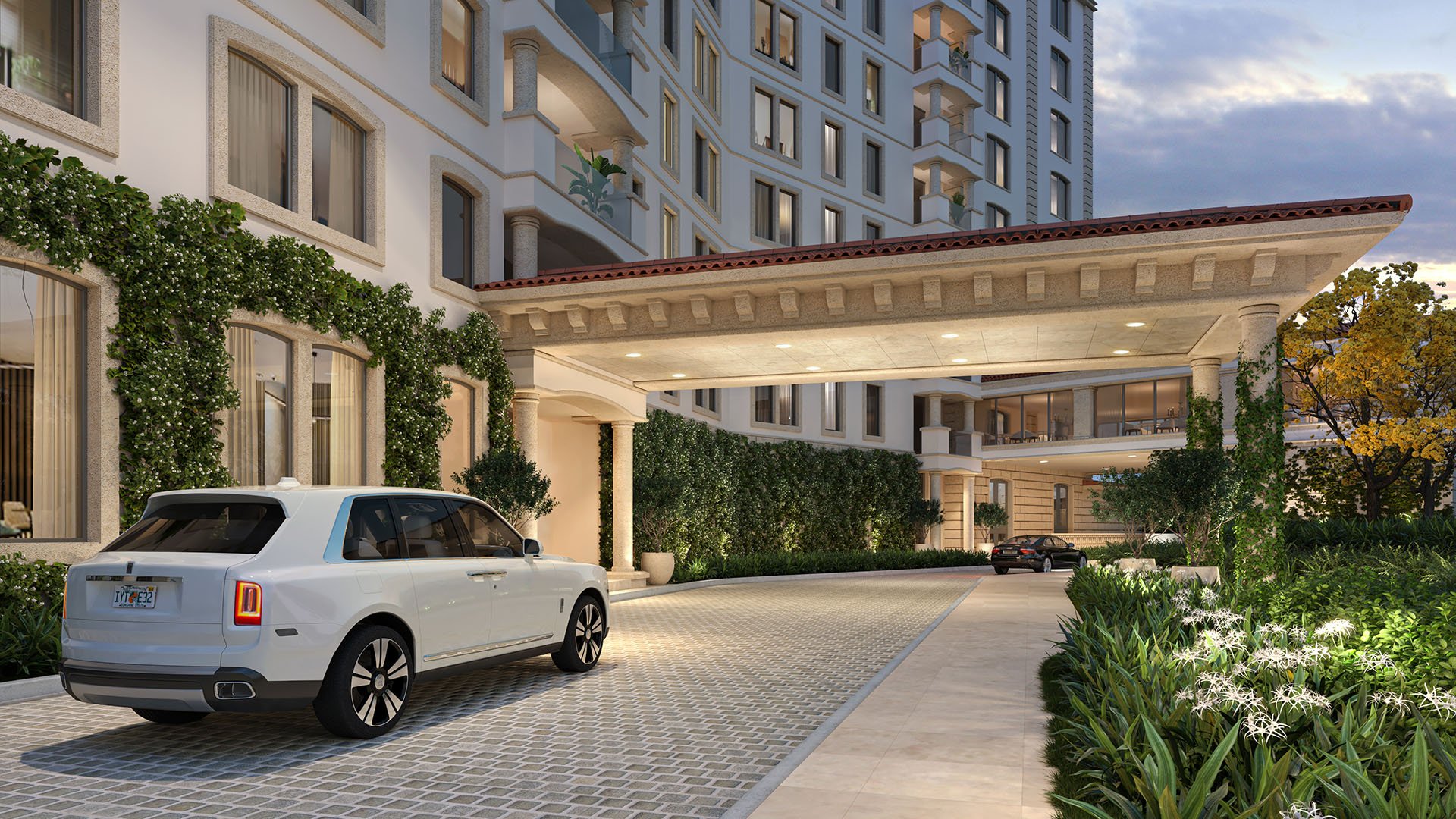
For many ultra-luxury buyers, privacy is not a finish selection or a spa menu. It is the choreography of getting home. The strongest towers for this audience reduce exposure from the moment a car enters the property to the instant an owner steps into a residence. That typically means gated or controlled access, a lobby with limited public crossover, secure valet or resident parking, and elevator systems designed to keep circulation quiet and direct.
This matters because the market has increasingly split into two luxury propositions. One is the destination building, built around spectacle, event energy, and amenity programming. The other is the residential-first tower, where the atmosphere is calmer, the common areas more restrained, and the arrival sequence treated almost like a private club. In places like Brickell, Miami Beach, and South of Fifth, that distinction can shape daily life more than any rooftop feature ever will.
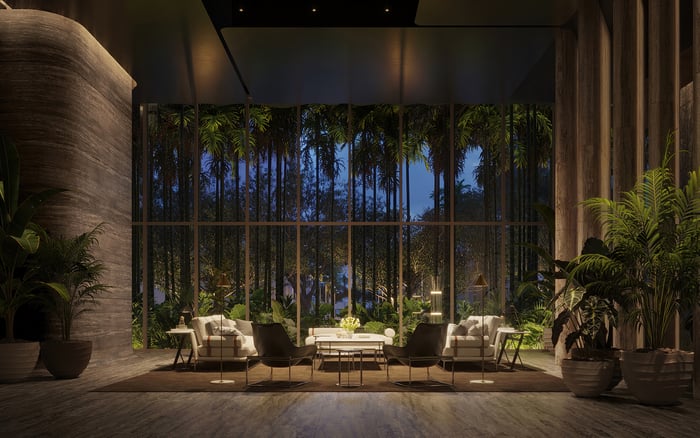
A privacy-first address usually signals itself through subtler cues. The lobby is often minimalist rather than theatrical. Parking is shielded from public view. Elevators may open to a private vestibule or directly into a residence. Floorplates tend to serve fewer homes, reducing traffic and making owner movement less visible. For buyers who care more about who sees them arriving than about who is using the cold plunge, those are the real markers of status.
1. PAMM Residences Miami, Downtown Miami
PAMM Residences stands out because its positioning treats privacy as an organizing principle rather than an amenity add-on. Private elevator lobbies and direct parking-to-residence access are presented as part of the concept, with resident movement separated from public-facing activity. That separation is exactly what private-arrival buyers look for: a route home that does not require owners to share their entrance experience with outside foot traffic.
Its appeal is especially clear for buyers who want a culturally significant setting without giving up discretion. In a dense urban environment, ground-floor design and circulation planning become as important as square footage.
2. Continuum South Beach, South of Fifth
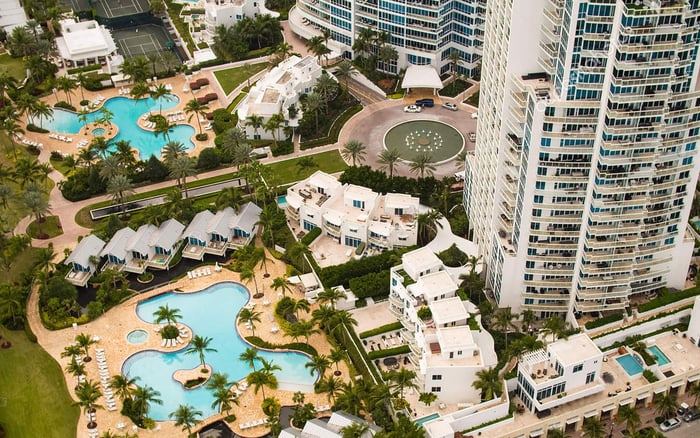
Continuum South Beach remains one of the clearest examples of a gated oceanfront arrival experience. The property is framed around a controlled residential sequence that supports a more secluded owner environment, an increasingly valuable distinction in South of Fifth, where visibility can easily become part of the lifestyle.
For a buyer who wants beachfront prestige without a hotel-like sense of turnover, Continuum's controlled access and resident-first orientation make it compelling. The address has long represented a version of luxury where privacy is reinforced before one reaches the elevator.
3. Arte, Surfside
Arte is persuasive for a different reason. Its low-density, design-led identity is paired with private entry lobbies rather than a spectacle-driven common-area agenda. That makes it one of the strongest examples of refined restraint in the region.
This is the kind of building that appeals to buyers who read luxury through editing, not abundance. Fewer residences, quieter circulation, and a stronger focus on residential design all support a less exposed daily rhythm.
4. Setai Residences Miami Beach, Collins Avenue
The Setai Residences are associated with a discreet Collins Avenue arrival and a residential environment oriented toward privacy and limited public crossover. For buyers who still want Miami Beach stature, that discreet tone matters.
The most effective privacy buildings on the beach are not necessarily the ones with the loudest entrance sequence. They are the ones that minimize friction, keep transitions controlled, and maintain a sense that residents are not performing ownership in public.
5. Paramount Miami Worldcenter, Downtown Miami
Paramount belongs on this list because it emphasizes secure valet and a separate residential lobby within a much larger district setting. In a location defined by scale and activity, that separation becomes especially important.
It may not express privacy in the same minimalist language as a lower-density boutique project, but the distinct resident arrival configuration gives it relevance for buyers who want urban energy without giving up controlled entry.
When private arrival is the brief, the better question is not how many amenities a tower offers. It is how many moments of unwanted exposure it removes. Private elevator service is one of the clearest clues, especially when only a small number of residences share a floor. Secure, non-public-facing parking is another. If a garage route allows an owner to move from car to elevator with minimal visibility, the building is already solving a major part of the privacy equation.
Ground-floor composition matters too. Lobbies inset from the street and shielded from retail traffic tend to feel more controlled. Minimalist lobby design is not simply an aesthetic preference. It can also reduce visual exposure and discourage casual through-traffic. In practical terms, a quieter lobby often means a quieter life.
This is why some buyers are increasingly comfortable choosing buildings with a more modest amenity footprint. Less program can mean less daily traffic, less guest flow, and less overlap between residents and nonresidents. In the upper tier of the market, understatement often functions as a security feature.
In Brickell, the privacy conversation is increasingly sophisticated. The neighborhood offers a compelling counterpoint to more public-facing beach luxury, particularly for buyers who want an urban address with stronger control over ingress, lobby exposure, and vertical circulation. Projects such as 2200 Brickell, Una Residences Brickell, and The Residences at 1428 Brickell speak to that broader residential-first appetite, even when each approaches luxury from a different design language.
On Miami Beach, the privacy buyer tends to sort quickly between performance and discretion. Some addresses are built around visibility, while others create a quieter threshold between street, lobby, and home. That is why the beach still rewards selective buyers who understand circulation as a luxury category in itself. For readers exploring this side of the market, Setai Residences Miami Beach fits naturally into the conversation.
In Surfside, low-density design remains one of the strongest shorthand signals for privacy. Buildings that avoid overprogramming often deliver a more controlled rhythm of ownership. That is part of the enduring appeal of Arte Surfside, where the idea of luxury leans decisively toward space, design clarity, and reduced social exposure.
South Florida has no single formal ranking for private-arrival towers, and that is partly the point. The most privacy-conscious buyers are not usually shopping by public leaderboard. They are studying circulation diagrams, lobby placement, parking access, density per floor, and whether a building feels residential-first in practice rather than in brochure language.
The best towers for this audience all share a common trait: they understand that arrival is part security protocol, part design exercise, and part emotional experience. A building can have every possible amenity and still fail this test if the route home feels exposed, crowded, or theatrical. By contrast, a tower with controlled access, direct elevator service, disciplined common areas, and low public crossover can feel far more luxurious even with a quieter shared program.
For the buyer who values discretion above spectacle, private arrival is not a niche preference. It is one of the clearest expressions of modern luxury in South Florida.
What is a private-arrival tower? It is a building designed to reduce owner exposure through controlled entry, secure parking, and quieter elevator circulation.
Why do private elevator lobbies matter so much? They limit shared circulation and create a more direct, discreet transition from building entry to residence.
Is a bigger amenity package always better for luxury buyers? Not for this segment. More amenities can also mean more traffic, more guests, and more visibility.
Are low-density buildings usually better for privacy? Often, yes. Fewer residences per floor generally mean less hallway traffic and a more controlled daily rhythm.
Does parking design really affect privacy? Absolutely. Secure garage-to-elevator movement is often nearly as important as in-unit privacy for these buyers.
Why is minimalist lobby design considered a privacy feature? Because it can reduce visual exposure and discourage unnecessary public crossover in the entrance sequence.
Is Miami Beach or Brickell better for privacy-first buyers? It depends on lifestyle. Miami Beach offers discreet coastal prestige, while Brickell can provide a more controlled urban arrival.
Why is South of Fifth often discussed in this category? The neighborhood includes residential settings where controlled access and quieter entry sequences can matter more than spectacle.
Why is Arte often discussed by privacy-minded buyers? Its low-density concept and private entry lobbies align with buyers who prefer design restraint over amenity spectacle.
What is the best way to shortlist comparable options for touring? Start with location fit, delivery status, and daily lifestyle priorities, then compare stacks and elevations to validate views and privacy.
When you're ready to tour or underwrite the options, connect with MILLION.
If branded residences are on your mind — as a home or as an allocation — we would be glad to share what we are seeing, privately.
Begin a quiet conversation