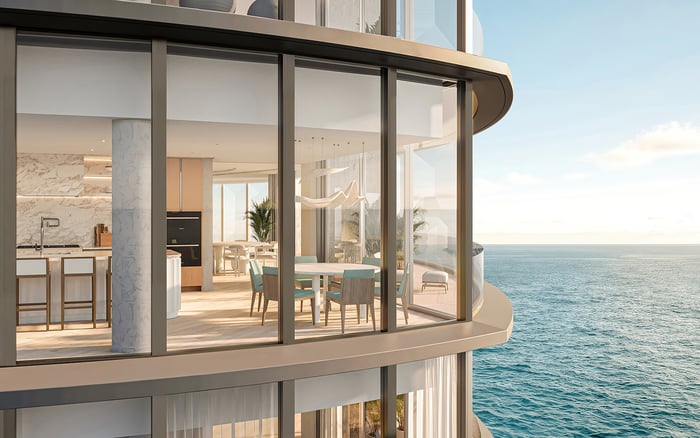
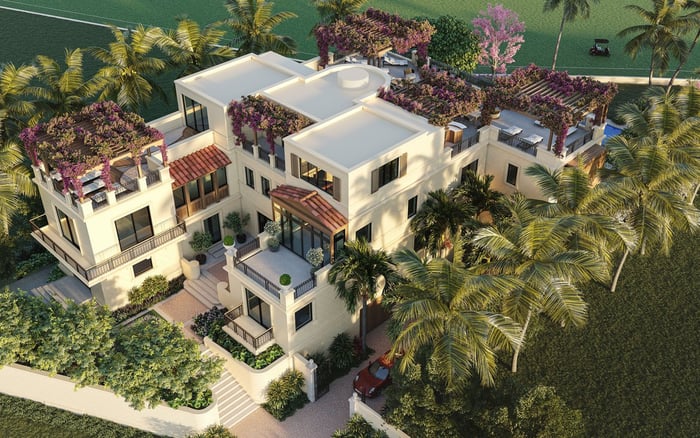
In South Florida’s ultra-prime towers, elevator zoning is not a technical footnote. It shapes privacy, security, daily convenience, and the sense of exclusivity that buyers feel from the moment doors open. In a market where many residences already offer generous floorplans, the quality of the arrival sequence can influence perceived value almost as much as interior dimensions.
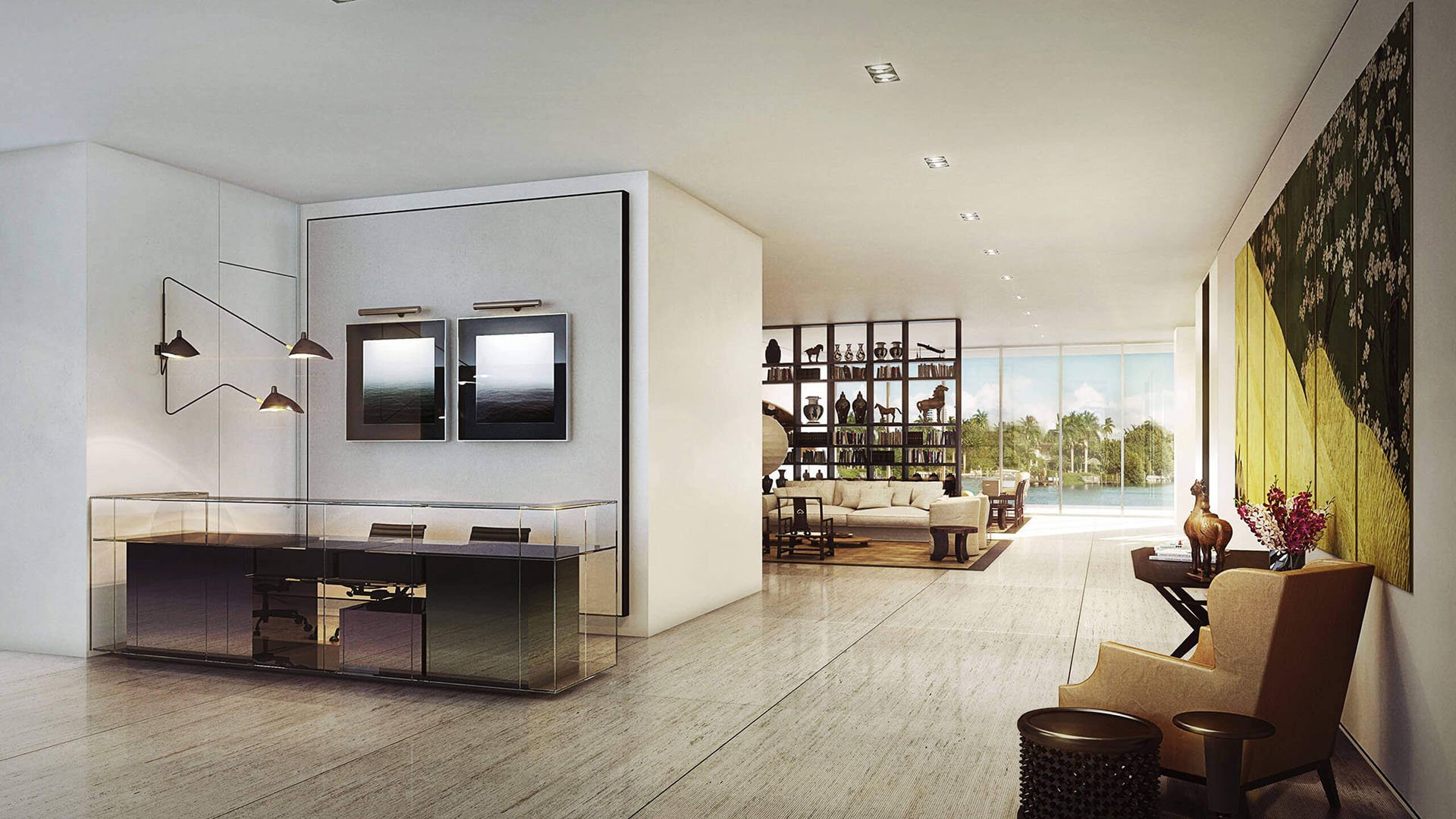
In the upper tier of South Florida real estate, square footage still matters. But once a buyer is comparing residences that are all large, well finished, and set in prime waterfront locations, another filter emerges: how the building actually lives. Elevator zoning sits at the center of that experience.
A residence may offer an expansive plan, dramatic views, and refined interiors, yet still feel less rare if the trip from lobby to front door is indistinct, crowded, or overly shared. By contrast, when a building limits the number of residences served by each elevator bank, or brings owners directly into a private foyer, the experience changes. The tower feels calmer. Circulation feels more controlled. The residence begins to read less like an apartment and more like a private home in the sky.
That distinction matters in Miami Beach, Brickell, Bal Harbour, and other luxury enclaves where sophisticated buyers are not simply shopping for space. They are buying discretion, separation, and a sense that the building understands ritual as much as real estate.
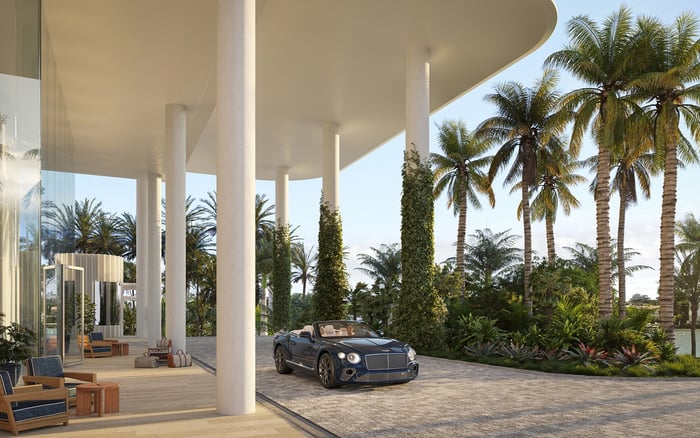
Ultra-prime buyers do not experience a home only once they cross the threshold. They begin judging it at the porte cochere, in the lobby, inside the elevator, and in the few seconds before the doors open. In the best buildings, that sequence is choreographed with clear intention.
This is why elevator planning carries financial relevance. If the approach to the residence feels private and composed, the entire product is elevated. If it feels like a shared corridor in a much denser building, the perception of exclusivity can soften, no matter how impressive the interiors may be.
In practice, this is one reason developers at the very top of the market emphasize private or semi-private elevator foyers so heavily. It is not decorative language. It signals that the building has reduced shared circulation and framed the residence as a more protected domain. In a market where large floorplans are common, circulation design becomes a meaningful differentiator.
That sensibility is easy to appreciate in projects built around a particularly refined residential experience, whether in the boutique feel of The Perigon Miami Beach, the waterfront prestige of Rivage Bal Harbour, or the highly branded vertical living associated with The Residences at 1428 Brickell.
At the ultra-prime level, privacy is not a bonus line item on a brochure. It is often the central reason a buyer chooses one building over another. Elevator zoning affects that privacy every day.
When fewer homes share a lift, owners encounter fewer neighbors, guests, deliveries, and staff in transitional spaces. Wait times typically feel shorter. Floors feel quieter. The building reads as less populated, even when its total unit count is substantial. This is one of the subtle but powerful ways design can alter perceived density.
Private elevator entry sharpens the effect further. Rather than stepping into a common hallway, the owner arrives in a controlled vestibule or foyer, creating a psychological and practical layer of separation. For buyers moving from estates, compounds, or international trophy homes, that moment often feels familiar. It restores the sense of a defined front door and protected threshold.
This is especially resonant in boutique buildings and in towers courting second-home buyers who value discretion as much as design. In many cases, the most desirable stacks are not merely the largest. They are the ones with the best elevator service and the least shared circulation.
One of the most misunderstood truths in luxury condominium pricing is that equal square footage does not create equal desirability. Two residences may look comparable on paper, yet live very differently because of the core.
If one line shares an elevator bank with multiple neighbors while another enjoys direct entry or more limited access, the latter often carries a stronger sense of scarcity. Buyers feel it instantly. Brokers can explain it quickly. And in resale, that distinction remains legible.
This is where elevator zoning begins to function as a form of internal hierarchy. Developers can create tiers within the same building by giving select lines more exclusive circulation, separate access patterns, or even one-residence-per-floor positioning. When that happens, the premium is not driven only by view or layout. It is reinforced by the building’s promise of reduced friction and greater discretion.
In places like Brickell and Sunny Isles, where buyers regularly compare multiple sophisticated towers in a single search, this distinction can be decisive. A larger residence with an inferior arrival experience may lose momentum against a slightly smaller home that feels more private and more controlled.
Security is often discussed in broad terms, but elevator design gives it practical form. Restricted elevator access can limit who reaches a residence floor or private vestibule, particularly when paired with controlled entry systems. That matters for owners who travel frequently, entertain selectively, or expect a more discreet style of living.
Convenience also plays a role. Luxury is not only about finishes. It is about removing friction from daily life. Fewer residences per elevator bank generally means less shared traffic and a smoother pattern of movement throughout the day. In a primary home, that improves habitability. In a second-home residence, it reinforces the feeling of easy, turnkey ownership.
Buildings such as St. Regis® Residences Brickell and Turnberry Ocean Club Sunny Isles reflect the broader expectation that elite towers must deliver separation and polish well before an owner reaches the living room.
For a buyer evaluating a high-value condominium, elevator zoning deserves the same scrutiny as ceiling height, terrace depth, and view corridor. The right questions are straightforward.
How many residences share the elevator serving the home? Does the elevator open directly into the residence or into a private foyer? Is there a dedicated service path distinct from the owner’s arrival? Are certain stacks better served than others? Does the floor plan preserve a graceful threshold, or does the front door feel exposed to common circulation?
These are not secondary details. They shape daily experience and future marketability. They also help explain why some residences feel unmistakably expensive in person while others, despite generous dimensions, feel merely large.
For MILLION readers, the broader point is simple: in the most rarefied segment of the South Florida market, square footage is only one expression of luxury. The path to the residence, the sense of control around the core, and the privacy of arrival can matter just as much.
What is elevator zoning in a luxury building? It refers to how elevators are assigned to serve certain residences or floors, which directly affects privacy, traffic, and the feel of exclusivity.
Why does elevator zoning matter to value? Because buyers at the ultra-prime level pay for discretion, convenience, and scarcity, not just interior size.
Is a private elevator better than a semi-private one? Usually yes, because direct or more limited access tends to create a stronger sense of separation and control.
Can two units with similar square footage feel very different? Yes. Shared circulation, wait times, and the quality of the arrival sequence can make one home feel markedly more exclusive.
Does elevator zoning affect security? Yes. More controlled elevator access can limit who reaches a residence floor or private foyer.
Why do brokers emphasize private elevator foyers so often? Because buyers immediately understand the benefit, and it is an easy point of comparison between competing buildings.
Is elevator privacy especially important in South Florida? Yes. The region’s top-tier buyers often prioritize privacy, security, and exclusivity alongside views and amenities.
Do boutique buildings usually have an advantage here? Often they do, since fewer residences can mean less shared circulation and a calmer overall experience.
Should buyers ask about the service elevator too? Absolutely. Separate service circulation can help preserve privacy and keep the owner arrival sequence more refined.
Can better elevator planning outweigh more square footage? In some ultra-prime comparisons, yes. A slightly smaller residence with superior privacy can be more compelling than a larger one with inferior circulation.
For a discreet conversation and a curated building-by-building shortlist, connect with MILLION.
If branded residences are on your mind — as a home or as an allocation — we would be glad to share what we are seeing, privately.
Begin a quiet conversation