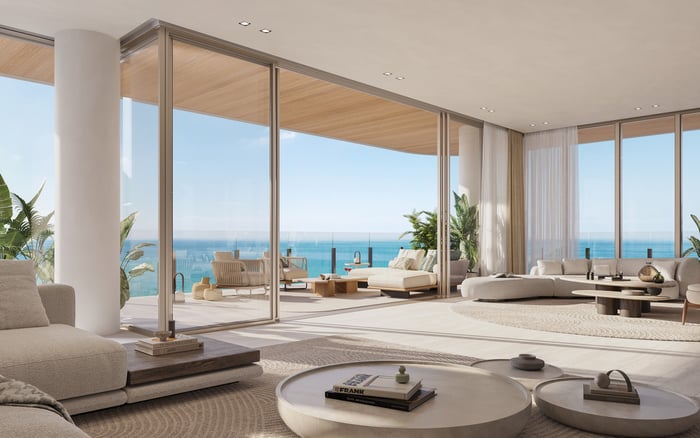
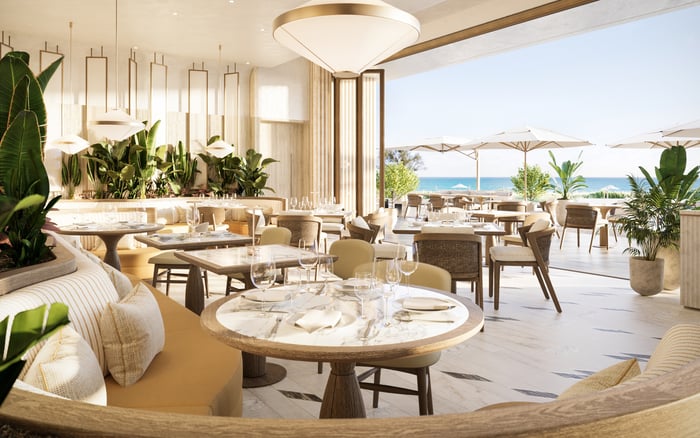
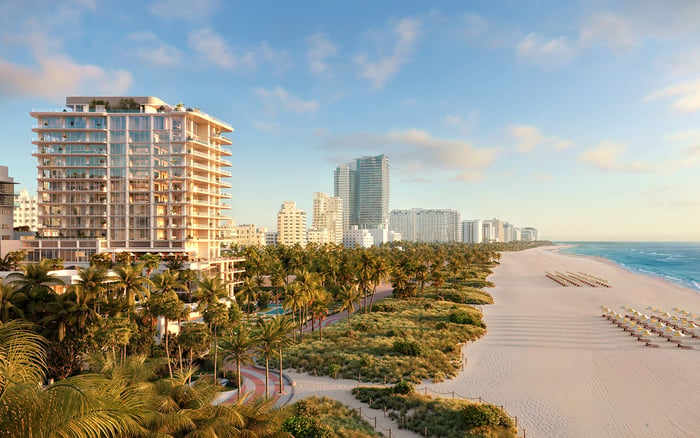
A discreet, buyer-oriented look at why South Florida’s ultra-luxury market continues to thicken at the top, how to interpret today’s price thresholds, and what to prioritize when purchasing a primary or second home in 2026.
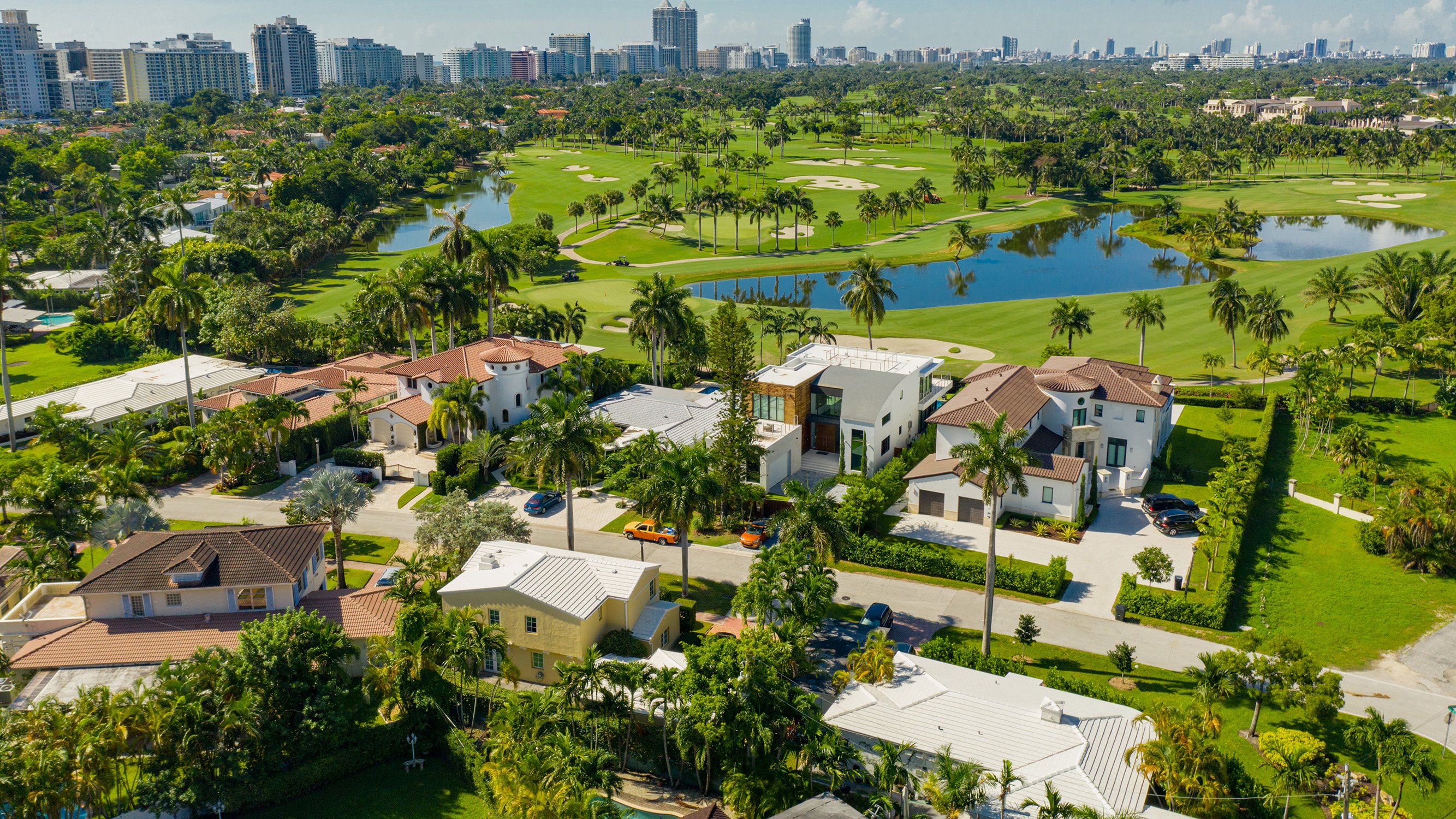
In South Florida, the language of luxury shifts quietly - until it doesn’t. One year you’re shopping “high-end.” The next, the market has repriced the very definition of what qualifies as luxury. Miami-Dade’s latest thresholds make the change explicit: the top 5% of single-family sales reached $3.3 million in 2024, while the top 1% rose to $10 million. Condo thresholds moved in tandem, with luxury at $2.3 million and ultra-luxury at $6.3 million.
For buyers, these aren’t abstract statistics. They shape expectations around inventory, negotiating leverage, and the level of finish a property must deliver to feel properly “complete.” A $2.3 million condo in 2026 is less likely to be a showpiece by default and more likely to win on planning, building operations, and the details that turn a beautiful residence into an effortless one.
The takeaway is straightforward: calibrate your search to the market’s current definitions - not last cycle’s. In a region where global capital and domestic migration frequently converge, the top of the market doesn’t simply rise. It stratifies.
South Florida recorded 361 closings of $10 million-plus homes in 2025, the second-highest annual total on record, trailing only 2021’s 444. That pace matters because it signals depth - not a handful of marquee trades. Ultra-luxury behaves differently when there are enough qualified buyers to sustain a consistent cadence of closings.
Cash is central to that story. In December 2025, cash represented 40% of Miami closings versus 27% nationally. For ultra-luxury buyers, this often means cleaner terms and faster execution, but it also changes the competitive set. Even when you intend to finance, you’re frequently bidding against buyers who can close with fewer contingencies.
Practically, treat your offer posture like a design exercise: pre-arrange proof of funds, streamline due diligence timelines, and align with a team that can move quickly - without skipping the steps that protect you.
South Florida is widely positioned as a global center for ultra-wealthy second homes, a narrative supported by research summarized from Altrata indicating 13,200+ UHNW individuals own secondary residences in Miami. Whether you agree with the superlatives or not, the behavioral pattern is clear: many buyers aren’t relocating in the traditional sense. They’re building a portfolio of places that supports how they live now.
That’s why “lock-and-leave” usability has shifted from a convenience to a non-negotiable. Buyers increasingly prioritize:
In Miami Beach, for example, a branded or hospitality-adjacent experience can align with the second-home mandate - especially when ownership is meant to be frictionless. Projects such as Setai Residences Miami Beach and Casa Cipriani Miami Beach speak directly to this preference: the calm of a private home, supported by the operational intelligence of a well-run hotel.
At the ultra-high end, “best location” is rarely a single variable. It’s the balance of exposure and retreat, social life and quiet, access and insulation.
Miami’s most rarefied enclaves continue to operate as micro-markets. Fisher Island, for instance, is consistently framed as an exceptional high-end enclave within the broader Miami landscape. Coral Gables’ Gables Estates is routinely described as “America’s most expensive neighborhood,” with its exclusivity and waterfront lots often highlighted.
What’s changing is how buyers weigh the daily mechanics of those locations. Ask questions that are operational rather than romantic:
On the ocean, the calculus shifts: beach frontage is an emotional purchase, but salt, wind, and exposure make building quality and maintenance culture decisive. A modern oceanfront boutique concept such as 57 Ocean Miami Beach naturally appeals to buyers who want a residential, less-crowded rhythm while still anchoring to Miami Beach.
Ultra-luxury is no longer defined solely by finishes. It’s defined by performance.
High-end residences increasingly rely on mature control platforms such as Crestron, Control4, and Lutron for lighting, shades, HVAC, security, and AV integration. The point isn’t simply that technology exists - it’s whether it’s legible and reliable. A well-designed system should be intuitive for guests, stable for staff, and serviceable over time.
When touring, push for clarity on system architecture and vendor support. A beautiful interface is irrelevant if updates, replacements, or troubleshooting require weeks of coordination.
The best security is quiet, layered, and remotely manageable. Enterprise-style approaches, including cloud-managed access control with remote administration and real-time visibility, are increasingly available and applicable to luxury residential use.
For second-home owners, this is less about paranoia and more about stewardship. If a residence sits unoccupied for stretches, you want real-time accountability: who entered, when, and why.
In 2026, “service” is a design principle. Buyers should evaluate:
A building can be visually stunning and operationally chaotic. In ultra-luxury, operational discipline is value.
Because Miami-Dade’s luxury and ultra-luxury thresholds rose sharply year-over-year in 2024, some buyers read the market as permanently “one-way.” The more accurate view is that the top of the market can remain active even as certain segments cool or normalize.
Use thresholds as a compass, not a trigger. If you’re buying a primary residence, lifestyle fit and long-term quality matter more than month-to-month noise. If you’re buying a second home, usability and operational excellence often determine whether the property becomes a true asset - or an ongoing management project.
Also note the broader demographic undertow: a major luxury trend forecast projects that Gen X and Millennials are set to inherit $24 trillion in U.S. real estate wealth over the next 10 years. For South Florida, that suggests continued demand for residences that are contemporary in both design and operations - built for owners who expect service, technology, and flexibility as standard.
There’s a reason ultra-luxury buyers increasingly curate a shortlist rather than “see everything.” When the market’s top tier is active and cash is common, optionality can disappear quickly. A disciplined approach preserves choice.
Start by matching product type to intent:
Then refine by non-negotiables: view protection, arrival privacy, terrace usability, generator and life-safety posture (where applicable), and technology readiness.
Finally, treat due diligence as part of the lifestyle purchase. In ultra-luxury, you’re buying the building’s governance as much as the residence itself.
What is considered “luxury” pricing in Miami-Dade right now? For 2024, the luxury threshold reached $3.3M for single-family and $2.3M for condos.
What is considered “ultra-luxury” pricing in Miami-Dade? For 2024, ultra-luxury thresholds were $10M for single-family and $6.3M for condos.
Is the $10M+ market still active in South Florida? Yes. South Florida logged 361 closings of $10M+ homes in 2025, one of its strongest years.
How common are cash deals in Miami? Cash is a major factor. In December 2025, cash was 40% of Miami closings versus 27% nationally.
Why do second-home buyers choose Miami in particular? Miami is widely covered as a global second-home hub for UHNW buyers, reinforcing its depth of demand.
Which matters more in 2026: finishes or operations? Operations often decide daily satisfaction. Finishes impress on day one; systems and service matter daily.
What smart-home systems are typical in ultra-luxury residences? Crestron, Control4, and Lutron are commonly positioned as scalable platforms for lighting, shades, and more.
What security features are most useful for a lock-and-leave home? Layered access control with remote management and real-time visibility helps owners monitor and audit entry.
Are enclaves like Fisher Island still considered top-tier? Yes. Fisher Island is consistently positioned as an exceptional high-end enclave within the Miami market.
How should I approach buying if I expect to travel frequently? Prioritize privacy of arrival, reliable building operations, and technology and security you can manage remotely.
For a confidential assessment and a building-by-building shortlist, connect with MILLION Luxury.
If branded residences are on your mind — as a home or as an allocation — we would be glad to share what we are seeing, privately.
Begin a quiet conversation