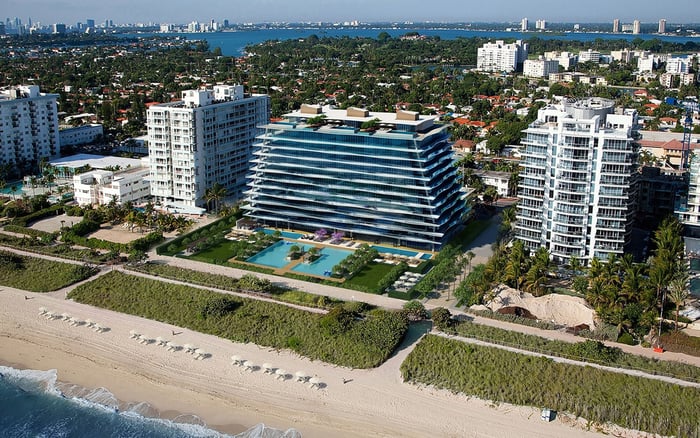
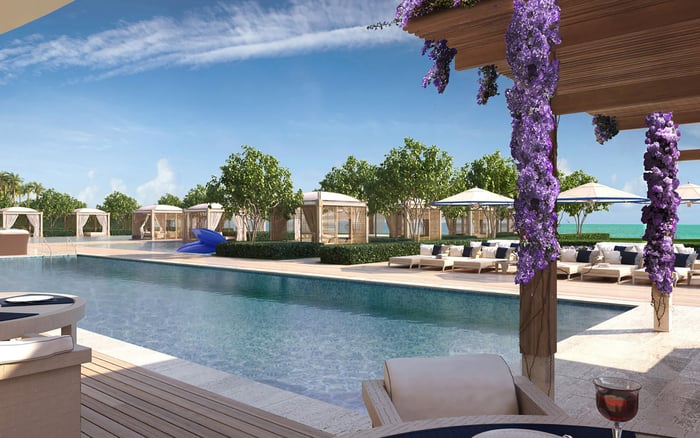
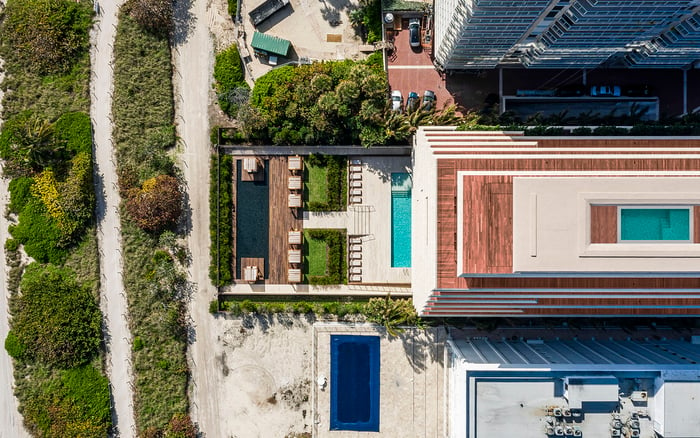
A buyer-focused comparison of Surfside’s two distinct ultra-luxury propositions: Arte Surfside’s architecture-led intimacy versus Fendi Château Residences Surfside’s immersive fashion-house identity.
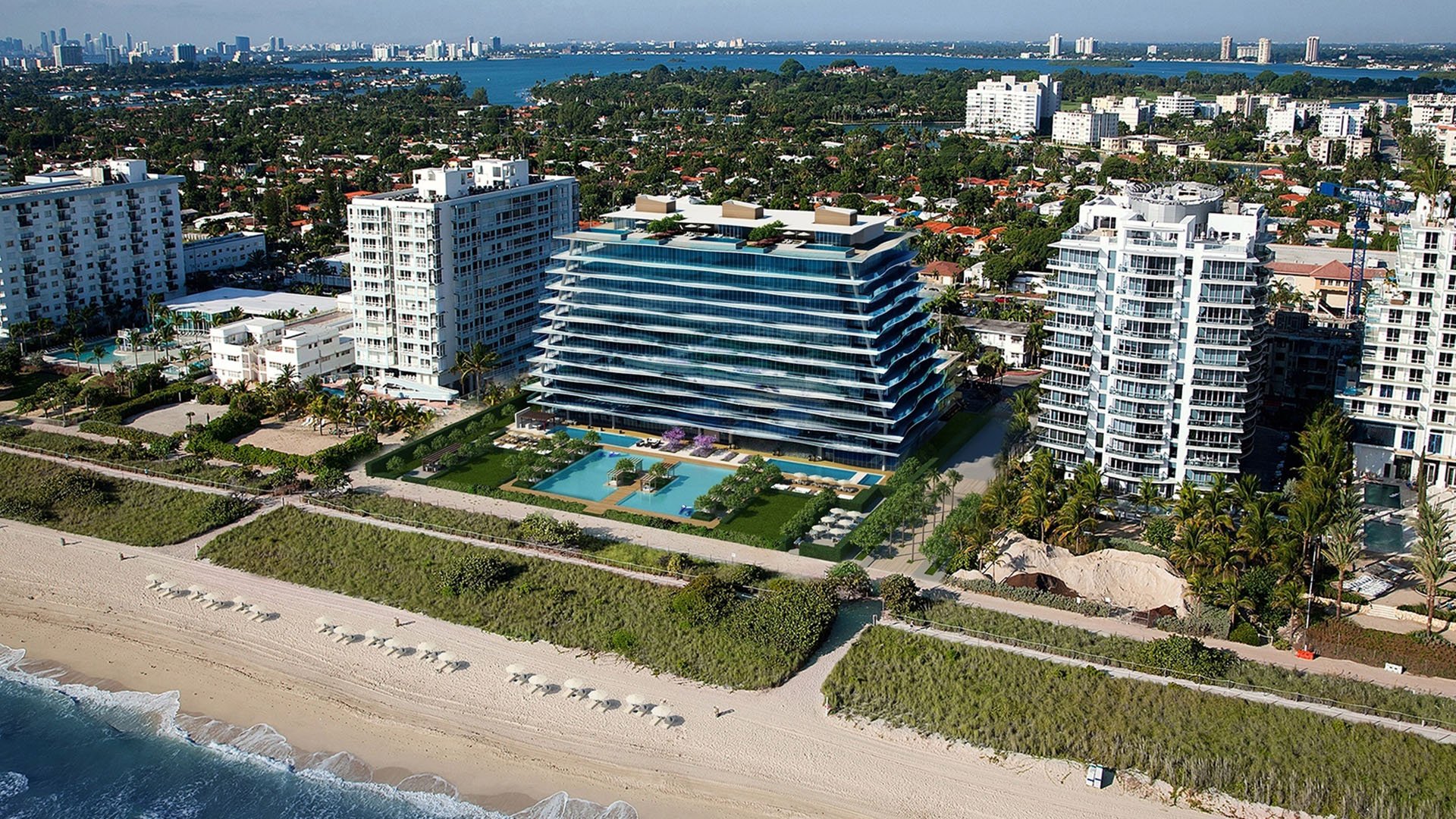
In Surfside, two oceanfront addresses reveal a particularly telling divide in ultra-luxury buying. Arte Surfside suits the purchaser who values authorship, proportion, and a level of discretion that feels almost private. Fendi Château Residences Surfside speaks to the buyer who places value on an unmistakable name, a fully articulated lifestyle concept, and a residential setting that carries fashion-house presence into everyday life.
Both projects occupy the same narrow, elite stretch of Surfside, and both appeal to the same broad tier of affluent purchasers. Yet they are not selling the same dream. One offers design intimacy. The other delivers brand theater, albeit in a polished, high-end form. For a MILLION Luxury reader, that distinction matters more than a simple comparison of price bands or tower height.
Arte Surfside is an 18-story condominium designed by Carlos Ott and developed by Terra. That pairing says almost everything about its positioning. Rather than borrowing prestige from an external fashion label, Arte builds its identity around architecture, developer credibility, and a deliberately restrained expression of luxury.
The scale reinforces that reading. With 55 residences, Arte sits firmly in the boutique bracket, and that relatively low count strengthens its sense of privacy on the oceanfront. Residences are described with floor-to-ceiling glass and private outdoor terraces, a familiar language in top-tier coastal real estate that here feels rooted in spatial experience rather than branding. The amenity mix follows the same logic: fitness center, spa, yoga studio, and private beach club access. It is a wellness-led composition calibrated for owners who prefer refinement over spectacle.
This is the kind of building that appeals to architectural collectors, buyers who care about how a residence is conceived, not simply how it is marketed. In that sense, Arte belongs to a wider South Florida conversation that includes other design-forward oceanfront properties such as The Delmore Surfside and Ocean House Surfside, where scarcity and authorship do much of the talking.
Pricing for Arte has reached roughly $8 million to $15 million-plus for top residences. That range suggests buyers are paying a premium for composition, intimacy, and the social value of understatement.
Fendi Château Residences Surfside approaches the same stretch of sand from the opposite direction. Rising 23 stories with roughly 60 residences, it remains boutique by regional standards, but its message is more overt. This is a branded residence in the clearest sense: the Fendi name is not decorative. It is central to the project’s identity, its interiors, and the atmosphere of its shared spaces.
Brand integration extends from the residences into lobbies, hallways, and common areas, giving the tower an immersive quality many purchasers actively seek. The appeal is not only in finishing materials or ocean views. It is the idea of living inside a recognizable luxury world, grounded in fashion heritage and Italian design cues. Amenities reflect that orientation as well, with a spa and wellness focus, wine storage, and couture-inspired finishes adding to the sense that the building has been curated as a lifestyle product, not merely assembled as a residence.
For the right buyer, that has real value. A branded tower offers instant legibility. Guests understand it. The market understands it. International purchasers often understand it immediately. That helps explain why fashion-linked residences continue to hold attention across South Florida, from 888 Brickell by Dolce & Gabbana to other branded concepts entering the region.
Pricing for Fendi Château has ranged from roughly $5 million to $12 million-plus. The spread is notable not because it makes the building definitively less exclusive, but because it shows how a major brand can widen the funnel while preserving an ultra-luxury aura.
On paper, 55 residences at Arte versus about 60 at Fendi Château is not a dramatic difference. In practice, those counts underscore each building’s personality. Arte uses its smaller-scale composition to reinforce calm and privacy. Fendi Château, while still highly limited, reads as slightly more social and more outward in its identity.
That is an important distinction for buyers who think in terms of texture rather than inventory. Boutique living can mean silence, separation, and owner anonymity. It can also mean a carefully staged club atmosphere, where the building’s shared identity is part of the pleasure. Surfside supports both interpretations, which is one reason the enclave continues to attract exacting capital.
In the broader coastline context, this tension between independent design and branded prestige also appears in neighboring markets. At The Surf Club Four Seasons Surfside, hospitality lineage and location shape value in yet another way, proving that on this stretch of coast, prestige can come from architecture, brand affiliation, or inherited social cachet.
Arte Surfside is best suited to the purchaser who values the internal life of a residence. This buyer cares about architectural authorship, serene detailing, wellness amenities, and the social confidence that comes from not needing a logo to validate the acquisition. The prestige signal is subtle but legible to the right audience.
Fendi Château Residences Surfside fits the buyer who enjoys the expressive side of luxury. This owner may still care deeply about finishes and layout, but is equally drawn to the cultural power of a globally known fashion house. Here, identity is part of ownership. The building does not whisper. It speaks in a controlled, elegant voice.
Neither stance is inherently superior. In fact, both are increasingly sophisticated responses to the same question: what should an oceanfront residence communicate about its owner? In Surfside, the answer has become unusually precise.
Surfside has matured into a remarkably selective oceanfront micro-market where the competition is not simply between towers, but between forms of prestige. One path prioritizes architectural credibility and minimal branding. The other leverages luxury-house equity to create immediate emotional resonance and global recognition.
Arte Surfside and Fendi Château Residences Surfside sit on opposite sides of that divide, yet both make sense within the same rarefied buyer pool. Arte demonstrates that discretion, low density, and design seriousness remain highly bankable. Fendi Château demonstrates that fashion-brand presence can be just as compelling when translated into a coherent residential experience.
For a buyer or advisor, the most useful question is not which tower is more luxurious in the abstract. It is whether the residence should feel like a private design object or a fully articulated branded world. In Surfside, that is the real fork in the road.
Is Arte Surfside a branded residence? No. Arte Surfside is positioned around architectural authorship and developer credibility rather than a fashion-house label.
Is Fendi Château Residences Surfside primarily a fashion-branded project? Yes. Its identity is closely tied to the Fendi name, with branding integrated into interiors and common areas.
Which building is more boutique in scale? Arte Surfside is slightly smaller, with 55 residences versus roughly 60 at Fendi Château Residences Surfside.
Which project emphasizes wellness more clearly? Both include wellness elements, but Arte’s profile is especially centered on spa, fitness, yoga, and private beach club access.
Which building is better for an architectural purist? Arte Surfside is the stronger fit for buyers who prioritize design intimacy, authorship, and restrained luxury.
Which project is better for someone who values brand recognition? Fendi Château Residences Surfside is the more natural choice for buyers drawn to fashion identity and branded living.
Are both projects located in Surfside? Yes. Both are oceanfront condominium developments within Surfside’s elite residential market.
Do their prices overlap? Broadly, yes. The ranges suggest overlap, though Arte has been associated with higher top-end pricing for premier residences.
Did Fendi Château face any notable market issues? Completion delays were part of its market narrative, a detail not emphasized to the same degree in Arte’s coverage.
What is the simplest way to choose between them? Decide whether you want architectural discretion or immersive brand presence, because that is the clearest divide between the two.
If you'd like a private walkthrough and a curated shortlist, connect with MILLION Luxury.
If branded residences are on your mind — as a home or as an allocation — we would be glad to share what we are seeing, privately.
Begin a quiet conversation