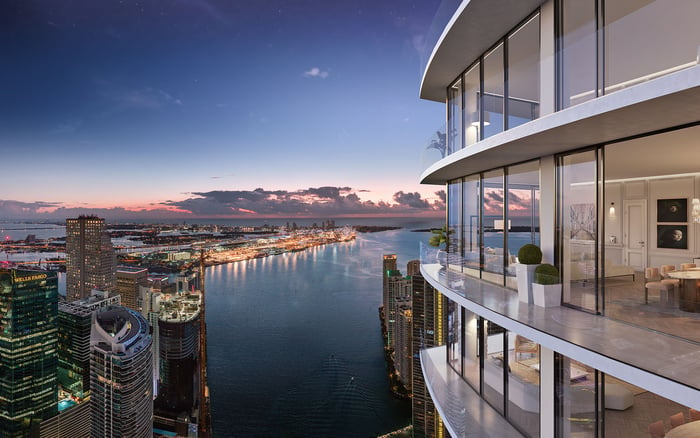
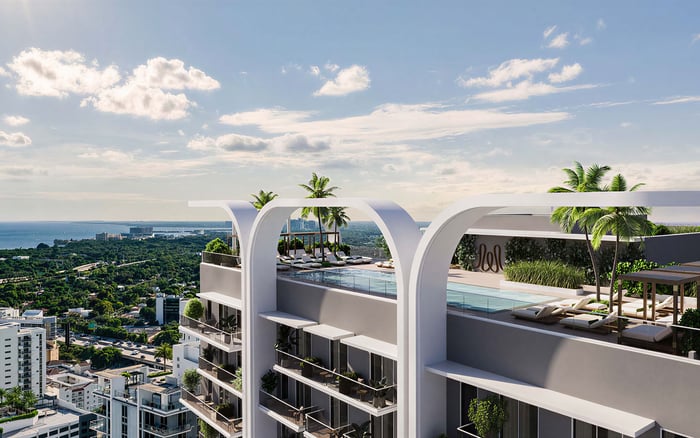
A discreet buyer’s guide to evaluating video-call acoustics, privacy, room behavior and executive work zones in South Florida’s glass residential towers.
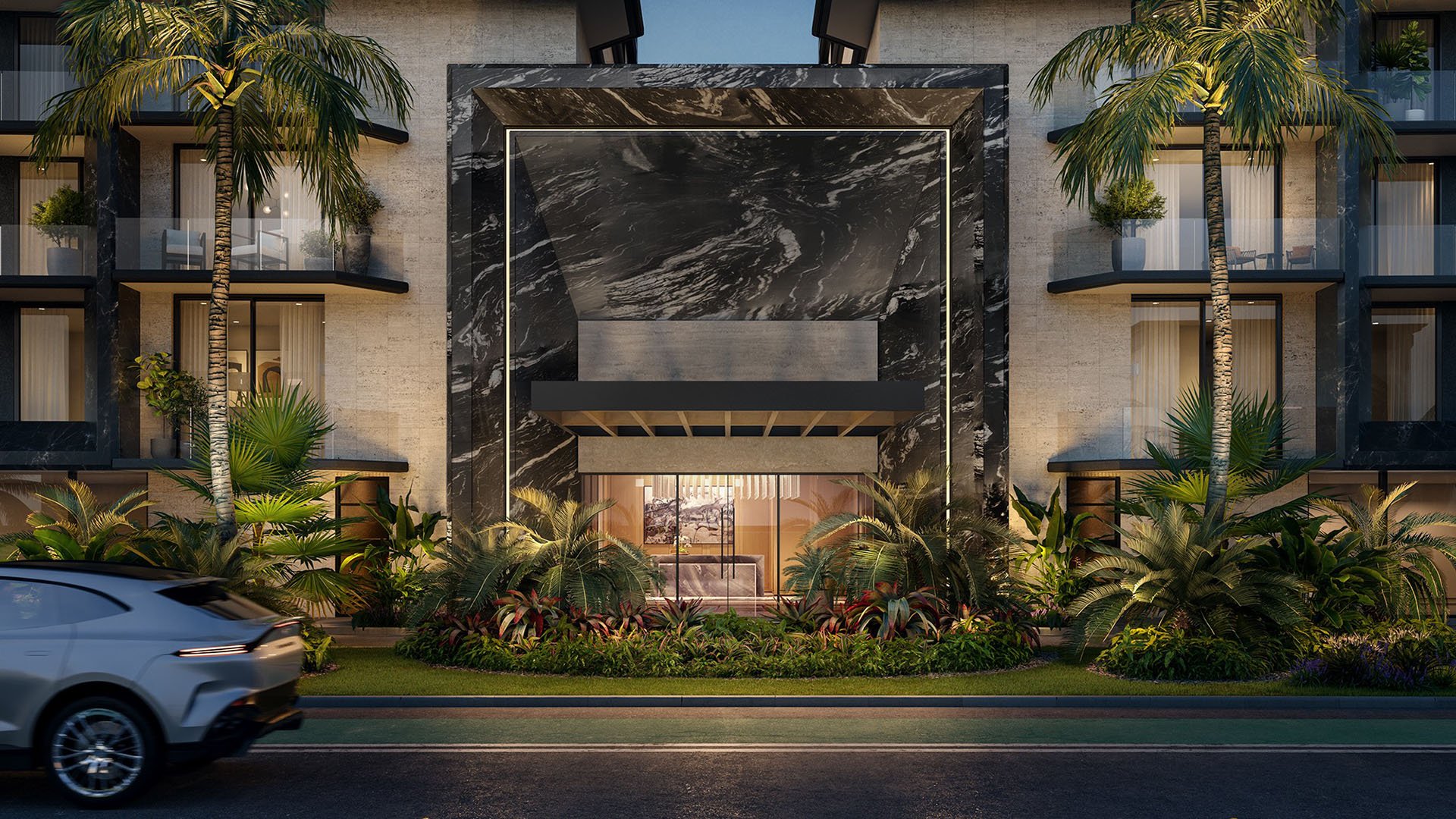
For the executive buyer, a South Florida glass tower is no longer judged only by its view line, arrival sequence or amenity program. The private residence has become a daily broadcast suite: board meetings from the den, investor calls from the primary sitting area, confidential negotiations from a corner of the great room. In that context, video-call acoustics are not a technical afterthought. They are part of how a residence performs.
The issue is subtle because a room can look serene and sound restless. Glass, stone, lacquer, high ceilings and open-plan entertaining spaces may photograph beautifully while still making speech feel bright or diffuse during a call. The goal is not to reject dramatic architecture. It is to understand how that architecture behaves when the camera is on and the conversation matters.
For buyers comparing Brickell, Miami Beach and Sunny Isles residences, the question is not whether a home has a place for a laptop. It is whether the home can support authority, privacy and ease without requiring the owner to retreat into a compromised corner.
A serious acoustic evaluation begins with silence, then with speech. During a showing, stand in the rooms where calls would actually happen. Speak at normal volume. Ask a companion to walk to the kitchen, corridor, terrace door and primary suite while you remain in the likely work zone. Listen for reflection, flutter, mechanical hum, hallway transfer and the way the voice changes as doors open and close.
Bring the device you use most often. A laptop microphone, phone headset and conference-room speaker can reveal different conditions. If possible, place a live call to someone who knows your voice and ask for blunt feedback: Is the sound crisp, hollow, distant or interrupted by background noise?
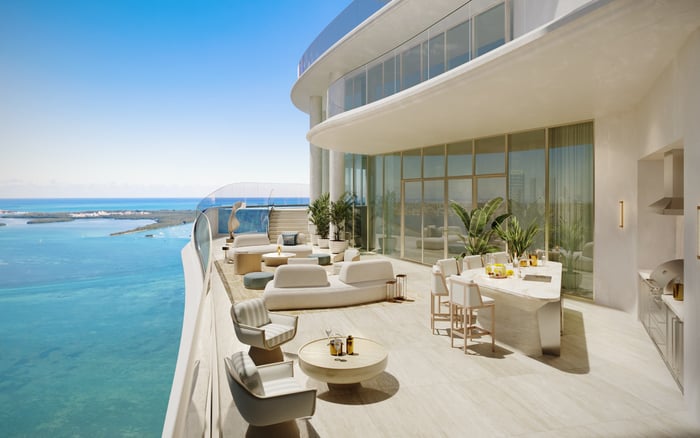
A balcony can be a magnificent extension of the living room, but it should be tested with the doors both open and closed. The same discipline applies to kitchens with hard surfaces, media rooms with built-ins and dens positioned near elevators or service areas. A luxury showing is visual by nature; an executive showing should also be auditory.
High floors are often pursued for outlook, privacy and drama, yet height alone does not guarantee a better acoustic experience. What matters is the total composition: glazing, ceiling volume, door placement, flooring, furnishing potential and whether the room can be softened without weakening the architecture.
In new-construction settings, buyers may have an opportunity to ask questions before finishes are fully installed or before a final furniture plan is set. A den with a door, a secondary bedroom that can become a private study or an alcove shielded from the main entertaining area may be more useful than a larger but fully exposed living room. A spectacular open plan can still work beautifully for calls when the residence offers at least one controlled zone.
This is why some buyers evaluating vertical trophy addresses in Brickell consider both public drama and private work rhythm. A residence at The Residences at 1428 Brickell, for example, may be discussed in the same conversation as daily executive use, not simply skyline presence. Likewise, the appeal of 888 Brickell by Dolce & Gabbana should be considered through the lens of how formal entertaining spaces, bedrooms and potential study areas can support confidential calls.
A strong executive floor plan gives the buyer choices. The ideal video-call room is not necessarily the largest room or the one with the most cinematic view. It is the room where the speaker can control the door, light, background, reflection and interruption.
Look for a space that can hold a proper desk without turning the camera toward a bed, corridor or kitchen. Consider whether the backdrop can be composed without revealing personal art, family photographs or sensitive materials. A clean wall, built-in shelving or measured city view can all work, but only if the audio remains composed.
Doors matter. A beautiful office without a solid sense of separation may underperform. A secondary suite with a vestibule may become a better executive studio than a glassy great room. The buyer should imagine the most demanding weekday, not the most flattering weekend tour.
In coastal markets, the seduction of horizon and water can be powerful. The challenge is to make the view compatible with voice. A room facing the ocean or bay may be ideal for mood and light, while still requiring careful window treatments, rugs, upholstered seating and a disciplined desk position.
At The Perigon Miami Beach, a buyer thinking about remote leadership should consider where the quietest working position would sit within the larger lifestyle plan. At Bentley Residences Sunny Isles, the same question becomes part of a broader evaluation of privacy, arrival and how the residence may function over a long ownership horizon.
The most successful solution often balances two instincts: the desire to be inspired by the setting and the need to sound composed to the person on the other side of the screen.
Ask direct, practical questions. Which rooms are best suited for a private office? Can doors be upgraded or specified? Are window treatments included, optional or fully owner-selected? Where are mechanical systems located relative to potential work zones? How might furniture placement improve voice quality? Are there amenity areas intended for business calls when the residence is hosting guests?
For resale residences, ask to revisit at a different time of day. For pre-construction or early-stage purchases, ask how comparable layouts are being furnished and whether a designer can identify a dedicated call room before contracts and customization decisions are finalized.
The point is not to turn a home search into an engineering exercise. It is to elevate one of the most-used functions of modern luxury living. A residence that sounds calm can make an executive feel more in command.
Many acoustic improvements are design-led rather than disruptive. Area rugs, lined drapery, upholstered chairs, fabric wall moments, books, millwork and art placement can all make a room feel more settled. The best interiors teams address these choices without making the home look like a studio.
Lighting is part of the same conversation. A room that sounds good but casts harsh shadows will not serve the executive well. The ideal plan brings together sound, camera angle, background, daylight control and seating posture. In a luxury tower, performance should feel invisible.
Should video-call acoustics influence a luxury condo purchase? Yes. For executives who work from home regularly, call quality affects privacy, authority and daily comfort.
Is a den always better than a bedroom for calls? Not always. The better room is the one with separation, a composed background and manageable sound.
Can a glass-wrapped room still work for executive calls? Yes, if furnishings, window treatments and desk placement help control reflection and interruption.
What should I test during a showing? Speak at normal volume, close doors, place a live call and listen for echo, hum and household noise.
Are open-plan great rooms suitable for confidential meetings? They can be elegant for occasional calls, but confidential work usually benefits from a more controlled zone.
Do higher floors automatically sound quieter? Not automatically. The room layout, glazing, doors and nearby systems can matter as much as elevation.
Should I ask about acoustics in pre-construction? Yes. Early conversations can shape office placement, finish choices and furniture planning.
Can interior design improve call quality after closing? Often, yes. Rugs, drapery, upholstered pieces and thoughtful millwork can help a room feel more composed.
How many work zones should an executive residence have? Ideally, at least one primary private zone and a secondary option for guests, travel schedules or overlapping calls.
Is this mainly a technology issue? No. Better microphones help, but room behavior, privacy and layout remain central to the experience.
When you're ready to tour or underwrite the options, connect with MILLION.
If branded residences are on your mind — as a home or as an allocation — we would be glad to share what we are seeing, privately.
Begin a quiet conversation