A buyer-oriented look at how The Surf Club Four Seasons Surfside pairs a 1927 private-club legacy with Four Seasons hospitality, beachfront residences, dining, and amenity-driven ownership in one of Miami’s most historically charged oceanfront settings.
The Surf Club Four Seasons Surfside holds a rare position in South Florida luxury real estate because it is not merely a beachfront residential address. It is a heritage property with a contemporary hospitality layer, where the original Surf Club identity remains central to how the project is understood, marketed, and experienced.
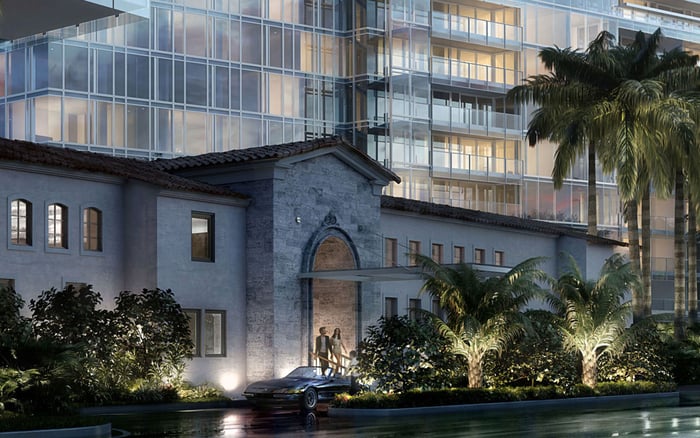
Founded in 1927, the original Surf Club gave the site a nearly century-long social and architectural legacy. That history is not decorative background. It is the defining differentiator. In a market where many new towers compete through height, finishes, amenities, and brand partnerships, The Surf Club Four Seasons Surfside begins with something harder to reproduce: a private-club narrative that predates the current era of branded residences.
For today’s buyer, the appeal lies in the tension within the title itself. The property offers legendary positioning, yet it is organized around contemporary luxury. It is intended to feel rooted, not merely new; serviced, not merely staffed; residential, yet closely aligned with the expectations of five-star hospitality.
In South Florida’s ultra-premium market, provenance has become a form of scarcity. The Surf Club’s historic role as a social institution, associated with celebrities, business figures, politicians, and international guests, gives it a narrative depth most residential developments cannot manufacture.
That matters because buyers at this level are often evaluating more than square footage. They are weighing identity, arrival, service rhythm, discretion, and the feeling of belonging to a place with a known past. The Surf Club’s redevelopment strategy is framed around preserving historical character while introducing modern residential towers and hospitality infrastructure. The result is not nostalgia alone. It is continuity.
This is where the project separates itself from purely contemporary luxury. A buyer considering Arte Surfside or Fendi Château Residences Surfside may already be focused on Surfside’s refined oceanfront corridor. The Surf Club adds another layer: the emotional weight of a private-club legacy paired with the operational polish of a global hospitality brand.
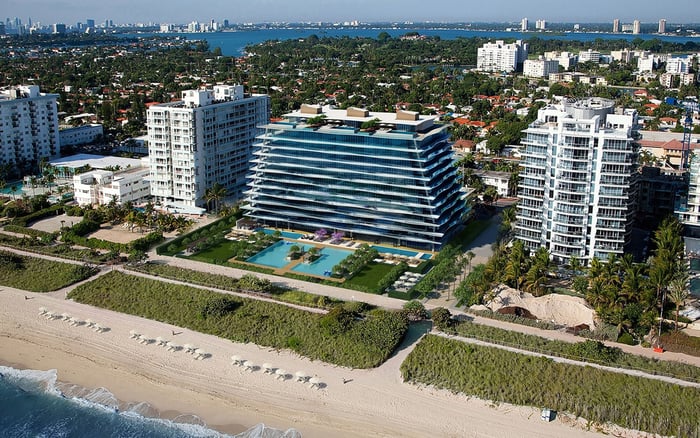
Oceanfront living in Surfside carries a different tone from the larger resort corridors of Miami Beach or the skyline energy of Downtown Miami. The setting emphasizes the water, the beach, and the sense of residential retreat. For The Surf Club Four Seasons Surfside, that beachfront location is inseparable from the value proposition.
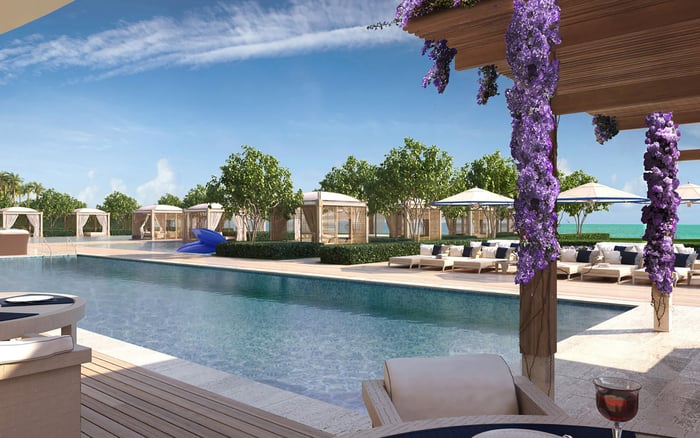
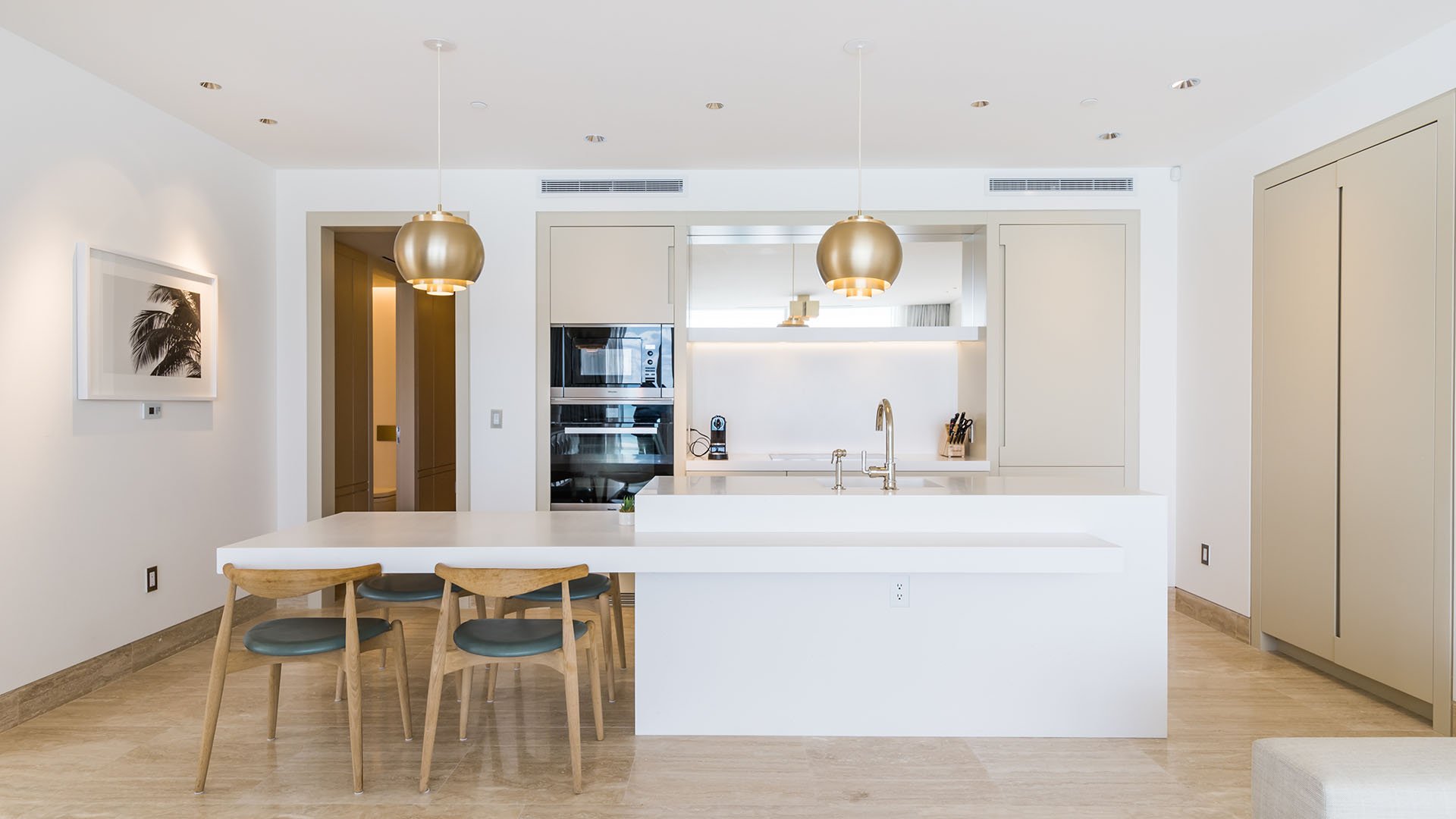
The residential experience is positioned around open-plan luxury living, indoor-outdoor flow, and views tied to the oceanfront setting. Those elements are familiar across top-tier coastal residences, but here they work in dialogue with the property’s historic identity. The buyer is not only purchasing access to light, terraces, and the Atlantic edge. The buyer is entering a curated environment where residence, hotel accommodations, dining, and amenities operate as part of a broader mixed-use luxury ecosystem.
That mixed-use character matters. It supports the sense that daily life can be managed without feeling transactional. Dining, amenity management, and hospitality support are not presented as add-ons; they are part of the broader residential experience.
The Four Seasons association is central to the contemporary positioning of The Surf Club Four Seasons Surfside. In practical terms, the project is not only competing through architecture or location. It competes through service standards, concierge capability, and the promise of hospitality-style residential living.
For many buyers, this is the decisive point. A luxury residence may be beautiful, but a serviced luxury residence changes the cadence of ownership. Concierge support, housekeeping-style service, dining access, and amenity management can make the property feel less like a static asset and more like a continuously supported lifestyle platform.
This is also part of a wider South Florida shift. Branded residences have moved from novelty to expectation among certain buyers, especially those who divide time between multiple homes or want the ease of hotel-level service without giving up private residential ownership. The same logic helps explain the appeal of Four Seasons Residences Coconut Grove, where the hospitality name signals a service culture as much as a design language.
At The Surf Club, however, the Four Seasons layer is intensified by the property’s heritage. The brand does not stand alone. It operates within an address already carrying social memory, architectural continuity, and beachfront permanence.
The strongest way to evaluate The Surf Club Four Seasons Surfside is to separate the emotional from the functional, then recognize that both matter. The emotional case is clear: a 1927 legacy, a storied club identity, and a sense of historic belonging on the ocean. The functional case is equally important: residences, hotel accommodations, dining, amenities, and Four Seasons-style service in a managed environment.
Buyers should focus on how they intend to live. For a primary resident, service consistency and the quality of daily amenity access may matter most. For a seasonal owner, the ability to arrive, settle in, and rely on a hospitality-trained environment may carry exceptional weight. For a collector of important properties, the address itself may be the central consideration.
What should be avoided is reducing the project to a simple comparison of finishes. The Surf Club’s competitive distinction is not only the real estate product. It is the combination of beachfront Surfside location, historic identity, and managed hospitality services. In that sense, it is best understood as a residential destination rather than a conventional condominium.
The Surf Club Four Seasons Surfside represents one of the clearest examples of a broader luxury real estate movement: the conversion of heritage hospitality or club properties into branded residential destinations. The model works when the past remains legible and the present feels effortless.
Here, the buyer proposition is unusually layered. The property offers the romance of a historic private club, the convenience of contemporary service, and the calm authority of a beachfront Surfside setting. It does not need to shout. Its strongest message is that true luxury can be both remembered and renewed.
What defines The Surf Club Four Seasons Surfside? It is a luxury Surfside project combining the historic Surf Club identity with Four Seasons hospitality, residences, hotel accommodations, dining, and amenities.
When was the original Surf Club founded? The original Surf Club was founded in 1927, giving the property a nearly century-long legacy in South Florida luxury culture.
Is The Surf Club Four Seasons Surfside only residential? No. It is positioned as a mixed-use luxury environment with residences, hotel accommodations, dining, and amenity components.
Why is the Four Seasons name important here? The Four Seasons association supports the project’s service-driven positioning, including concierge capability, hospitality standards, and managed residential living.
What makes the property different from newer luxury towers? Its distinction is the combination of historic private-club identity, beachfront Surfside location, and contemporary hospitality services.
Does the project preserve elements of the original Surf Club identity? The redevelopment strategy is framed around preserving historical character while adding modern residential towers and hospitality infrastructure.
What type of buyer is drawn to this address? It appeals to buyers who value heritage, oceanfront living, service consistency, and the prestige of a storied South Florida setting.
How should buyers think about the residential experience? The experience is positioned around open-plan luxury living, indoor-outdoor flow, oceanfront views, and access to managed amenities.
Is this an example of the branded residence trend? Yes. It reflects the broader movement of turning heritage hospitality or club properties into serviced branded residential destinations.
What is the core buyer takeaway? The project sells both historical belonging and modern convenience, making its value proposition as much about lifestyle and identity as real estate.
For a confidential assessment and a building-by-building shortlist, connect with MILLION.
If branded residences are on your mind — as a home or as an allocation — we would be glad to share what we are seeing, privately.
Begin a quiet conversation