An aspirational, buyer-oriented editorial for South Florida’s luxury real estate audience, with discreet guidance on neighborhoods, new construction, and lifestyle priorities.
South Florida’s ultra-premium market has evolved into a discipline: luxury is no longer a single attribute like square footage or a view corridor. It’s a composite of privacy, service, security, wellness, and true ease of living-plus the frictionless ability to arrive and depart on your own schedule. In practical terms, the most coveted residences are the ones that reduce decisions and increase control: controlled access, discreet drop-offs, strong management, and amenity programs that operate like an extension of a private club.
Today’s buyer is also more exacting about how a home performs day to day. A panoramic water view can be exhilarating, but the realities of ownership matter just as much: sound attenuation, elevator count and speed, delivery logistics, storage, pet circulation, valet policies, and the steady competence of the staff. The best buildings don’t just photograph well; they perform under real use.
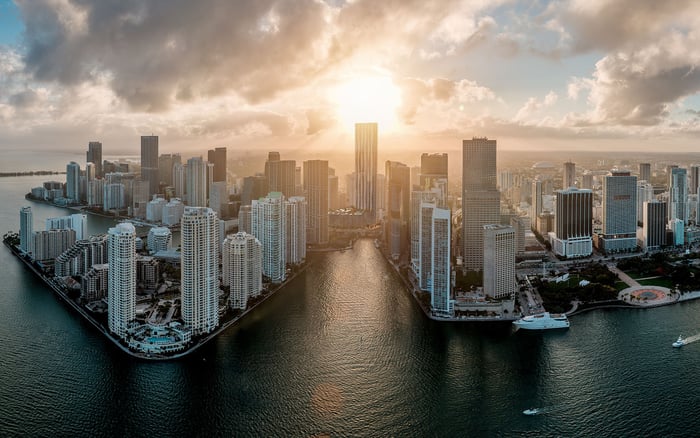
South Florida rewards buyers who lead with lifestyle, then refine by asset quality. If your weeks revolve around finance, dining, and proximity to major arteries, Brickell can feel like the obvious choice. The buyer calculus there often favors newer towers with considered arrival sequences and strong resident services, including options such as 2200 Brickell and Una Residences Brickell for those who want a contemporary, design-forward standard of living.
If you want sand underfoot and a more resort-like rhythm, Miami-beach and nearby coastal enclaves offer a different kind of daily satisfaction: walkability, an immediate horizon line, and a social calendar that can be as visible-or as private-as you prefer. For buyers drawn to discreetly scaled luxury with a direct relationship to the ocean, 57 Ocean Miami Beach speaks to a quieter, more residential interpretation of beachfront living.
Meanwhile, neighborhoods such as Bay-harbor and other close-in islands deliver a compelling blend: proximity to Miami’s cultural core with a more insulated residential texture. Wellness-forward concepts are increasingly central here; The Well Bay Harbor Islands reflects how health, air, light, and community programming have become real value drivers-not marketing flourishes.
In ultra-luxury condominiums and branded residences, the most consequential differentiators are often the least glamorous. A disciplined due diligence process protects both your enjoyment and your long-term liquidity.
Start with circulation and privacy. Ask how residents and guests enter, where cars queue, how deliveries are managed, and how staff move through the building. The best experience feels effortless because the systems are: separate service paths, clear security protocols, and enough elevator capacity that the building never feels like it’s waiting on itself.
Then evaluate the residence as a living instrument. Ceiling height, natural light, and terrace depth shape emotion-but sound control determines whether you can truly relax. Look at window systems, mechanical placement, and how adjacent units stack. If you entertain, the kitchen and social spaces should perform for real gatherings, not just staged photography.
Amenities should be judged by frequency of use, not sheer quantity. A well-designed pool deck with intelligent sun exposure and discreet cabanas can matter more than a long list of rooms. Likewise, a genuinely functional fitness and recovery suite-with thoughtful programming and privacy-often outperforms a sprawling gym that feels public.
Finally, management quality is a luxury feature. Sophisticated buyers will speak with residents, observe staff attentiveness in common areas, and look for evidence of careful maintenance. Luxury without operational excellence rarely ages well.
New construction can deliver meaningful advantages: current building codes, fresh mechanical systems, and more contemporary layouts that reflect how people live now. It can also bring stronger amenity planning, better back-of-house operations, and a clearer design vision. In certain cases, the value isn’t novelty-it’s the elimination of headaches.
Resale, however, can be compelling when a building has already proven itself operationally and socially. You can test noise realities, see how amenities are actually used, and understand the tenor of the resident community. For many buyers, the ideal is a building that’s matured enough for operational kinks to be resolved, while still offering modern interiors and a fresh public realm.
If you’re leaning toward new development, focus on developer track record, the clarity of the design team’s intent, and whether the project’s luxury is structural or superficial. The strongest projects typically have a coherent thesis, not just expensive finishes.
In South Florida, the water isn’t just a view-it’s infrastructure. Ocean proximity, intracoastal access, and marina adjacency can fundamentally change how you use your time. For boaters, the equation extends beyond the slip: channel access, traffic patterns, bridge schedules, and the day-to-day practicality of provisioning and maintenance.
Even for non-boaters, waterfront living can introduce a distinct calm and a sense of separation from the city’s pace. Still, micro-location matters: exposure to wind and salt, potential noise from marine traffic, and the orientation of balconies and terraces.
In coastal submarkets like Hallandale, the lifestyle can tilt toward a private resort sensibility-strong ocean presence and a genuine sense of escape. Projects such as 2000 Ocean Hallandale Beach show how a more intimate building scale can suit buyers who want an oceanfront address without the intensity of larger, more public towers.
Design matters, but not only as aesthetics. Strong design reduces friction. It creates intuitive pathways, builds in storage where you actually need it, and keeps the home feeling composed-even when life is not.
Branding, by contrast, is best treated as a layer rather than a foundation. A brand can influence service standards, amenity expectations, and international recognition. The real test is whether the day-to-day experience matches the promise. In the ultra-luxury tier, value increasingly concentrates in buildings that deliver operationally: resident services, security, and a well-maintained common realm.
The most successful residences in South Florida are the ones you can enjoy privately while still tapping into the region’s cultural energy when you choose. The home should never require you to be “on.”
Before committing, define your hierarchy. Do you want walkability or seclusion? A social building or a quieter one? Full-service staffing or a more independent feel? Answering these early keeps you from overpaying for features you won’t use.
On tours, pay attention to what isn’t being said: corridor noise, how quickly an elevator arrives, whether the lobby feels calm, and whether residents seem at ease. Ask practical questions about policies that shape daily life: pet rules, guest access, valet hours, renovation guidelines, and how the building handles privacy.
If you’re evaluating the property as a second home, prioritize lock-and-leave readiness: secure storage, reliable building staff, and clear protocols for receiving packages and maintaining the residence while you’re away.
What matters most in a South Florida luxury condo purchase? Prioritize privacy, building operations, and location fit before finishes or views.
Is new construction always a better investment than resale? Not always; resale can offer proven operations, while new can reduce near-term maintenance.
How should buyers evaluate a building’s service quality? Observe staffing, security, and maintenance firsthand during multiple visits at different times.
Do branded residences automatically command higher resale value? Only when branding aligns with genuine service standards and consistent building management.
What are common hidden deal-breakers during tours? Elevator wait times, hallway noise, awkward loading and delivery logistics, and limited storage.
How important is waterfront orientation within the same building? It can materially change wind, sun exposure, noise, and daily terrace usability.
What should second-home buyers focus on most? Lock-and-leave convenience, reliable staff, and clear protocols for privacy and upkeep.
Are amenities a reliable signal of quality? Only if they’re well-designed and well-used; a smaller, better program often outperforms a long list.
How can buyers protect privacy in a high-profile building? Favor discreet arrivals, controlled access, and a management culture that respects confidentiality.
What is the best first step to narrow neighborhoods? Map your daily habits and preferred pace, then choose the area that matches how you live.
If you'd like a private walkthrough and a curated shortlist, connect with MILLION Luxury.
If branded residences are on your mind — as a home or as an allocation — we would be glad to share what we are seeing, privately.
Begin a quiet conversation