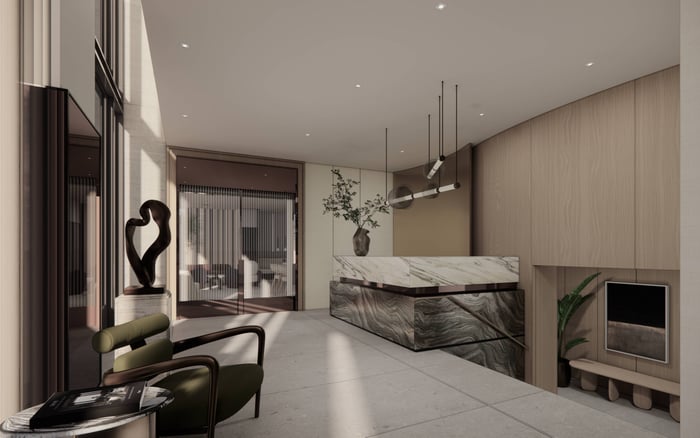
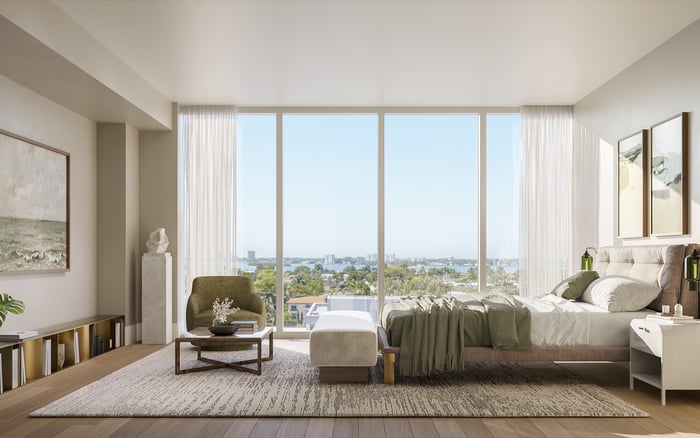
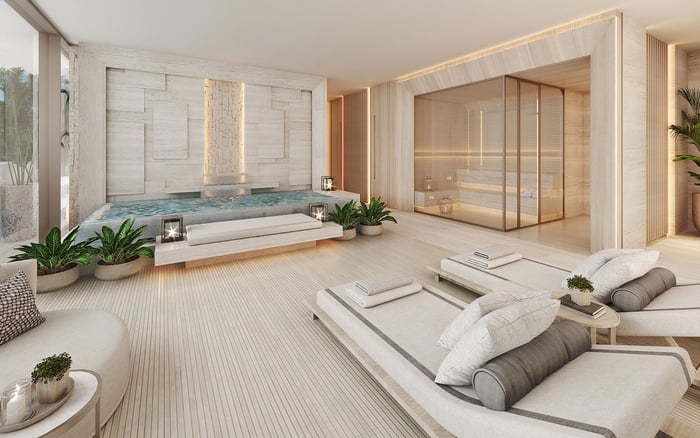
Wellness is no longer a spa perk. In South Florida’s most discerning submarkets, it is becoming a planning principle that influences architecture, interiors, air quality, and even concierge services. Bay Harbor Islands, in particular, is emerging as a discreet address where boutique inventory and lifestyle programming intersect. This MILLION Luxury editorial looks at how wellness-forward development is being marketed today, what is verifiable, and how buyers can evaluate the difference between true health infrastructure and simply good rooftop leisure.
Luxury buyers have always paid for time, convenience, and a sense that daily life runs smoothly. What is changing is the definition of “smooth.” At the top of the South Florida market, many buildings can deliver impressive views, high-level finishes, and strong service. Wellness has emerged as a differentiator because it speaks to what residents want protected: sleep quality, recovery, air, and a lower-stress routine, not just what the building provides for entertainment.
The more meaningful shift is how wellness is being positioned. Instead of a spa-like perk, it is increasingly marketed as infrastructure. Developers now highlight dedicated wellness centers, thermal suites, and resident programming as core building components rather than optional extras. For buyers, that changes the diligence process. A basic gym is no longer the question. The better question is whether the building supports consistent, low-friction habits, and whether those habits will still feel valuable once the newness fades.
Boutique buildings are particularly aligned with this demand. Fewer residences can mean fewer scheduling conflicts, more privacy, and amenities that feel usable rather than performative. “Boutique” is not simply a design label. It is a lifestyle mechanism that shapes everything from elevator waits to whether you actually use a recovery room on a weekday.
Bay Harbor Islands sits in a narrow corridor between the oceanfront visibility of Miami Beach and the globally recognized retail and beach scene of Bal Harbour. For many high-net-worth buyers, that in-between position is the point. You can reach the energy quickly, then return to an address that feels quieter and more contained.
The neighborhood’s boutique profile matches how many second-home and primary buyers prefer to live now: fewer neighbors, less transient activity, and buildings that feel curated rather than scaled. In that context, wellness reads as a natural extension of a calmer daily cadence.
From a buyer’s perspective, Bay Harbor Islands rewards specificity. Buildings here often compete less on height and more on how intelligently they use square footage. That can show up in terraces sized for real outdoor living, or amenity footprints designed to move beyond “pool and gym” into a fuller lifestyle stack.
In Bay Harbor Islands, the most explicit wellness proposition is The Well Bay Harbor Islands, a seven-story residential building at 1160 Kane Concourse with 54 residences. Publicly marketed layouts span approximately 1,150 to 3,266 square feet, which matters for buyers who want meaningful interior volume without the anonymity that can come with a very large tower.
What distinguishes the project in its market narrative is the amenity allocation. The building is marketed with roughly 22,000 square feet of amenities, anchored by a signature wellness center of about 13,000 square feet. Square footage is not a guarantee of quality, but it is a signal of intent. A large, dedicated wellness component typically implies planning around mechanical needs, acoustics, staffing expectations, and the potential for resident programming.
The thermal and recovery features marketed for the wellness areas include a Caldarium, a Saunarium, a Halotherapy Steam Room, and an Infrared and Sound Dome. For buyers who already prioritize recovery, the appeal is not novelty. It is proximity. When these environments are within the building, friction drops and follow-through becomes far more realistic.
The in-home proposition is also positioned as wellness-forward. Residences are marketed with air purification, aromatherapy, and integrated red light therapy. Buyers should still ask how these systems are specified, maintained, and warranted, but the broader takeaway is clear: wellness is being treated as something that can live inside the residence, not only in the common areas.
Services are part of the promise as well. The project markets a wellness concierge and wellness programming tied to the broader health concept. In practice, delivery is where luxury either becomes effortless or feels like a brochure. Smart buyers will clarify what is included versus what is offered a la carte, and how programming is expected to evolve once the building is fully occupied.
Design credibility matters in this category because spaces must feel as elevated as they are functional. The project has been presented as a collaboration led by Terra, with Arquitectonica on architecture and Meyer Davis on interiors. For many buyers, that team composition signals an intent to balance aesthetics with usability, particularly in high-touch amenity environments.
Wellness does not always require a full campus. Sometimes it is about access to light, air, and amenities that genuinely work day to day. Alana Bay Harbor Islands is positioned as a boutique condominium at 9901 W Bay Harbor Dr with 30 residences, marketed as two- and three-bedroom homes.
The residential design language emphasizes expansive terraces and floor-to-ceiling, impact-resistant sliding glass doors and windows. Indoor-outdoor continuity has moved beyond a design preference. For many owners, it functions as a daily wellbeing tool: morning coffee outside, a terrace workout, or the steady psychological benefit of daylight and open air.
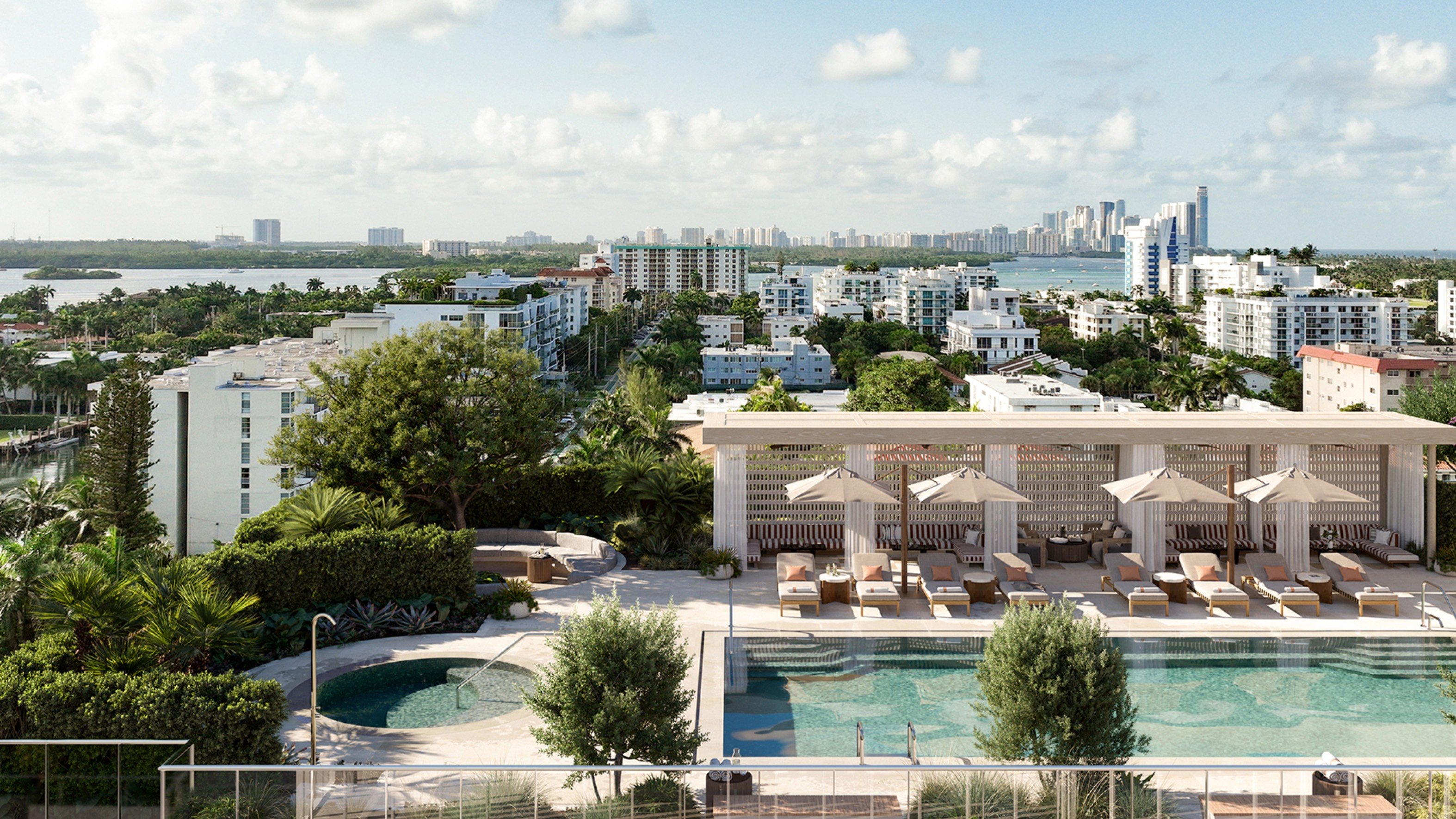
Alana’s amenity pitch centers on a “Rooftop Oasis,” marketed to include an infinity-edge pool, a whirlpool, lounge areas, and outdoor entertaining features. The building also markets a fitness center and outdoor areas positioned for yoga and meditation. This is a lighter-touch wellness story, but it resonates with buyers who want health-supportive design without the intensity of a medically themed environment.
A time-sensitive detail is delivery status. Alana received a Temporary Certificate of Occupancy on February 6, 2025, enabling move-ins and closings to begin. In a market where timelines can drift, this kind of milestone can move a decision from theoretical to operational, especially for buyers planning near-term occupancy.
Miami Beach remains the region’s most visible luxury shoreline, but enduring value often comes from operational excellence, not just the address. A well-run, service-forward environment can function as wellness by reducing daily stress. The routine becomes simpler: arrival, security, valet, housekeeping coordination, and predictable standards.
For buyers who want a lifestyle that feels curated, branded residential offerings can be compelling. Shore Club Private Collections Miami Beach reflects the ongoing appeal of Miami Beach living where design, hospitality cues, and amenity expectations converge.
Similarly, Setai Residences Miami Beach speaks to the buyer who values calm, discretion, and an environment that reads as intentionally composed. The wellness connection is often indirect: quiet, service discipline, and the sense that management protects the resident’s time.
For those who prioritize a classic luxury service ethos, The Ritz-Carlton Residences® Miami Beach underscores how brand standards and operational consistency can become lifestyle infrastructure. When wellness is defined as lowered friction, reliable service and a thoughtful arrival experience can matter as much as any thermal suite.
Wellness can be a real upgrade, or it can be branding. The difference usually appears in the details you request during discovery.
First, separate marketed features from delivered, operational realities. Ask which amenities are planned, which are built, and which depend on third-party programming. If a building promotes a wellness concierge, clarify hours, scope, and whether services are included.
Second, treat square footage as a starting point, not proof. A 13,000-square-foot wellness center sounds decisive, but buyers should ask how that space is allocated, how it is acoustically treated, and how it will feel at peak use. In boutique buildings, the same square footage can feel dramatically more private than in larger towers.
Third, evaluate in-home wellness claims the way you would evaluate kitchens or glazing. If air purification and other systems are part of the pitch, ask how they are integrated, how filters are replaced, and what long-term maintenance expectations look like.
Finally, match the wellness style to your lifestyle. Some buyers want a comprehensive, programmed environment. Others want a beautiful rooftop, a serious fitness room, and a terrace that extends the home. The best choice is the one you will use consistently.
What makes a condo “wellness-forward”?
It is marketed and planned around health infrastructure, including dedicated wellness areas, recovery features, and in-home systems that support air quality and routines.
Why do boutique buildings align so well with wellness living?
Fewer residences can mean less crowding in amenities and a more private daily experience, which increases the likelihood that wellness spaces are actually used.
How many residences are at The Well Bay Harbor Islands?
It is marketed as having 54 residences.
Where is The Well Bay Harbor Islands located?
It is at 1160 Kane Concourse, Bay Harbor Islands, Florida 33154.
What is the marketed size range for residences at The Well?
Approximately 1,150 to 3,266 square feet, depending on the layout.
What is the signature amenity component at The Well?
A wellness center marketed at approximately 13,000 square feet within a broader amenity program of roughly 22,000 square feet.
What thermal and recovery features are marketed at The Well?
Caldarium, Saunarium, Halotherapy Steam Room, and an Infrared and Sound Dome.
How many residences are at Alana Bay Harbor Islands?
It is marketed as a 30-residence boutique condominium.
What is a key delivery milestone for Alana?
Alana received a Temporary Certificate of Occupancy on February 6, 2025, enabling move-ins and closings to begin.
How should buyers compare Bay Harbor Islands and Miami Beach for lifestyle?
Bay Harbor Islands can feel quieter and boutique, while Miami Beach often emphasizes proximity to the ocean and hospitality-grade service environments.
For a private consultation on South Florida’s most design-forward residences, explore MILLION Luxury.
If branded residences are on your mind — as a home or as an allocation — we would be glad to share what we are seeing, privately.
Begin a quiet conversation