In South Florida’s ultra-premium market, the most consequential decision is often not style or finishes, but allocation: pay for a prime address, or pay for acreage. This editorial breaks down how land pricing, waterfront premiums, maintenance realities, and build complexity reshape the true cost of ownership, then offers a practical framework for matching a purchase to lifestyle, liquidity, and legacy goals.
In South Florida, “more” is rarely a budget question alone. It is a question of where your capital works hardest: in an address that delivers immediate lifestyle and long-term liquidity, or in land that delivers scale, privacy, and optionality.
Statewide, Florida’s average land value is often cited around $35,000 per acre, but South Florida plays by different rules. In Miami-Dade, average land values can exceed roughly $525,000 per acre-and that is before the market assigns premiums for micro-location, water adjacency, or a true trophy corridor. Palm Beach County can be just as bifurcated, with coastal parcels commanding dramatically higher pricing than western or rural tracts.
That is why two properties with the same purchase price can represent entirely different philosophies: one purchases proximity and frictionless living; the other purchases space and autonomy, with a materially different operating profile.
Luxury buyers do not buy cities; they buy micro-locations. The premium is often paid for a tight radius of daily life: walkable dining, a reliable commute to decision-making centers, international connectivity, and a social fabric that stays relevant across cycles.
That premium is most visible in established coastal and urban neighborhoods, where scarcity is structural. A prime address also tends to compress uncertainty. It is easier to underwrite because demand is broad: second-home buyers, international owners, and domestic relocations frequently converge on the same few submarkets.
In practice, this is why amenity-forward, full-service living continues to resonate. A residence that removes friction can be more valuable than square footage that adds it-particularly for buyers who travel often or manage multiple homes.
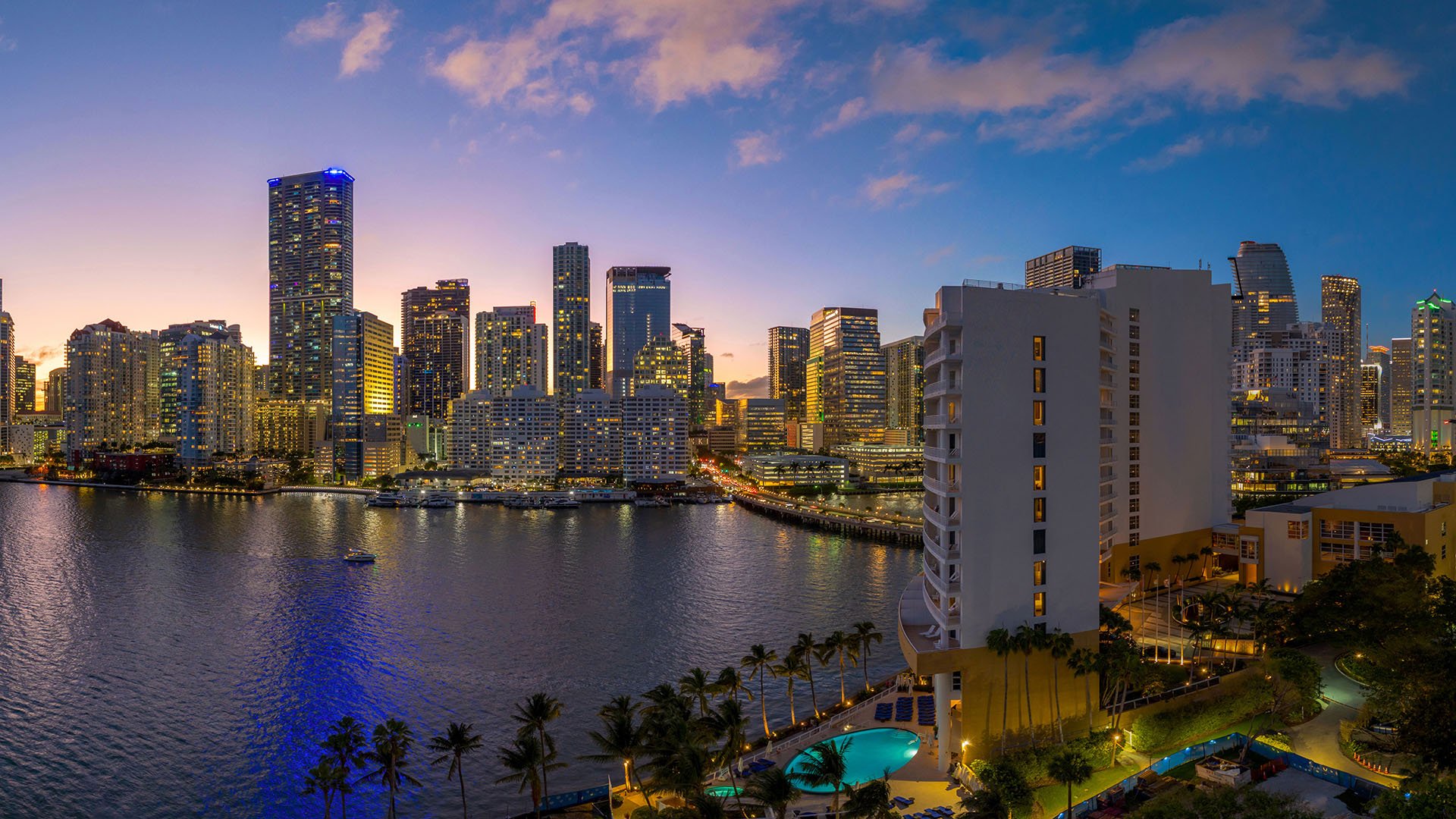
Within Brickell, for instance, the appeal of a modern, serviced lifestyle supports the “address-first” thesis. 2200 Brickell and Una Residences Brickell sit within a broader ecosystem where restaurants, waterfront parks, and cultural access are part of the daily equation-not a weekend plan.
Acreage is not simply about size. It is about control.
Land can create meaningful privacy buffers, longer setbacks, and the ability to build a compound that reflects a family’s routines rather than a developer’s assumptions. It can support equestrian priorities, guest structures, garages that house collections, and outdoor programs that feel resort-like rather than decorative.
But land also adds layers of complexity and time. Buying undeveloped land typically requires more due diligence, feasibility work, utility considerations, and zoning review than buying an existing home. Even when everything is straightforward, build timelines and costs can move in ways that are difficult to predict-which is why many luxury buyers have increasingly favored move-in-ready homes, where disruption and scheduling risk are minimized.
There is also a maintenance reality: larger parcels and large-lot living can require more intensive management than smaller-lot homes or managed buildings. Landscaping, irrigation, exterior lighting, pest control, gate systems, and storm preparation can become a year-round operation.
The land thesis works best when the land itself is the lifestyle. If you are buying a mission, acreage is a luxury. If you are buying convenience, acreage can become an obligation.
Water sells. It sells because it is scarce, emotional, and instantly legible.
On a broad basis, waterfront homes can command roughly a 116% premium compared to comparable non-waterfront homes. That premium reflects not only the view, but also the lifestyle: boating culture, breezes, and the psychological value of owning an edge.
Yet waterfront ownership also tends to bring higher ongoing costs and greater risk exposure. Storm readiness is more than sandbags. It is insurance complexity, elevation and flood considerations, corrosion, seawall and dock upkeep, and the reality that a “perfect” day can translate into a higher operating budget.
In Miami Beach, the difference between “near the ocean” and “on the ocean” can feel like a separate market. For buyers who want the coastal experience with a lock-and-leave sensibility, boutique oceanfront condominium living can be a strategic compromise. In that context, 57 Ocean Miami Beach and The Perigon Miami Beach reflect a broader preference: prioritize the address and lifestyle while professionalizing building operations.
At the very top of the market, the “cost” of a home is rarely confined to the purchase price. The deeper cost is uncertainty.
A custom build can produce an extraordinary result, but it is also a multi-stakeholder project. When timelines matter, uncertainty becomes expensive: it affects travel patterns, staffing, carrying costs, and family logistics.
That is why turnkey living has become more than a design preference. It is a risk preference. Many luxury buyers prefer to avoid renovation uncertainty, timeline risk, and ongoing disruption-choosing instead to pay for a finished, cohesive product.
This is not a referendum against land. It is a recognition that different seasons of life come with different appetites for complexity. A buyer with a demanding schedule may prefer a managed residence today, then shift toward a land-forward compound later, when time is more flexible.
When deciding between location and land, start by identifying the dominant value driver that must be true for the purchase to feel successful.
If your daily life depends on being near dining, arts, schools, and airports, location tends to win.
If you need acreage for equestrian use, multi-structure living, or a true retreat, land tends to win.
A prime address often offers a broader resale audience, especially when the home is easy to use.
Waterfront can be a spectacular decision, but it requires a clear-eyed view of operating and storm-related realities.
The longer you plan to hold, the more land optionality can matter. The shorter the horizon, the more certainty and frictionless use tend to matter.
If your priority is simply to own more land, North Florida can present a very different value proposition. In some counties, land can trade in ranges roughly from $8,000 to $40,000 per acre, making large-acreage purchases feasible at budgets that would not buy much land in South Florida.
The tradeoff is straightforward: those locations are generally farther from South Florida’s major job centers, international connectivity, and luxury amenity density. For some families, that distance is the point. For others, it becomes the reason the property is used less than expected.
Palm Beach County offers a nuanced middle ground. Coastal pricing can be intense, yet certain pockets can attract luxury buyers seeking relative value while still insisting on newer, amenity-rich options.
For buyers who want a Palm Beach County lifestyle without sacrificing modernity, West Palm Beach has become an increasingly compelling axis-particularly for those who want a polished building experience and immediate access to culture and dining. Alba West Palm Beach is a useful reference point for the kind of turnkey, elevated living that supports an address-forward strategy.
This is also where generational preferences begin to surface. As ownership transfers to younger cohorts over time, many luxury buyers place outsized value on convenience, lifestyle, and a location that can be enjoyed immediately-not after a multiyear build.
The most sophisticated South Florida buyers do not debate whether location or land is “better.” They decide which variable they cannot replace.
You can renovate a home, but you cannot renovate a neighborhood.
You can buy an address for access and liquidity, then use design and services to make it feel private.
Or you can buy land for privacy and possibility, then accept that the property will behave more like an estate: a living organism with higher management intensity.
The right answer is the one that aligns your time, your temperament, and the way you want the home to perform-not only as a statement, but as a daily instrument.
Is it smarter to buy the best location or the most land in South Florida? It depends on whether your lifestyle is powered by proximity or by privacy. The best purchase is the one you will use effortlessly.
Why does Miami-Dade land feel so expensive compared to the rest of Florida? Prime land is scarce and demand concentrates in small, high-amenity submarkets. That scarcity is capitalized into the price of an address.
Does waterfront always hold value better? Waterfront can command a major premium because it is limited, but ownership also brings higher operating costs and storm-related risk considerations.
What is the biggest risk of buying undeveloped land? Complexity and uncertainty: feasibility, zoning, utilities, and future build costs can shift. You need patience and a strong advisory team.
Why are turnkey homes so popular with luxury buyers right now? Turnkey reduces renovation disruption and timeline risk. For many buyers, certainty is worth paying for.
Can a condo be a strategic alternative to a waterfront house? Yes, especially for lock-and-leave owners who want the waterfront lifestyle with professionalized building operations and amenities.
How should I think about maintenance when choosing land? Larger parcels often require more intensive ongoing management. Budget for staffing, landscaping, systems upkeep, and storm preparation.
Is North Florida a good option for buyers who want acreage? It can be, because per-acre pricing can be far lower. The tradeoff is distance from South Florida’s job centers and luxury amenity density.
What is “micro-location,” and why does it matter? It is the exact pocket within a neighborhood that drives walkability, views, quiet, and access. In luxury, micro-location can define liquidity.
How do I decide if I should pay a premium for a prime address? If your schedule, travel, and social life benefit from convenience and services, the premium can translate into better use and simpler ownership.
For a confidential assessment and a building-by-building shortlist, connect with MILLION Luxury.
If branded residences are on your mind — as a home or as an allocation — we would be glad to share what we are seeing, privately.
Begin a quiet conversation