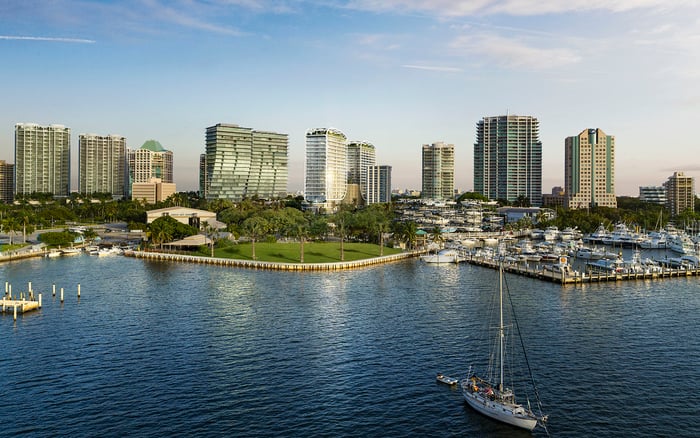
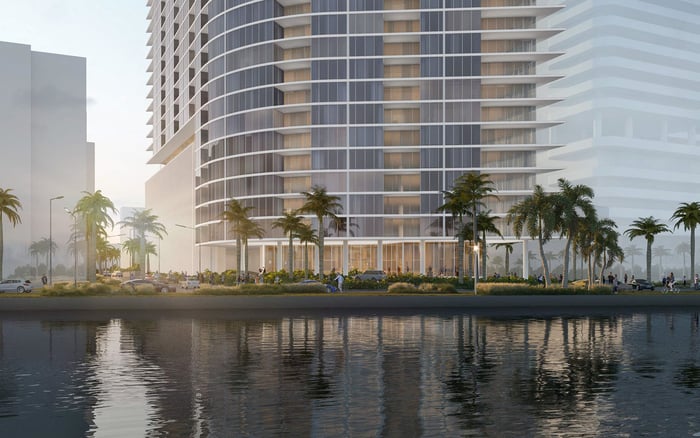
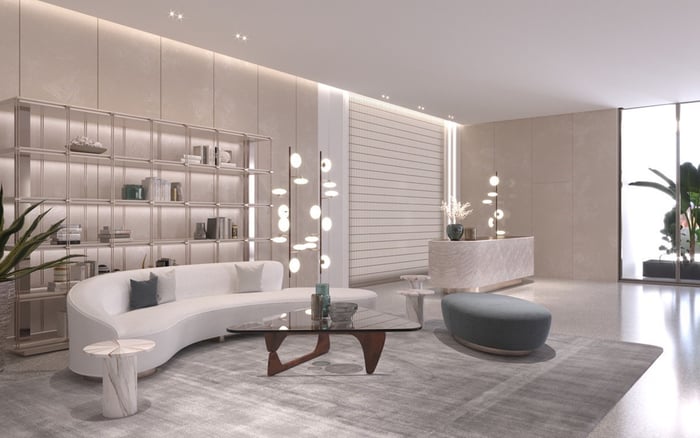
From Brickell to West Palm Beach, South Florida’s next chapter is being written by long-horizon corporate commitments, record-setting residential trades, and a buyer pool increasingly comfortable writing eight-figure checks in cash. The result is a more institutional, more international, and more lifestyle-driven luxury market where proximity to headquarters, waterfront access, and turnkey service levels increasingly define value.
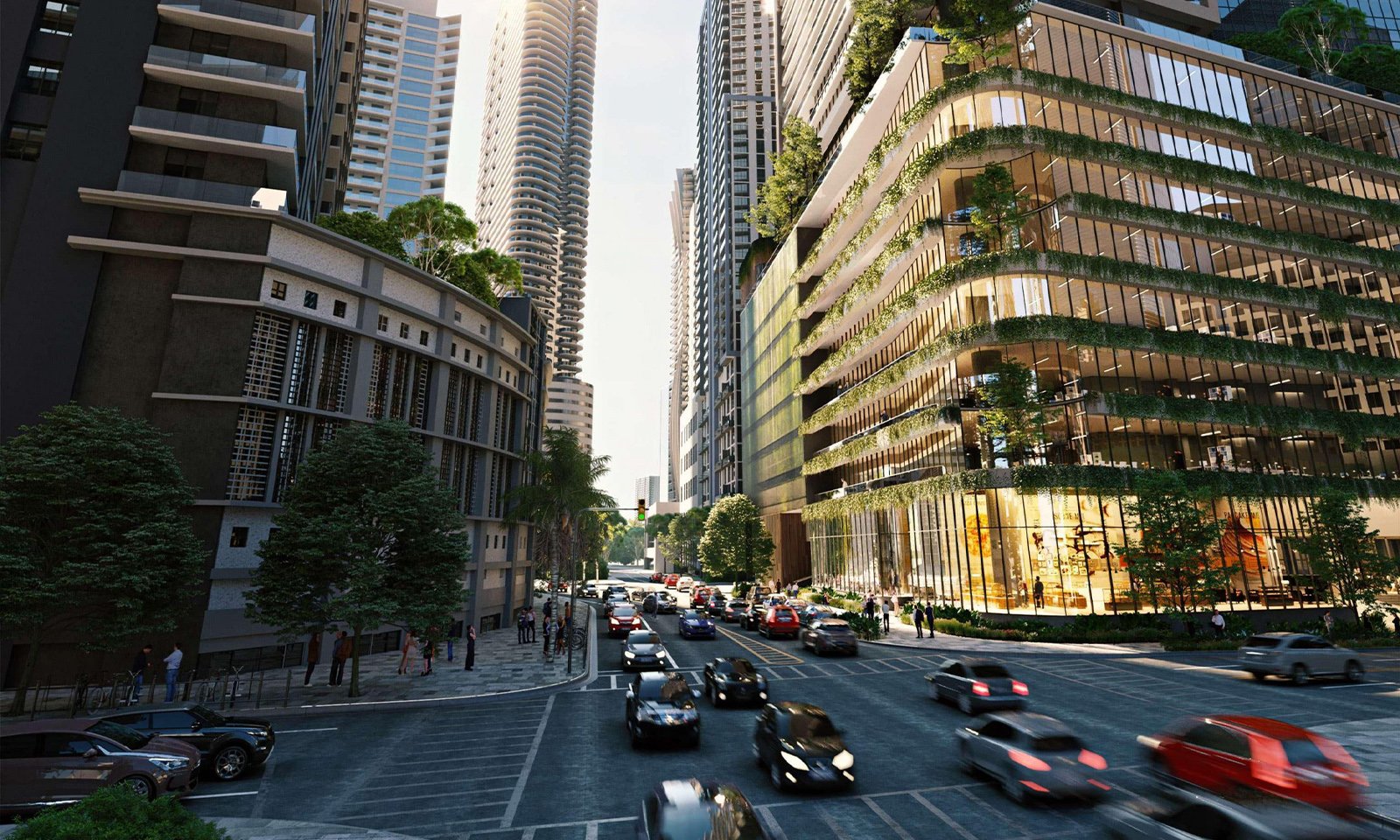
For several years, South Florida has been framed as a destination. In 2026, the more consequential story is permanence: capital arriving with multi-year construction timelines, long-term hiring plans, and a public footprint that changes how neighborhoods operate.
This kind of commitment changes how buyers underwrite real estate. A household considering a $5 million to $25 million purchase is often making a portfolio decision, not simply choosing a view. When a corporate campus becomes a near-term reality, the value of walkability, predictable commute times, and a true work-lifestyle loop becomes easier to quantify.
Brickell has always priced as an address, but corporate gravity gives it a clearer rationale: proximity to decision-making. That typically pulls forward demand for high-service, low-friction residences built to support travel schedules and privacy.
The market’s emerging buyer archetype is time-starved and outcome-oriented. They prioritize staffed buildings, controlled arrivals, and amenities that function like extensions of a private club. In that context, projects such as 2200 Brickell can read less like “a condo” and more like a strategic base-especially for principals splitting time between multiple cities.
The second-order effect is pricing psychology. When corporate buildouts normalize three- to five-year horizons, residential buyers grow more comfortable paying for future neighborhood maturity. The narrative shifts from “Miami is hot” to “Miami is being built.”
While Brickell absorbs corporate demand, Miami Beach continues to anchor the region’s global brand. In 2025, Miami Beach recorded 45 sales above $10 million, and the market’s thresholds moved into rarified territory: an ultra-luxury threshold of $45.6 million and a luxury threshold of $27.5 million.
That matters because thresholds are more than statistics-they signal where negotiations now begin for premium inventory. As the top 5 percent and top 1 percent of sales climb, the “normal” luxury conversation shifts upward. Buyers who once anchored their searches around $15 million increasingly frame $25 million as the price of certainty for waterfront positioning, height, or architectural pedigree.
On the condo side, widely covered pricing has also lifted perceptions, including a Miami Beach penthouse deal discussed around $120 million and positioned as a local condo record. Even when the ultra-top comprises only a handful of transactions, it influences seller confidence and developer posture.
For those seeking Miami Beach’s blend of culture and discretion, newer boutique inventory can provide a quieter alternative to resort corridors. In North Beach, 57 Ocean Miami Beach reflects the enduring pull of oceanfront living that reads as residential rather than transient.
At the $10 million-plus tier, South Florida recorded 361 home sales in 2025-the second-highest annual total on record. In Miami-Dade alone, $10 million-plus single-family sales rose to 114 in 2025 from 31 in 2019.
Just as important as volume is structure: about 81 percent of $10 million-plus purchases in 2025 were all-cash. Cash dominance changes the market’s tempo. It compresses timelines, reduces contingency risk, and shifts negotiation toward non-price terms such as closing flexibility, seller post-occupancy, and the inclusion of furnishings or art-grade fixtures.
For buyers, it also raises the bar on preparation. In a cash-forward environment, the winning offer is often the one with the cleanest execution plan, not necessarily the loudest number. This is where well-managed new construction-with transparent milestones and predictable handoffs-can function as its own form of risk management.
One of the most visible recent trades was a Coconut Grove waterfront compound that sold for $101.5 million, a transaction highlighted as the most expensive U.S. home sale reported for December 2025. Beyond the headline, the deal reinforces a broader thesis: in a market defined by travel schedules and privacy expectations, the “compound” increasingly behaves like an asset class.
Coconut Grove’s appeal is its ability to deliver a residential cadence within reach of Miami’s commercial nodes. That combination supports a specific buyer profile: families who want a neighborhood, not a scene, and principals who want fast access without living inside the densest part of Downtown.
For buyers who prefer turnkey living over full-time estate management, Grove luxury has also matured vertically. Four Seasons Residences Coconut Grove speaks to that moment, offering an ownership experience designed for high-frequency travel, security, and service.
Northward, Palm Beach County’s 2025 thresholds also moved higher, with a luxury threshold of $3.5 million and an uber-luxury threshold of $11.0 million. The county logged 141 sales above $10 million, a record.
Corporate expansion adds another layer of demand. By 2028, a major enterprise software company has said it plans a regional headquarters and AI innovation hub in West Palm Beach, supported by up to $2 million in incentives. Separately, a global aesthetics company opened its U.S. headquarters in Miami and planned roughly 150 employees by 2028. These are more than relocations; they indicate a professional ecosystem diversifying beyond finance.
West Palm Beach, in particular, benefits from a straightforward lifestyle logic: proximity to Palm Beach, private aviation access, and a compact downtown that can feel more navigable than larger urban cores. For buyers who want that balance, Alba West Palm Beach is representative of newer inventory suited to an executive routine.
South Florida’s luxury market is not only local and domestic. In 2025, foreign buyers purchased $4.4 billion of South Florida residential real estate, up from $3.1 billion in 2024. International buyers represented 15 percent of South Florida dollar volume in 2025, far above national levels.
The buyer map is broad, with purchasers from 55 countries led by Colombia and Argentina, followed by Brazil, Mexico, Canada, and Venezuela. The practical implication is that product must perform across different lifestyles: seasonal occupancy, multi-generational use, and a preference for secure, lock-and-leave residences.
This is one reason branded and service-rich buildings continue to resonate. In Brickell, 888 Brickell by Dolce & Gabbana aligns with the market’s appetite for design clarity and hospitality-grade operations-particularly for global owners who expect consistency across cities.
Luxury buyers often emphasize privacy, but in South Florida’s evolving core, mobility and the public realm are increasingly tied to value. The inclusion of public waterfront access in a major Brickell mixed-use plan, alongside dedicated funding for Metromover improvements, points to a future where the surrounding experience becomes part of the address.
For the ultra-luxury buyer, this shows up in small but meaningful ways: cleaner drop-offs, stronger pedestrian connections, and a more refined sense of arrival that starts before the lobby. As new projects deliver, the most competitive properties will be the ones that feel effortless-whether used as a primary residence or a disciplined second-home base.
In a market shaped by corporate permanence, international capital, and cash competition, the most effective approach is disciplined and location-specific.
First, match asset type to lifestyle. If your schedule is travel-heavy, consider high-service condominiums near Brickell’s core where the time cost of ownership stays low. If privacy and outdoor living are non-negotiable, explore neighborhoods like Coconut Grove where compounds and waterfront lots remain culturally coherent.
Second, underwrite the neighborhood, not just the unit. Corporate projects with multi-year horizons can lift nearby demand, but they can also introduce construction cycles and shifting traffic patterns. Treat that as a planning factor, not a surprise.
Third, optimize for execution. In an 81 percent cash environment at $10 million-plus, certainty is a competitive advantage. Align legal, tax, and closing logistics early so your offer can move at the speed the market now expects.
Why does a corporate headquarters project matter to luxury home values? Large buildouts signal long-term commitment and job growth, which can lift demand for nearby premium housing.
What is the scale of the planned Brickell headquarters at 1201 Brickell Bay Drive? It has been described publicly as a 54-story, roughly 1.7-million-square-foot mixed-use tower targeted for 2028.
When is construction expected to start on the Brickell headquarters plan? Construction is expected to begin in early 2026 following unanimous county approval.
How active was the $10M+ market in 2025? South Florida recorded 361 home sales above $10 million, one of the highest totals on record.
Are ultra-luxury buyers really paying cash? Yes, about 81 percent of $10 million-plus purchases in 2025 were all-cash transactions.
How has Miami-Dade’s $10M+ single-family segment changed since 2019? Miami-Dade recorded 114 $10 million-plus single-family sales in 2025 versus 31 in 2019.
What do Miami Beach’s luxury thresholds suggest about the market? With a 2025 luxury threshold of $27.5M and ultra-luxury at $45.6M, the top end has reset higher.
What was notable about the $101.5M Coconut Grove sale? It was a high-profile waterfront compound trade and was highlighted as the most expensive reported U.S. sale for December 2025.
How significant is international demand in South Florida luxury real estate? International buyers accounted for 15 percent of South Florida dollar volume in 2025 and purchased $4.4B in property.
Which Palm Beach County metrics point to continued strength? Palm Beach County recorded 141 sales over $10M in 2025, alongside an uber-luxury threshold of $11.0M.
To compare the best-fit options with clarity, connect with MILLION Luxury.
If branded residences are on your mind — as a home or as an allocation — we would be glad to share what we are seeing, privately.
Begin a quiet conversation