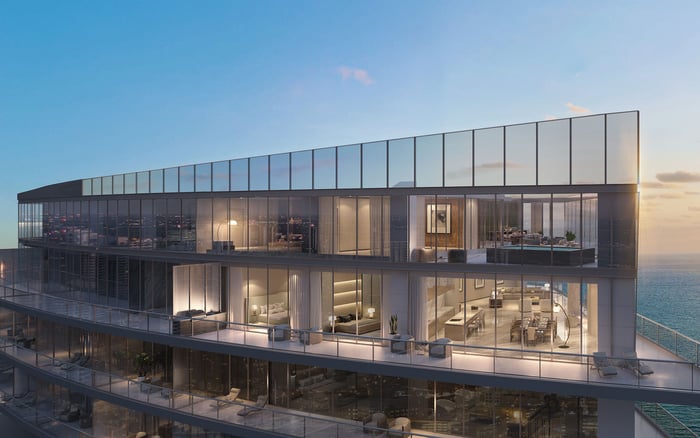
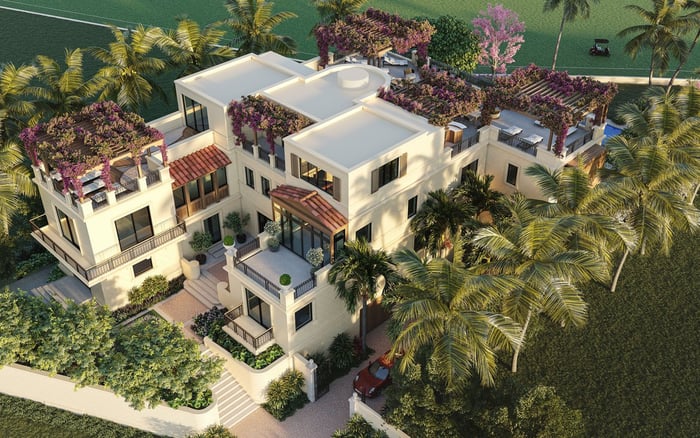
From Brickell to Miami Beach, the most competitive new towers are borrowing from private clubs, adding wine vaults, tasting rooms, and resident locker programs designed for display and ritual.
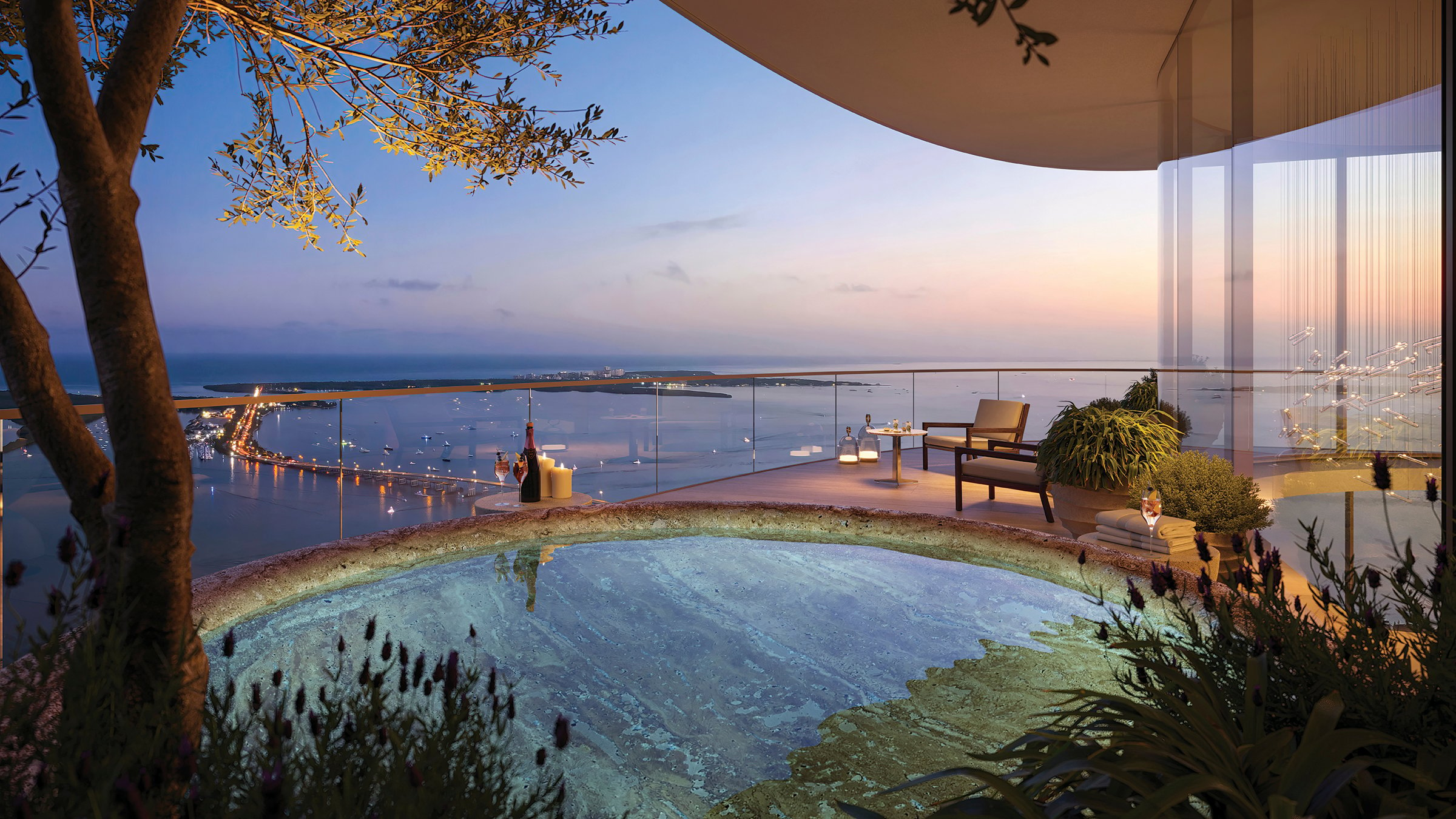
South Florida’s top residential product has always sold lifestyle first: oceanfront arrival sequences, spa-grade wellness floors, and hospitality-caliber service. Now a classic marker of private wealth is being reinterpreted for vertical living: the cellar.
What is changing is not simply the presence of wine storage. The shift is toward curated, club-like rooms that treat collecting as ritual, not utility. Across Miami and Fort Lauderdale marketing, wine and spirits lounges are framed the way libraries once were: spaces that signal discernment, privacy, and a sense of ceremony.
For buyers, this matters because it clarifies where premium new construction is headed. The best buildings are no longer competing only on view corridors and finish schedules. They are competing on how convincingly they can deliver an intimate, members-only experience inside a residential tower.
A wine wall can be decorative. A cellar is functional. In South Florida’s heat and humidity, that difference is not subtle.
Most guidance for proper wine preservation points to storage around 55°F with relative humidity around 60 to 70 percent. Those targets are not marketing garnish. They support cork stability, protect labels, and help limit oxidation over time.
From a buyer’s perspective, the most credible wine amenity programs tend to share three traits:
If you collect at any scale, evaluate the amenity the way you would a gym: the mechanical plan matters more than the photography.
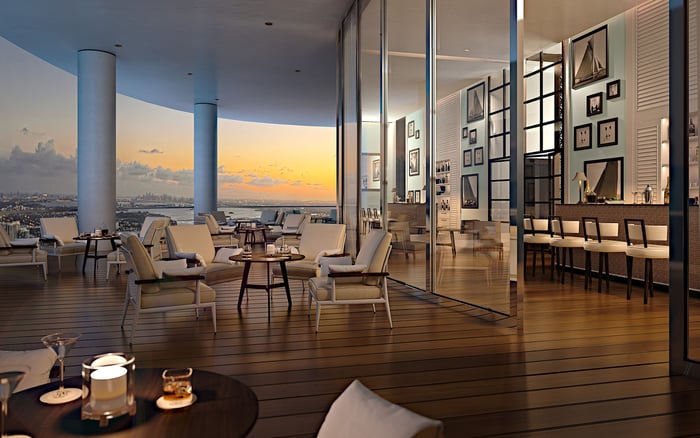
Across the region, the most ambitious amenity decks now read like boutique lounges. Some of the clearest examples are being marketed in Brickell, where high-rise living has long been a proxy for time efficiency.
At The Residences at 1428 Brickell, the building is planned with a two-story wine and spirits lounge of roughly 10,000 square feet, positioned as a destination amenity rather than a tucked-away room. As marketed, pricing runs from about $2.9 million to $14.4 million, with a targeted completion timeline of Q4 2028. The scale is the signal: in an era when wellness and co-working already command prime square footage, dedicating this much area to wine and spirits reads as a clear statement about how residents are expected to host.
Elsewhere, the concept extends beyond wine. JEM Private Residences at Miami Worldcenter is publicly described as including a dedicated tequila and spirits tasting room designed by Rockwell Group. The project also reported a $9 million sky villa sale at roughly $2,500 per square foot, cited as a local record for Miami Worldcenter. In other words, the tasting room is presented as part of the value proposition for buyers who pay for rarity and programming.
In Brickell, wine-forward amenities match the district’s pace: dinners that start late, mornings that start early, and entertaining that happens close to home. It is also where branded hospitality language has become standard, which helps explain why wine vaults and specialty tasting rooms are marketed so confidently.
Miami Beach adds a different layer. The buyer profile often blends second-home behavior with a strong preference for privacy. In that context, a discreet, well-managed lounge can feel more valuable than a high-traffic bar scene.
North Bay Village is another case study, because new development there is selling the idea of a connected waterfront micro-neighborhood. At Shoma Bay North Bay Village, the project is described as a 327-unit, 21-story mixed-use waterfront development, with residences starting around the $400,000s and projected delivery in 2025. It also includes a private residents’ wine club of 1,000-plus square feet with 100 custom wine lockers. Locker programs matter because they introduce ownership and routine: your bottle is not simply stored, it is placed, the way a locker at a private tennis club becomes part of your identity.
Miami Beach remains a magnet for buyers who want a curated lifestyle near culture and dining. For those weighing a hospitality-led residential concept, Shore Club Private Collections Miami Beach is frequently in the conversation, particularly for buyers who value a service-oriented ethos.
The most noticeable pairing in current marketing is wine with cigars and whiskey. It is a deliberate return to the gentlemen’s-club vocabulary, updated for contemporary taste and design.
At Bentley Residences Sunny Isles, the project is marketed with a lounge and whiskey bar plus a dedicated cigar lounge. Residences are marketed with starting prices around $5.8 million. For buyers, the takeaway is less about the brand name and more about the intent: the building is explicitly courting residents who entertain privately and collect intentionally.
Sunny Isles has long supported trophy towers, but the amenity conversation is moving beyond pools and fitness into spaces that function as personal sanctuaries.
Fort Lauderdale developers are leaning into a different sensory cue: audio. Viceroy Residences Fort Lauderdale is marketed with a “sound bar” concept that blends music-focused design with a premium spirits-lounge environment. As described, the wine and sound bar sits on the 46th floor and includes private wine lockers. Residences are marketed from about $525,000.
For buyers comparing Miami and Fort Lauderdale, this contrast is useful. Miami’s wine amenities often read as social and club-like. Fort Lauderdale’s read as experiential and mood-driven, calibrated for entertaining without spectacle.
Wine amenities do not guarantee resale premiums on their own. But they can widen your buyer pool at the top end, where differentiation is increasingly about lifestyle fit.
Market signals suggest steady demand for wine-related features. Redfin’s Miami pages have shown roughly the mid-80s count of active listings tagged with “wine cellar,” with a median list price shown in the low-$700,000s depending on the snapshot date. JamesEdition’s Miami “wine cellar” search results show dozens of luxury listings spanning a broad pricing spectrum.
In practice, the amenity’s impact tends to show up in three places:
This is why new-construction marketing is leaning so hard into wine and spirits. It is not only about bottles. It is about belonging.
If you plan to create a private cellar within a residence, treat it as a micro-climate build, not millwork.
Start with the target conditions, around 55°F and 60 to 70 percent humidity, then work backward into system selection. Through-the-wall units can be straightforward, but ducted and split systems can offer cleaner aesthetics and quieter operation if the residence’s mechanical constraints allow.
Next, insist on proper assembly. In a humid region, insulation and a correctly installed vapor barrier are repeatedly emphasized as essentials to avoid condensation and mold. Glass-heavy showpiece cellars can be striking, but they are unforgiving if the envelope is compromised.
A useful design reference comes from a Jupiter Island case study that described a 360-degree glass wine cellar designed to store 400-plus bottles, pairing custom millwork with modern racking. The larger point is not the exact bottle count. It is that display and preservation can coexist when technical details lead the design.
Q: Are wine lounges becoming standard in luxury towers? A: They are increasingly common in high-end marketing, especially where developers are competing on a private-club lifestyle.
Q: What temperature and humidity should a cellar target in Miami? A: Guidance commonly cites about 55°F and roughly 60 to 70 percent relative humidity.
Q: What is the value of resident wine lockers? A: Lockers create a personal, repeatable experience and support a shared lounge without sacrificing privacy.
Q: Are spirits rooms different from wine rooms? A: Yes. Spirits concepts often emphasize tastings and mixology, while wine rooms prioritize storage stability and inventory.
Q: Which cooling system is best for a condo cellar? A: It depends on space and noise constraints, but common options include through-the-wall, ducted, and split systems.
Q: Why do vapor barriers matter so much in South Florida? A: They help prevent condensation in humid air, reducing the risk of mold and material damage.
Q: Do cigar lounges meaningfully affect buyer demand? A: For certain buyers, yes. They signal a private, adult entertaining culture and can influence building identity.
Q: Is a glass wine wall always a red flag? A: Not necessarily, but glass-forward designs require careful engineering to maintain stable conditions.
Q: Will a wine amenity increase resale value? A: It can improve desirability and shorten decision cycles, though premiums depend on overall building quality.
Q: How should buyers evaluate a wine amenity during a tour? A: Ask how temperature and humidity are controlled, whether lockers are assigned, and how the space is intended to be used.
For guidance on South Florida buildings where lifestyle amenities are shaping demand, explore MILLION Luxury.
If branded residences are on your mind — as a home or as an allocation — we would be glad to share what we are seeing, privately.
Begin a quiet conversation