A buyer-oriented comparison of off-grid style power redundancy expectations at two Brickell trophy towers, focusing on what can and cannot be assumed without published engineering disclosures.
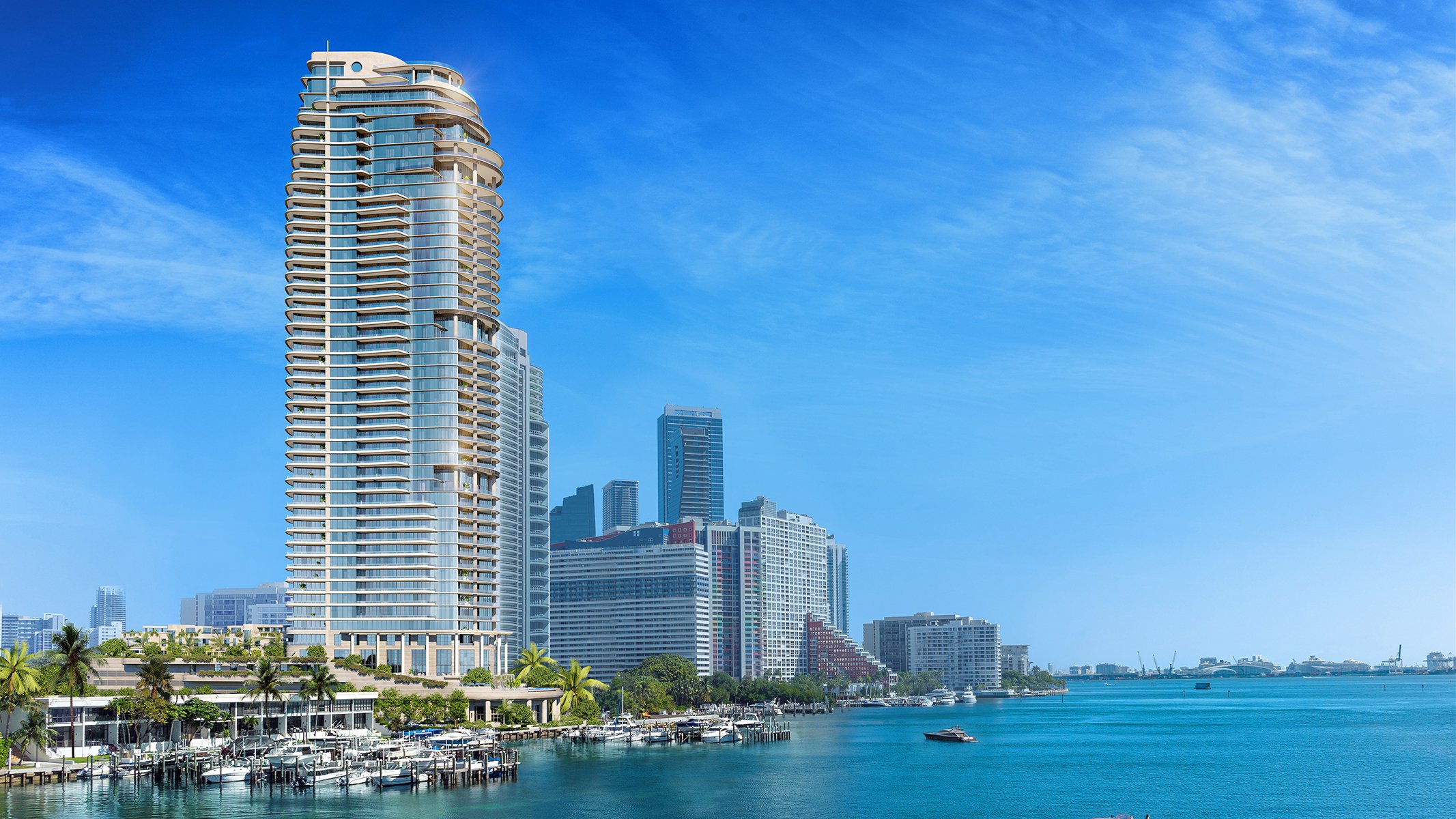
In South Florida, the desire for power continuity has moved from a niche concern to a central part of the luxury buying conversation. Yet “off-grid” can be misleading in a high-rise context. A condominium tower is not a self-contained estate with a private micro-utility; it is a dense, code-governed system where base-building infrastructure, life-safety requirements, and private residence loads intersect.
For an ultra-premium buyer weighing The Residences at 1428 Brickell against St. Regis® Residences Brickell, the real question is not whether either building can be “off-grid” in the casual sense. The question is: what level of electrical redundancy is designed, what is it intended to serve, and how clear is the path from marketing language to engineering reality.
In this piece, MILLION Luxury frames the comparison as a due-diligence exercise: how to evaluate resilience claims, what to request during contract and design selections, and which buyer priorities should drive the decision.
Many buyers assume that if a building “has generators,” their residence will feel normal during an outage. In practice, high-rise backup power is typically engineered first around life-safety systems: emergency lighting, fire pumps, alarm systems, certain elevators under specified conditions, and other code-driven loads. That is essential-but it is not the same as sustaining a full residential experience.
Lifestyle continuity is a different tier. It can include:
HVAC that maintains temperature and humidity within comfort bands.
Refrigeration and a meaningful share of kitchen loads.
Domestic water pressure, hot water circulation, and plumbing support systems.
Internet and building-wide telecom infrastructure.
Garage and access control, security systems, and select amenity operations.
When evaluating two trophy addresses in Brickell, treat “redundancy” as a spectrum of capabilities-not a binary promise. The right question is: “Which circuits are supported, for how long, and under what operating assumptions?”
A building can claim redundancy and still fail the lived-experience test if the system is narrow in scope, undersized for real-world loads, or constrained by fuel logistics and maintenance windows. To assess viability, consider five pillars.
The most meaningful distinction is whether backup power is limited to base-building systems or extends into residences in a way that supports comfort. Some towers provide emergency outlets, selected circuits, or partial kitchen coverage. Others focus on keeping the building safe, lit, and secure while residences remain largely dark.
The practical path is to request a written schedule of supported loads-what a resident can expect to run during an outage, and what will be unavailable. If the building offers any in-residence support, confirm whether it is standard, optional, or dependent on owner upgrades.
Redundancy that lasts a few hours addresses short disruptions. Autonomy that lasts multiple days is a different design ambition. “Off-grid” aspirations tend to imply the latter, but high-rise realities make it complex. Fuel storage, refueling access, local regulations, and service-provider priority all influence duration.
The most revealing question is not “Do you have generators?” but “What is the intended operating duration at the intended load?” Pair that answer with a clear plan for fuel replenishment when the region is stressed.
A well-designed system anticipates moment-by-moment realities: automatic transfer, prioritized loads, and the ability to shed nonessential circuits. Ask whether the building’s design defines priority tiers-and whether resident-facing loads are included in those tiers or excluded.
In a high-rise, power continuity can be undermined by non-electrical chokepoints: chilled-water distribution, condensate management, elevator availability, water booster pumps, and access control. Request clarity on which of these are supported under backup conditions.
Even an excellent system can underperform if it is not tested and maintained. A luxury buyer should weigh whether the building’s operational culture supports rigorous preventive maintenance, documented testing, and transparent communication to residents.
Because high-rise resilience details are often not fully disclosed in public-facing materials, a disciplined comparison starts with your own priorities and then maps them to questions that either development team can answer in writing.
Focus on in-residence load coverage and HVAC strategy. Ask whether backup power supports any portion of the air-conditioning system for residences and, if so, at what performance level. In Brickell’s humidity, temperature control is not only comfort-it is also a materials and art-preservation issue.
Focus on base-building systems that protect the asset during outages: water pressure, security, access control, and vertical transportation. Under this lens, a building can be a strong choice even if it does not keep every residence fully powered.
Treat “off-grid” as a metaphor rather than a literal condition. In a condominium, viability is less about independence and more about controlled continuity: predictable behavior under stress and a clear plan for extended disruptions.
Both The Residences at 1428 Brickell and St. Regis® Residences Brickell sit within the same urban energy context: the same climate, the same broader utility environment, and similar expectations from a luxury buyer base that increasingly values resilience. The differentiator is typically the specificity of what is designed, what is guaranteed, and what is aspirational.
A discreet, high-performing due diligence process avoids confrontation and prioritizes clarity. For either building, consider requesting the following-ideally before finalizing selections and again prior to closing:
Supported loads list: Which building systems are on emergency power, and which are on standby power (if differentiated)?
In-residence scope: Are residences supported at all? If yes, which circuits and what kW allocation per residence?
HVAC continuity: What is the strategy for cooling and humidity control under backup power?
Duration assumptions: What runtime is contemplated at the intended load, and what is the fuel replenishment plan?
Transfer behavior: Is transfer automatic? What is the restart sequence and prioritization hierarchy?
Elevator plan: Which elevators are intended to operate, under what constraints, and with what resident communications?
Water and sanitation: Are booster pumps, domestic water, and essential plumbing systems supported?
Telecom resilience: Is there any backup for building internet and cellular enhancement systems, if present?
Testing cadence: How often are systems tested, and how are results documented for governance?
Owner upgrade pathways: If higher redundancy is possible, can owners select enhanced electrical packages, surge protection, or dedicated circuits?
A key nuance: “Off-grid” is sometimes conflated with “solar.” In a vertical city setting, rooftop area is limited and often reserved for mechanical equipment, amenities, and life-safety functions. Even when renewables are present, they rarely cover whole-home high-rise demand. The pragmatic target is redundancy-not independence.
Brickell buyers often cross-shop other luxury offerings, and the comparison can be instructive. A buyer evaluating 2200 Brickell may weigh a more intimate residential feel and governance style against the service depth and brand theater found in flagship towers. Others considering Una Residences Brickell may focus on architecture and waterfront adjacency, then ask how those design choices translate into mechanical resilience.
This broader cross-shopping matters because it reveals a pattern: power continuity has become an amenity in the truest sense. Not a poolside amenity, but a lifestyle amenity that protects sleep, schedule, and property.
The most sophisticated buyers treat redundancy the way they treat privacy: not something to advertise loudly, but something to have, test, and rely on quietly.
Without relying on unverified specifications, you can still decide intelligently by aligning your needs to the most common redundancy profiles.
You value a building that behaves predictably under stress: clear communications, strong security, controlled access, and a defined plan for elevators and common areas. Under this profile, either Brickell option can be compelling if the management and engineering approach is mature and transparent.
You want your residence to remain comfortable and functional, including meaningful HVAC support. This profile requires explicit, written confirmation about in-unit electrical coverage and cooling strategy. If a sales narrative cannot be translated into a load schedule and duration assumption, treat it as a preference-not a promise.
You prioritize stable interior conditions to protect finishes, art, wine, and sensitive technology. Ask about humidity control, temperature drift assumptions, and whether any building-level dehumidification strategies remain active during outages.
You want multi-day viability. This profile is as much about fuel logistics and operational governance as it is about equipment. Ask about refueling access and continuity planning when the neighborhood is disrupted.
For a luxury high-rise, “viable” is not a slogan. It is a chain of decisions: what is powered, how it transfers, how long it runs, and how it is maintained. The most persuasive indicator is not a dramatic phrase, but a calm, specific answer delivered in writing.
When comparing The Residences at 1428 Brickell and St. Regis® Residences Brickell, approach resilience the same way you approach view corridors, sound attenuation, and service culture: define your minimum standard, verify what is included, and understand what upgrades or limitations exist.
Can a Brickell condo truly be “off-grid”? Not in the literal, estate-like sense; the realistic goal is robust backup and controlled continuity.
Does backup power usually cover my entire residence? Often it does not; many towers prioritize life-safety and select building systems over full in-unit loads.
What should I ask for to verify redundancy claims? Request a written supported-load schedule, a transfer-behavior description, and intended runtime assumptions.
Is HVAC the most important comfort variable during outages? Yes; in Miami’s climate, cooling and humidity control drive livability and protect interiors.
Do generators guarantee elevator service? Not always; towers may limit elevator operation to specific cars and protocols during outages.
How long can a tower run on backup power? Duration depends on the load served and fuel strategy; ask for the design intent at specified loads.
Is surge protection part of resilience planning? It can be; ask whether base-building and in-residence surge mitigation is included or optional.
Should buyers treat “emergency power” and “standby power” differently? Yes; emergency power typically serves life-safety, while standby may support additional comforts.
Can I upgrade my residence for better outage performance? Sometimes, via dedicated circuits or owner electrical packages; confirm what is permitted and supported.
Does a branded building automatically mean better redundancy? Not automatically; brand can influence operations, but engineering scope must be verified in writing.
For a discreet conversation and a curated building-by-building shortlist, connect with MILLION Luxury.
If branded residences are on your mind — as a home or as an allocation — we would be glad to share what we are seeing, privately.
Begin a quiet conversation