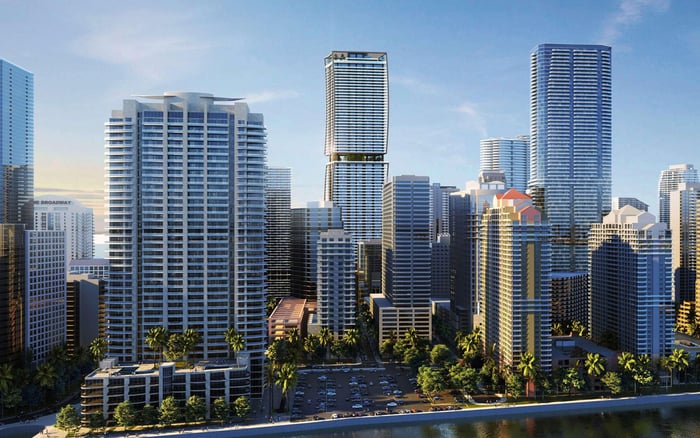
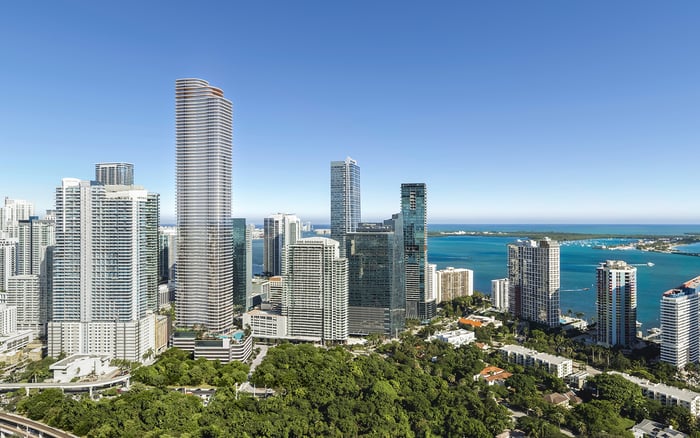
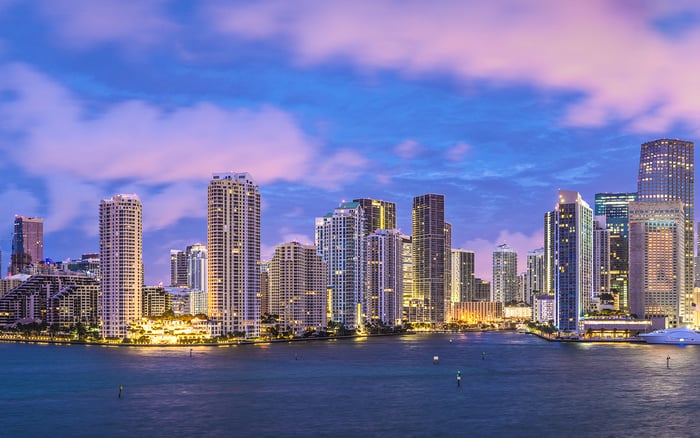
In Miami’s newest ultra-luxury towers, dining is no longer an afterthought. Developers are underwriting resident life around signature restaurants, cocktail lounges, and in-residence service, turning the building itself into a standing reservation. This buyer-focused ranking highlights five developments in Brickell and Downtown that are publicly marketed with dedicated food-and-beverage concepts, along with the practical questions sophisticated purchasers should ask before committing.
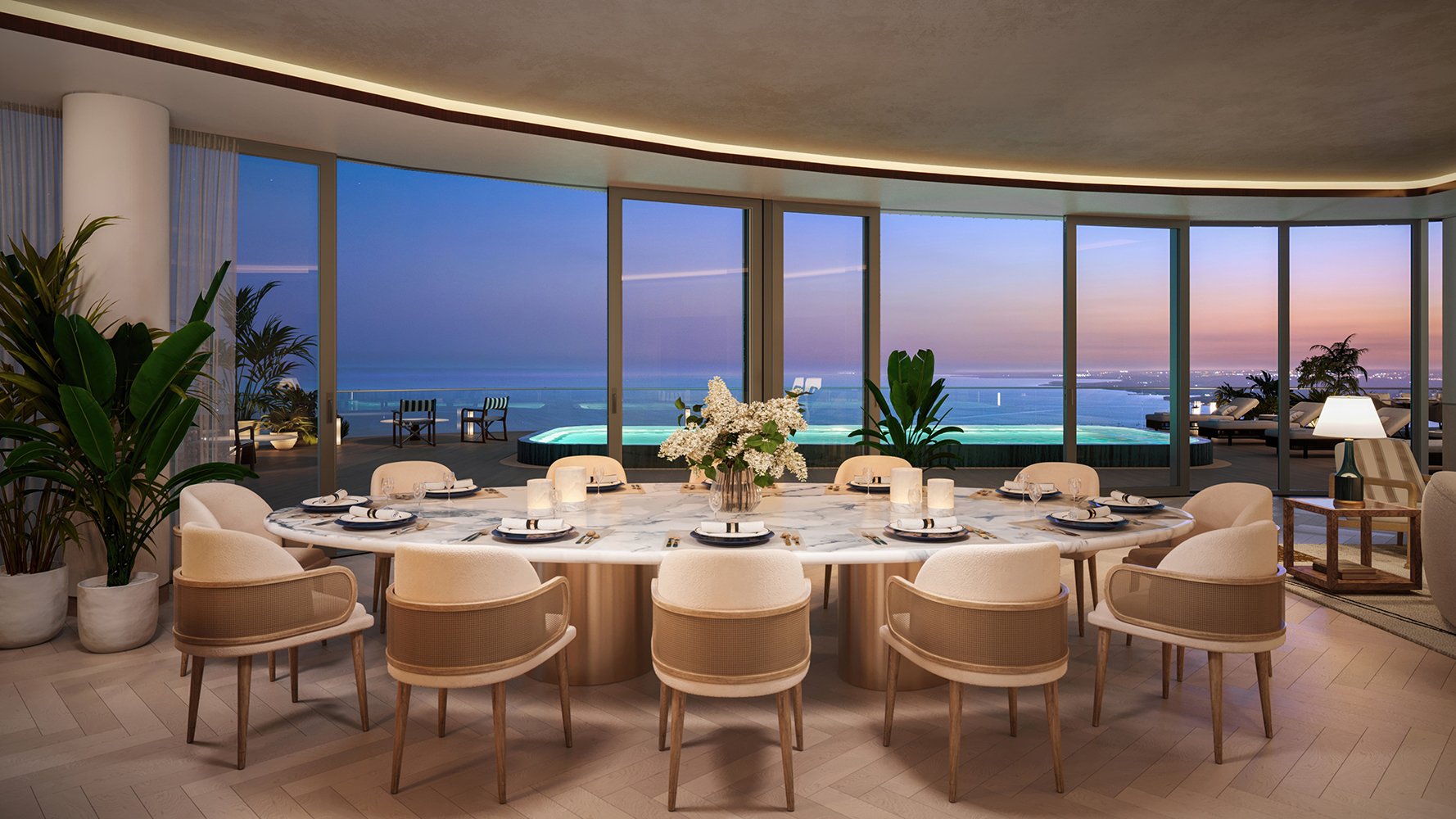
Miami’s luxury condo market has evolved beyond the expected conversation about floor plans, views, and finishes. Those fundamentals still matter, but the clearest differentiation in the newest ultra-luxury towers is lifestyle programming that removes friction from daily life. In the most ambitious developments, food and beverage is not treated as a nice add-on. It is positioned as a core amenity: a signature restaurant that functions like an extension of your dining room, a lounge that feels closer to a private club than a public bar, and service infrastructure built to make hosting feel seamless.
For buyers, this shift is not about novelty. It is about time, privacy, and consistency. A well-executed culinary program can deliver the social energy of going out while keeping the experience within a controlled environment. It also reshapes the value of location. In Brickell and Downtown, where premium addresses already compress commute times and concentrate culture, on-site dining can become a daily advantage rather than an occasional indulgence.
Not every building marketed to “foodies” delivers real livability. Before treating a restaurant or lounge as a deciding factor, look for details that signal whether the concept is designed around residents or merely adjacent to them.
Start with versatility. A single destination restaurant can be compelling, but the strongest amenity stacks typically layer more than one environment, such as a restaurant plus at least one bar or lounge. That range supports different moments: a quick breakfast, a spontaneous cocktail, a formal dinner, or a discreet meeting.
Next, assess the service pathways. Many of Miami’s newest developments promote concierge coordination, catered private events, and in-residence dining. Those features matter because they convert a branded venue into a private entertaining platform. Dinner for two should be able to scale into a birthday, client night, or holiday gathering without creating logistical work for the owner.
Then evaluate programming, not just the space. Chef tastings, wine programming, and private dining events are increasingly bundled into amenity narratives. Even when schedules and details vary, structured programming often indicates a developer intent to curate community and keep owners engaged.
Finally, weigh discretion. In ultra-luxury buildings, the most persuasive dining and bar concepts are resident-forward: controlled access, predictable service standards, and a tone that aligns with the tower’s overall privacy.
Below are five developments widely marketed with integrated dining and lounge concepts. The ranking reflects the clarity of publicly positioned food-and-beverage programming, plus the lifestyle framing around resident entertaining.
1. Waldorf Astoria Residences Downtown Miami - 330 Biscayne Blvd, Downtown Miami Waldorf Astoria Residences Miami is planned at 330 Biscayne Blvd and is promoted with signature restaurant and lounge concepts integrated into the building. It is also positioned with high-end amenity floors designed to support resident socializing and hosted events.
Marketing for the project has publicly referenced an approximate price band of $3.3M to $27M, placing it firmly in the rarefied end of the new-construction landscape while aligning the culinary experience with skyline-level entertaining.
2. Cipriani Residences Brickell - 1420 S Miami Ave, Brickell, FL 33130 Cipriani Residences Miami is positioned with a dedicated Cipriani restaurant and bar concept for residents, alongside an in-residence dining framing that aligns the brand’s hospitality heritage with everyday use.
It is marketed as an 80-story residential tower with 397 units, and has been promoted with an approximate price range of $1.1M to $4.4M, pairing a recognizable hospitality name with a Brickell address that rewards convenience.
3. St. Regis Residences Brickell - South Brickell Bayfront, Brickell St. Regis Residences Brickell is positioned as an all-residential tower with signature St. Regis service programming, and is promoted with a food-and-beverage offering that includes a restaurant plus multiple bar and lounge experiences.
For buyers, the appeal is the promise of a service culture that treats dining as part of a larger hospitality ecosystem, where the same standards that define a luxury stay are expected to shape resident life.
4. ORA by Casa Tua Brickell - 1210 Brickell Ave, Brickell, FL 33131 ORA by Casa Tua is planned at 1210 Brickell Ave and is marketed with multiple on-site dining and beverage venues branded by Casa Tua. Its amenity program includes “Terra,” described as a 24-hour market concept for food and essentials.
The project is also promoted with four distinct dining concepts, including a wine bar and rooftop dining, and has been publicly marketed with an approximate price range of $859K to $3.7M.
5. Baccarat Residences Brickell - 444 Brickell Ave, Brickell, FL 33131 Baccarat Residences Brickell is planned at 444 Brickell Ave on the Miami River and is positioned with a waterfront-focused lifestyle concept. It is marketed with an on-site signature restaurant and bar designed to leverage river views.
A private marina component has also been promoted as part of the project’s entertaining narrative, linking dining and arrival to waterfront access, with publicly marketed pricing in an approximate $1.8M to $4.3M range.
Brickell has become Miami’s most efficient luxury district: close to business nodes, walkable by local standards, and dense enough to support last-minute plans. What is changing is where those plans begin. New towers increasingly allow residents to move through a sequence of hospitality moments without ever leaving the property.
A clear example is the “vertical village” positioning at ORA by Casa Tua Brickell. The concept is built around connection, pairing multiple dining and beverage venues with an elevated green-space idea that has been publicly described as “Bosco.” “Terra,” the 24-hour market concept for food and essentials, is especially revealing. It signals that daily convenience is being treated with the same seriousness as celebration and entertaining.
A different kind of assurance comes from Cipriani Residences Brickell, where a residents-oriented restaurant and bar concept sits at the center of the pitch. The brand heritage is tied to Harry’s Bar in Venice, founded in 1931, and that lineage implies consistency. For buyers who entertain often, the value is less about the newest opening and more about having a reliable, high-standard option on standby.
Service-forward luxury also remains decisive. St. Regis® Residences Brickell is promoted with restaurant plus lounge experiences and a broader St. Regis service ethos. In practice, that kind of programming is most meaningful for owners who want a home that can shift from private to social smoothly, without feeling like a compromise.
From an underwriting standpoint, Brickell’s culinary arms race can support demand, but it can also create noise. Sophisticated buyers separate branding from mechanics: resident access policies, delivery pathways, and how private events are managed. In a district where time is the ultimate luxury, the right building makes hosting feel nearly invisible.
Downtown Miami’s appeal is simple: velocity. You are closer to the city’s visual drama and often closer to major cultural and event venues. When developers integrate restaurant and lounge programming into a Downtown tower, they are effectively underwriting a private venue high above the city.
That is why Waldorf Astoria Residences Downtown Miami stands out in the current conversation. The project is planned with signature restaurant and lounge concepts integrated into the building, and it has been publicly positioned with amenity floors designed to support socializing and hosted events. For certain buyers, the emotional benefit is direct: the ability to host in a setting that feels like a destination, without planning transportation or coordinating multiple reservations.
In Downtown, the dining program can also act as a social filter. When the experience is seamless and predictable, it becomes part of a resident’s weekly rhythm. That can be particularly compelling for second-home owners who want their Miami time to begin the moment they arrive.
Miami’s relationship with water is not only aesthetic. It is functional. Waterfront access can reshape how guests arrive, how long they linger, and how an evening feels. When a development pairs a signature restaurant and bar with water views, the social spaces can begin to function like a private club.
Baccarat Residences Brickell is planned on the Miami River and is marketed with a signature restaurant and bar concept designed around the river’s presence. The project is also promoted with a private marina component. For an owner who values arrival theater and outdoor entertaining, that is not a footnote. It is a lifestyle anchor.
The strongest waterfront dining environments do something subtle: they encourage guests to stay longer without making the night feel staged. River views can soften Brickell’s tempo, and a marina component can expand the definition of “walking distance” to include the waterway.
Culinary amenities can elevate daily life, but they should be evaluated with the same rigor as any major purchase driver.
Begin with frequency. If you dine out regularly, on-site options can replace multiple weekly reservations. If you travel often, you may value returning home and still accessing a polished restaurant experience without leaving the property.
Next, consider how you entertain. Some owners host intimate dinners and will care most about in-residence dining and catered private events. Others prioritize a lounge setting for pre-dinner cocktails or informal meetings. A building with multiple venues can meet both needs, but only if the service model is designed to support them.
Then consider discretion. The best programs feel resident-forward even when publicly visible. Concierge coordination, controlled access, and a consistent tone can be as important as the menu.
Finally, keep resale logic in view. In a fast-moving market, the most durable value often comes from concepts that are easy to use, not merely impressive to describe. A restaurant that becomes part of a resident’s routine is more likely to translate into long-term desirability.
Are on-site restaurants actually resident-focused? In the strongest towers, the concept is built to serve residents daily, not just to read well in marketing.
Does in-residence dining matter if I already use delivery apps? Yes. It can imply hotel-level execution and coordination, not basic delivery.
Why is Brickell leading this trend? Brickell’s density supports frequent, convenient dining and social programming within the building.
What does a 24-hour market amenity add? It reduces friction for essentials and makes the building feel livable at any hour.
How should I evaluate bar and lounge spaces? Look for multiple atmospheres, resident access controls, and consistent service standards.
Does a marina component change day-to-day life? It can, particularly for owners who arrive by water or host guests who do.
Are these culinary programs only for entertaining? No. The strongest offerings improve weekday routines as much as special occasions.
Will events and tastings feel intrusive? In well-managed buildings, programming is curated to remain optional and discreet.
Do branded hospitality names guarantee quality? They can signal standards, but buyers should still evaluate how service is structured.
What is the simplest question to ask before buying? Ask whether you would realistically use the dining program every week.
For private guidance on culinary-led luxury residences, connect with MILLION Luxury.
If branded residences are on your mind — as a home or as an allocation — we would be glad to share what we are seeing, privately.
Begin a quiet conversation