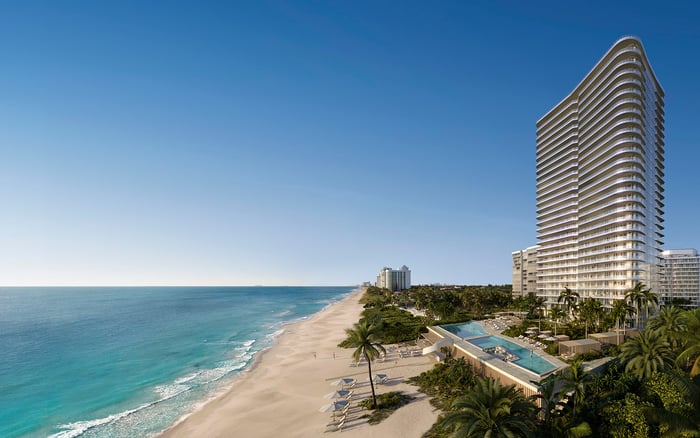
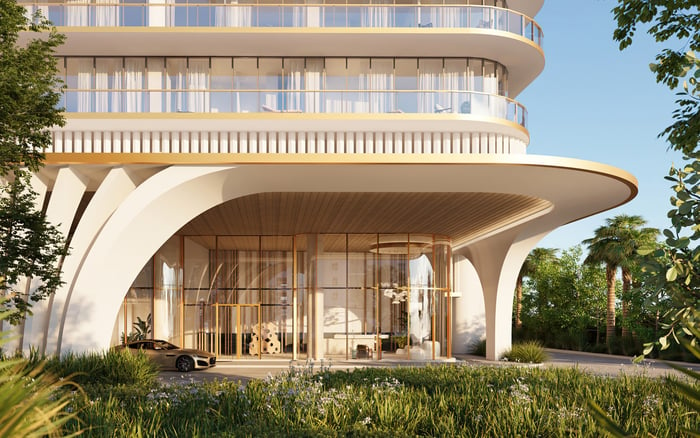
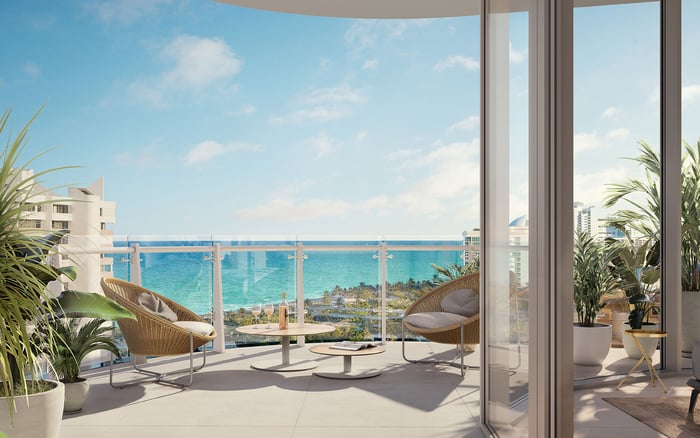
A discreet buyer’s guide to evaluating W Pompano Beach Hotel & Residences through the lens of storm-day livability, operational readiness and Pompano Beach coastal ownership.
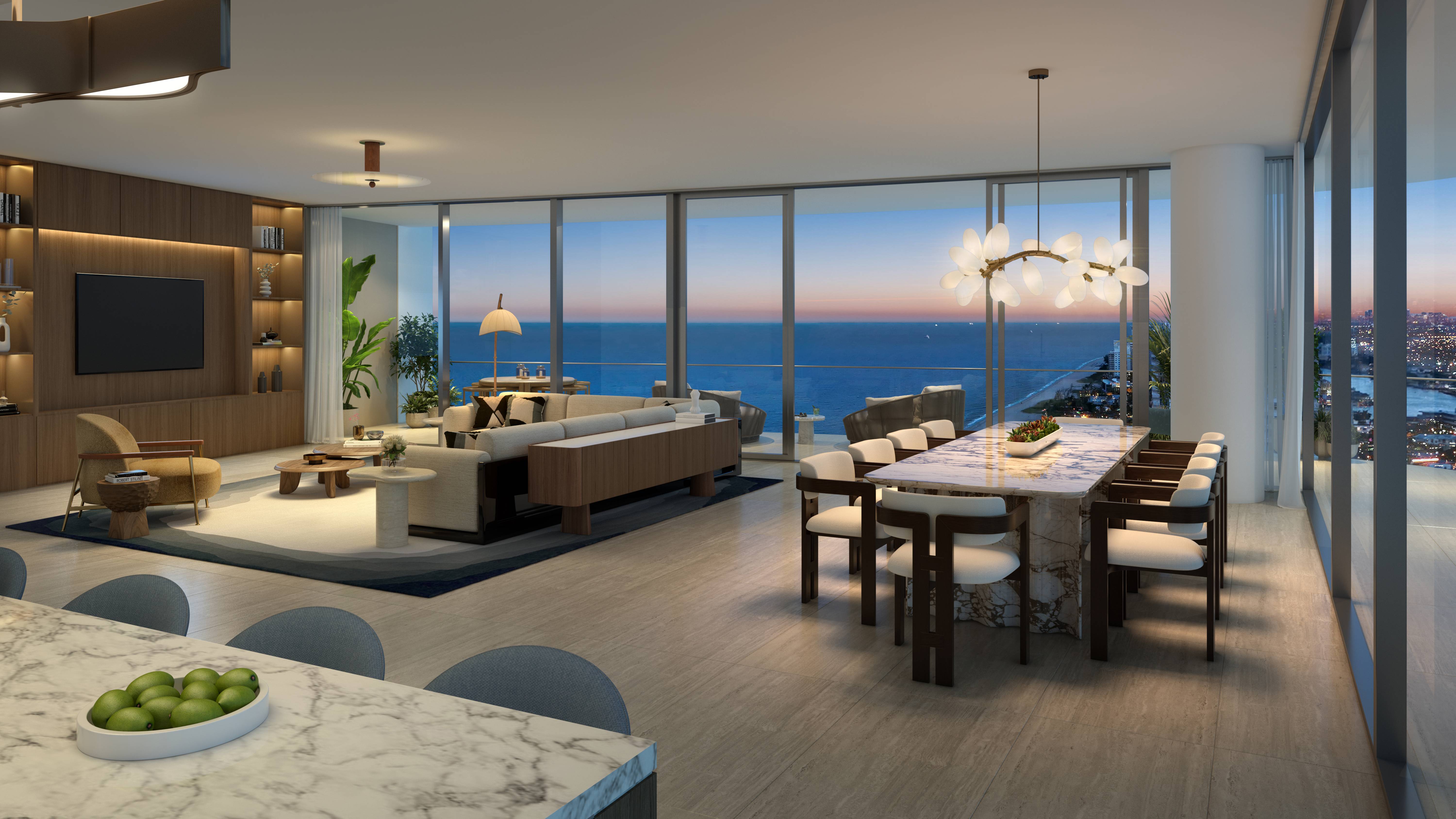
For South Florida buyers, a residence is no longer judged only by its view, finishes or social address. The most sophisticated purchasers now ask a quieter, more consequential question: how does the property live when the weather changes? Storm-day livability is not a marketing phrase. It is the intersection of building systems, staff protocols, access, comfort, communication and practical continuity.
That is why W Pompano Beach Hotel & Residences belongs on the shortlist for buyers who want a coastal residence examined through a resilience-first lens. The project is identified in Pompano Beach, and its name places it squarely in the branded hotel-and-residences conversation. For buyers, that makes it a property to evaluate carefully, not casually.
The point is not to assume that any single building has solved every storm-day concern. The point is to know which questions matter before choosing a residence where ownership may include seasonal absences, family visits, elderly relatives, pets, vehicles, art and staff coordination. At the upper end of the market, peace of mind is increasingly measured in operational detail.
Pompano Beach has become a more visible part of South Florida’s luxury corridor, particularly for buyers who want a coastal setting with access to the broader Broward and Miami lifestyle map. Within the Pompano Beach search universe, branded and design-forward projects are increasingly compared not only by amenity package, but by how they may support daily life during periods of disruption.
That matters because storm-day livability is a local issue. A buyer considering Armani Casa Residences Pompano Beach, The Ritz-Carlton Residences® Pompano Beach or W Pompano Beach Hotel & Residences is not simply comparing names. The sharper comparison is how each ownership opportunity should be reviewed for elevation, generator strategy, garage planning, drainage, communications, staffing, insurance posture and resident protocols.
Those items are rarely as glamorous as a lobby rendering, but they are central to ownership satisfaction. A tower can be beautiful on a calm afternoon and still require a rigorous review for how it performs when winds, rain, access limitations or service interruptions become part of the day.
The first priority is backup power. A serious buyer should ask which systems are supported, how long that support is intended to last, and whether coverage extends to elevators, life-safety systems, common areas, security, access control, cooling, water pressure or select residential functions. The distinction between life-safety backup and comfort backup can be substantial.
The second priority is vertical mobility. In a high-rise environment, elevators are not merely conveniences. They are the daily infrastructure of luxury living. Buyers should ask how elevator service is planned during and after major weather events, what redundancy exists, and how residents with mobility constraints are accommodated.
The third priority is water management. Storm-day livability depends on the building’s approach to site drainage, garage protection, equipment placement and flood-related design choices. This is where a polished sales presentation should be paired with technical review. Elevation certificates, flood maps, engineering details and condominium documents can help a buyer move from assumption to confidence.
The fourth priority is human operation. Hotel-and-residences environments can be compelling because they imply a service culture, but the buyer should still ask precise questions. Who is on site during a storm watch? How are residents updated? What happens if roads are limited? How are deliveries, valet operations, pets, guests and vendors handled? A luxury residence should feel composed, even when the surrounding environment is not.
Branded residences often attract buyers because they offer a legible lifestyle promise: design cohesion, hospitality influence, service orientation and a recognizable identity. A project such as Waldorf Astoria Residences Pompano Beach sits in the same broader buyer conversation, where the name on the building is part of the emotional and financial calculus.
For storm-day livability, however, brand is only the beginning. The intelligent buyer asks how the brand experience translates into operating standards. Does the property have clear resident communication procedures? Are staffing plans formalized? Are common-area operations designed for continuity? Are association responsibilities and hotel-related responsibilities clearly separated where relevant?
This is especially important for condo-hotel and hotel-residence formats, where ownership structure, rental flexibility, services and operating agreements can be materially different from conventional condominium living. Buyers should understand not only what they may enjoy in normal conditions, but also what they can rely on when conditions are less convenient.
W Pompano Beach Hotel & Residences should be viewed as a shortlist candidate because it is positioned in Pompano Beach and carries a hotel-and-residences identity that naturally invites scrutiny around service, operations and continuity. For a buyer prioritizing storm-day livability, that is precisely the kind of asset to place under a disciplined lens.
Shortlisting does not mean buying on name recognition. It means the project merits a direct, document-led conversation before a purchaser makes a decision. The buyer should request building specifications, condominium documents, operating summaries, insurance information, flood-related documentation and details on emergency procedures. Legal, engineering and insurance advisors should be part of that review for any significant coastal purchase.
The comparison set should be broad enough to reveal standards. A buyer looking at Ocean 580 Pompano Beach alongside W Pompano Beach Hotel & Residences can sharpen the right questions: which building best supports the owner’s actual life, not just the owner’s preferred aesthetic?
During a private presentation, storm-day questions should be asked calmly and specifically. Begin with the building envelope, then move to mechanical systems, then to resident operations. Ask where critical equipment is located, what flood mitigation measures are contemplated or documented, how parking areas are protected, and how access is controlled if power, elevators or streets are affected.
Ask about post-storm re-entry, communication cadence and staffing expectations. Ask whether residents receive written protocols. Ask how the property handles pets, guest access, deliveries, valet limitations, waste removal and temporary amenity closures. These details may sound mundane, yet they are often the difference between a residence that merely shelters and a residence that remains livable.
For new-construction buyers, the opportunity is to clarify expectations before closing, while documents and specifications can still be reviewed in depth. In a market where design and branding are abundant, operational clarity is a luxury of its own.
Is W Pompano Beach Hotel & Residences located in Pompano Beach? Yes. W Pompano Beach Hotel & Residences is listed for Pompano Beach.
Does the available information confirm specific storm-resilience features? Specific details such as backup power, elevation, flood mitigation and delivery timing should be confirmed directly through project documentation and professional review.
Why should storm-day livability matter to luxury buyers? It affects comfort, access, communication, mobility, security and confidence during weather-related disruption.
What should buyers ask about backup power? Buyers should ask which systems are supported, how long support is planned, and whether comfort systems differ from life-safety systems.
Are hotel-and-residences formats different from conventional condominiums? They can be, particularly in service structure, operations, rental policies and association documents, so buyers should review the governing materials carefully.
Should a buyer compare W Pompano Beach Hotel & Residences with other Pompano Beach projects? Yes. Comparing projects can clarify standards for design, operations, documentation and day-to-day ownership expectations.
What role should advisors play in this review? Legal, engineering and insurance advisors can help interpret documents, risks and obligations before a buyer commits.
Is branding enough to establish storm-day confidence? No. Branding may signal service ambition, but buyers still need documentation, specifications and operating clarity.
What is the most overlooked storm-day question? Many buyers overlook staffing and resident communication, which can matter as much as physical systems during disruption.
What is the best way to shortlist comparable options for touring? Start with location fit, delivery status, and daily lifestyle priorities, then compare stacks and elevations to validate views and privacy.
If you'd like a private walkthrough and a curated shortlist, connect with MILLION.
If branded residences are on your mind — as a home or as an allocation — we would be glad to share what we are seeing, privately.
Begin a quiet conversation