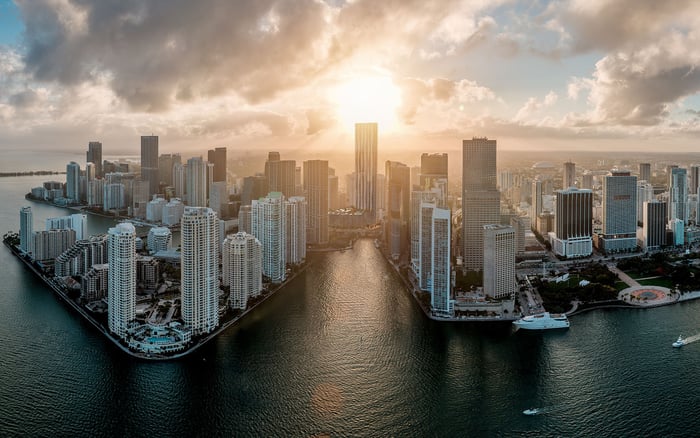
Bridge clearance is one of the quiet variables that can reshape the true cost of owning in a South Florida full-service tower. For waterfront buyers, the issue is not only whether a residence has views, service, or proximity to the water, but whether the daily rhythm of boating aligns with the tower’s location, access route, and long-term resale audience.
In South Florida luxury real estate, the conversation around a full-service tower often begins with the visible pleasures: architecture, arrival sequence, water views, private dining, spa programming, valet, concierge, and the social pull of a coveted address. Yet for a certain buyer, the most consequential detail may sit outside the lobby and beyond the pool deck. Bridge clearance can quietly change the real cost of ownership.
The issue is not abstract. A residence can appear perfectly positioned on a map, with glittering water beyond the glass and a service model worthy of a private club, yet still create friction for an owner whose life includes a serious boat. A fixed bridge, a drawbridge schedule, a narrow channel, or a route that demands repeated timing calculations can affect how often the boat is used, what vessel makes sense, and how desirable the asset feels to the next buyer.
That is why sophisticated purchasers evaluate waterfront towers through two lenses at once. One is residential: finish level, privacy, service, building culture, and view. The other is nautical: access, clearance, wait time, routing, and the fit between the residence and the vessel. The premium is not simply for being near the water. It is for living with the water easily.
The purchase price is only the first number. The real cost of a tower residence includes the compromises it asks of the owner over time. If bridge clearance restricts the boat an owner can keep nearby, the buyer may face a different marina arrangement, a smaller vessel, a longer route, or less spontaneous use. None of these line items needs to appear on a closing statement to matter.
For a buyer comparing a Brickell residence with a coastal or bayfront alternative, the same square footage can carry a very different lifestyle equation. A tower such as Una Residences Brickell may appeal to someone prioritizing urban waterfront living, while another buyer may place greater emphasis on the ease of reaching open water from a less constrained boating corridor. The best choice depends on how the owner actually lives.
Clearance also affects future liquidity. A waterfront residence that works for both view-driven buyers and boating-focused buyers may speak to a deeper resale audience. By contrast, a location that reads as nautical but practically excludes certain vessels may narrow the buyer pool. The result can be a subtle but important difference in market depth.
A full-service tower can remove many daily inconveniences. Staff can receive guests, manage vehicles, coordinate deliveries, assist with reservations, and create a hotel-like atmosphere around private ownership. But service cannot change the height of a bridge or the geometry of a waterway.
This distinction matters. A buyer may be drawn to a residential experience that feels effortless inside the building, then discover that the boating component remains highly conditional. The lesson is not to avoid towers behind bridges. Many buyers love them, especially when the residence delivers privacy, views, neighborhood access, and a refined amenity platform. The lesson is to price the lifestyle honestly.
Boat-slip planning is especially important when the residence is part of a broader waterfront routine. If a slip, marina relationship, or nearby storage option is central to the ownership experience, the clearance route should be treated as part of due diligence. A beautiful lobby cannot compensate for a vessel that cannot comfortably reach its intended water.
South Florida is not one waterfront market. It is a series of micro-markets, each with its own relationship to water access. Bayfront, riverfront, oceanfront, Intracoastal, island, and canal-adjacent addresses all create different patterns of movement.
In Bay Harbor Islands, for instance, a buyer studying La Baia North Bay Harbor Islands may be thinking about a quieter residential atmosphere and bay-oriented living rather than the same daily rhythm as a high-intensity urban core. In Fort Lauderdale, a residence such as Riva Residenze Fort Lauderdale may attract buyers who are more explicitly sensitive to boating logistics because the city’s identity is so closely tied to waterways.
Pompano Beach, Sunny Isles, Miami Beach, Coconut Grove, and the islands each carry their own version of the same question: does the address provide only a water view, or does it provide a seamless waterfront life? The answer can change the practical value of an otherwise comparable residence.
The most useful questions are not generic. They are personal. What boat do you own today? What boat might you buy in three years? Will you go out at fixed times, or do you want spontaneity? Is a marina walk part of the pleasure, or does it become a chore? Do you entertain aboard, fish offshore, cruise locally, or simply want the water as a backdrop?
A buyer looking at The Ritz-Carlton Residences® Pompano Beach may value coastal ease, service, and a resort-caliber residential environment. Another buyer may compare that experience with an inland bayfront address and assign a different premium to directness, privacy, or neighborhood character. Neither is universally superior. The right answer is the one that matches the owner’s habits.
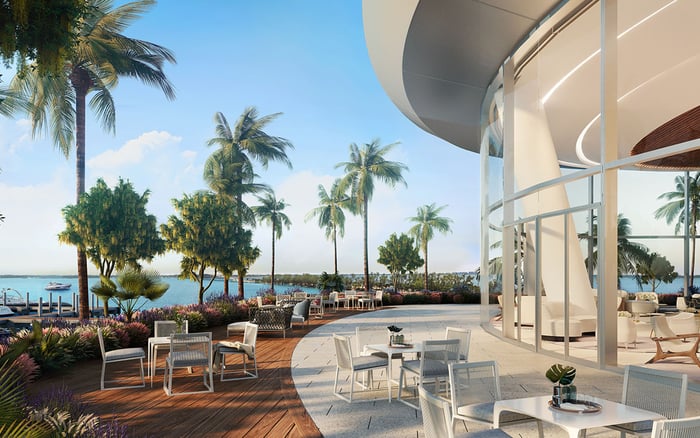
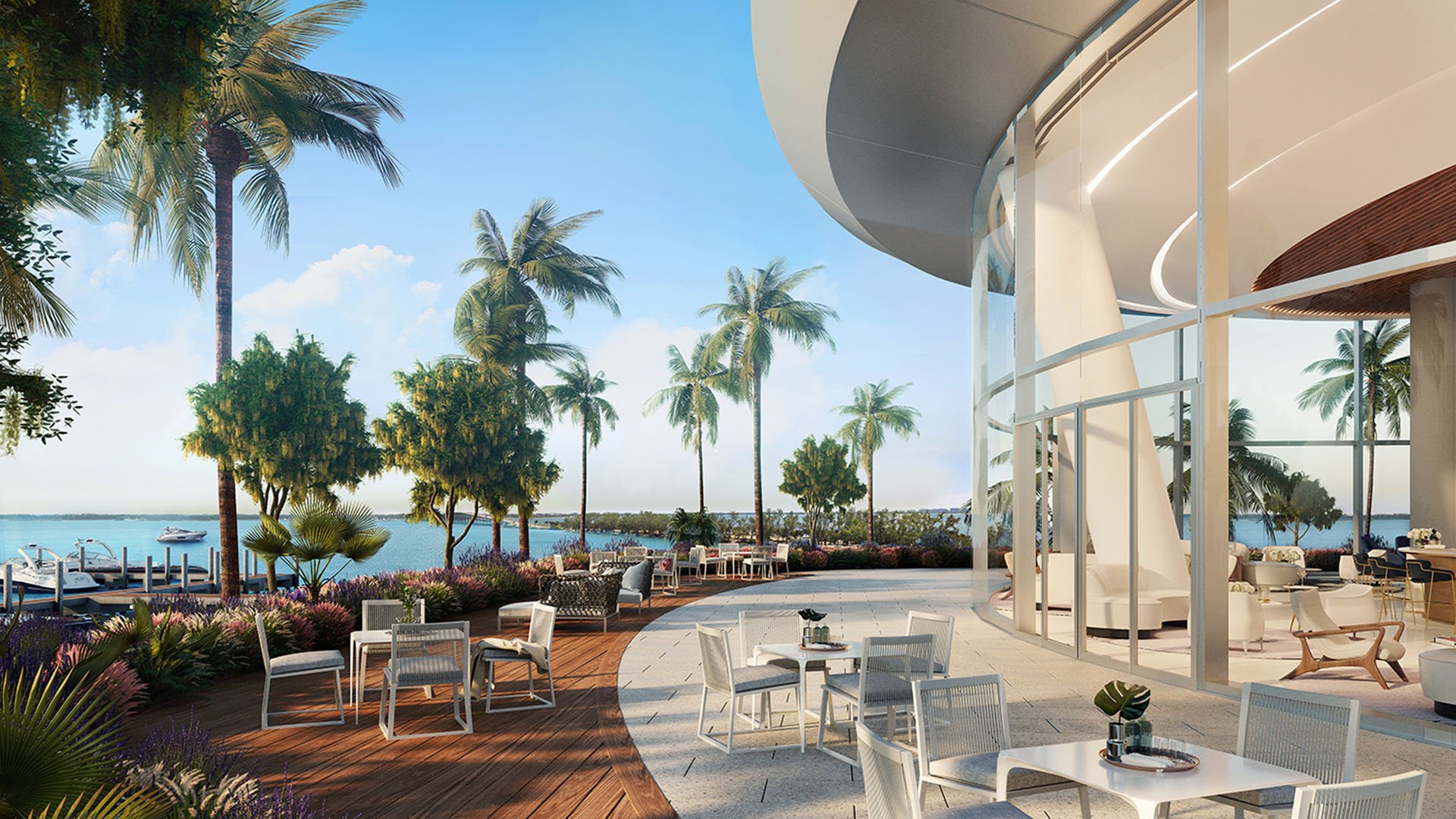
New-construction buyers should be especially attentive because polished sales environments can make all waterfronts feel equally convenient. Renderings emphasize beauty, not constraints. The water may look open, calm, and immediate, while the actual route to open water is more nuanced.
Luxury buyers do not need to be told that views command premiums. The more refined question is whether the premium is for a view, access, or both. Oceanfront towers often price the emotional impact of the horizon. Intracoastal and bayfront residences may price a more layered promise: scenery, boating culture, sunset, privacy, and movement.
When bridge clearance limits vessel choice, the buyer should separate the visual premium from the access premium. If the residence is being marketed or perceived as a boater’s address, access should withstand scrutiny. If the residence is fundamentally a serene waterfront home with service and views, then a bridge constraint may be acceptable, even irrelevant, to the right owner.
This is where marina due diligence becomes a valuation tool. It can clarify whether a tower should be compared to other boating-forward addresses or to luxury view residences with secondary water use. That distinction can influence negotiation, resale expectations, and the buyer’s willingness to stretch for a particular floor or line.
The strongest South Florida acquisitions are not always the most obvious. They are the homes where the buyer understands exactly what is being purchased. In a full-service tower, that means reading beyond the finishes and asking how the property functions at 7 a.m. on a perfect boating day.
Bridge clearance is rarely glamorous, but it is deeply practical. It can change vessel decisions, usage patterns, marina strategy, and resale appeal. For owners who never intend to boat, it may be background noise. For owners who do, it can be the detail that separates a beautiful purchase from a truly intelligent one.
Why does bridge clearance matter when buying a luxury tower? It can affect boating convenience, vessel choice, and the practical value of a waterfront address.
Is a waterfront view the same as boating access? No. A residence can have exceptional water views while still involving bridge or routing constraints.
Should non-boaters care about bridge clearance? Sometimes. Even non-boaters may benefit from understanding how access affects future resale demand.
Can full-service amenities offset a difficult boating route? They can enhance daily life inside the building, but they cannot remove nautical constraints outside it.
What should yacht owners review before contract? They should review the route from residence to open water, including bridge conditions and marina logistics.
Does bridge clearance affect every South Florida market equally? No. Each waterfront micro-market has its own access profile and buyer expectations.
Can bridge limitations make a residence a poor purchase? Not necessarily. It depends on whether the buyer is paying for views, boating access, or both.
How does clearance influence resale? Easier access can broaden appeal among boating buyers, while constraints may narrow that audience.
Should boat-slip availability be reviewed separately? Yes. A slip or marina option is only useful if the vessel and route fit the owner’s needs.
What is the best way to evaluate the real cost? Compare the residence, service model, water access, and future buyer pool as one complete ownership picture.
For a tailored shortlist and next-step guidance, connect with MILLION.
If branded residences are on your mind — as a home or as an allocation — we would be glad to share what we are seeing, privately.
Begin a quiet conversation