A discreet planning framework for aligning a San Francisco sale with a Surfside purchase, from vesting and homestead priorities to escrow, financing, privacy, and entity discipline.

Leaving San Francisco for Surfside is not simply a sale followed by a purchase. For a high-value homeowner, it is a coordinated transition across two properties and two legal environments, involving the movement of substantial funds and a consequential decision about how the next residence should be owned.
The central question is not which structure sounds most sophisticated. It is whether title, financing, homestead priorities, privacy, liability planning, estate planning, and the intended use of the Surfside property all point in the same direction. That alignment should be established before closing documents are finalized-not reconstructed after the keys are delivered.
For readers of MILLION’s Buyer's Guides, the most useful principle is straightforward: design the ownership architecture around the property’s actual use.
The California residence and the Florida acquisition should be analyzed separately, even when the proceeds from one fund the other. A structure suited to a rental asset may be poorly suited to a primary home.
Under California’s 2025 framework, the homestead exemption protected an inflation-adjusted $361,113 to $722,151 of primary-residence equity, depending on county median home prices. Moving a California primary residence into an LLC may jeopardize that protection. Any pre-sale deed transfer also warrants review because changes in ownership or title can create property-tax consequences.
A revocable living trust can support probate avoidance and estate planning, but it generally does not protect the grantor from creditors because the grantor retains the power to revoke it. An LLC serves a different purpose: when properly formed and administered, it can separate real-estate liabilities from personal assets.
The practical conclusion is clear: the San Francisco exit structure should not automatically become the Surfside acquisition structure. Each side requires its own analysis, coordinated through a single closing plan.
Intended use should be determined before vesting. If Surfside will become the buyer’s primary residence, potential homestead eligibility and financing flexibility may outweigh the privacy and liability advantages of LLC ownership. Florida eligibility, occupancy timing, deed language, lender requirements, and local filing details require confirmation with Florida advisers.
If the residence will be a Second-home, the analysis may focus more heavily on financing, estate planning, insurance, and privacy. If it will be an Investment property, an LLC may provide clearer separation between rental-related liabilities and the owner’s personal affairs.
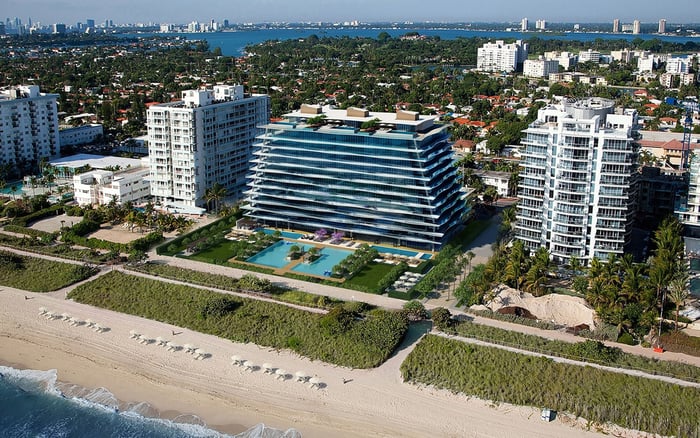
This distinction applies throughout Surfside’s Oceanfront market. A buyer considering Arte Surfside as a personal residence may reach a different vesting decision from an owner acquiring a unit primarily for investment. The same disciplined inquiry belongs in the review of Fendi Château Residences Surfside: who will occupy the home, how will it be financed, and what should the title accomplish?
An LLC owned by a trust can offer substantial ownership privacy, but it also introduces greater complexity and state-dependent homestead questions. Layered LLC, partnership, and trust arrangements are often used to segregate assets and litigation risks, yet complexity is worthwhile only when every layer has a defined purpose.
U.S. real estate may be held directly, through a trust, through a single-member disregarded entity, or through another entity form. Each approach can carry distinct tax and reporting implications. The right choice therefore requires coordinated advice from counsel, tax advisers, the lender, insurance professionals, and the closing team.
For a purchase at Ocean House Surfside or The Delmore Surfside, the buyer should settle four points early: the purchaser’s identity, the final vesting language, the source and path of funds, and the property’s intended use. The contract name, loan application, insurance binder, wire instructions, and closing statement should all reflect the approved structure.
Changing title after closing may introduce further tax, financing, insurance, and administrative questions. A clean pre-closing decision is usually more elegant than a corrective deed.
Sale proceeds should follow a documented path that matches the purchaser identified in the Surfside file. Before funds leave California escrow, the closing team should confirm account ownership, wire instructions, required entity resolutions, trust certificates, and lender conditions.
If an LLC is selected, its liability shield depends on substantive administration-not merely the letters after its name. Personal and entity funds should not be commingled. The company should maintain separate accounts, records, governing documents, and transaction approvals.
California LLCs generally require Articles of Organization, a registered agent, and a Statement of Information after formation. They also generally face an $800 annual minimum franchise tax, regardless of income or property activity. California does not authorize domestic Series LLC formation, and an out-of-state Series LLC doing business there may face an $800 tax for each series. Separate LLCs organized by property or risk category are a common alternative, but they add cost and administration.
Before signing, confirm the Surfside property’s intended use, final owner, tax classification, loan structure, insurance placement, and local homestead strategy. Then reconcile those decisions with the California sale timeline and escrow flow.
The final review should resolve several practical questions: Does the buyer named in the contract match the approved vesting? Can the receiving account accept the funds? Has the lender approved the owner and title format? Do the insurance documents identify the correct parties? Are all trust and entity authorizations ready?
This coordinated review preserves optionality without allowing privacy, asset protection, or estate-planning ambitions to disrupt the closing itself.
Should the San Francisco home and Surfside property use the same structure? Not necessarily. Each property’s use, location, financing, homestead position, and risk profile should be evaluated separately.
Can a California primary residence be transferred into an LLC before sale? It may be possible, but the transfer could jeopardize homestead protection and create property-tax consequences. Review should precede any deed.
Does a revocable living trust provide creditor protection? Generally, no. It can support estate planning and probate avoidance, but the grantor’s power to revoke it usually limits creditor protection.
Is an LLC always preferable for a Surfside purchase? No. For a primary residence, homestead eligibility and financing flexibility may matter more than an LLC’s privacy and liability features.
When may LLC ownership be more suitable? It may be more suitable when the Surfside property is held as an investment and rental-related liabilities should be separated from personal affairs.
Can a trust own the purchasing LLC? Yes, but the structure adds complexity and may affect state-dependent homestead eligibility, tax treatment, reporting, financing, and administration.
Why should vesting be decided before closing? Early approval helps align the contract, loan, insurance, escrow funds, entity documents, and deed, reducing the need for a later transfer.
What weakens an LLC liability shield? Commingling personal and company funds, maintaining incomplete records, and administering the entity poorly can undermine the separation it is intended to create.
Does California permit domestic Series LLCs? No. An out-of-state Series LLC operating there may also incur an $800 franchise tax for each series.
Which Florida details require local verification? Homestead eligibility, occupancy deadlines, deed requirements, lender conditions, insurance treatment, and filing procedures should be confirmed locally.
For a confidential assessment and a building-by-building shortlist, connect with MILLION.
If branded residences are on your mind — as a home or as an allocation — we would be glad to share what we are seeing, privately.
Begin a quiet conversation