A discreet buyer’s guide to evaluating construction-noise exposure before purchasing luxury real estate in Pompano Beach, with practical questions for showings, contracts, terraces, amenities, and long-term ownership.
Construction-noise exposure is rarely the first concern a buyer raises when considering a waterfront residence in Pompano Beach. Views, finish packages, service culture, private amenities, parking, and beach access tend to lead the conversation. Yet for a discerning purchaser, particularly one considering a primary residence or seasonal home used for recovery, work, and entertaining, the sound environment can be as consequential as the floor plan.
Pompano Beach is drawing attention from buyers who want a more composed coastal rhythm within Broward, but luxury still requires discipline. A residence may feel serene during a curated showing, then sound very different at 8:30 a.m. on a weekday, on a breezy terrace, near an amenity deck, or from a bedroom facing an active corridor. The objective is not to avoid every sign of growth. It is to understand exposure, timing, orientation, insulation, and contractual protections before the deposit becomes emotional.
This is especially relevant when comparing branded and oceanfront offerings such as Armani Casa Residences Pompano Beach, The Ritz-Carlton Residences® Pompano Beach, and Waldorf Astoria Residences Pompano Beach. Each buyer’s threshold is personal, but the questions should be professional.
Before falling for a view line, ask what surrounds the building today and what could reasonably change. The most useful conversation begins with a simple radius study: adjoining parcels, vacant land, older low-rise buildings, nearby commercial sites, roadway edges, marina infrastructure, and any property that appears underutilized relative to its setting.
Ask the sales team, your advisor, and counsel to identify active construction sites and plausible future sites. Do not limit the review to projects visible from the lobby. Sound travels differently across open water, along street canyons, and between hard surfaces. A crane two blocks away may be less relevant than a staging zone just below the balcony. A future garage entrance may matter more than a distant tower.
For buyers using Pompano Beach as a lifestyle search category, the key is to translate romance into exposure. Which side of the building faces potential work? Which stack looks toward neighboring parcels? Which amenity areas could sit close to delivery routes or temporary staging? A spectacular line can still be the right purchase, but it should be priced, negotiated, and occupied with clear expectations.
A luxury conversation should move quickly from verbal reassurance to documentation. Ask for written materials that address construction schedule assumptions, adjacent site awareness, building envelope details, terrace door specifications, window systems, mechanical separation, and any known work that may affect early occupancy.
The language matters. A general statement that a residence is “well built” is not the same as a clear explanation of glazing, wall assemblies, slab design, and mechanical isolation. Ask whether bedroom walls have different acoustic priorities than living areas. Ask how elevator cores, service corridors, loading areas, pool equipment, and emergency generators are separated from residential interiors.
With new-construction purchases, the buyer is often evaluating a promise as much as a finished object. That does not mean accepting ambiguity. It means asking for the most specific written information available, then having the purchase documents reviewed for what is represented, what is merely illustrative, and what can change.
A polished tour can be misleading because it compresses the property into its most flattering hour. If possible, visit the location on a weekday morning, midafternoon, early evening, and a weekend. Stand quietly in the arrival sequence, garage area, amenity levels, elevator lobby, bedroom zones, and terrace. Listen without conversation for at least a few minutes in each place.
If you are considering a residence at W Pompano Beach Hotel & Residences or Ocean 580 Pompano Beach, apply the same discipline you would bring to any ultra-premium market: test the everyday experience, not just the brochure moment. Open and close terrace doors. Sit where you would take calls. Stand where you would place the primary bed. Walk the route from parking to elevator and from elevator to residence.
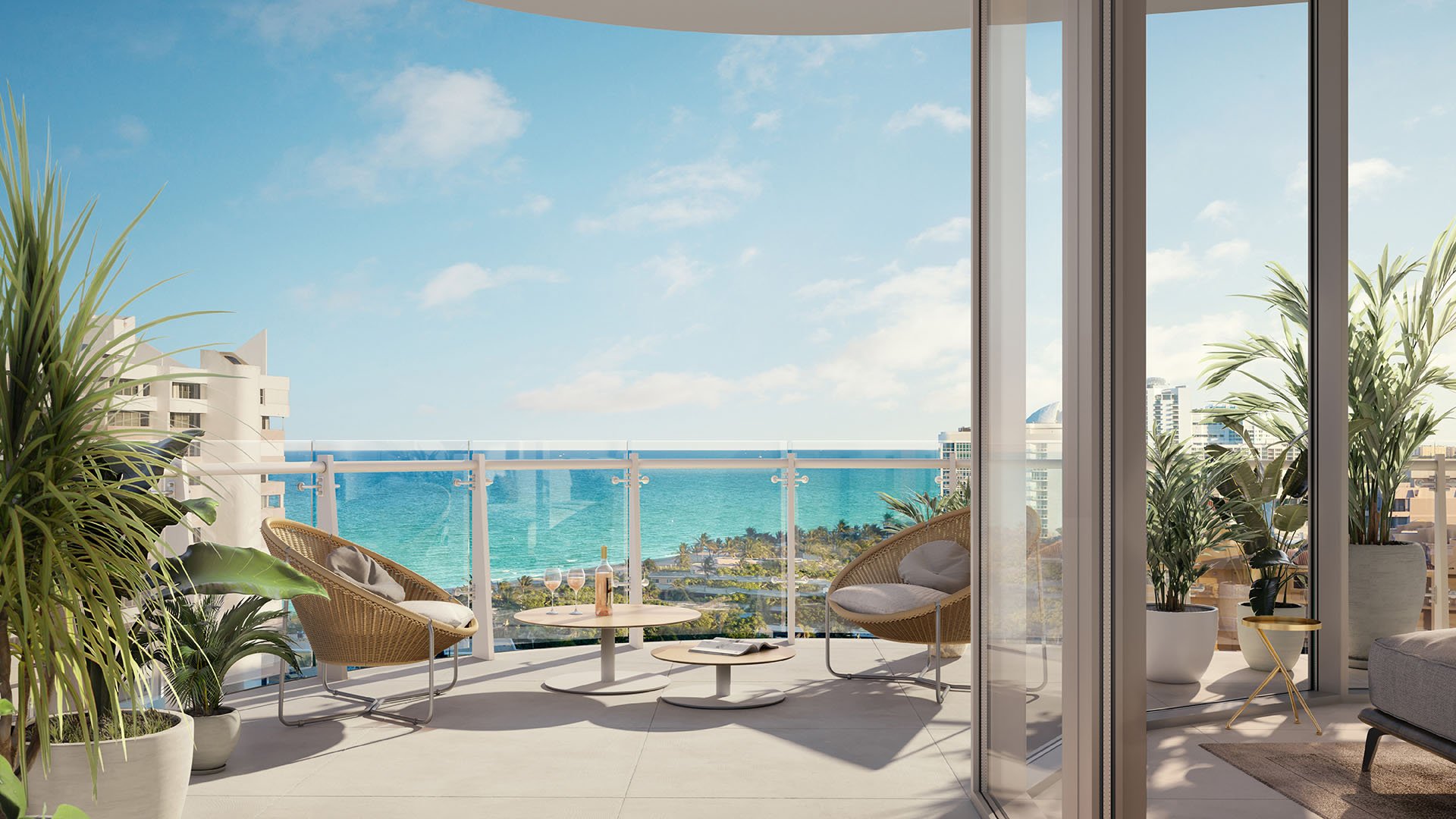
Oceanfront does not automatically mean quiet. It can mean restorative surf, open air, and visual calm, but it can also mean wind, balcony acoustics, pool-deck activity, nearby work, and amplified exterior sounds. The question is not whether sound exists. The question is whether the residence manages it in a way that suits your life.
Ask directly: Are there active construction sites nearby? Are there planned or publicly visible projects in the immediate area? Where are the likely truck routes, loading zones, or staging areas? What work hours apply to the site, the building, and nearby parcels? Are there association rules governing renovation noise after turnover?
Then move from neighborhood to unit. Which rooms face the highest potential exposure? Are the primary suite and main terrace oriented toward or away from likely activity? Does the line rely on sliding glass for acoustic performance? Are there operable windows, and if so, how do they perform when closed? Are any mechanical rooms, elevators, service shafts, or amenity spaces adjacent to the residence?
Finally, ask about remedies and timing. If delivery occurs while nearby work continues, what disclosures have been made? What walk-through rights exist? What happens if building elements differ from the sound-control expectations described during sales conversations? Which statements can be incorporated into written communications before contract execution?
Construction-noise diligence is not only a lifestyle exercise. It is a contract exercise. Buyers should avoid relying on impressions alone, particularly when purchasing before completion. Have counsel review disclaimers, change rights, association documents, construction rules, and any language addressing surrounding development.
If noise exposure is material to the decision, say so early. A buyer who works from home, records audio, sleeps during daytime hours, hosts wellness retreats, or expects extended terrace use has a different risk profile from a buyer who visits only on weekends. The more specific the lifestyle need, the more important it is to memorialize the questions asked and the answers received.
Also consider resale. Future buyers may ask the same questions you are asking now. A residence with a clear orientation story, strong interior quiet, and manageable exposure can be easier to explain. A residence with uncertainty can still be desirable, but it should be understood as part of the investment narrative.
Luxury buyers sometimes frame the issue as a binary: quiet or noisy. In a growing coastal market, the better framework is layered. What is the baseline sound? What is temporary? What is structural? What is controllable through orientation, glazing, elevation, and use pattern? What could change after closing?
The most elegant purchases are not necessarily the ones with no ambient sound. They are the ones where the buyer understands the sensory profile before committing. In Pompano Beach, that means pairing architectural desire with practical questions, then letting the answers shape the line, floor, timing, and terms.
Should I ask about construction noise before touring a Pompano Beach condo? Yes. Raising the issue early helps your advisor focus on orientation, nearby parcels, and the building features most relevant to quiet enjoyment.
Is a higher floor always better for reducing construction noise? Not always. Height can help in some situations, but exposure depends on orientation, surrounding surfaces, wind, distance, and the type of activity.
What rooms should I test most carefully during a showing? Prioritize the primary bedroom, main living area, home office location, and terrace because these spaces usually define daily comfort.
Can terrace sound differ from interior sound? Yes. A residence may feel calm inside with doors closed while the terrace has a very different acoustic profile.
Should I visit more than once before making an offer? If timing allows, visit at different times and on different days. A single showing can miss the patterns that affect real living.
What should I ask about neighboring parcels? Ask whether nearby sites are active, vacant, underused, or visibly positioned for possible redevelopment, then assess how each relates to your unit line.
Can contract language help with noise concerns? It can help clarify what has been represented, what remains subject to change, and what rights you have before closing.
Are amenity decks a potential noise source? They can be. Pool areas, service functions, equipment, and social spaces should be evaluated alongside external construction exposure.
Is construction noise always a reason not to buy? No. It is a factor to price, manage, and understand, especially if the residence otherwise fits your long-term lifestyle goals.
Who should review noise-related concerns before contract signing? Your real estate advisor and counsel should review the practical exposure, written materials, and purchase documents before you commit.
For a confidential assessment and a building-by-building shortlist, connect with MILLION.
If branded residences are on your mind — as a home or as an allocation — we would be glad to share what we are seeing, privately.
Begin a quiet conversation