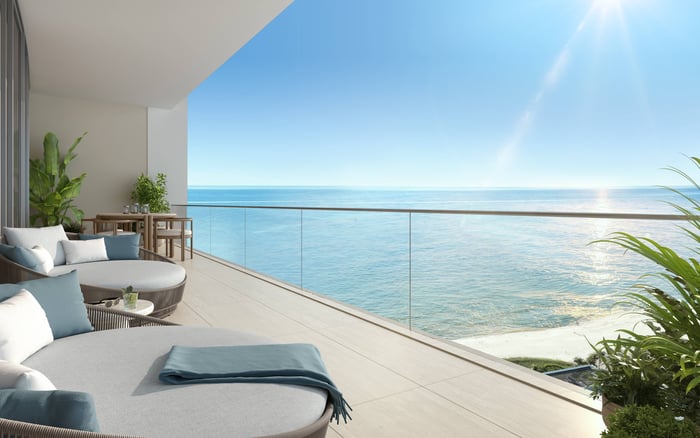
A finance-minded guide to evaluating Pompano Beach luxury residences with discipline, from carrying costs and governance to branded positioning, daily use, and exit liquidity.

For finance executives, the most intelligent way to evaluate Pompano Beach is to separate desire from durability. A luxury residence can persuade within seconds: light, water, ceiling height, a private terrace, the rhythm of arrival. The real question is whether the asset still holds together after conservative underwriting.
That exercise should feel familiar. Define the acquisition thesis, expected holding period, liquidity assumptions, downside case, and non-negotiables. Then ask whether the residence serves one clear purpose: primary home, second home, family base, lifestyle hedge, or long-term capital placement. A buyer who treats Pompano Beach as a personal balance-sheet decision will read the market differently from one led only by finishes.
The investment memo should go deeper than labels. The best purchase is not necessarily the most dramatic residence. It is the one whose cost structure, governance, privacy, and resale story remain coherent under pressure.
A luxury buyer rarely needs help affording a residence. The sharper question is whether the carrying profile is elegant. In coastal condominium ownership, purchase price is only the first line item. A finance executive should model taxes, insurance, association dues, reserves, assessments, maintenance, utilities, club-style fees, parking, storage, service expectations, and potential upgrades after closing.
Run the numbers as if the asset were a portfolio position with variable expenses. What happens if insurance costs rise? What if association reserves require more capital? What if a second-home usage pattern means higher service, cleaning, and management costs than expected? A residence that appears fairly priced can become less attractive when recurring obligations are opaque or the building’s capital plan is difficult to read.
This is where branded and service-driven residences deserve particular scrutiny. A building such as The Ritz-Carlton Residences® Pompano Beach may belong in the conversation for buyers seeking a managed luxury environment, yet the underwriting should still isolate service value from service cost. The point is not to avoid premium amenities. It is to confirm that the premium is intentional.
Pompano Beach should not be evaluated as one undifferentiated market. For a finance executive, the more useful exercise is to segment product types. A boutique waterfront residence, a branded tower, a hotel-residential concept, and a smaller new development may all compete for the same buyer, but they do not carry the same risk profile.
Consider what you are actually buying: scarcity of frontage, brand identity, privacy, amenity depth, lock-and-leave convenience, future rental flexibility, or a larger floor plan at a different basis. Each can be rational. The mistake is comparing price per square foot before comparing use case.
A residence at Armani Casa Residences Pompano Beach can be evaluated through the lens of design positioning and personal fit. Ocean 580 Pompano Beach may belong in a different conversation, especially for buyers focused on scale, simplicity, or a more boutique residential feel. The correct decision depends less on which name feels more prestigious and more on which structure fits the buyer’s actual life.
The most disciplined buyers ask the exit question before the offer. If you had to resell in a less generous market, who is the next buyer? A local move-up purchaser, a Northeast second-home buyer, an international family, an executive relocating within South Florida, or a retiree seeking a managed waterfront lifestyle? The broader and clearer the buyer pool, the more resilient the asset may be.
Liquidity often depends on attributes that are easy to overlook during a beautiful showing. Floor-plan usability matters. So do elevator experience, parking logic, storage, natural light, terrace function, pet policy, building reputation, and whether the view corridor feels enduring. A spectacular amenity deck cannot fully compensate for an awkward primary suite or poor arrival sequence.
When evaluating a hospitality-oriented project such as W Pompano Beach Hotel & Residences, consider the future buyer’s priorities as carefully as your own. Some purchasers value energy, service, and brand visibility. Others prize calm, privacy, and residential discretion. Exit liquidity improves when the product speaks clearly to its natural audience.
For high-net-worth buyers, governance can be as important as the view. Before signing, review association structure, rental policies, pet rules, guest access, renovation limitations, reserve philosophy, insurance responsibilities, and procedures for approving future building work. These documents are not administrative clutter. They define the lived experience and the asset’s flexibility.
Finance executives should also study the culture implied by the rules. Is the building designed for full-time residents, seasonal owners, frequent guests, or hotel-style turnover? Are amenities likely to feel private at the times you will use them? Is the residence compatible with family visits, remote work, staff coordination, and long absences? Luxury is often less about abundance than friction reduction.
Projects such as Waldorf Astoria Residences Pompano Beach naturally invite questions about service, privacy, brand standards, and long-term operating rhythm. The right diligence is not skeptical for its own sake. It protects the lifestyle you believe you are purchasing.
A luxury residence can pass the spreadsheet and still fail the calendar. Before committing, simulate ordinary days. Where will you take calls? How does the morning light affect the primary bedroom? Does the terrace support actual use, or only photography? How intuitive is the arrival after dinner, travel, or a late flight? How much privacy do you have from neighboring units and amenity spaces?
The finance executive’s advantage is pattern recognition. The same discipline used to evaluate executive time can be applied to residential design. A residence should compress friction: easier mornings, better entertaining, more privacy, simpler access, and fewer operational surprises. If the residence adds complexity, the numbers must justify it.
This is particularly important when comparing Pompano Beach with nearby coastal alternatives in Broward, Miami-Dade, and Palm Beach. A buyer may find more compelling personal utility in Pompano Beach than in a more established address, or may decide that a different South Florida market offers deeper resale precedent. Neither conclusion is universal. The point is to make the trade-off explicit.
Before writing an offer, create a weighted decision matrix. Include acquisition price, carrying costs, governance, insurance exposure, floor-plan efficiency, view quality, service model, privacy, brand relevance, rental flexibility, amenity use, parking, storage, and likely resale audience. Score each category honestly, then review the result with the same detachment you would bring to a capital allocation committee.
This process prevents the most common luxury mistake: negotiating aggressively on the wrong residence. A small discount cannot repair poor fit. Conversely, a premium may be rational when the residence offers superior usability, clearer liquidity, and a building culture aligned with the buyer’s life.
In Pompano Beach, the opportunity for finance executives is to buy with intention before a narrative becomes consensus. That does not mean rushing. It means applying institutional discipline to a personal asset and recognizing that the best residence is the one that remains intelligent after the emotion has cooled.
Should finance executives treat a Pompano Beach residence as an investment? It should be treated as both a lifestyle asset and a balance-sheet decision. The key is to define the primary purpose before underwriting the purchase.
What is the first number to pressure-test? Start with total annual carrying cost, not purchase price alone. Include association costs, insurance, taxes, reserves, maintenance, and service expectations.
Are branded residences always safer purchases? Not automatically. Brand can support recognition and service expectations, but buyers should still review costs, governance, privacy, and resale depth.
How should I compare new construction with resale? Compare timing, finish quality, association maturity, building operations, and near-term capital needs. The better choice depends on the buyer’s use case and holding period.
What matters most for exit liquidity? A clear next-buyer profile matters most. Floor-plan quality, view, parking, building reputation, and policy flexibility all influence resale appeal.
Should rental rules affect my decision if I do not plan to rent? Yes. Rental flexibility can affect future optionality and the character of the building, even for owners who never intend to lease their residence.
How important is building governance? Very important. Governance shapes assessments, renovations, amenity standards, access, reserves, and the long-term quality of daily ownership.
What should I ask before buying a residence with major amenities? Ask who uses the amenities, when they are busiest, how they are funded, and whether their value matches your actual routine.
Is Pompano Beach better for primary or second-home buyers? It can suit either profile if the residence matches the buyer’s calendar, privacy needs, service expectations, and holding period.
When should I bring in advisory support? Bring in support before emotional commitment. The best advice is most valuable when the buyer is still comparing options, not after negotiation begins.
For a confidential assessment and a building-by-building shortlist, connect with MILLION.
If branded residences are on your mind — as a home or as an allocation — we would be glad to share what we are seeing, privately.
Begin a quiet conversation