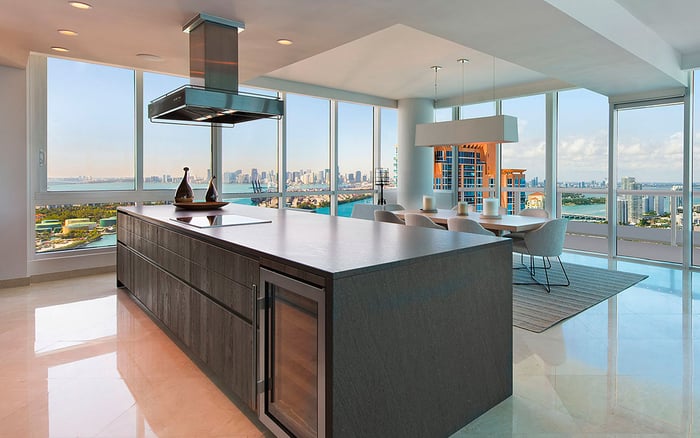
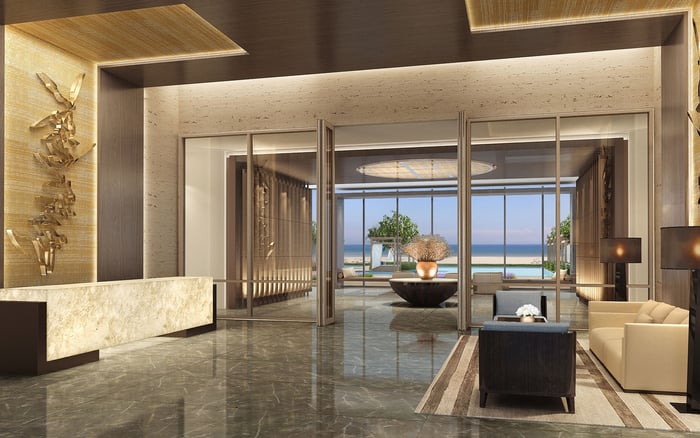
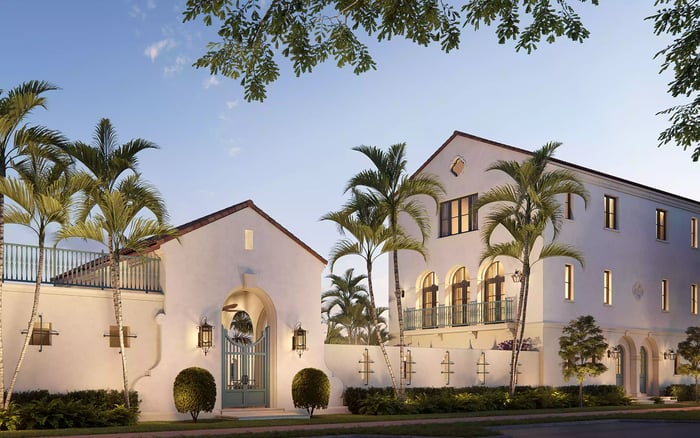
South Florida’s ultra-wealthy buyers are increasingly choosing low-density residential buildings over amenity-heavy towers, treating privacy, controlled ownership experience, and long-term scarcity as more valuable than oversized communal decks. For many primary residents, the appeal lies not in fewer luxuries, but in more intentional ones: private elevators, terraces, tailored floor plans, and a building culture shaped by a smaller circle of neighbors.
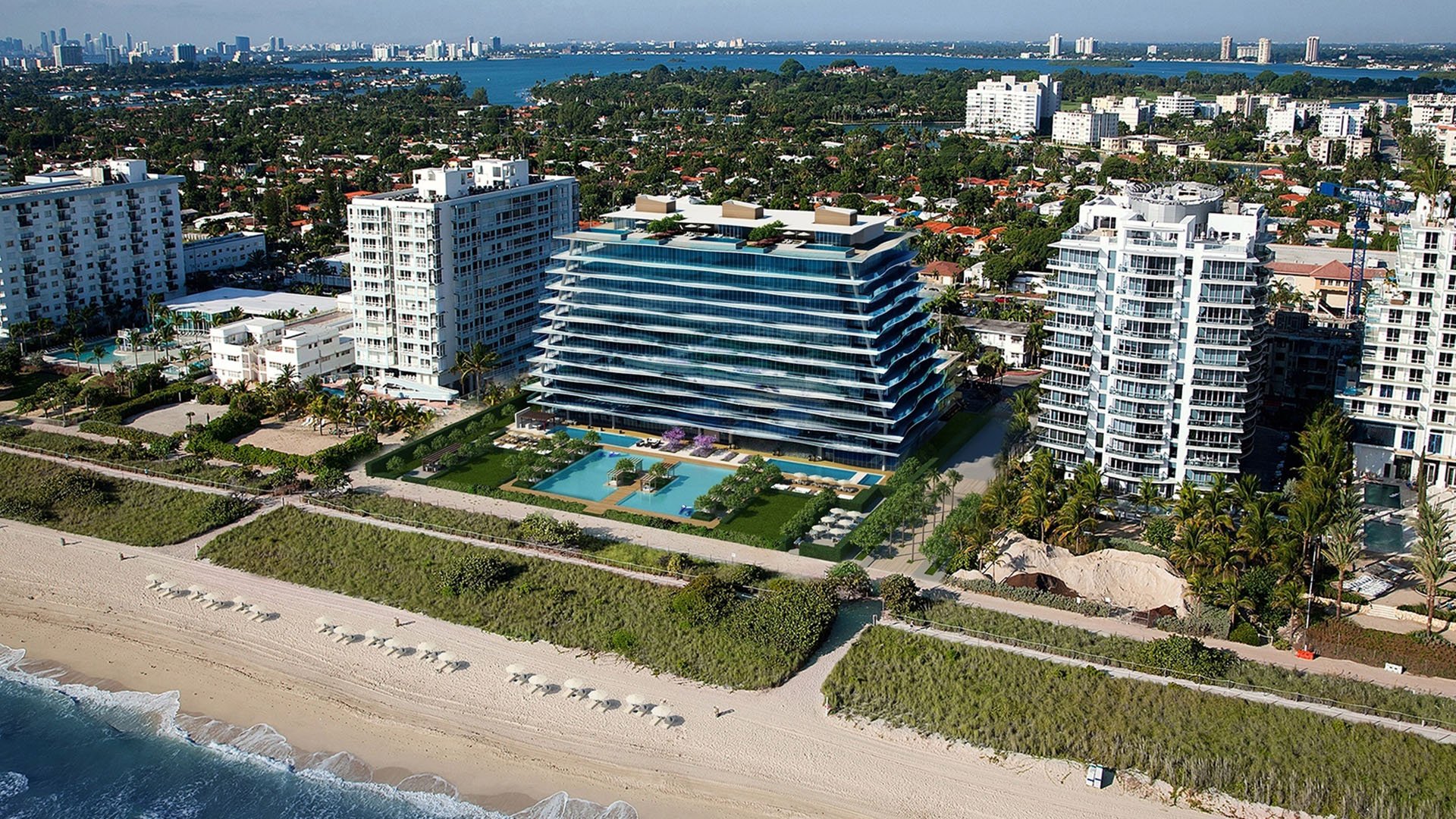
In South Florida’s upper tier, the conversation around luxury living is growing more exacting. For a rising share of high-net-worth buyers, the question is no longer how large the amenity deck is or how many shared spaces a tower can market. The more relevant question is how many people will actually share the building.
That shift helps explain why boutique buildings, often in the 20-to-80-unit range, are drawing disproportionate attention. A lower unit count signals something affluent buyers increasingly value: a quieter arrival, fewer daily encounters, less transient traffic, and a more controlled residential environment. In practical terms, fewer neighbors can mean less elevator congestion, more discreet staffing, and a stronger sense that the building is designed around ownership rather than spectacle.
This is not an anti-amenity movement. It is a recalibration of what luxury means. Today’s buyer is often more interested in whether a residence has a private elevator vestibule, a meaningful terrace, a spa experience that feels intimate, or storage suited to a real lifestyle than in whether the property offers a sprawling communal deck that functions more as a brochure image than as a daily-use space.
Post-pandemic buying patterns accelerated a preference that was already emerging: more privacy, fewer casual interactions, and greater control over the rhythm of day-to-day living. That preference has been especially visible among buyers seeking a primary residence rather than a purely financial hold. For a full-time owner, building culture matters. So do familiarity with neighbors, smoother operations, and less friction in shared spaces.
In that context, low-density luxury feels less like a niche and more like the logical next chapter of ultra-prime housing. Developers have responded by advancing more sub-100-unit projects across Miami-Dade and surrounding luxury enclaves, framing limited unit count as a benefit in itself. Scarcity is being marketed explicitly because buyers are treating it as value, not merely as branding.
In neighborhoods where design identity and discretion carry unusual weight, that logic is easy to understand. A residence in Arte Surfside, for example, sits within a boutique framework that aligns with the broader preference for privacy-led living. In Coconut Grove, projects such as Vita at Grove Isle illustrate a similarly intimate approach, where the residential proposition leans toward a controlled experience rather than maximal density.
For years, luxury development in South Florida leaned on visual abundance. Rooftop lounges, oversized pool decks, elaborate wellness floors, screening rooms, and social spaces helped towers compete in a crowded market. Those features still matter, but not in the same way.
Many wealthy buyers already have private clubs, second residences, boats, or hospitality access that fulfill much of the lifestyle once promised by oversized common areas. If an owner already entertains on a private terrace, belongs to a beach club, or splits time among multiple homes, the practical value of extensive shared amenity space can diminish quickly.
What has not diminished is the expectation of quality. Buyers still want wellness, service, beauty, and convenience. They are simply favoring amenities that feel personal over amenities that feel public. The most compelling package now may be a beautifully resolved spa suite, wine storage, private dining capability, or bespoke concierge support, delivered in a setting where usage remains limited and the atmosphere remains calm.
That helps explain why a more expansive tower such as Aria Reserve Miami speaks to one type of buyer, while a more selective proposition in Bay Harbor or the Grove appeals to another. The distinction is not luxury versus non-luxury. It is shared abundance versus controlled exclusivity.
One of the more consequential developments in this segment is that fewer units do not necessarily mean less pricing power. In many cases, the opposite appears true. Smaller ultra-luxury buildings can achieve stronger average pricing per residence than larger towers, even without trying to outbuild them on communal amenities.
That premium makes sense through the lens of scarcity. A limited number of residences can sharpen demand, reinforce the sense of belonging to a finite address, and strengthen resale confidence. Buyers in this bracket are often highly attuned to future market saturation. If a neighborhood can deliver endless comparable inventory, exclusivity weakens. If a project is structurally limited, the ownership proposition can feel more defensible over time.
This is particularly relevant in areas like Miami Beach, Coral Gables, and Key Biscayne, where low-density luxury inventory has been associated with stronger pricing than nearby towers with much larger resident counts. It is also why projects such as The Delmore Surfside and Ponce Park Coral Gables fit so neatly into the current buyer mindset. In Surfside and Coral Gables alike, the message is similar: rarity can be more persuasive than volume.
A smaller building often leaves more room for architectural coherence. Floor plans can be more bespoke. Finishes can feel more tailored. The overall identity of the property can remain tighter because the developer is not trying to satisfy hundreds of buyers across a broad stack of unit types.
That design precision matters more than it once did. Ultra-high-net-worth buyers are increasingly purchasing with a curator’s eye. They are evaluating not just square footage and views, but whether a building has a point of view. Does it feel composed, private, and intentionally scaled? Or does it feel like a large hospitality machine translated into residential form?
Lower density can also support a cleaner ownership experience after closing. Fewer residences may reduce HOA complexity, simplify operations, and create a governance structure that feels more aligned with full-time residents. For a buyer planning to live in the home year-round, that operational ease is not a minor detail. It is part of the luxury equation.
The implication is not that large towers will disappear. South Florida will continue to support ambitious, amenity-rich buildings in Brickell, Downtown, Sunny Isles, and beyond. But the market is sending a more nuanced signal than it did a few years ago.
The signal is that HNWI buyers are becoming less impressed by amenity count alone and more focused on what the building protects: privacy, peace, discretion, and design integrity. Developers who once led with spectacle are increasingly leading with resident experience, low density, and personalization.
That is a meaningful repositioning. It suggests the next phase of luxury competition may revolve less around who can build the largest shared deck and more around who can produce the most controlled and coherent way of living. In a region where new development is constant, that is a subtle but powerful distinction.
For buyers, it also clarifies a broader truth. The most valuable luxury feature may no longer be the one with the biggest footprint. It may be the one that limits access, preserves calm, and makes daily life feel unmistakably private.
Are buyers rejecting amenities altogether? No. They still expect luxury amenities, but increasingly prefer private or curated features over oversized communal spaces.
Why do fewer total units appeal to HNWI buyers? Lower density typically means more privacy, less resident turnover, and a more controlled ownership experience.
Do smaller buildings always cost less than large towers? Not necessarily. Boutique ultra-luxury buildings can command stronger pricing per unit because exclusivity itself carries value.
Is this trend strongest among investors or end users? It appears especially compelling for primary-residence buyers who prioritize livability, familiarity, and day-to-day ease.
What types of amenities are still in demand? Private elevators, terraces, spa components, wine storage, and personalized services remain highly desirable.
Why are large amenity decks losing some influence? Many affluent owners already satisfy lifestyle needs through private clubs, additional homes, or off-site memberships.
Which South Florida areas fit this preference best? Miami Beach, Coral Gables, and Key Biscayne are among the markets where low-density luxury has particular appeal.
Does a smaller unit count help resale prospects? It can. Buyers often view limited-supply buildings as protection against future saturation and as a marker of long-term rarity.
How does lower density affect daily operations? It can reduce complexity, simplify shared governance, and create a smoother experience for full-time residents.
Will developers continue building boutique projects? The direction of the market suggests yes, especially where buyer demand favors discretion, scarcity, and personalization.
For a confidential assessment and a building-by-building shortlist, connect with MILLION.
If branded residences are on your mind — as a home or as an allocation — we would be glad to share what we are seeing, privately.
Begin a quiet conversation