A ranked look at five South Florida waterfront residences where low density, controlled access, and island or enclave settings create a rarer form of luxury: privacy.
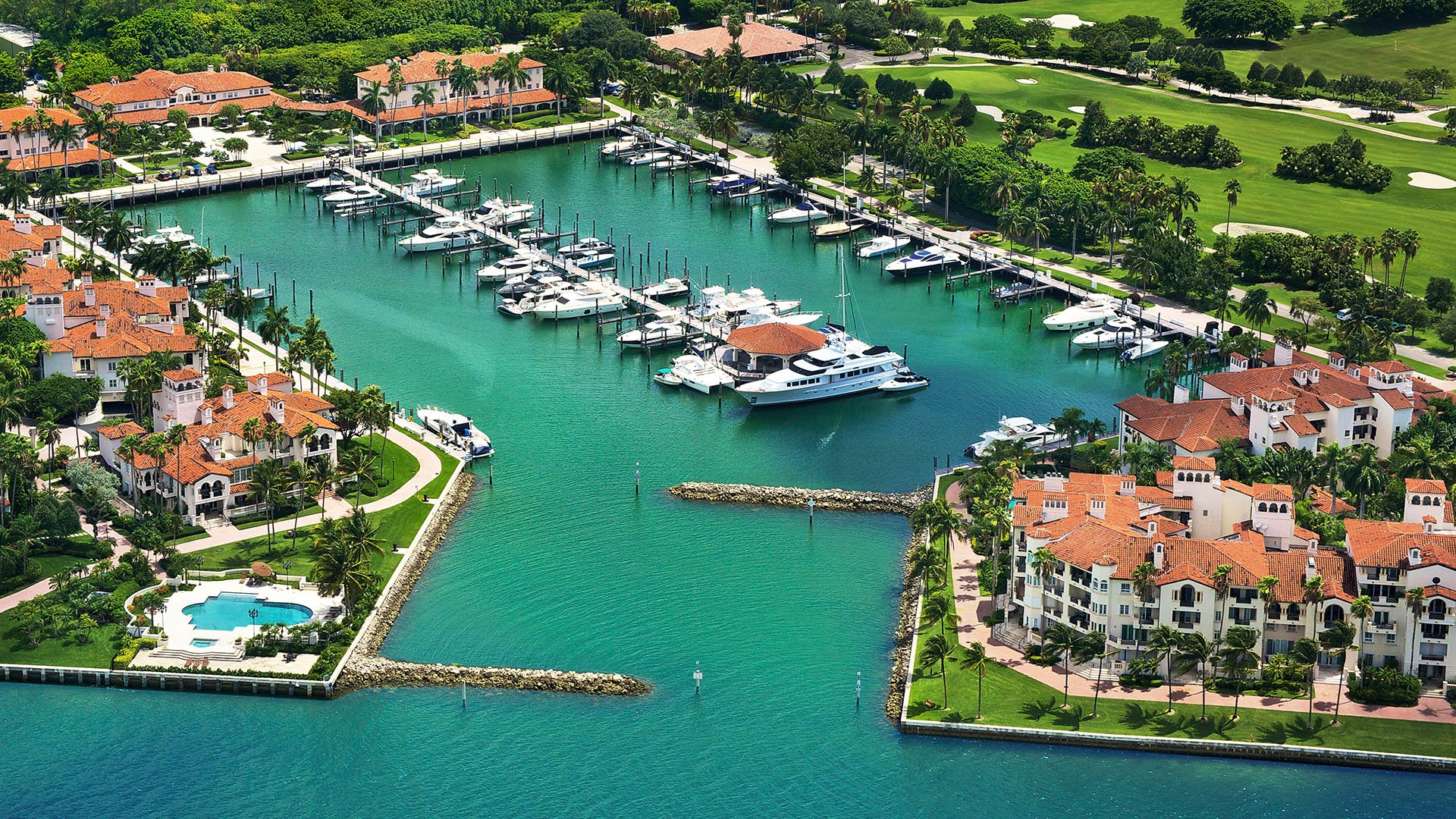
In South Florida’s top residential tier, privacy has become one of the market’s most prized luxuries. Waterfront addresses have always carried a premium, but the sharper distinction now is not water frontage alone. It is how many owners share the setting, how access is controlled, and whether the experience feels insulated from the pace of the surrounding city.
That shift helps explain the growing appeal of boutique waterfront developments. In practical terms, lower density means fewer residences sharing a larger site, more open space, and a stronger sense of separation from neighboring units and public traffic. For buyers who value discretion, that often translates into quieter common areas, more attentive service, and a more residential cadence than a conventional tower with hundreds of homes.
In Miami Beach and Surfside, scarcity is especially meaningful because prime shoreline and bayfront land is finite. In Coral Gables, a more residential planning environment reinforces a calmer, more private waterfront experience. In Key Biscayne, the island setting itself reduces through-traffic and heightens the sense of remove many second-home and primary-home buyers now seek.
That broader context also makes nearby projects worth watching for buyers comparing privacy-oriented inventory across the region. On Miami Beach, The Ritz-Carlton Residences® Miami Beach and Setai Residences Miami Beach remain natural reference points. In Surfside, Arte Surfside belongs in the same conversation around scarcity-driven oceanfront ownership.
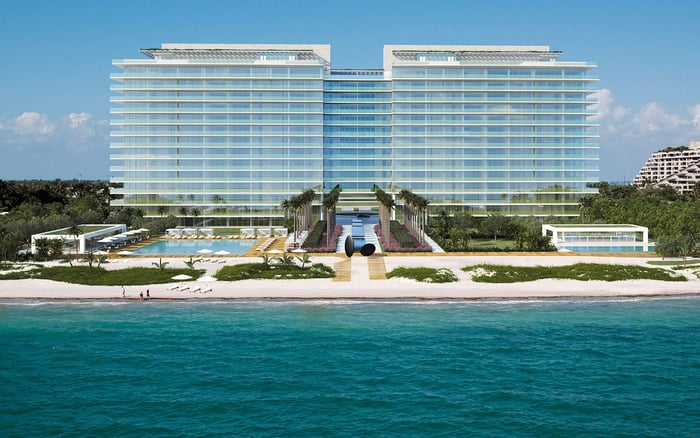
1. Ritz-Carlton Residences, Miami Beach - 10-acre oceanfront site with 111 residences
This is the strongest all-around example of low-density waterfront luxury in the current ranking because the scale of the site reshapes the living experience. With 111 residences across 10 oceanfront acres, the project offers a notably more spacious relationship between homes, amenities, and shoreline than a typical high-density coastal tower.
Its standing is further reinforced by private marina access and more than 50,000 square feet of amenities, all framed around privacy and resort-style service. For buyers who want waterfront living without sacrificing discretion, it delivers a rare balance of full-service infrastructure and meaningful breathing room.
2. Arte by Antonio Citterio - Surfside beachfront building with 16 residences
Few residential buildings in South Florida express scarcity as clearly as Arte. The 16-story property contains just 16 residences, placing it in a category of its own for buyers who measure exclusivity by the number of neighbors they will actually have.
Designed by Antonio Citterio, Arte is highly curated and privacy-forward, with a wellness-led sensibility that complements its boutique scale. In a market filled with larger branded towers, its appeal lies in restraint: a beachfront address, a limited owner roster, and a level of intimacy that feels closer to a private residential club than a conventional condominium.
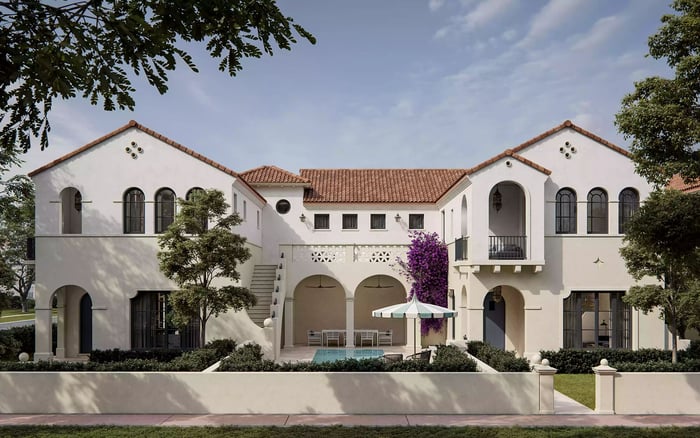
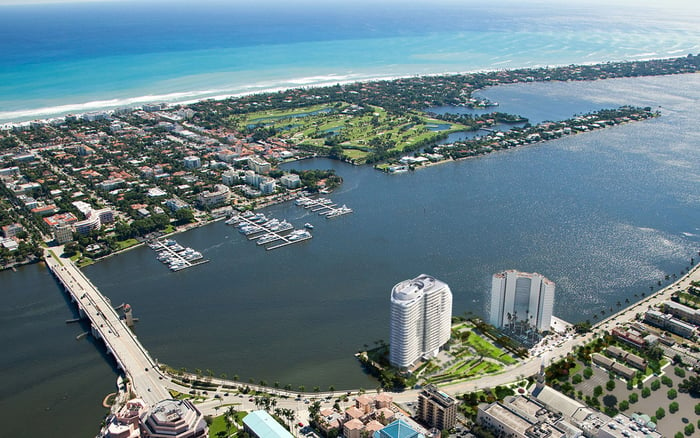
3. Océan Palms, Coral Gables - Biscayne Bay waterfront with 44 residences
Océan Palms earns its place by combining a relatively limited residence count with a quieter Coral Gables waterfront setting. It is identified as a 44-unit development on Biscayne Bay, with a private marina and gated environment that support its privacy-led positioning.
What distinguishes Coral Gables in this context is its more residential character. For buyers seeking bayfront living with a greater sense of order and retreat than many urban-core districts provide, Océan Palms represents an appealing middle ground between boutique scale and full waterfront functionality.
4. Grovenor House, Key Biscayne - gated bayfront community with 32 residences
Grovenor House benefits from two layers of privacy. The first is its own low-density, gated bayfront character, with 32 residences identified in the available project details. The second is Key Biscayne itself, where the island setting naturally limits traffic and reinforces a more secluded residential atmosphere.
For buyers who prioritize insulation from the mainland’s intensity, this combination is compelling. The bay frontage delivers the visual calm expected of a top waterfront address, while the setting deepens the sense of security and separation that defines true island privacy.
5. The Setai Miami Beach, Residences - oceanfront hospitality-linked exclusivity
The Setai’s residential offering is distinct because its privacy proposition is tied to a highly discreet oceanfront hospitality environment. Located on Collins Avenue with direct beach access, it is known for a secluded atmosphere, personalized service, and a refined approach to oceanfront living.
While it is less defined by a publicly emphasized unit-count narrative than the projects above, it remains a credible inclusion because the experience is unmistakably privacy-led. For certain buyers, especially those who prefer service and seclusion over a purely residential tone, that can be every bit as important as raw density alone.
At this level of the market, the premium is rarely just about square footage or a panoramic view. It is about control. Fewer residences usually mean fewer shared elevators, fewer arrivals moving through common areas, and fewer moments when ownership feels exposed rather than protected.
That is why many sophisticated buyers now prioritize limited inventory over speculative upside. They are buying time, calm, and the assurance that the property will not function like a transient resort environment. A building with a smaller ownership base can often support a more tailored service culture and a quieter day-to-day experience, particularly when combined with marina access, gated arrival sequences, or beachfront positioning.
This is also why the most relevant comparison set often extends beyond direct rivals. A buyer considering an intimate waterfront address in Miami Beach may also look at 57 Ocean Miami Beach or The Perigon Miami Beach to understand how privacy, scale, and shoreline exposure are interpreted in nearby product. In Key Biscayne, Oceana Key Biscayne offers another useful benchmark for island-oriented oceanfront living.
For a buyer focused on ultimate privacy, residence count should be the beginning of the conversation, not the end. The more telling question is how the property manages circulation. A low number of homes matters, but so do gated access, the relationship between lobby and street, marina or beach entry patterns, and how visible residents are during arrival and departure.
The site itself is equally important. A larger waterfront parcel with fewer homes generally creates more setback, more landscaping, and a stronger sense of remove. Island locations add another dimension because they naturally filter outside traffic. That is why Key Biscayne and certain Coral Gables waterfront pockets continue to appeal to buyers who are not simply seeking prestige, but protection from density itself.
Service style is the final layer. Some owners want a quietly residential atmosphere with minimal interaction. Others prefer a hospitality-inflected model where service is ever-present but highly discreet. The projects in this ranking succeed in different ways, yet all align with one central idea: true luxury on the water feels controlled, calm, and difficult to replicate.
What defines a low-density boutique waterfront development? It generally means a waterfront property with relatively few residences compared with typical high-rise inventory, creating more privacy, open space, and controlled access.
Why do low-density waterfront properties command stronger demand? Buyers value fewer neighbors, better service ratios, and a calmer ownership experience, especially when paired with prime water views and limited supply.
Why is Ritz-Carlton Residences, Miami Beach ranked first here? Its 10-acre oceanfront site, 111 residences, private marina access, and extensive amenity program make it the most fully supported low-density example in this group.
What makes Arte by Antonio Citterio so rare? Arte has just 16 residences in a 16-story beachfront building, giving it an unusually scarce and highly private ownership profile.
How does Coral Gables compare with Miami Beach for privacy? Coral Gables tends to feel more residential and controlled, which can appeal to buyers who want bayfront access without a more urban beachfront tempo.
Why is Key Biscayne attractive for discreet waterfront living? Its island setting naturally limits through-traffic and creates a stronger sense of separation from mainland activity.
Is beachfront always better than bayfront for privacy? Not necessarily. Beachfront offers direct ocean access, while bayfront settings can feel more sheltered and residential depending on the site and access patterns.
Do marina features add value in these developments? Yes. Private marina access can deepen both convenience and exclusivity, especially for owners who want seamless waterfront use without leaving the property environment.
Are hospitality-linked residences less private than pure residential buildings? They can be, but the best examples are designed to preserve a secluded atmosphere through service, controlled circulation, and discreet resident experiences.
What should buyers review first when comparing boutique waterfront projects? Focus on residence count, site scale, access control, and whether the property’s daily experience feels genuinely insulated rather than simply marketed that way.
For a confidential assessment and a building-by-building shortlist, connect with MILLION Luxury.
If branded residences are on your mind — as a home or as an allocation — we would be glad to share what we are seeing, privately.
Begin a quiet conversation