A discreet, buyer-forward guide to reading flood zone designations and using elevation certificates when underwriting a Coral Gables waterfront purchase, renovation, or rebuild.
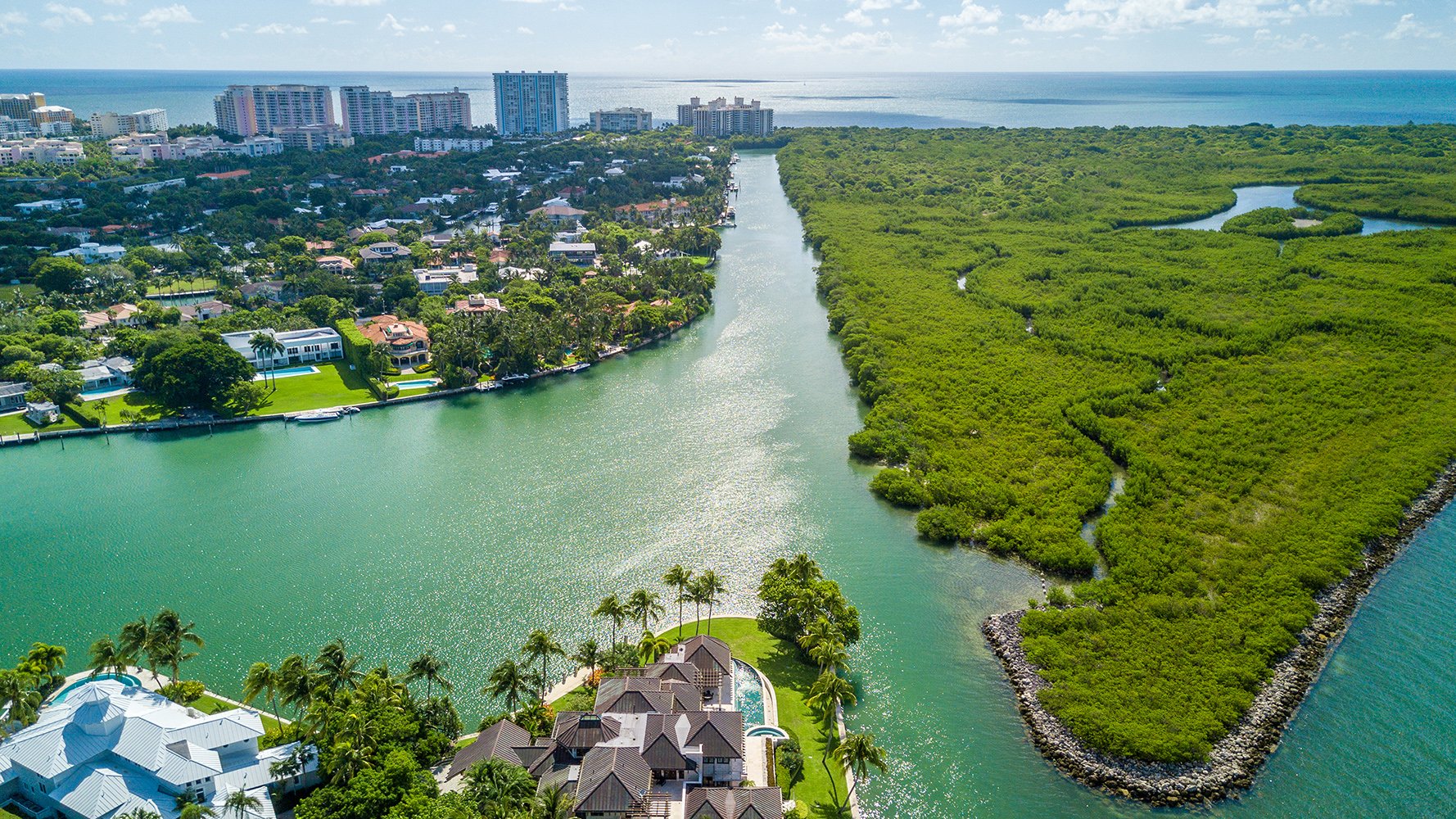
Waterfront in Coral-gables trades on permanence: protected streetscapes, mature canopies, and the quiet authority of generational neighborhoods. Yet the underwriting reality is fluid. Flood zone designations affect far more than a lender checkbox. They shape rebuild scope, renovation constraints, resale liquidity, and how buyers evaluate “future-proofing” as a core component of luxury.
For waterfront estates, the practical objective is to move from general, map-based risk to property-specific clarity. That’s where flood zone designations and the Elevation Certificate intersect. One is the neighborhood-level framework; the other is the document that converts that framework into actionable, building-specific numbers.
Even for buyers who prioritize architecture over spreadsheets, fluency in these two tools is increasingly part of sophisticated ownership-on par with reviewing a roof schedule or a seawall condition report.
Flood maps divide land into zones that signal expected flood hazard. The labels can feel bureaucratic; the implications are not.
Zone AE
is a high-risk designation where a Base Flood Elevation (BFE) is provided. In practice, the map supplies an expected water-surface elevation for a major flood event, and that number often becomes the reference point for building and insurance decisions.
Zone VE
is also high-risk, but with an added stressor: wave action. Construction requirements are generally more stringent in coastal high-hazard areas, reflecting the destructive potential of waves, scour, and debris impact.
Zone X
generally indicates moderate-to-minimal flood risk compared with AE or VE, commonly outside the 1% annual chance floodplain. Buyers sometimes interpret X as “no issue,” but for waterfront-adjacent property, X should be read as “lower mapped risk,” not a guarantee of dry feet.
Zone D
is the wildcard: possible but undetermined flood hazard where detailed analyses and BFEs are not provided. When a property touches Zone D, premium underwriting and retrofit decisions often hinge on additional investigation because the map itself is not offering the usual numeric anchor.
The most important refinement: a flood zone is not a building. Two homes on the same canal can sit at materially different elevations, have different enclosure configurations, and carry different risk profiles once you look past the label.
An Elevation Certificate is designed to document key elevation information for floodplain management and flood insurance rating. It is typically completed and certified by a licensed land surveyor, engineer, or architect, as allowed by state law.
For a Coral Gables waterfront estate, this document functions like an elevation appraisal: a standardized record of how the building sits relative to expected flood levels-and how that relationship should be interpreted, numerically.
Three details matter for luxury buyers:
Elevations must be tied to an accepted vertical datum, commonly NAVD88, while some legacy records use NGVD29. The certificate should clearly state the datum so the numbers remain usable for rating, design, and comparisons.
A map may place the neighborhood in AE, but the Elevation Certificate can reveal a higher finished floor, a lower garage slab, or an enclosure condition that changes how risk is priced and how renovations should be approached.
In a market where buyers compete not only on price but on certainty, a clean elevation file can reduce friction during financing and insurance placement-and support more confident renovation planning.
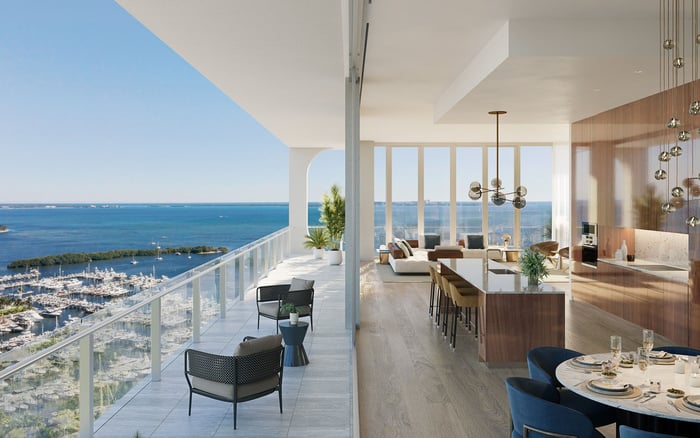
This is one reason many sophisticated buyers ask for elevation paperwork early, especially when comparing waterfront to high-rise alternatives such as Una Residences Brickell, where flood exposure is experienced differently at the unit level than on a ground-attached estate.
Luxury due diligence is less about collecting documents and more about sequencing them correctly.
Start with a flood map lookup to confirm the property’s current flood zone designation and whether a BFE is shown. Treat this as the framework. Next, align that framework with local property records and mapping resources that buyers commonly use to verify parcel details and context.
Then move to the building-specific question: does an Elevation Certificate exist, and is it current enough to be meaningful? If it exists, confirm it is complete, signed by a qualified professional, and tied to a clearly stated vertical datum. If it does not exist, commissioning one can still be worthwhile-especially when the purchase includes a meaningful renovation or an insurance strategy that depends on precise elevations.
This same discipline applies across South Florida waterfront decisions, whether you are considering a bayfront lifestyle at Oceana Key Biscayne or a quieter canal setting in Coral Gables. The address may change; the underwriting discipline does not.
Waterfront buyers often plan improvements: a kitchen reorientation to the water, a new primary suite, upgraded glazing, or reimagined outdoor rooms. Flood designations can influence how far those plans can go before the project begins to trigger flood-resistant construction requirements.
Florida’s Building Code includes flood-resistant construction provisions that govern design and construction in flood hazard areas. The practical takeaway is simple: don’t assume a “cosmetic” renovation stays cosmetic. Scope can expand quickly once systems, enclosures, and elevations enter permitting conversations.
In AE and VE contexts, the BFE becomes the reference point, and design teams typically evaluate how lowest floors, enclosed areas, and mechanical placement relate to that level. In VE, wave action introduces a different class of problem-one that can reshape structural and enclosure decisions.
The luxury lens here is control. You’re not only buying square footage; you’re buying the freedom to improve it. Flood constraints can narrow that freedom, so it pays to surface them before you fall in love with a floor plan.
Flood insurance pricing has shifted toward more property-specific variables rather than relying only on map designations. That evolution rewards buyers who can present clean, accurate building information-and penalizes those who cannot.
In plain terms: the market is moving from “what zone is this neighborhood?” to “how does this exact structure sit, perform, and mitigate risk?” That is precisely the question an Elevation Certificate is built to help answer.
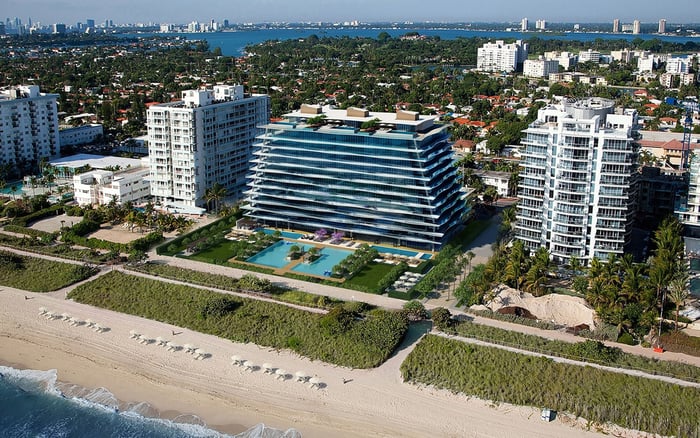
For buyers comparing a waterfront estate to coastal condo living, it can help to think in layers. A Miami Beach oceanfront tower such as 57 Ocean Miami Beach may carry different building-wide and unit-level considerations than a single-family canal property, but both benefit from rigorous, building-specific documentation.
Some properties experience multiple flood claims over time, and those patterns can trigger heightened attention in mitigation strategy frameworks because repeat claims drive disproportionate losses.
For Coral Gables waterfront estates, the discreet move is to ask early, in writing, for any available loss history disclosures, prior mitigation work, and the existence of elevation or retrofit documentation. The goal is not to stigmatize a home; it is to avoid surprises when coverage terms, deductibles, or renovation plans collide with prior events.
This is also where buyers benefit from widening the lens beyond the parcel: drainage performance, high-water-table conditions, and neighborhood water management can shape lived experience even when living areas are elevated. If your lifestyle includes a ground-level gym, wine storage, or a garage that doubles as a collector car space, those details become as consequential as the formal living room.
In waterfront South Florida, flood risk is not only about rainfall. Coastal hazard awareness includes storm surge, tidal influence, and the way water can be pushed or trapped across a broader basin.
At the same time, the region’s high groundwater table can limit how quickly water leaves a site, influencing landscape design, pool construction, and the performance of below-grade ambitions. These are not reasons to avoid waterfront. They are reasons to design with eyes open-and to prefer teams that treat hydrology as a design input, not an afterthought.
Buyers drawn to boutique, design-forward communities sometimes find it helpful to compare notes across markets. A low-lying island setting like Bay Harbor Towers raises different building-form questions than Coral Gables, yet the same discipline applies: understand the mapped zone, then confirm the building’s elevation reality.
Think of this as a quiet pre-close playbook:
Confirm the current flood zone designation and whether a BFE is provided.
Obtain any existing Elevation Certificate; confirm signature, completeness, and vertical datum.
If no Elevation Certificate exists, consider commissioning one before finalizing insurance strategy or renovation scope.
Align renovation ambitions with flood-resistant construction requirements and permitting realities.
Request prior loss and mitigation documentation early, especially for ground-level improvements.
Done well, this process does not slow a transaction. It sharpens it. And in the ultra-premium segment, clarity is leverage.
What is a FEMA flood zone designation? It is a mapped label that indicates relative flood hazard for an area and is used for floodplain management and insurance.
What does Zone AE typically mean for a waterfront home? It is a high-risk zone where a Base Flood Elevation is provided, often shaping design and insurance rating inputs.
How is Zone VE different from Zone AE? VE is a coastal high-hazard area subject to wave action, which generally drives more stringent building requirements.
Is Zone X the same as “no flood risk”? No. It typically indicates lower mapped risk than AE or VE, but it does not eliminate flooding potential.
What is Zone D and why does it matter? Zone D indicates possible but undetermined flood hazard without detailed analyses or BFEs, so added diligence is prudent.
What is an Elevation Certificate used for? It documents key building elevation information for floodplain management and flood insurance rating.
Who can complete an Elevation Certificate? It is completed and certified by a licensed land surveyor, engineer, or architect, as allowed by state law.
Why does the vertical datum (NAVD88 vs NGVD29) matter? Elevations must reference an accepted datum, and the stated datum ensures the numbers are interpreted correctly.
Do flood insurance premiums rely only on the map zone? Not exclusively. Pricing has moved toward more property-specific variables, making accurate building data more valuable.
What is the first step in flood due diligence for Coral Gables waterfront? Verify the parcel’s mapped designation and BFE context, then evaluate building-specific elevations via documentation.
For a discreet conversation and a curated building-by-building shortlist, connect with MILLION Luxury.
If branded residences are on your mind — as a home or as an allocation — we would be glad to share what we are seeing, privately.
Begin a quiet conversation