In South Florida’s most desirable condominium markets, penthouse buyers often focus on elevation first. Yet the more revealing question is not simply how high a residence sits, but what surrounds it, what looks back at it, and how its terraces, glazing, and view corridors behave in real life.
In South Florida luxury real estate, height carries a powerful emotional charge. A penthouse suggests command, quiet, air, and a measured distance from the street. It also signals status, which is why many buyers begin by asking for the highest possible floor before studying what the residence actually sees.
Yet in the ultra-premium market, height is only one part of the equation. The more revealing measure is sightline quality. What sits beside the building? What could be built across from it? Which rooms face another tower, and which open toward sky, water, or a low-rise edge? A residence can sit high and still feel visually exposed. Another can sit lower yet live with greater privacy because its angles, setbacks, and neighboring context are more favorable.
This distinction matters in dense, desirable neighborhoods where towers, waterfront parcels, bridges, marinas, and low-rise enclaves shape daily life as much as floor number. Buyers comparing addresses in Brickell, for example, often look beyond elevation to understand the relationship between glass walls, terrace depth, and neighboring facades at projects such as The Residences at 1428 Brickell.
A view is what a camera captures. A sightline is what the body experiences. It is the diagonal from the primary bedroom to the building across the way, the angle from a bathtub to an adjacent balcony, the line of vision from a dinner table to a neighboring amenity deck. In a luxury penthouse, these small geometries can have an outsized effect on comfort.
The most coveted residences do not simply look outward. They manage what comes back inward. Privacy at this level is not only about distance from the street, security staff, or private elevators. It is also about visual discretion. Can the owner open shades during the day without feeling observed? Can guests move from kitchen to terrace without crossing a direct line of sight? Can art, furniture, and lighting be arranged without turning the home into a display case after dark?
A water view is not a single condition, either. It may be wide and permanent, filtered between towers, angled across a bay, or partially dependent on neighboring development patterns. The strongest penthouse evaluations separate the romance of water from the discipline of view protection.
The assumption that higher is always better comes from a simpler skyline. In today’s South Florida, an upper floor can still align directly with another building’s upper floors. Two towers of similar height may create a residential canyon in the sky, especially when both use expansive glazing and large outdoor rooms.
The opposite can also be true. A residence below the very top may clear a lower neighbor, face a park, open over a marina, or benefit from an oblique orientation that preserves privacy. Setback, tower shape, and site planning can matter more than the elevator button.
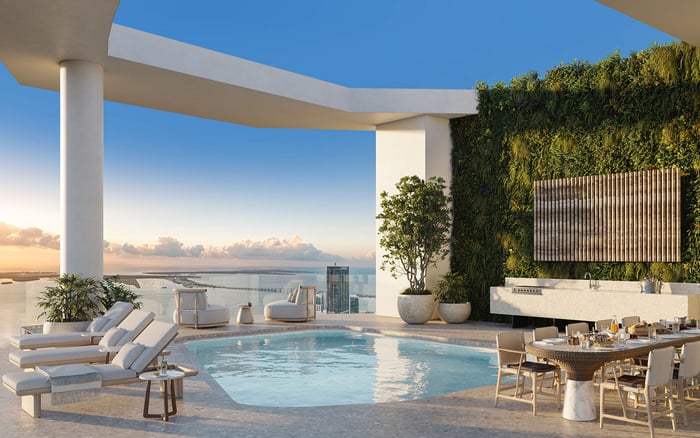
This is particularly relevant for buyers who value outdoor living. The terrace is often the emotional center of a penthouse, but it is also the most exposed portion of the home. A deep terrace with a protected side wall may feel more private than a higher, shallower terrace facing directly into another stack of residences. The question is not only, “What can I see?” It is also, “Who can see me?”
Before committing to a penthouse, a sophisticated buyer should study the neighboring tower condition from multiple rooms and at multiple times of day. Morning light can flatter a view that feels more exposed at night. A neighboring facade that seems distant in daylight may become prominent once interior lights turn on.
The best test is spatial, not theoretical. Stand where daily life will happen: the primary bed, the shower, the main seating area, the dining table, the outdoor kitchen, the pool if there is one. Then look outward from eye level, not only from the terrace rail. The most consequential sightlines often begin inside the home.
In Edgewater, where bay views, vertical living, and new development patterns intersect, buyers may compare residences such as Villa Miami with particular attention to how the home is oriented within its immediate context. A beautiful skyline can still require careful reading.
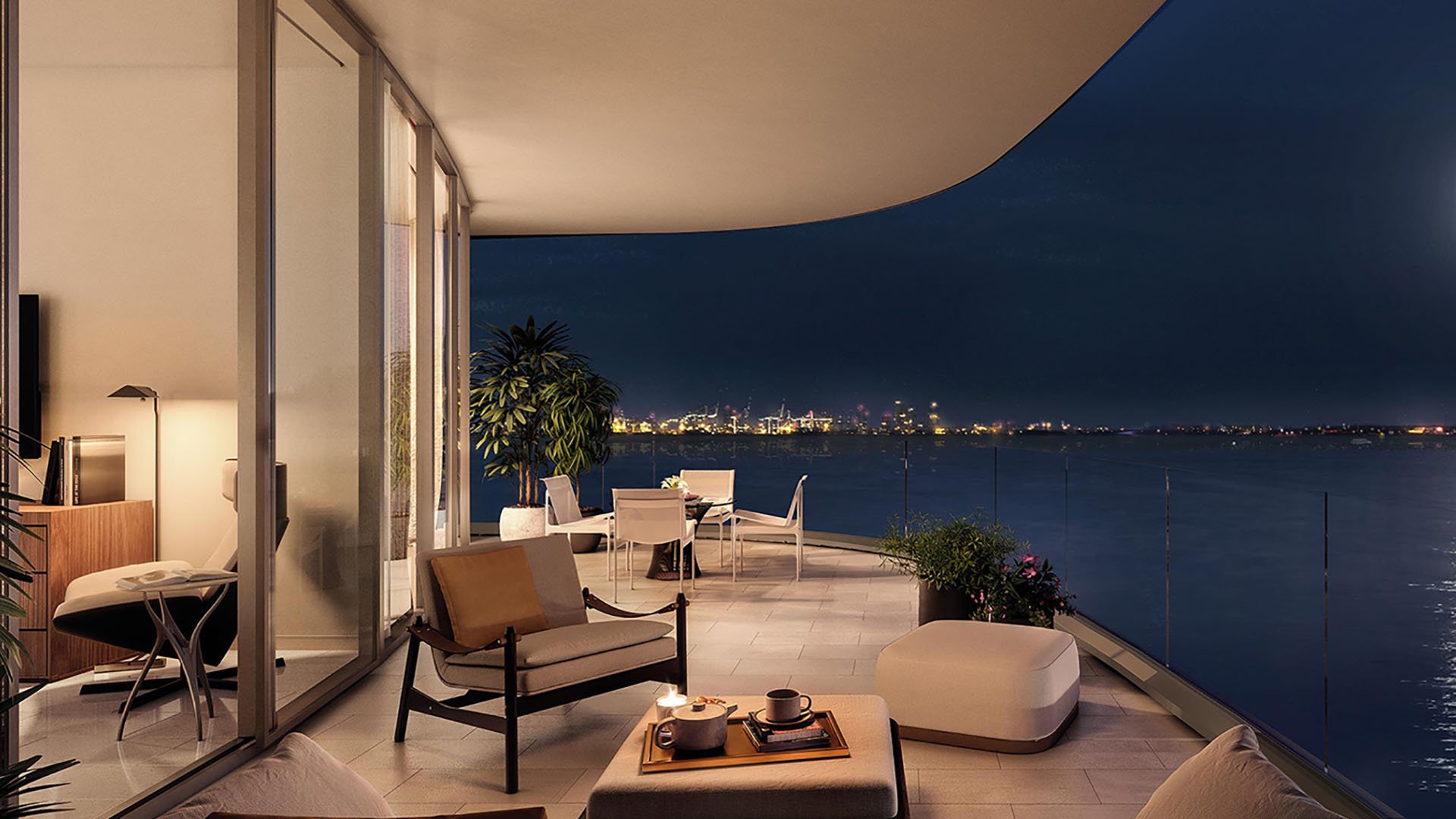
Architecture can either amplify exposure or soften it. Corner residences often create broader panoramas, but they may also introduce multiple directions of visibility. Curved glass can produce cinematic views, yet may complicate privacy planning. Deep setbacks, wing walls, and carefully placed terraces can create a sense of enclosure without sacrificing openness.
For many buyers, the ideal penthouse is not the one that sees everything. It is the one that sees selectively. An elegant view corridor toward water, treetops, or open sky may be more livable than a panoramic sweep interrupted by close neighboring windows. Selectivity can feel more luxurious than spectacle.
This is why floor plan review should be paired with sightline review. The plan may show square footage, room sequence, and outdoor area. It will not always reveal whether the breakfast room faces a neighboring amenity deck or whether the primary suite is exposed to a tower across a narrow corridor.
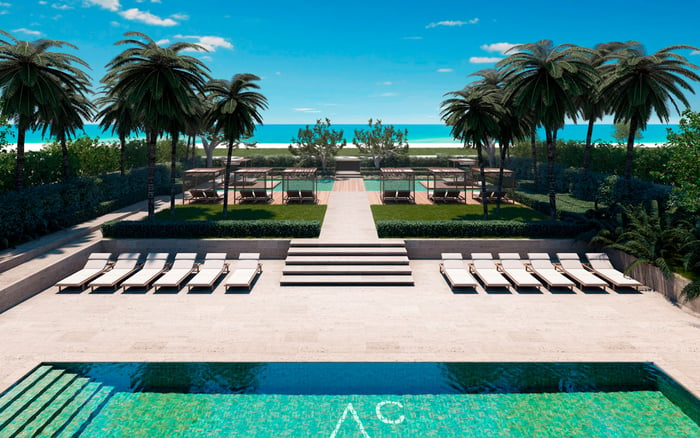
Along the coast, oceanfront living often brings a different form of sightline analysis. The ocean side may feel naturally open, while the landward side, pool deck, service areas, and neighboring buildings create the privacy questions. A penthouse with spectacular water exposure can still have secondary spaces that deserve scrutiny.
In Surfside, buyers considering boutique and ocean-oriented living at projects such as The Delmore Surfside and The Perigon Miami Beach may think carefully about how building placement, terrace orientation, and neighboring parcels affect the lived experience. The most refined residences balance openness with restraint.
This is not a minor concern. Privacy influences how often an owner uses the terrace, how freely the home is furnished, how shades are programmed, and how comfortable the residence feels when entertaining. In the luxury tier, that comfort is part of value.
The right questions are direct. Which exposures are protected by water, open space, or low-rise context? Which exposures depend on a neighboring parcel remaining unchanged? Which rooms face another tower at close range? Are terraces shielded, staggered, or directly aligned with adjacent balconies? How does the home feel after sunset?
Buyers should also ask how the residence performs from inside out. A penthouse should not require constant shade management to feel private. It should allow natural light, views, and daily living to coexist comfortably. The best homes create a sense of release without turning privacy into a compromise.
Height still matters. It can improve light, reduce street noise, and broaden horizons. But height is not the same as serenity. In the most discerning searches, the winning residence is often the one with the cleanest sightlines, the least visual friction, and the greatest confidence that the view experience will remain elegant over time.
Does a higher penthouse always have better privacy? No. A higher residence can still face neighboring towers, while a lower residence may benefit from better angles, setbacks, or open corridors.
What is the difference between a view and a sightline? A view is the outward scene. A sightline includes what can be seen from specific rooms, terraces, and daily living positions.
Why do neighboring towers matter so much? They can affect privacy, light, evening exposure, terrace use, and the overall sense of calm inside the residence.
Should buyers evaluate sightlines during the day or at night? Both are important. Nighttime can reveal exposure that is less obvious when neighboring interiors are not illuminated.
Can a terrace feel private in a dense skyline? Yes, if it benefits from depth, side protection, thoughtful orientation, or distance from directly opposing residences.
Are water views automatically protected? Not always. Buyers should distinguish between broad open-water exposure and partial views framed by other buildings or parcels.
Do corner penthouses offer better sightlines? They can offer wider views, but they may also create more directions of exposure. The specific orientation matters.
What rooms should be checked first? Focus on the primary suite, main living room, dining area, bathrooms, and any outdoor entertaining spaces.
Is floor height still important? Yes. Height can improve light and perspective, but it should be weighed alongside privacy, orientation, and neighboring context.
How should a buyer compare two luxury penthouses? Compare how each home lives from the inside out, especially privacy, terrace usability, and the quality of its long-term view corridors.
To compare the best-fit options with clarity, connect with MILLION.
If branded residences are on your mind — as a home or as an allocation — we would be glad to share what we are seeing, privately.
Begin a quiet conversation