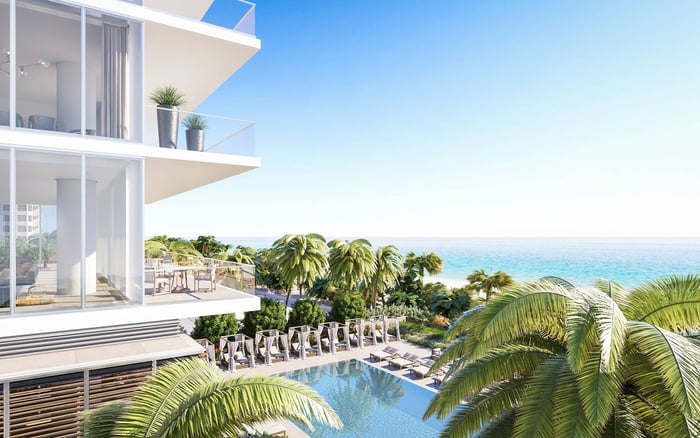
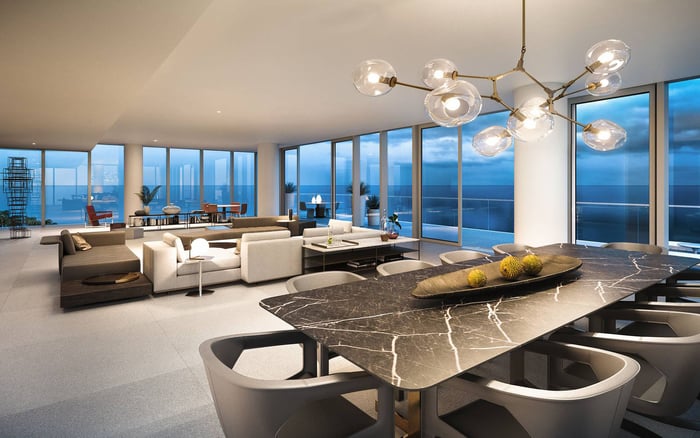
A buyer-oriented due-diligence lens comparing 2000 Ocean Hallandale Beach and Regalia Sunny Isles Beach through arrival experience, security posture, guest discretion, and daily privacy expectations.
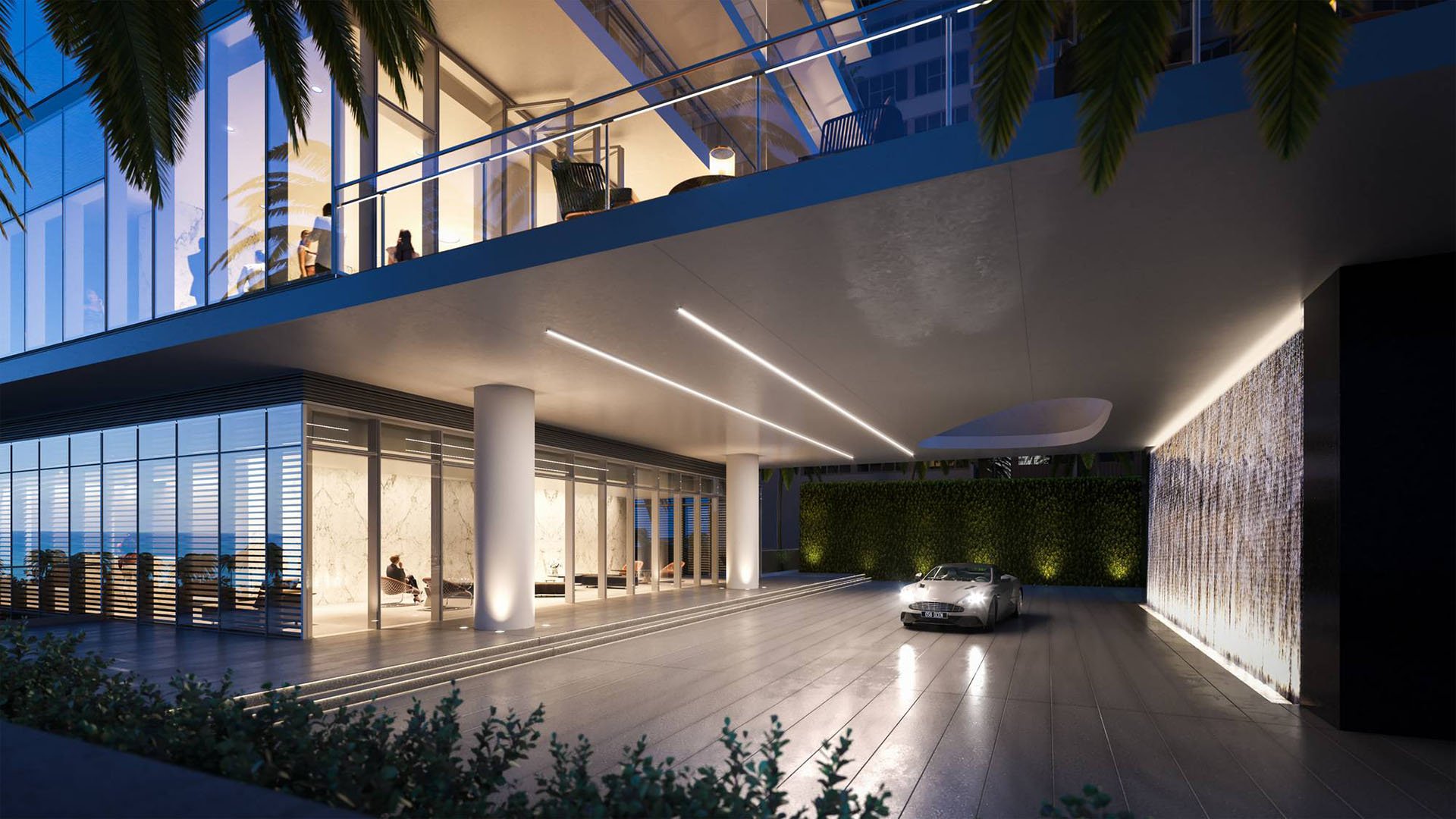
For a South Florida buyer at the top of the market, the difference between an impressive residence and a truly livable one often begins before the elevator ride. Arrival sequence, security posture, and guest discretion are not secondary details. They are the quiet architecture of ownership, shaping how a resident returns from dinner, receives family, accommodates staff, and preserves anonymity during high-visibility weeks.
That is why a due-diligence review of 2000 Ocean Hallandale Beach and Regalia Sunny Isles Beach should focus less on surface comparison and more on behavior. How does the building receive people? How many points of friction exist between curb and residence? Where does a guest wait, who can see them, and what happens when two residents arrive with separate parties at the same time?
A buyer's notes may tag priorities as 2000 Ocean Hallandale Beach, Regalia Sunny Isles Beach, Hallandale, Sunny Isles, oceanfront, and waterview, but the real comparison lives in sequence and behavior. Luxury is not only what is visible. It is what has already been resolved before it becomes visible.
Arrival sequence should be evaluated as a continuous path, not as a collection of features. A polished lobby matters, but the more revealing question is how the experience unfolds from the public street to the private residence. The strongest arrival sequence feels intuitive to residents, legible to invited guests, and controlled without appearing theatrical.
For Hallandale Beach and Sunny Isles Beach buyers, traffic patterns, valet choreography, porte cochere behavior, lobby sightlines, and elevator access can all influence perceived privacy. A property may feel serene during a quiet midday showing yet reveal a different personality during peak dinner hours, weekend guest arrivals, or seasonal congestion.
When touring, buyers should observe where vehicles queue, how staff communicate, whether visitors are naturally directed away from resident-only paths, and how much of the resident's movement is visible to others. In a luxury condominium, the goal is not merely convenience. It is a calm sequence that reduces exposure.
Comparable oceanfront and coastal projects, including Shell Bay by Auberge Hallandale and Bentley Residences Sunny Isles, are part of the broader buyer conversation because they reinforce how much emphasis the modern market places on arrival as a lifestyle filter. The lesson is direct: the driveway, the greeting, and the transfer from public to private space are central to value perception.
Security posture is most effective when it is layered, consistent, and discreet. Buyers should avoid treating security as a question of personnel or technology alone. The stronger question is whether the building has a coherent culture of access control, with clear boundaries between residents, guests, vendors, deliveries, and service providers.
A refined security posture does not feel tense. It feels practiced. Residents should not need to explain themselves repeatedly, yet unauthorized access should not feel easy. Guests should experience a gracious reception, while staff should know exactly where they are expected to move and where they are not.
In evaluating 2000 Ocean and Regalia, buyers should ask how visitor authorization is handled, how after-hours arrivals are managed, how vendors are routed, and how recurring staff are recognized. The answers matter less as marketing language and more as operating habits. A building that performs well over time typically has protocols simple enough to follow and disciplined enough to protect residents.
Sightlines also deserve scrutiny. Can someone in a common arrival area easily identify who is entering, who is waiting, or which elevator bank is being used? Does the reception area create a natural buffer, or does it place everyone in the same visual field? In high-net-worth ownership, privacy is often won or lost in these small spatial decisions.
Guest discretion is where luxury service and privacy intersect. Owners with family offices, household staff, visiting friends, wellness providers, stylists, chefs, or security teams need a residence that can host without turning every arrival into a public moment. The question is not whether guests are welcome. The question is how gracefully their presence is absorbed.
A buyer should understand where guests wait, whether resident approval is visible or discreet, how multiple parties are handled, and what occurs when a visitor arrives before the resident is available. A strong building protects both sides: the resident's privacy and the guest's dignity.
This is particularly relevant in communities where seasonal hosting is part of ownership. During art, sport, yachting, charity, and holiday calendars, a residence can become a receiving platform. The building must support that rhythm without feeling like a hotel lobby or a public lounge.
The same lens can be applied across South Florida's most privacy-conscious addresses. In Sunny Isles Beach, St. Regis® Residences Sunny Isles sits within a market where brand, service, and discretion are increasingly evaluated together. In Miami Beach, projects such as The Perigon Miami Beach underscore the broader shift toward residences that feel curated, controlled, and quietly protective.
The most useful due diligence is experiential. Buyers should tour at different times of day, including late afternoon, early evening, and a weekend window if possible. They should arrive as residents would, not only through the most polished presentation route. If valet is part of the experience, observe the pacing. If guests are part of the lifestyle, ask to understand the full guest path from identification to residence access.
It is also important to distinguish between design intent and operating reality. A building may have elegant physical spaces, but the lived experience depends on staffing, training, consistency, and resident culture. A discreet building is one where residents share an implicit understanding that privacy is part of the asset.
For buyers comparing Hallandale Beach and Sunny Isles Beach, the decision may come down to personal rhythm. One owner may prioritize a quieter arrival profile. Another may value proximity to a more active coastal corridor. Both preferences can be valid, but the diligence standard should remain the same: the residence must protect the owner's time, visibility, and control.
2000 Ocean Hallandale Beach and Regalia Sunny Isles Beach invite a more sophisticated question than which building looks more impressive. The sharper question is which environment better supports the owner's private life. Arrival sequence reveals how the building transitions from public to personal. Security posture reveals whether access is disciplined without becoming intrusive. Guest discretion reveals whether hospitality can occur without exposure.
In the ultra-premium tier, these are not soft considerations. They affect daily comfort, resale confidence, and the way a property performs during the moments when privacy matters most. A residence that handles arrival, security, and guests with quiet precision is not simply more convenient. It is more composed.
Why is arrival sequence important in luxury condominium due diligence? It shows how well the building moves residents from public space to private space. A calm arrival can reduce exposure and daily friction.
What should buyers observe during an arrival review? Buyers should watch vehicle flow, staff coordination, lobby sightlines, guest waiting areas, and elevator access. The experience should feel controlled but not tense.
How should security posture be evaluated? Look for layered access, clear guest procedures, vendor routing, and consistent staff behavior. The best systems feel discreet rather than performative.
Does guest discretion matter for second-home owners? Yes, especially for owners who host family, friends, staff, or service providers while in residence. Discretion helps preserve comfort during seasonal stays.
Should buyers tour only during quiet hours? No. Touring during busier windows can reveal how the building performs under real conditions, including valet demand and overlapping guest arrivals.
What is a common privacy mistake in condominium selection? Buyers often focus on the residence itself while overlooking the path to it. Privacy begins at the street, not at the front door.
How can a buyer compare Hallandale Beach and Sunny Isles Beach objectively? Use the same checklist for both locations: arrival, access control, guest flow, service routing, and visibility. Then weigh the setting against personal lifestyle needs.
Are branded or newer projects automatically more discreet? Not automatically. Discretion depends on design, operations, staffing, and resident culture, not branding alone.
What questions should be asked about vendors and household staff? Ask how recurring providers are registered, where they enter, how they move through the property, and how access is logged or approved.
What is the final decision lens for private buyers? Choose the residence that best protects time, movement, and anonymity while still feeling gracious. The strongest choice is usually the one that feels effortless under pressure.
For a discreet conversation and a curated building-by-building shortlist, connect with MILLION.
If branded residences are on your mind — as a home or as an allocation — we would be glad to share what we are seeing, privately.
Begin a quiet conversation