A discreet buyer’s guide to evaluating private-driver staging, porte-cochère function, valet rhythm, resident privacy, and arrival choreography before purchasing a luxury condo in South Florida.
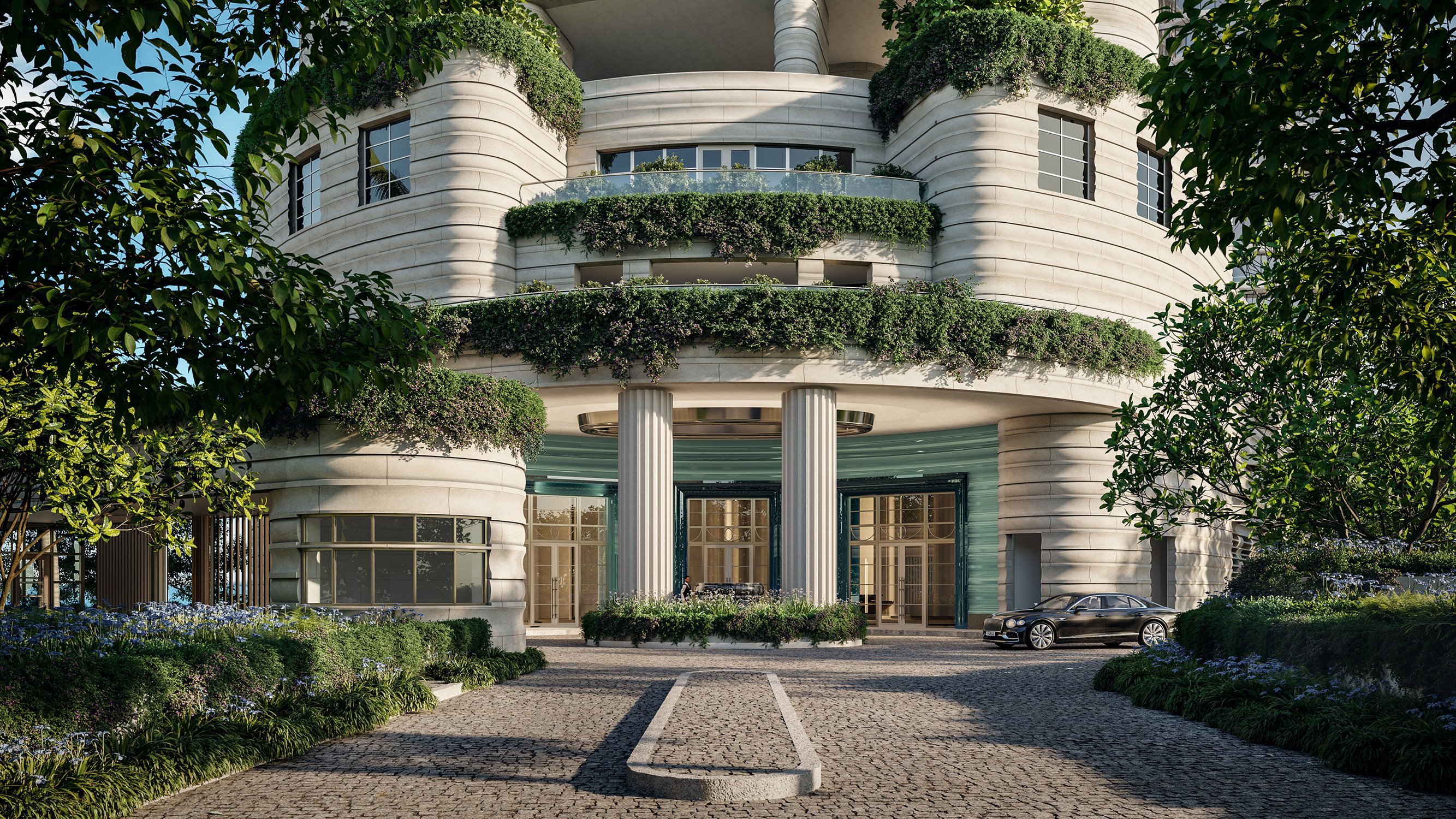
For a certain South Florida buyer, the residence does not begin at the front door. It begins as the car approaches the building, as a driver knows where to pause, as a doorman understands the rhythm of a household, and as luggage, guests, children, pets, security, and timing move without friction. Private-driver staging is the choreography behind that experience.
In the ultra-premium condo market, this subject is often addressed too late. Buyers study view lines, ceiling heights, finishes, wellness programming, and the balcony experience, only to discover after closing that the daily arrival sequence feels improvised. A beautiful lobby cannot fully offset a congested curb, unclear driver protocol, or a pickup pattern that leaves residents waiting unnecessarily.
The issue is especially relevant across districts with different rhythms. Brickell has a more urban arrival condition. Surfside and Miami Beach can feel more ceremonial, though curb pressure shifts by hour and season. Sunny Isles favors vertical luxury along a coastal corridor, while Aventura often reflects a more car-dependent lifestyle. Fort Lauderdale and West Palm Beach bring their own marina, beach, business, and cultural patterns. The question is not whether a building is luxurious. The question is whether its arrival system matches the way you actually live.
Ask to walk the arrival sequence slowly. Begin at the street, not inside the sales gallery. Where does the car turn in? Is the porte-cochère generous enough for a composed arrival, or does it depend on constant movement to function? Can one vehicle unload while another waits without blocking circulation? Does the building distinguish resident arrival from guest arrival, service access, and delivery movement?
A buyer comparing St. Regis® Residences Brickell with a quieter waterfront setting should evaluate more than brand, skyline, and amenity mix. The driver question is situational. In an urban district, efficiency and dispatch communication may matter most. In a resort-style setting, privacy, pacing, and luggage handling may carry greater weight.
Ask whether drivers are permitted to remain on site, whether there is a designated waiting area, and how long a vehicle may dwell before staff redirects it. If the answer depends on time of day or staff discretion, clarify what the written policy says. In a primary residence, small uncertainties become daily irritations.
Private-driver staging is not only physical design. It is communication. Ask whether residents can notify the front desk in advance, how staff alerts a driver, and whether coordination happens by phone, app, radio, text, or verbally. The strongest systems are quiet, redundant, and legible to everyone involved.
If you employ a full-time driver, ask whether management allows that person to coordinate directly with the valet or concierge team. If you rely on rotating chauffeurs, black cars, family office transportation, or security detail, ask how unfamiliar drivers are authenticated and directed. The building should be able to explain how it handles names, license plates, guest permissions, and last-minute changes without making the resident manage the process.
The goal is not special treatment. It is predictability. A high-functioning building makes routine arrivals feel effortless because the staff, rules, and physical plan all support the same result.
Every building looks graceful when the driveway is empty. The better question is what happens under pressure. Ask about morning school departures, dinner-hour pickups, holiday weekends, rain, major events, move-ins, deliveries, and simultaneous guest arrivals. You do not need exaggerated scenarios. You need ordinary luxury-life scenarios.
For buyers considering coastal buildings such as The Perigon Miami Beach or The Delmore Surfside, ask how beach days, restaurant reservations, family visits, and airport departures are staged. Does the building support luggage transfer discreetly? Is there a sheltered place to wait? Can residents avoid standing at the curb when a car is delayed?
If possible, visit during a busier window. Watch without announcing every concern. You will learn how staff move, whether drivers appear confused, whether the valet lane backs up, and whether residents seem relaxed or impatient. The scene often reveals more than the brochure.
Privacy is not only a matter of tinted glass or a private elevator. It is the continuity of discretion from vehicle door to residence door. Ask who can see the arrival area from the street, lobby, restaurant, amenity deck, neighboring buildings, or public sidewalk. Ask whether guests and residents share the same entry sequence. Ask whether service providers cross the same path.
At a tower such as Bentley Residences Sunny Isles, a buyer may naturally study the car relationship as part of the lifestyle proposition. Still, the right questions remain practical: how are vehicles identified, where do passengers transition, and how does staff preserve discretion when multiple residents arrive at once?
For public-facing owners, collectors, executives, athletes, or families with security needs, ask whether a security consultant can review the approach before contract. The issue is not drama. It is alignment. Some buyers need ceremonial arrival. Others need invisibility.
Private-driver staging intersects with valet policy, deeded parking, guest parking, electric-vehicle access, household staff routines, and vendor rules. Ask whether your driver may retrieve items from your vehicle, whether the vehicle can be washed or charged, whether guests can be pre-cleared, and how overnight vehicles are handled.
If you maintain multiple residences, ask how the building manages long absences and sudden arrivals. If you entertain frequently, ask whether several cars can be staged within a short window. If you travel with pets, children, assistants, or medical staff, ask how those transitions are handled without turning the porte-cochère into a negotiation.
Buyers looking beyond Miami might compare the arrival patterns of Four Seasons Hotel & Private Residences Fort Lauderdale with the more business-and-culture cadence of West Palm Beach. No single model is universally superior. The right answer is the one that fits your household’s tempo.
Before contract, ask for written guidance on driver waiting, valet operations, guest arrivals, move-ins, deliveries, vendor access, security procedures, and management discretion. If a sales team describes a future operating standard, ask where it will appear in association documents, house rules, or management protocols.
Key questions include: Where may a private driver wait? Who controls dispatch? Is there a separate service entry? Can staff notify the residence when a car has arrived? Are there restrictions on idling or dwell time? How are large events handled? What changes when the building is fully occupied? Who resolves conflicts between residents, guests, and vehicles?
The best buildings welcome these questions because they signal a serious buyer. They also reveal whether the development has thought beyond the apartment itself.
Private-driver staging is ultimately a test of lifestyle intelligence. A residence may have magnificent materials, a cinematic lobby, and a world-class view, yet still feel inconvenient if every departure requires explanation. Conversely, disciplined operations can make even a dense urban setting feel calm.
When touring, imagine three ordinary days: a weekday airport departure, a rain-soaked dinner pickup, and a Sunday return with luggage and guests. If each scene feels orderly, the building may support your life well. If each scene requires improvisation, keep asking.
What is private-driver staging? It is the way a condominium manages chauffeured arrivals, waiting, pickup, luggage, guest flow, and communication between staff and drivers.
Should I ask about driver waiting before signing a contract? Yes. Written rules on waiting, dwell time, and dispatch help prevent misunderstandings after closing.
Is a porte-cochère enough to solve the issue? Not by itself. The design must be supported by staffing, rules, communication, and enough circulation for real daily use.
How can I evaluate privacy during arrival? Walk from the car door to the elevator and note who can see you, who shares the path, and where delays might occur.
Do urban condos require different questions than beachfront condos? Yes. Urban buildings often emphasize speed and coordination, while beachfront settings may require more attention to resort pacing and guest flow.
Should my driver speak directly with building staff? If you employ a regular driver, direct coordination can be helpful, but it should be permitted and structured by management.
What should I ask about valet service? Ask who controls the vehicle, how retrieval works, how guest cars are handled, and whether policies change during peak periods.
Can private-driver staging affect resale appeal? It can. Sophisticated buyers often value buildings that make arrival, privacy, and transportation feel effortless.
Should security be part of the conversation? Yes, especially for high-profile residents or families with specific privacy needs. The arrival path should support discretion.
What is the simplest touring test? Visit during a busy period and observe whether residents, staff, and drivers move calmly or appear to negotiate each step.
For a tailored shortlist and next-step guidance, connect with MILLION.
If branded residences are on your mind — as a home or as an allocation — we would be glad to share what we are seeing, privately.
Begin a quiet conversation