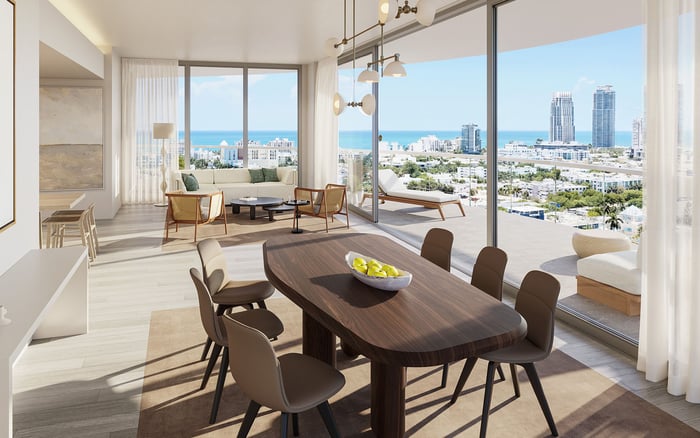
Outdoor room furniture is becoming a serious purchase filter for South Florida buyers who want terraces, balconies, pool decks, and waterfront settings to function as furnished living rooms rather than decorative afterthoughts.
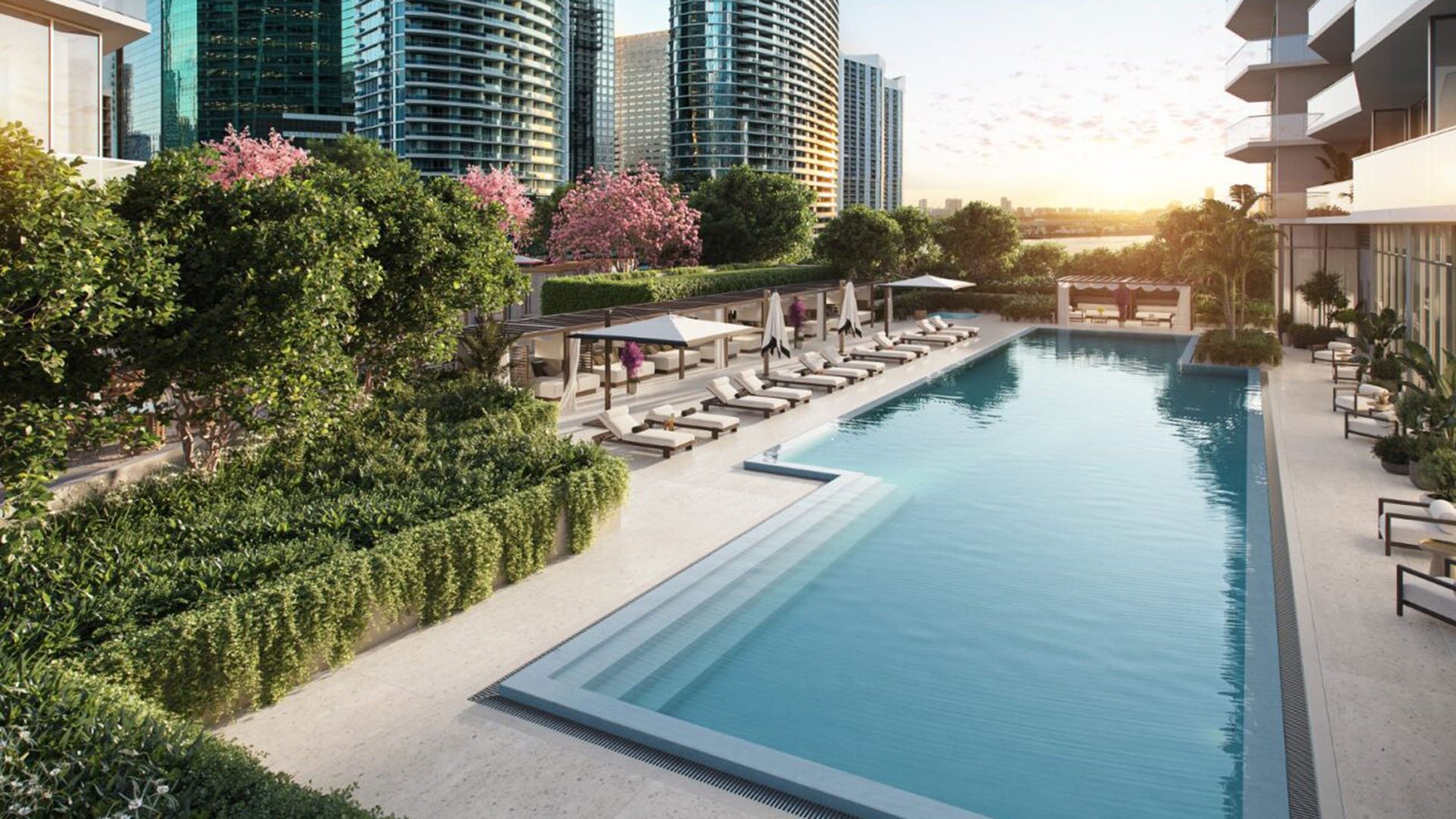
For South Florida’s luxury buyer, outdoor room furniture is no longer a styling detail reserved for the final walkthrough. It is becoming a first-pass filter: a quiet but decisive test of whether a residence truly supports the life it promises. The question is not simply whether a home has exterior space. It is whether that space can hold a real conversation, a long lunch, a shaded afternoon, and an easy evening transition without feeling improvised.
This shift is especially visible in how buyers read plans, photographs, and private showings. A wide view still matters, but furniture reveals proportion. If a terrace can only hold two decorative chairs, it functions differently from one that can accommodate a dining table, a deep sofa, and circulation around both. A balcony with a dramatic outlook may lose force if it cannot be furnished for daily use. In that sense, outdoor furniture has become a measuring instrument.
The 2026 buyer is less impressed by empty square footage and more attentive to usable volume. This is a mature luxury instinct. A room must work. The same standard now applies outside, where climate, privacy, breeze, shade, finishes, and maintenance all shape the decision.
In a South Florida search, buyers may compare Brickell with Miami Beach, Oceanfront residences with quieter bayfront settings, and new towers with established waterfront homes. Across those settings, the same questions surface. Can breakfast be served outside without moving half the furniture? Is there room for a chaise without blocking the door? Does the seating face the view, the sunset, the garden, or the social center of the home? Does the exterior layout support one person reading and six people arriving for cocktails?
The language is also changing. Balcony, Terrace, Pool, and Oceanfront are no longer just amenity labels. They are lifestyle zones buyers expect to see furnished with purpose. A pool deck without proper lounge spacing can feel under-realized. A terrace without shade can feel seasonal, even in a market built around year-round outdoor living.
Outdoor furniture exposes scale in a way polished imagery often softens. A sectional has depth. Dining chairs need pullback space. Chaise lounges require side clearance. Planters, consoles, umbrellas, and side tables all compete for the same surface. When a buyer sees these pieces in place, the exterior either resolves into a room or collapses into a corridor.
This is why well-furnished outdoor spaces can sharpen confidence. They help a buyer imagine daily rituals with less abstraction: coffee before calls, a child reading after school, a couple hosting another couple without retreating indoors, or a quiet dinner with the doors open. The best exterior rooms feel edited, not crowded. They leave enough negative space for movement while still offering the comfort associated with an interior lounge.
Materiality matters as well. Luxury buyers notice whether cushions look vulnerable, whether metal finishes feel appropriate, whether wood tones can age gracefully, and whether storage has been considered. In South Florida, outdoor living is beautiful precisely because it is exposed. That exposure makes durability part of elegance.
Not every exterior space needs to do everything. In fact, the most convincing residences create a hierarchy. One area may be designed for dining. Another may be arranged for lounging. A secondary balcony may serve as a private morning perch rather than a social stage. The strength lies in clarity.
For condominiums, this clarity often begins at the threshold. Sliding doors, indoor flooring transitions, ceiling heights, and furniture alignment determine whether the outdoor room feels like an extension or an interruption. If the living room sofa faces one direction and the terrace seating faces another, the home can feel visually fragmented. If the pieces align, the eye travels naturally from interior to exterior.
For single-family homes, the logic expands to the garden, pool, summer kitchen, and covered loggia. Buyers increasingly want a sequence, not a collection of isolated moments. The table should relate to the kitchen. The lounge should relate to the view. The pool furniture should support both sun and shade. Privacy should be designed, not patched together with oversized planters after closing.
Outdoor room furniture is ultimately a proxy for deeper values. The first is proportion. If the furniture looks strained, the space is probably undersized for the buyer’s intended use. The second is comfort. Luxury buyers are not only purchasing a view; they are purchasing the ability to remain in that view for hours. The third is ease. Exterior living should not require a daily choreography of moving cushions, shifting chairs, and negotiating tight corners.
There is also a social dimension. South Florida homes are often judged by how gracefully they host. A residence may have a formal dining room, a chef’s kitchen, and dramatic glazing, but if guests naturally drift outside, the exterior must carry the same level of hospitality. Seating groups should invite conversation. Dining should feel stable and intentional. Lighting should allow the space to remain elegant after sunset.
For buyers comparing residences at similar price levels, this can become a subtle tie-breaker. The home that demonstrates a finished outdoor life feels more complete. It suggests that the developer, designer, owner, or seller understood the climate and the culture of the market. It also reduces the buyer’s mental work. Instead of wondering what could fit, the buyer can evaluate what already works.
For sellers, the lesson is practical: furnish the outside with the same discipline as the inside. Do not overfill the space in an attempt to prove capacity. Do not under-furnish it and hope the view will compensate. The objective is to make each exterior zone legible within seconds.
Start with the primary use. If the terrace is best for dining, show a properly scaled table and leave enough space for chairs to move. If the balcony is best for lounging, use pieces with enough depth to communicate comfort. If the pool area is central, organize chaises, side tables, and shaded seating so the deck feels resort-like without becoming theatrical.
Color should support the architecture and the landscape. In South Florida, restrained palettes often perform best because the sky, water, palms, and city lights already provide movement. The most memorable outdoor rooms tend to avoid clutter. They rely on proportion, texture, shade, and a few decisive pieces.
Buyers should look beyond the first impression and ask how they would live outside on a normal Tuesday, not only during a perfect weekend showing. Where would the laptop go? Where would breakfast be served? Could two people use the space differently at the same time? Is there a place for towels, covers, serving pieces, or additional cushions?
They should also walk the path from kitchen to exterior dining, from bedroom to private balcony, and from living room to main terrace. The more natural those paths feel, the more likely the outdoor room will be used. A beautiful exterior space that requires effort often becomes visual value rather than lived value.
This is why outdoor room furniture has become such a useful filter. It turns aspiration into evidence. It shows whether a residence supports South Florida’s most elemental luxury: the ability to live between indoors and out with ease.
Why is outdoor room furniture becoming a buyer filter in South Florida? It helps buyers judge whether exterior space is truly usable or simply decorative. Furniture scale quickly reveals comfort, circulation, and daily function.
Is a large terrace always better than a smaller balcony? Not necessarily. A smaller balcony with clear purpose, shade, and well-scaled seating can feel more valuable than a larger terrace that is awkward to furnish.
What should buyers look for first outside? Start with depth, shade, privacy, and how easily furniture can be arranged without blocking doors or views. These details shape daily use.
Does outdoor furniture affect perceived resale value? It can influence perception by making the lifestyle feel complete. Buyers often respond strongly to spaces that are already resolved and easy to understand.
How important is shade in South Florida outdoor rooms? Shade is essential because it extends the hours a space can be comfortably used. Covered areas, umbrellas, and architectural overhangs all matter.
Should sellers stage balconies and terraces? Yes, if the staging is restrained and properly scaled. The goal is to clarify use, not to crowd the exterior with unnecessary pieces.
What is the biggest mistake in outdoor staging? Overfilling the space is the most common error. It can make even a generous terrace feel tight and visually noisy.
Do waterfront homes need different outdoor furniture strategies? Waterfront settings benefit from low, comfortable pieces that preserve sightlines. The furniture should frame the view rather than compete with it.
Are pool areas judged differently now? Yes, buyers increasingly expect pool areas to function as outdoor living rooms. Lounging, shade, side tables, and circulation all influence the impression.
How should a buyer compare two similar residences? Choose the one where the outdoor spaces already support the way you intend to live. The best plan is the one that turns exterior square footage into daily pleasure.
For a discreet conversation and a curated building-by-building shortlist, connect with MILLION.
If branded residences are on your mind — as a home or as an allocation — we would be glad to share what we are seeing, privately.
Begin a quiet conversation