A practical, discreet framework for evaluating whether a South Florida luxury residence can support the real rhythms of staff, guests, pets, and school-day life before a buyer commits.
A residence can be architecturally exquisite and still fail the life it is meant to hold. For the South Florida buyer, the question is not only whether a home is beautiful, well located, or materially refined. The sharper test is whether it works at 7:15 a.m. on a school day, at 5:30 p.m. when guests arrive early, after a wet dog returns from a walk, or when household staff need to move without crossing the principal entertaining path.
Pressure-testing is the discipline of walking a home through the routines that will stress it most. It is not a negative exercise. It is a luxury discipline. The more valuable the residence, the more carefully its operational grace should be tested.
Begin with people, not square footage. Write down who uses the residence daily, who uses it occasionally, and who must move through it without becoming part of the social scene. Principals, children, grandparents, overnight guests, nannies, housekeepers, drivers, chefs, trainers, tutors, dog walkers, and security personnel each create a distinct circulation pattern.
Then place those patterns over the floor plan. Where does each person enter? Where do they wait? Where do they store bags, uniforms, sports gear, dog leashes, strollers, groceries, deliveries, and luggage? A grand foyer may impress for thirty seconds. A discreet service route may matter every day.
In a vertical residence, the same test applies to elevators, parking, package handling, and the distance from arrival to the kitchen or service area. In a single-family home, focus on gates, garages, side entries, laundry access, mudroom function, and whether staff can reset the home while guests remain undisturbed.
Luxury households depend on invisible choreography. A chef should not need to cross the formal living room with supplies. A housekeeper should have a natural path to laundry, linen storage, guest rooms, and refuse areas. A nanny should be able to move from children’s rooms to kitchen and car without constant interruption.
Ask where staff can pause. This is often overlooked. A residence may have generous entertaining space but no practical area for a uniform change, a phone call, a meal break, or a secure place for personal items. If full-time staff are part of the household, the plan should support professional dignity as well as privacy.
For buyers comparing urban residences such as 2200 Brickell, the staff test should include building arrival, parking logistics, elevator timing, and whether daily services can occur without creating friction for the family. The address may be central, but the real value lies in how smoothly the building supports repeated use.
The guest test is not about how many people can fit at a cocktail party. It is about whether guests can be welcomed, entertained, housed, and released without exposing the private life of the residence.
Walk the path from arrival to powder room, bar, dining area, terrace, guest suite, and departure. If a visitor must pass bedrooms, children’s study spaces, laundry, or a staff work zone, the plan may feel less private than it appears. In waterfront or skyline residences, guests naturally migrate toward the view. The question is whether that movement is anticipated, or whether it pulls them through intimate areas.
Overnight guests require a second test. Can they wake early, make coffee, take a call, or step outside without entering the principal family zone? The best guest suites feel integrated when needed and separate when privacy matters.
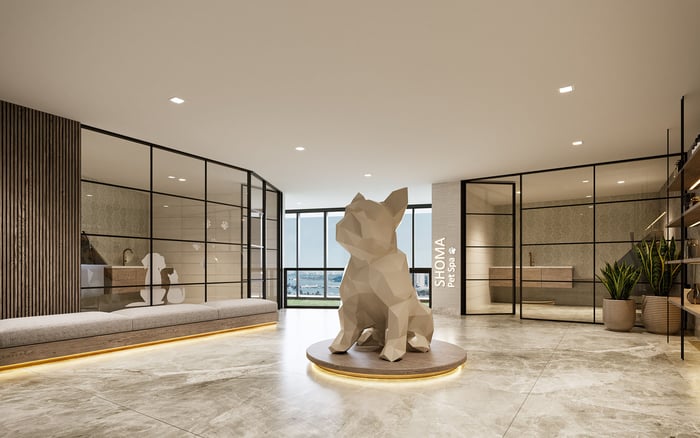
Pets are an elegant way to expose weak planning. A dog does not care that the marble is rare or the elevator lobby is dramatic. The route from residence to walk area, the place where paws are cleaned, the storage for food and grooming, and the management of pet odors all matter.
If the home has a balcony or terrace, ask how those spaces are supervised, shaded, cleaned, and furnished for real use. Is there room for a pet bed without compromising the seating plan? Can plants, bowls, and outdoor fabrics be managed without turning the space into clutter? A large terrace that lacks practical access from the rooms where people actually gather may become an occasional stage rather than a daily living space.
The pool test is similar. Study towel storage, restroom access, wet traffic, sunscreen storage, changing routines, and whether children, guests, and pets can move from water to interior without distressing the finishes. For Miami Beach buyers considering a residence such as The Perigon Miami Beach, the glamour of coastal living should be paired with a precise understanding of how sand, salt air, guests, and animals move through the home.
School-day life is where fantasy floor plans become honest. Rehearse the morning in sequence: wake-up, bathrooms, breakfast, uniforms, backpacks, devices, instruments, sports equipment, car seats, driver arrival, parent departure, and the inevitable forgotten item.
A strong residence creates parallel paths. Children can move without colliding with staff. A parent can take an early call without standing in the breakfast path. A nanny can manage the exit while a housekeeper resets bedrooms. A driver can wait without blocking another car. The garage, elevator, lobby, or porte cochere becomes part of the home’s functional architecture.
Families looking beyond Miami into Boca Raton may evaluate Alina Residences Boca Raton with these routines in mind. The right question is not simply whether the residence is near the desired orbit, but whether the home makes weekday movement calmer.
A South Florida second home has its own operational demands. It may sit quiet for periods, then become intensely active during holidays, long weekends, and school breaks. Test for arrival after travel, luggage staging, grocery loading, guest turnover, pet travel, and the ability to open the home quickly.
Storage becomes especially important. Owners often underestimate the volume of duplicate wardrobes, beach gear, children’s equipment, pet supplies, entertaining pieces, and seasonal décor. If everything must be visible or improvised, the residence will feel less serene over time.
In Coconut Grove, a buyer studying The Well Coconut Grove might pressure-test for a different cadence than in Brickell: quieter mornings, family meals, wellness routines, and flexible hosting. The point is not which lifestyle is superior. It is whether the residence is honest about the lifestyle it promises.
During a showing, slow the pace. Do not allow the tour to become a sequence of views, finishes, and amenities. Ask to enter as you would on a rainy weekday. Stand where staff would unload groceries. Open the closets that would hold school bags and pet supplies. Trace the path from car to kitchen, from kitchen to terrace, from pool to bath, and from guest suite to morning coffee.
Ask what happens simultaneously. Can a tutor work while dinner is prepared? Can guests arrive while children are leaving for practice? Can a dog walker come and go while principals are entertaining? Can service providers reach mechanical, laundry, or delivery areas without moving through the social heart of the home?
The finest residences do not merely accommodate these moments. They absorb them. That is the difference between a home that is impressive and a home that is livable at the highest level.
What does it mean to pressure-test a residence? It means evaluating the home against the routines that will happen repeatedly, including staff movement, guest arrivals, pet care, school mornings, and entertaining.
Should this be done before making an offer? Ideally, yes. The pressure-test can reveal operational issues that are not visible in photographs or during a fast showing.
How should buyers test staff circulation? Trace service entries, laundry access, kitchen support, storage, parking, and any path staff would use while the family or guests occupy primary rooms.
Why are guests so important to the evaluation? Guests reveal whether the home protects private bedrooms, children’s areas, staff zones, and owner routines while still feeling gracious.
What should pet owners look for first? Focus on the route to outdoor space, cleaning points, durable transitions, food storage, grooming needs, and places where pet items can remain discreet.
How should a balcony be evaluated? Consider safety, shade, furniture layout, cleaning, pet supervision, and whether the space is connected to rooms used every day.
What makes a terrace successful? A strong terrace has intuitive access, enough depth for real furniture, manageable maintenance, and a natural relationship to entertaining or family rooms.
What should families test for school mornings? Rehearse backpacks, uniforms, breakfast, devices, sports gear, driver arrival, elevator or garage timing, and forgotten-item recovery.
Does a pool change the way a home should function? Yes. A pool adds wet traffic, towel storage, restroom needs, supervision, sunscreen storage, and finish durability considerations.
Can a beautiful residence still fail this test? Absolutely. Beauty is only one layer; the best home also supports privacy, service, movement, storage, and calm under daily pressure.
When you're ready to tour or underwrite the options, connect with MILLION.
If branded residences are on your mind — as a home or as an allocation — we would be glad to share what we are seeing, privately.
Begin a quiet conversation