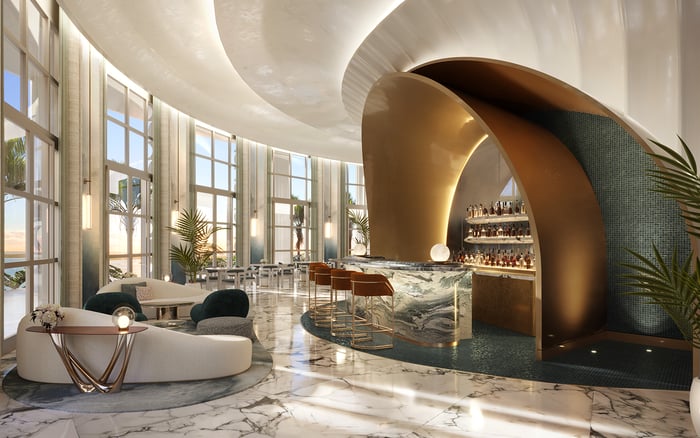
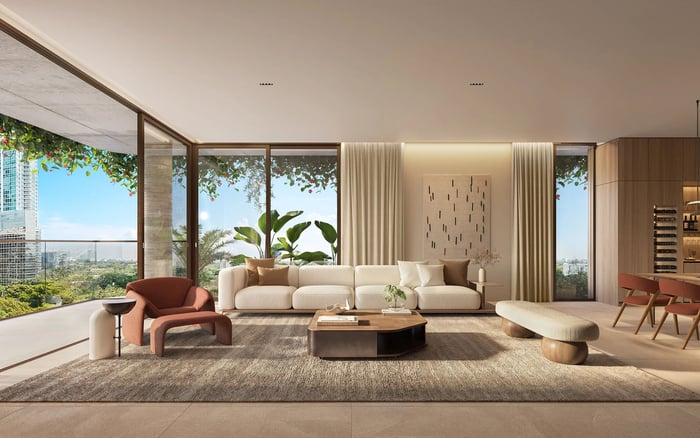
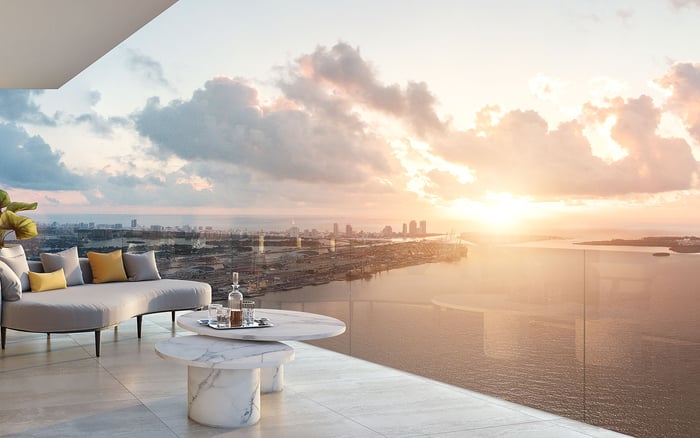
A practical guide for family buyers evaluating penthouse lighting scenes, daylight comfort, glare control, terrace transitions, bedrooms, and smart-home usability in South Florida.
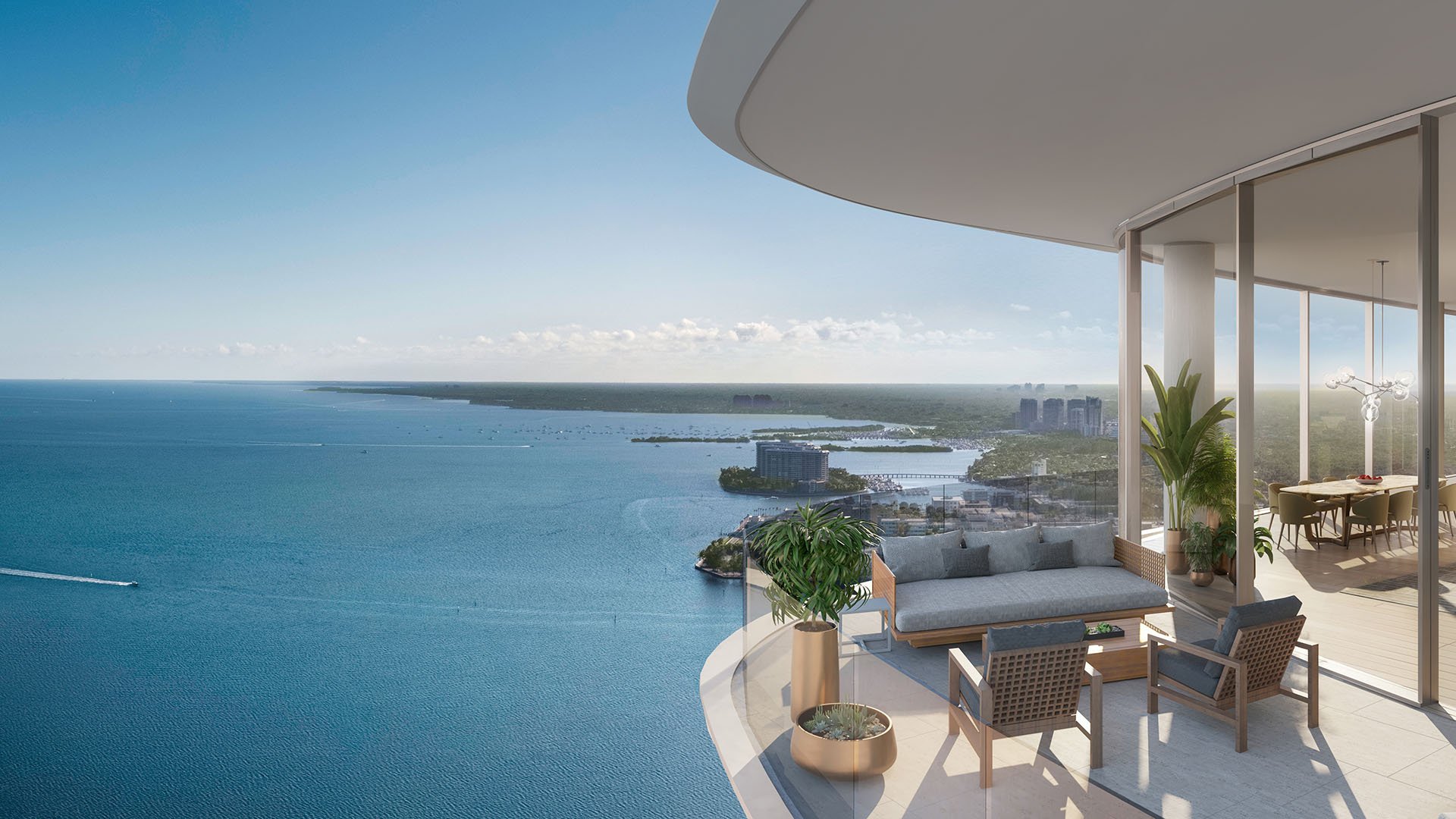
For many buyers, the first impression of a Penthouse is visual: ceiling heights, glass, water, skyline, a broad Terrace, and the immediate sense of privacy above the city. Families, however, need to look beyond the first evening glow. The more important question is how the home lives from breakfast to bedtime, from a bright weekend lunch to a quiet school-night routine.
Lighting scenes are preset combinations of fixtures, dimming levels, shades, and sometimes temperature or audio settings. In a well-considered penthouse, they allow a family to shift from one mood to another without navigating a wall of switches. A strong scene can make a large open plan feel intimate. A weak one can leave a dining table overlit, a television washed in glare, or a child’s bedroom dependent on a hallway control.
In South Florida, this matters because the light is rarely passive. Sun, water, glass, cloud cover, and nighttime city brightness all shape how a residence feels. Family buyers should treat lighting as part of the floor plan, not as decoration added at the end.
Before admiring chandeliers or recessed details, walk through a normal day. What happens at 6:45 a.m. when one parent is making coffee, one child is looking for a uniform, and another is still asleep? The right morning scene should bring usable brightness to kitchen and circulation areas without flooding bedrooms or media spaces.
Afternoon asks for a different approach. Homework, tutoring, reading, and casual dining benefit from steady, low-glare light. If the residence has deep views across Brickell, Miami Beach, Sunny Isles, or the bay, the family may also be managing reflections from glass towers and water. Ask whether shades can be grouped by exposure, room, and time of day. One universal shade command may look elegant in a demonstration, but it may not match family life.
Evening deserves the same scrutiny. A dinner scene should flatter food and faces, not simply dim every fixture at once. A bedtime scene should create a soft path from living areas to bedrooms. A late-night scene should let a parent move through the home safely without waking everyone.
Luxury lighting can be theatrical, but families usually live better with restraint. In a penthouse, glare is often the quiet defect. It may come from downlights placed too close to glass, polished stone reflecting ceiling fixtures, or exposed linear lighting that looks sharp from a seated position.
During a showing, sit where the family will actually sit. Use the breakfast counter, the sofa, the dining chairs, the desk area, and the primary bed. Look toward the windows and then back into the room. If your eyes are constantly adjusting, the lighting plan may need refinement.
High floors can intensify this issue because the eye has fewer neighboring structures to interrupt the horizon. That openness is part of the appeal, but it also means daytime brightness and evening contrast can feel more pronounced. The best lighting scenes soften transitions rather than compete with the view.
Family buyers should be especially precise about bedroom controls. Children’s rooms, guest suites, and staff or flex rooms should not feel like afterthoughts. Each should have intuitive bedside control, a calm nighttime pathway, and enough task lighting for reading or study.
Ask how scenes are named. “Relax” may mean one thing in the primary suite and another in a teenager’s room. Clear naming matters because a home automation system is useful only if everyone in the household can operate it without a tutorial. For younger children, simple keypads or limited app access may be preferable to full control from a phone.
Also consider the bathroom relationship. A midnight bathroom scene should be gentle, not clinical. Vanity lighting should support grooming without spilling harsh light into the sleeping area. If a suite uses glass partitions, pocket doors, or reflective surfaces, test how light travels when one person is awake and another is resting.
Most penthouse living areas combine several activities: cooking, dining, conversation, media, entertaining, and access to outdoor space. One grand lighting scene rarely serves all of them. Families should look for zones that can be tuned independently.
The kitchen may need strong task light at the island and softer ambient light at the perimeter. The dining area should have dimmable focus without creating a spotlight effect. The media area should reduce reflections on screens while preserving enough low-level light for movement. Art walls, shelves, and architectural details should support the room without becoming visually louder than the people in it.
If the residence includes a Balcony as well as a larger Terrace, confirm that indoor and outdoor scenes work together. The transition from interior to exterior should feel natural. Overly bright exterior fixtures can flatten the night view, disturb neighboring residences, or make outdoor dining feel exposed.
A sophisticated control system is not automatically a family-friendly one. During a tour, ask for the system to be demonstrated as if it were a normal evening, not a sales presentation. How many taps does it take to prepare dinner, lower shades, and set the living room for conversation? Can guests use a wall control without opening an app? What happens if the network is down?
The best systems offer layers. Parents may want full app control, while children and guests need straightforward keypads. Housekeepers, nannies, or visiting relatives may need simple access to practical scenes such as cleaning, morning, evening, and away. If every action requires specialized knowledge, the system may become a daily inconvenience.
Also ask whether scenes can be adjusted after move-in. Furniture placement, art installation, and family habits often change the ideal lighting balance. A buyer should understand whether reprogramming is simple, specialized, or tied to a broader service arrangement.
A first showing often happens under curated conditions. A second showing should be more practical. Visit at a different time of day if possible. Turn scenes on and off. Raise and lower shades. Stand at the windows, then sit with your back to them. Check whether polished floors, stone counters, mirrors, and glass railings create distracting reflections.
Bring the family conversation into the space. Where will bags land after school? Where will someone read quietly? Where will a child join a video lesson? Where will dinner move when guests are present? Lighting should support those answers.
This is also the time to review the relationship between natural light and privacy. A penthouse can feel wonderfully open by day and unexpectedly exposed by night if interior light turns the glass into a mirror from within. Proper evening scenes help preserve depth, view, and discretion.
For family buyers, the finest lighting scenes do not announce themselves. They reduce friction. They allow the same residence to feel energetic in the morning, focused in the afternoon, gracious at dinner, and serene at night. They also protect the architectural qualities that drew the buyer to the home in the first place.
A lighting plan should make scale feel livable. It should make views feel calm. It should make children comfortable and adults at ease. In a market where finishes and amenities often receive the loudest attention, lighting scenes are one of the most revealing tests of whether a penthouse has been designed for real life.
What is a lighting scene in a penthouse? It is a preset combination of lights, dimming levels, shades, and sometimes related systems that creates a specific mood or function.
Why are lighting scenes important for family buyers? Families use a home in many modes each day, so scenes should support different routines without making the home complicated to operate.
Should buyers test lighting during the day or at night? Ideally, both. Daytime reveals glare and shade performance, while evening shows ambiance, privacy, and reflections.
What is the biggest lighting mistake in a penthouse? Overlighting is common. Too much brightness can make large rooms feel cold and can compete with skyline or water views.
How should children’s bedrooms be evaluated? Look for independent controls, soft nighttime settings, reading light, and simple operation that does not depend only on an app.
Do outdoor areas need separate lighting scenes? Yes. Outdoor lighting should support dining and movement while preserving views and avoiding unnecessary brightness.
Are smart lighting systems always better? Not always. The best systems are intuitive, reliable, and easy for family members and guests to use.
What should buyers ask about shade controls? Ask whether shades can be controlled by room, exposure, and scene rather than only through one whole-home setting.
Can lighting scenes be changed after purchase? Often they can, but buyers should understand who can adjust them and whether specialized programming is required.
What is the best way to shortlist comparable options for touring? Start with location fit, delivery status, and daily lifestyle priorities, then compare stacks and elevations to validate views and privacy.
When you're ready to tour or underwrite the options, connect with MILLION.
If branded residences are on your mind — as a home or as an allocation — we would be glad to share what we are seeing, privately.
Begin a quiet conversation