A buyer-oriented guide to the qualitative cost drivers behind ownership at The Surf Club Four Seasons Surfside, from coastal insurance exposure and reserve funding to maintenance intensity and seasonal staffing expectations.

At The Surf Club Four Seasons Surfside, the appeal is immediate: direct Atlantic Ocean frontage, a Surfside address just north of Miami Beach, and a setting layered with private-club history. The property occupies the historic Surf Club site, originally established as a private social club in the 1930s, and today integrates preserved portions of the original clubhouse with new residential towers, a Four Seasons hotel, and private-club amenities.
That composition is what makes the address so rare. It is also what makes the carrying-cost conversation more nuanced than a simple monthly assessment. The Surf Club Four Seasons Surfside combines private residences, hotel operations, and club functions within one oceanfront complex. For owners, that means the cost structure is shaped not only by condominium common elements, but also by coastal exposure, brand-level service, and a mixed-use operating environment.
For buyers, the right lens is not whether a waterfront property costs more to operate. It is why, where the costs concentrate, and how those obligations support the standard of ownership that defines the asset.
The Surf Club’s direct Atlantic frontage is central to its value proposition. It is also central to its insurance profile. Oceanfront buildings in South Florida contend with wind exposure, salt air, storm-risk planning, and a higher degree of physical exposure than inland properties. That does not translate into a universal premium or a predictable line item from one building to the next, but it does explain why insurance deserves early attention in any ownership review.
At a luxury condominium property, insurance is not merely a defensive expense. It is part of the financial architecture that protects common areas, building systems, amenity spaces, and the broader residential environment. Because the residential component is structured around condominium ownership, owners share responsibility for common elements through association assessments. Those assessments may reflect the association’s approach to property coverage, deductibles, risk management, and storm planning.
A buyer comparing Surfside options, including Arte Surfside, should resist the temptation to evaluate monthly carrying costs in isolation. A low-looking assessment is not automatically efficient, and a higher one is not automatically excessive. The better question is whether insurance, reserves, maintenance, and service labor appear aligned with the building’s exposure and service promise.
Reserve funding matters in every condominium, but it takes on added importance at the waterline. Salt air, wind, and storm-risk planning are recurring considerations for maintenance at oceanfront luxury condominium properties like The Surf Club. Exterior surfaces, glazing, mechanical systems, pool decks, landscape areas, beach-facing elements, and high-use amenity spaces all require disciplined attention.
In ultra-luxury buildings, reserves also carry a reputational function. Luxury-service expectations leave little tolerance for visible deferred maintenance or amenity downtime. The point is not simply to repair. It is to preserve the sense of continuity owners expect when they arrive from New York, London, São Paulo, or Palm Beach and want the property to perform at the level of a private resort.
This is especially relevant at a property that includes preserved historic architecture within a contemporary oceanfront development. The modern Surf Club is not a generic tower. It is a layered complex where residential, hotel, and club functions coexist. Reserve planning therefore has to contemplate more than routine building replacement cycles. It must support the continuity of a place whose value is tied to design, heritage, landscape, service, and location.
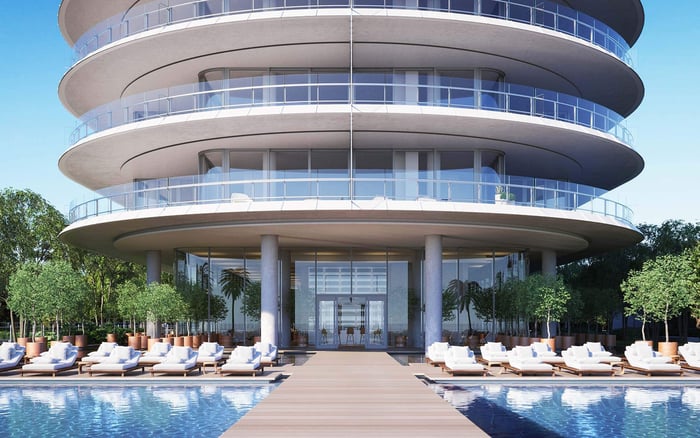
Oceanfront living is defined by light, air, and horizon. Its maintenance reality is defined by those same elements. Salt air can accelerate wear. Wind exposure can make exterior care more demanding. Storm planning requires procedures, vendors, inspections, and post-weather readiness. At The Surf Club, maintenance planning must account for residents, hotel guests, and club users, not just a single residential population.
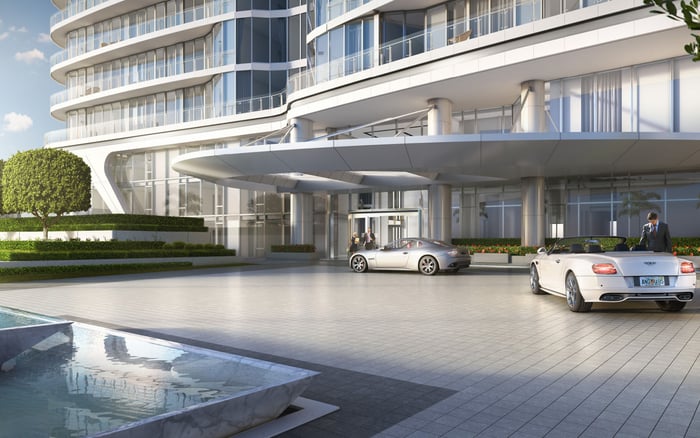
That scale and mixed-use nature can make operating budgets more complex than those of a typical residential-only condominium. Shared hotel, residence, and club infrastructure creates a layered operating environment. Amenity operations, security protocols, valet flow, arrival sequences, beach access, pools, dining-related interfaces, and housekeeping coordination all influence how a property feels day to day.
This is where waterfront ownership becomes a stewardship model. The owner is not merely buying a view or an address. The owner is participating in the upkeep of a carefully choreographed environment. In nearby Surfside conversations, buyers may also weigh the more residentially framed appeal of Fendi Château Residences Surfside, but the underwriting logic remains similar: the closer and more refined the relationship to the ocean, the more important the operating culture becomes.
The Four Seasons affiliation raises the expected service baseline versus a conventional standalone condominium. That distinction is central to the carrying-cost analysis. Hotel-style services at branded residences can include concierge, valet, housekeeping coordination, security, beach service, amenity operations, and related hospitality functions.
Labor is one of the clearest expressions of the brand promise. A resident does not evaluate the experience only by marble, landscaping, or ceiling heights. The experience is measured by arrival, discretion, speed, memory, preparedness, and consistency. Those qualities require staffing models that can flex with demand while maintaining a high standard during quieter periods.
Seasonal occupancy patterns can affect staffing needs, particularly for concierge, valet, security, housekeeping, beach, pool, and food-and-beverage-related service areas. In South Florida, the rhythm of peak season, holiday periods, owner arrivals, visiting families, and private events can influence how a luxury property prepares its labor coverage. The result is not simply more staff. It is a more sophisticated approach to scheduling, training, cross-functional coordination, and amenity readiness.
Buyers considering branded environments beyond Surfside, such as Four Seasons Hotel & Private Residences Fort Lauderdale, often understand that the service component is not incidental. It is one of the primary reasons to own. The carrying cost is therefore tied to the very thing that protects the daily experience.
The best analysis starts with monthly assessments, but it should not stop there. Buyers underwriting ownership should evaluate assessments alongside insurance exposure, reserve obligations, waterfront maintenance needs, and service-driven labor costs. At The Surf Club, those categories are interconnected. Insurance protects the physical asset. Reserves fund future capital needs. Maintenance preserves the presentation and performance of the property. Staffing animates the lifestyle.
A practical review should focus on what the budget is designed to support. Does it reflect the complexity of an oceanfront, mixed-use, hospitality-influenced property? Does it allow the building to avoid visible deferred maintenance? Does it recognize that resident expectations differ from those in a conventional condominium? Does it align with the reality that hotel guests, residents, and club users may all rely on overlapping infrastructure?
This framework can also help buyers compare nearby luxury choices such as The Delmore Surfside without reducing the decision to a single fee. In the highest tier of Surfside and Miami Beach-adjacent ownership, the better question is not simply what it costs. It is what standard the cost is intended to preserve.
Why are carrying costs at The Surf Club Four Seasons Surfside different from a typical condo? The property combines private residences, hotel operations, and club functions, which can create a more complex operating budget than a residential-only building.
Does oceanfront location affect ownership costs? Yes. Direct Atlantic frontage enhances value, but it also brings coastal exposure, including salt air, wind, and storm-planning considerations.
What are the main cost categories buyers should review? Buyers should review monthly assessments in relation to insurance exposure, reserve obligations, waterfront maintenance needs, and service-driven labor costs.
Why do reserves matter so much in a luxury oceanfront building? Reserves help preserve common elements and reduce the likelihood of visible deferred maintenance or amenity downtime.
How does the Four Seasons affiliation influence costs? The affiliation raises the expected service baseline, which can affect staffing, amenity operations, concierge services, valet, security, and related hospitality functions.
Can seasonal occupancy affect staffing? Yes. Seasonal patterns can influence needs for concierge, valet, security, housekeeping coordination, beach, pool, and food-and-beverage-related service areas.
Is waterfront maintenance only about exterior repairs? No. It also includes planning for amenity presentation, mechanical resilience, storm readiness, vendor coordination, and day-to-day service continuity.
Should buyers focus only on the monthly assessment? No. The assessment should be considered together with insurance, reserves, maintenance intensity, and labor required to support the ownership experience.
Why is Surfside significant in this ownership discussion? Surfside offers an ultra-prime oceanfront setting just north of Miami Beach, where scarcity, privacy, and direct beach adjacency shape buyer expectations.
Is The Surf Club Four Seasons Surfside best understood as Branded Residences? Yes. Its Four Seasons affiliation and hotel-style service environment place it within the branded-residences conversation, with service as a central value driver.
For a discreet conversation and a curated building-by-building shortlist, connect with MILLION.
If branded residences are on your mind — as a home or as an allocation — we would be glad to share what we are seeing, privately.
Begin a quiet conversation