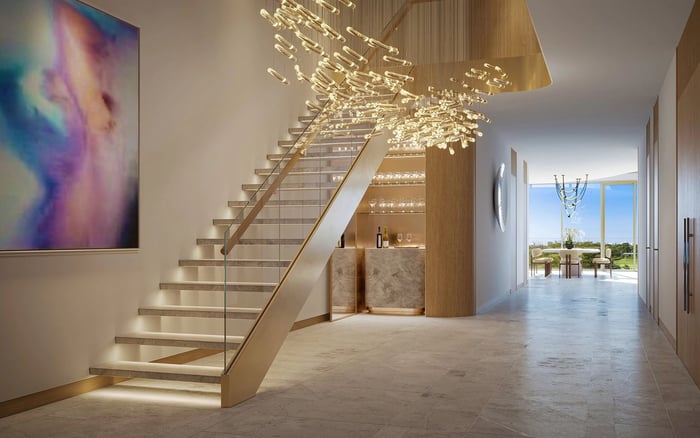
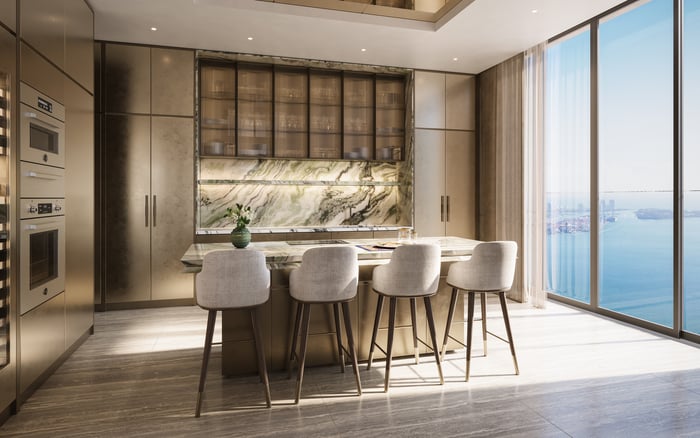
Kitchen ventilation is moving from a technical afterthought to a quiet luxury filter for South Florida buyers, shaping how they evaluate open plans, entertaining kitchens, air quality, and resale readiness.
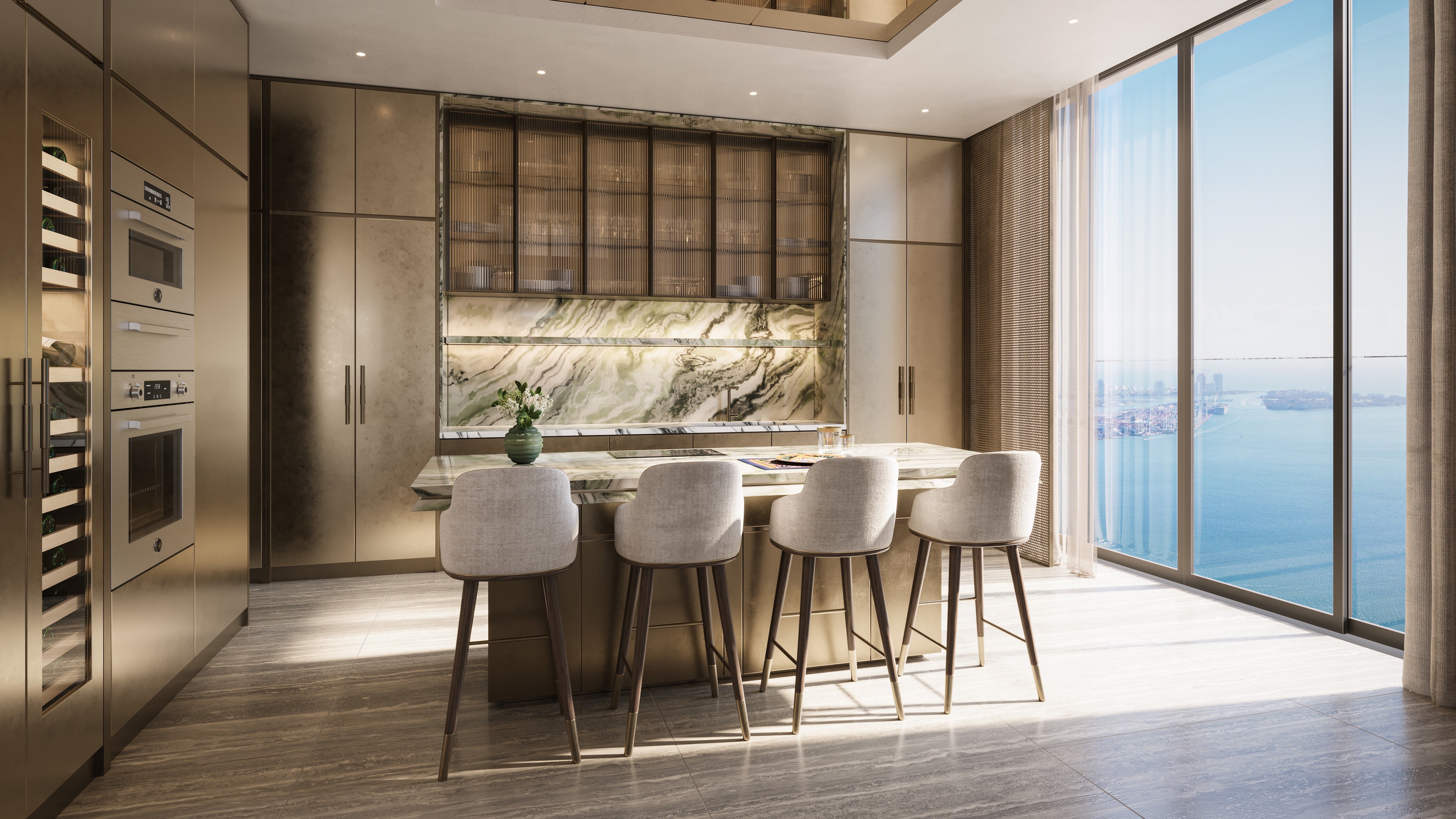
For years, the prestige kitchen in South Florida was judged first by its sightlines: a long island, stone with movement, integrated appliances, a wall of glass beyond the breakfast area, and a terrace close enough to make dinner feel coastal even in the center of the city. In 2026, a more technical question is entering the same conversation: how does the kitchen actually breathe?
This shift is not about turning luxury buyers into mechanical engineers. It is about comfort, discretion, and daily use. In a market shaped by open living, entertaining, wellness, and year-round climate control, ventilation has become a quiet proxy for whether a home has been planned beyond the photograph. Buyers who cook seriously, host often, or simply want interiors to remain composed after dinner are beginning to treat ventilation as a practical filter.
The distinction is subtle but important. A beautiful kitchen can create the first impression. A well-ventilated kitchen can protect the living experience after closing.
South Florida luxury homes often celebrate continuity: kitchen to dining, dining to living, living to terrace. The effect is elegant, but it also gives cooking air fewer boundaries. Aromas, heat, moisture, and grease can move quickly through spaces furnished with natural woods, textiles, art, and custom finishes.
That is why buyers are asking more direct questions during showings. Is the hood decorative or functional? Does the cooktop sit on an island, where capture is harder? Is the system ducted outside where possible, or is it recirculating? How does make-up air enter the residence? Has the ventilation strategy been coordinated with cabinetry, lighting, ceiling heights, and the air-conditioning system?
These questions are not glamorous, but they are increasingly aligned with how affluent buyers live. A residence may be used for a family breakfast, a chef-prepared dinner, a late cocktail gathering, and a quiet work-from-home morning in the same open volume. Ventilation helps those moments coexist without the kitchen announcing itself long after the meal is over.
The highest expression of kitchen ventilation is not necessarily the most visible one. In premium residences, the ideal solution often feels integrated, quiet, and proportional. It supports the design rather than competing with it.
Buyers tend to respond to systems that are appropriate to the cooking surface, carefully placed, and easy to operate. A sculptural hood can be a focal point when the architecture invites it. A concealed or ceiling-integrated solution can be more persuasive in a minimalist interior. What matters is not merely the brand or the finish, but whether the system is credible for the way the kitchen is meant to function.
Noise is part of the luxury equation. A system that must roar to be useful can undermine the room it is meant to improve. Ease of cleaning matters as well, especially in residences intended for frequent entertaining or seasonal ownership. The best kitchens make performance feel calm.
In practical buyer shorthand, this filter is appearing across Brickell, Miami Beach, Sunny Isles, Coconut Grove, new-construction, and ultra-modern searches, because it is less about one neighborhood than about expectations for the next generation of residences.
South Florida magnifies the importance of ventilation because interiors often live in dialogue with the climate. Air conditioning, humidity management, balcony doors, outdoor kitchens, and indoor entertaining all intersect. A kitchen that performs beautifully in a dry, temperate environment may need more careful consideration in a coastal home where humidity and conditioned air are part of daily life.
There is also a lifestyle dimension. Many buyers are not choosing kitchens simply to prepare weeknight meals. They are choosing social infrastructure. The kitchen is the arrival point after the beach, the informal bar before dinner, and the place where a private chef may work while guests move through the living room. Poor ventilation can make that choreography feel less refined.
For waterfront condominiums and high-floor residences, the question can become especially nuanced. Building systems, exterior venting rules, ceiling conditions, and appliance placement may limit what can be altered later. In a single-family estate, there may be more freedom to refine the system, but the design still requires careful coordination. Either way, buyers are learning that ventilation is easiest to value before purchase, not after a decorative renovation has already been completed.
The new luxury buyer is not necessarily carrying a checklist, but the pattern is clear. They stand at the island and look up. They ask whether the range is gas, induction, or electric. They notice if the hood is shallow, too high, or visually detached from the cooking area. They ask whether cooking odors linger in the great room. They consider whether the kitchen was designed for actual use or primarily for staging.
For advisers, designers, and sellers, this means the kitchen conversation is becoming more layered. It is no longer enough to cite premium appliances or imported stone. Buyers want to understand the operating logic of the room. A kitchen can be serene, tailored, and photogenic while still offering a credible answer to steam, smoke, and scent.
For sellers, documentation can help. Specifications, maintenance history, appliance manuals, and renovation details can make a buyer more comfortable. For buyers, a specialist review may be wise when the kitchen is central to the decision. Ventilation is one of those elements that can look simple and become complicated once cabinetry, ceilings, ducts, and building rules are involved.
Ventilation is also becoming a resale signal. Not every future buyer will ask about capture area or duct routing, but many will notice how a home feels. Does the kitchen support a dinner party without overwhelming the living room? Does it feel fresh the next morning? Can a private chef use the space confidently? Does the design allow the next owner to upgrade appliances without rebuilding the ceiling?
These are the details that distinguish a polished residence from a persuasive one. In ultra-premium real estate, the difference is often found in systems that are barely visible. The buyer may not talk about ventilation first, but it can influence whether the home feels complete.
This is especially relevant for new and recently renovated residences, where expectations are high. If the kitchen presents itself as professional, the ventilation should not feel residential in the weakest sense of the word. If the interior is minimal, the mechanical solution should not feel like an afterthought. Luxury is coherence.
Developers, architects, and sellers should treat kitchen ventilation as part of the wellness and livability story, not merely a technical line item. The conversation can be framed with restraint: quieter cooking, cleaner transitions between kitchen and living areas, better support for entertaining, and a more considered relationship between design and daily life.
The most successful approach is not to overexplain. Instead, demonstrate that the home has been thought through. A buyer should be able to understand, in plain language, where the cooking air goes, how the system is controlled, and whether it suits the scale of the kitchen. If those answers are clear, the feature becomes part of the residence's composure.
For buyers, the lesson is equally simple. Do not let the stone distract from the system. A kitchen is not only a place to look at. It is a place where air, heat, sound, and people move. In South Florida's luxury market, the most compelling homes increasingly manage all of that with grace.
Why is kitchen ventilation becoming more important to South Florida buyers? Open living plans make cooking air more visible in daily life, so buyers are paying closer attention to comfort, odor control, and entertaining performance.
Is a dramatic range hood always the best option? Not always. The best solution depends on the cooktop location, ceiling conditions, design intent, and whether the system performs quietly and effectively.
Should buyers ask whether a system vents outside? Yes. Understanding whether the system is ducted or recirculating helps buyers evaluate performance expectations and possible future limitations.
Does ventilation matter if the owner rarely cooks? It can still matter for resale, private chefs, entertaining, and the overall freshness of an open-plan residence.
Can poor ventilation be fixed after purchase? Sometimes, but changes can be constrained by cabinetry, ceilings, building systems, and association rules, so it is best evaluated early.
What should sellers prepare before listing? Appliance specifications, renovation records, and maintenance details can help explain the kitchen's performance without overcomplicating the showing.
Is this mainly a condominium issue? No. Condominiums may have more system constraints, but single-family homes also need ventilation that matches the scale and use of the kitchen.
How does ventilation connect to luxury design? It allows the kitchen to function beautifully without compromising quiet, comfort, finishes, or the rhythm of entertaining spaces.
What is one simple thing buyers can observe during a tour? Look at the relationship between the cooking surface and the ventilation source, including height, depth, and whether the solution appears functional.
Will ventilation become a standard buyer question in 2026? For many design-aware buyers, yes. It is becoming part of a broader assessment of whether a residence is truly livable.
If you'd like a private walkthrough and a curated shortlist, connect with MILLION.
If branded residences are on your mind — as a home or as an allocation — we would be glad to share what we are seeing, privately.
Begin a quiet conversation