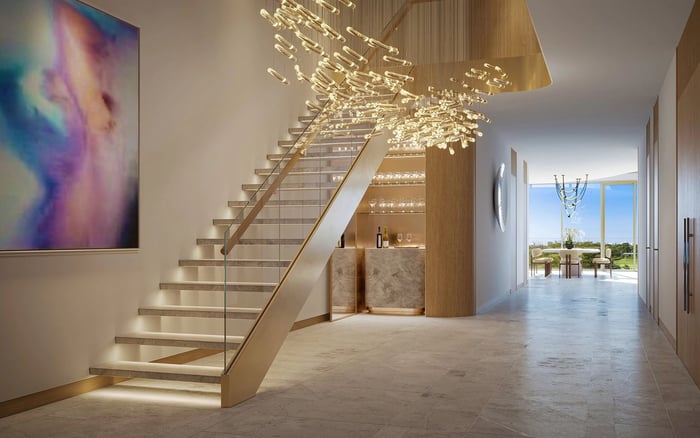
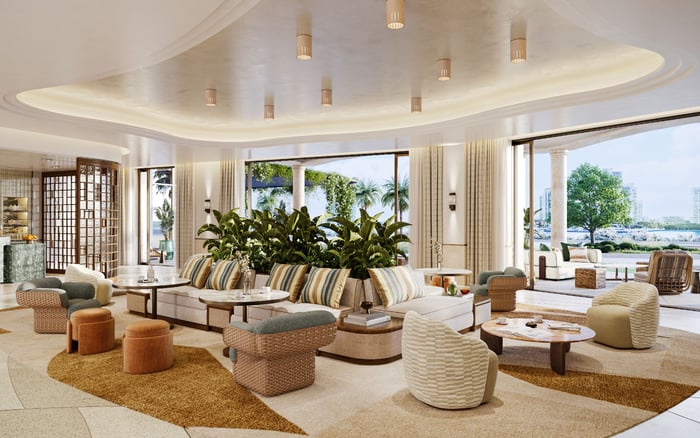
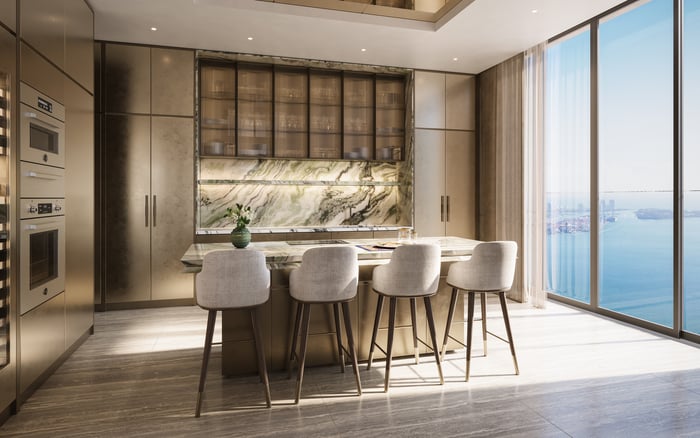
Design pedigree has become a quiet but powerful filter for South Florida luxury buyers, shaping how residences are evaluated beyond square footage, views, and amenities.
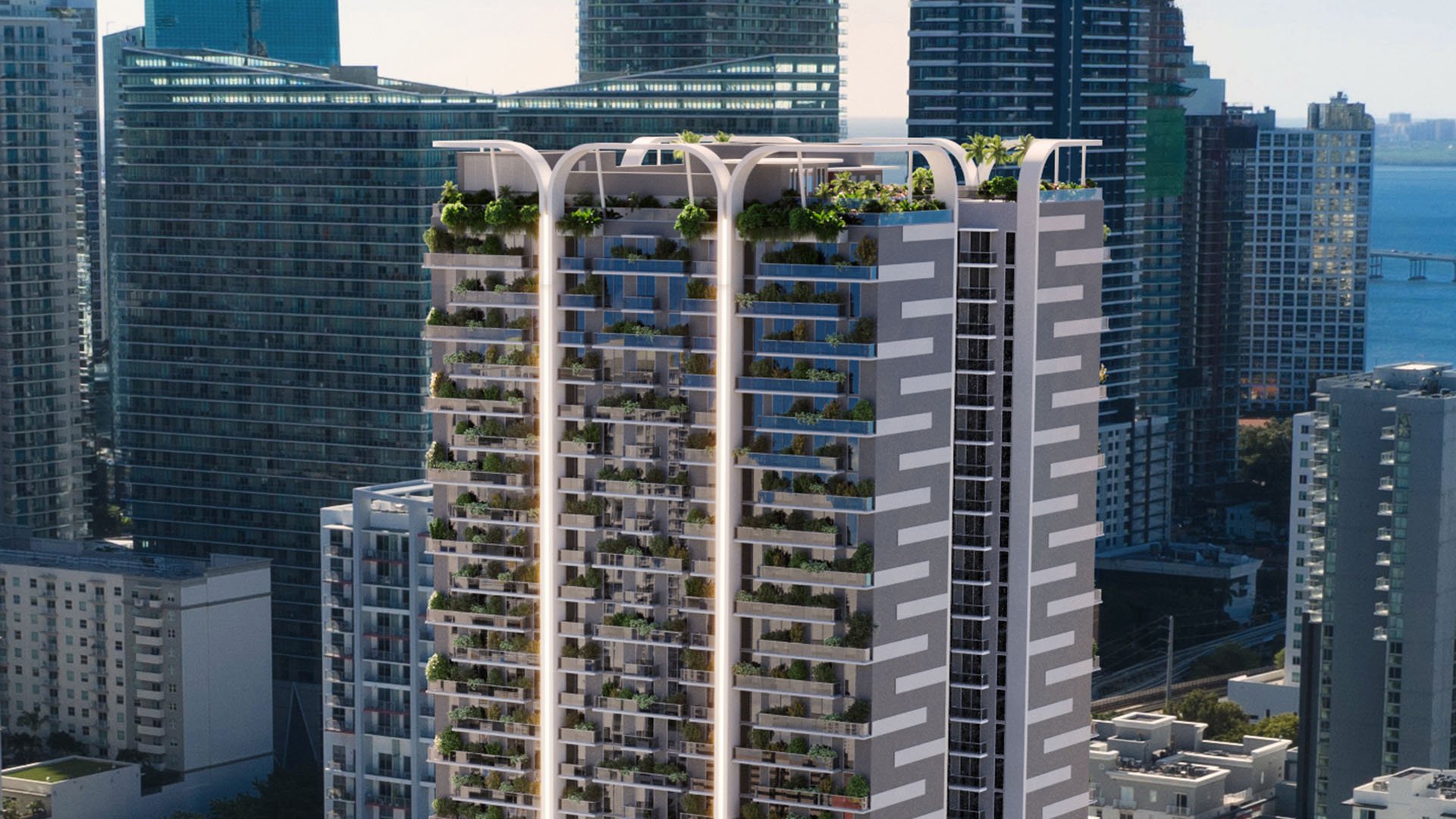
In South Florida, the most discerning residential buyers no longer evaluate luxury by scale alone. Square footage, water views, terraces, and private amenities remain essential, but they are no longer enough to distinguish the merely expensive from the architecturally meaningful. The sharper question is this: who shaped the residence, what design language defines it, and will that language still feel relevant years from now?
Design pedigree gives buyers a way to read a building before they enter a sales gallery. It signals intent. It suggests that a residence has been considered as architecture, not simply produced as development. In a market where ultra-premium inventory can appear visually abundant, pedigree creates distinction.
This is especially true across Brickell, Miami Beach, Coconut Grove, Sunny Isles, and other prestige enclaves, where buyers often compare residences across multiple lifestyles. A waterfront tower, a boutique coastal address, and a garden-oriented village residence may serve different needs, but the strongest examples share a common quality: a coherent point of view.
This conversation intersects Brickell, Miami Beach, Coconut Grove, Sunny Isles, new-construction, and ultra-modern buyer language, but its real importance is more personal. A well-designed residence helps buyers understand how they want to live.
For much of the modern luxury cycle, new residences competed through amenity escalation. The longest pool, the most elaborate wellness level, the largest arrival sequence, the most dramatic lounge, and the most theatrical roofline all became part of the language of desirability. Those elements still matter, but buyers at the top of the market are increasingly focused on whether they are integrated into a larger architectural idea.
A building with pedigree does not need to shout. Its proportions, materials, circulation, light, and privacy planning do the work. The experience is felt in quieter moments: the compression and release of an entry, the framing of a view, the way service areas disappear, and the way an interior palette supports art rather than competing with it.
That is why projects with recognizable design narratives often earn a different kind of attention. In Brickell, The Residences at 1428 Brickell speaks to buyers who want an urban address to feel intentional, refined, and future-facing rather than generic. The interest is not only in the skyline. It is in the belief that the residence belongs to a more disciplined architectural conversation.
The rise of branded residences has made design pedigree more visible, but also more demanding. A name alone does not create lasting appeal. Sophisticated buyers look for alignment among the brand, the architecture, the interiors, and the way the residence is operated. If those elements feel disconnected, the brand can feel decorative. If they are aligned, the residence can feel deeply resolved.
This is where fashion, hospitality, automotive, and design-house names have changed buyer expectations. A buyer may be drawn to 888 Brickell by Dolce & Gabbana not simply because of the name, but because the name implies a particular sensibility: theatrical, polished, and highly composed. The value proposition becomes emotional as much as functional.
The same dynamic appears when buyers consider residences shaped around mobility, craft, or resort-level service. At the ultra-premium level, brand relevance depends on whether it offers a believable living experience. The best branded residences are not logos applied to real estate. They are environments where the brand’s values are translated into daily rituals.
South Florida buyers rarely choose architecture in isolation. They first narrow the map: oceanfront, bayfront, walkable urban core, private island, village neighborhood, or established resort corridor. Once the location is chosen, design pedigree becomes a deciding factor among closely matched alternatives.
This is clear in coastal and waterfront submarkets, where buyers may already assume that views and proximity to the water are part of the offering. The question then becomes which building handles that privilege with the most intelligence. Does the architecture protect privacy? Does it avoid visual fatigue? Does the interior plan support both extended stays and formal entertaining? Does the arrival sequence feel discreet rather than performative?
In Sunny Isles, Bentley Residences Sunny Isles illustrates how a project name can immediately frame buyer expectations around design, engineering, and identity. For some buyers, that specificity is useful. It narrows the field and clarifies whether the residence fits their own self-image.
Miami Beach buyers often ask a slightly different question. They tend to balance architectural presence with cultural proximity, beach access, privacy, and a sense of permanence. The Perigon Miami Beach enters that conversation as part of a broader desire for residences that feel calm, edited, and architecturally composed.
Design pedigree does not guarantee performance, and buyers should be cautious about treating any architectural name as a substitute for due diligence. Yet pedigree can influence resale psychology because it gives future buyers something clear to understand. A residence with distinctive design authorship, a recognizable aesthetic, or carefully managed brand language may be easier to position than one that relies on generic luxury cues.
This matters because the next buyer often wants more than a list of features. They want a reason to choose one address over another. Strong design provides that reason. It creates memory. It gives brokers, advisors, and owners a more compelling story to tell without reducing the home to finishes and square footage.
In Coconut Grove, Four Seasons Residences Coconut Grove reflects the kind of pairing many buyers seek: a known hospitality sensibility placed within a neighborhood where landscape, privacy, and daily rhythm carry significant weight. The architectural value is not just in the building. It is in how the residence interprets the life around it.
A design-forward residence deserves a layered review. Buyers should begin with the floor plan. Pedigree has limited value if the plan does not support the household’s actual patterns: morning routines, staff movement, guest stays, collections, work areas, pets, entertaining, and periods of absence.
Next, buyers should study material restraint. Ultra-luxury interiors age better when they do not depend entirely on trend. Natural light, clean proportions, quality millwork, durable surfaces, and flexible wall space often matter more than dramatic finishes that impress only once.
Privacy is another essential measure. The most refined residences understand the difference between exposure and view. Glass can be magnificent, but only when paired with intelligent setbacks, orientation, shading, and interior planning. A home that photographs beautifully but feels constantly visible may not satisfy a long-term owner.
Finally, buyers should consider governance and stewardship. A significant building must be maintained with the same seriousness with which it was conceived. Architecture is not static. It depends on management, service culture, maintenance standards, and the discipline to preserve the original design intent.
The strongest South Florida residences share a quality that is difficult to quantify: coherence. The architecture, interiors, amenities, landscaping, arrival sequence, and service model feel like parts of one idea. That coherence is what makes a residence feel inevitable rather than assembled.
For buyers, coherence reduces uncertainty. It allows them to trust the environment. It also gives the home a sense of dignity, which is increasingly valuable in a market crowded with spectacle. The most confident residences do not chase every trend. They edit. They choose. They leave room for the owner’s life, art, and rituals to complete the space.
That is the true power of design pedigree in South Florida luxury real estate. It does not replace location, pricing discipline, or practical analysis. It sharpens them. It gives buyers a way to distinguish between a residence that is merely new and one that may remain compelling long after the first impression has passed.
What makes a residence architecturally significant? It usually has a clear design point of view, thoughtful planning, and a level of coherence that distinguishes it from standard luxury inventory.
Does a famous design name automatically create value? No. The name matters most when the architecture, interiors, service model, and buyer experience feel fully aligned.
Why do South Florida buyers care more about design pedigree now? As luxury inventory becomes more varied, pedigree helps buyers identify residences with stronger identity, restraint, and long-term appeal.
Is design pedigree more important than location? Location remains foundational. Design pedigree becomes especially important when buyers are comparing strong options within similar locations.
How should a buyer evaluate a branded residence? Look beyond the name and study whether the brand’s values are meaningfully reflected in planning, materials, amenities, and operations.
Can architecture affect resale appeal? It can influence buyer perception by giving a residence a memorable identity and a clearer narrative in a competitive market.
What is the risk of buying only for visual drama? Dramatic design can date quickly if it lacks livable floor plans, privacy, durable materials, and a coherent daily experience.
Are boutique buildings more design-driven than large towers? Not necessarily. Both can be architecturally strong if the concept, execution, and stewardship are disciplined.
What should second-home buyers prioritize? They should focus on ease of living, privacy, service quality, maintenance, and whether the design still feels calming over extended stays.
What is the best way to shortlist comparable options for touring? Start with location fit, delivery status, and daily lifestyle priorities, then compare stacks and elevations to validate views and privacy.
If you'd like a private walkthrough and a curated shortlist, connect with MILLION.
If branded residences are on your mind — as a home or as an allocation — we would be glad to share what we are seeing, privately.
Begin a quiet conversation