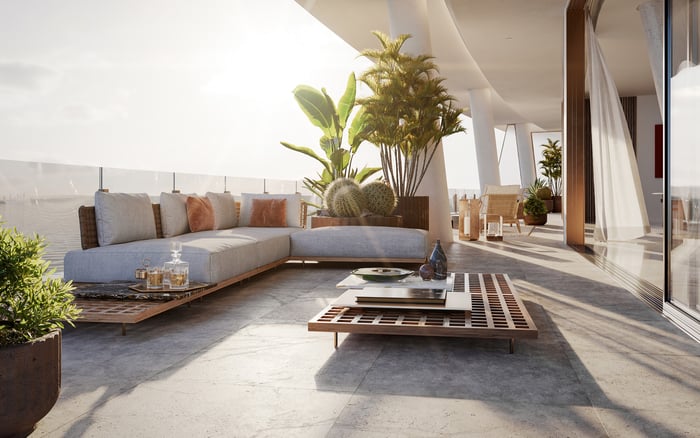
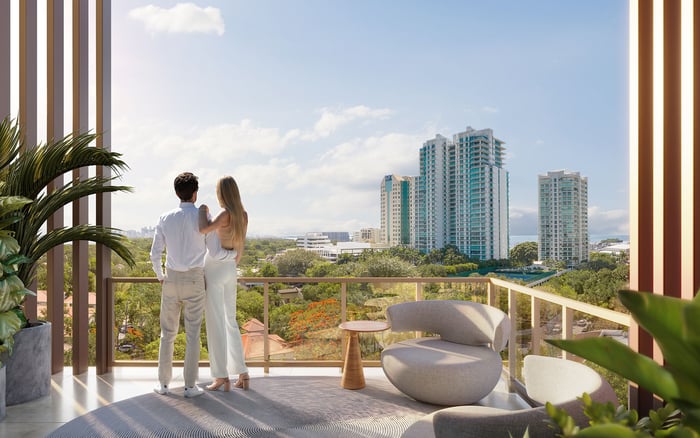
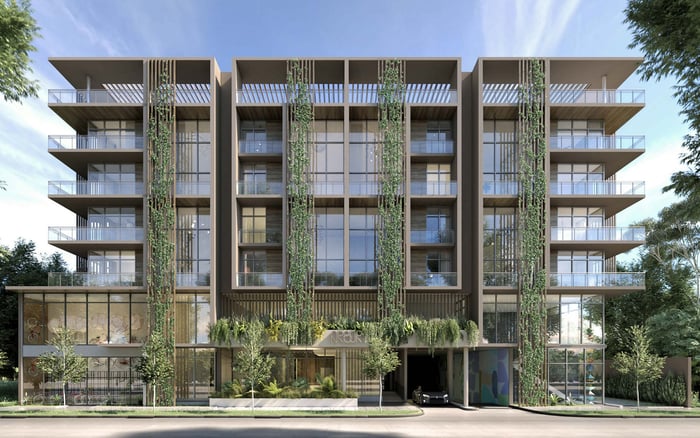
A buyer-focused editorial guide to evaluating Coconut Grove residences through the lens of terrace usability, from shade and wind comfort to salt-air resilience and day-to-night livability.
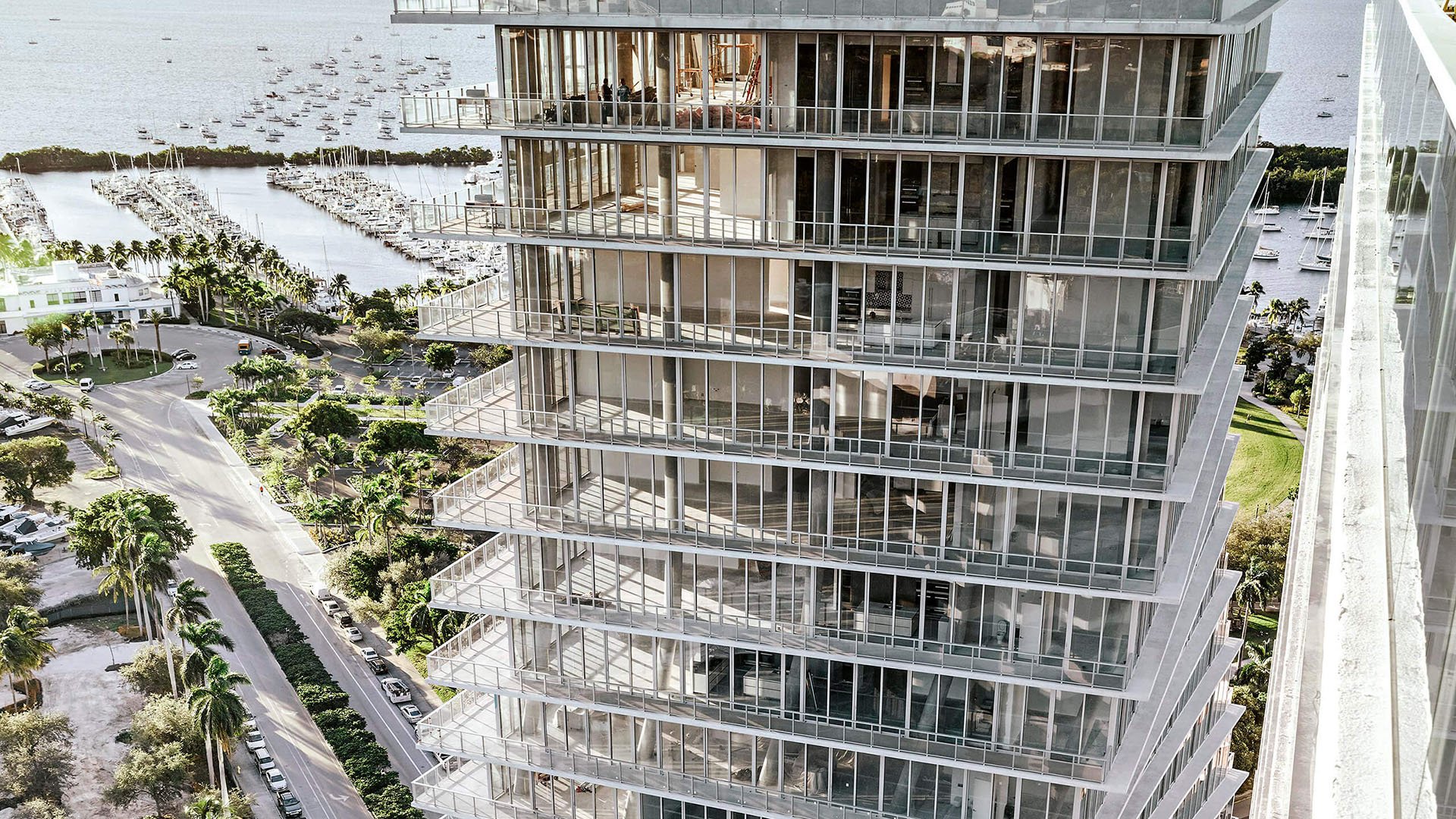
In Coconut Grove, the terrace is not a decorative afterthought. It is often the room that determines whether a residence feels gracious at breakfast, composed in the afternoon, and genuinely livable after dark. The neighborhood’s appeal has always rested on a precise balance: lush canopy, bay proximity, marina culture, and a slower residential rhythm within reach of Miami’s urban core. For buyers prioritizing outdoor space, that setting is only as strong as the terrace that mediates it.
Heat, wind, and salt air are not inconveniences to endure. They are design conditions. A terrace that works in Coconut Grove must provide shade without making the home feel enclosed, invite air movement without turning every meal into a wind event, and rely on materials that age with dignity. The best residence is not necessarily the one with the largest outdoor area. It is the one where orientation, depth, overhang, railing treatment, floor finish, planting, furniture planning, and interior adjacency work in concert.
For MILLION readers, the question is refined but practical: which type of Coconut Grove residence lets the terrace function as a true living room across more of the year?
1. Deep shaded terrace residence - all-day usability
The strongest terrace-first residence begins with depth. A shallow ledge may photograph well, but it rarely performs through heat. A deeper terrace allows dining, lounging, and circulation to coexist, while giving furniture a protected position away from the rail. Shade should feel architectural, not improvised.
This profile suits buyers who want the terrace to operate as a daily extension of the living room. Look for a plan where the main entertaining areas open naturally to the exterior, rather than forcing guests through a bedroom corridor or secondary door.
2. Protected corner residence - breeze without exposure
A corner residence can be exceptional when it captures cross movement of air while retaining a sense of shelter. The objective is not maximum wind. It is moderated breeze. Terraces that wrap too aggressively into exposed corners may be dramatic, but the most usable versions offer at least one calm seating zone.
This profile is compelling for buyers who like movement, open sky, and changing light. It rewards careful inspection at different times of day, particularly when wind patterns shift and the terrace transitions from scenic to social.
3. Canopy-oriented residence - privacy and filtered light
Coconut Grove’s tree canopy changes the terrace conversation. A residence oriented toward greenery can feel cooler, softer, and more private than a more exposed, view-driven alternative. Filtered light can be a luxury in itself, especially for buyers who intend to spend afternoons outdoors.
This is the profile for those who value intimacy over spectacle. The best examples feel connected to the neighborhood’s garden character, with enough openness to avoid heaviness and enough screening to soften glare.
4. Bay-conscious residence - salt-air discipline
A residence close to bay influence asks more of its terrace specification. Salt air rewards robust detailing and punishes casual material choices. Buyers should pay close attention to metals, hardware, exterior flooring, drainage, and the ease of maintaining glass or railing systems.
This profile appeals to those who want the emotional pull of water proximity without accepting a high-maintenance outdoor room. A terrace can be elegant and resilient, but only when its materials are chosen for exposure rather than showroom impact alone.
5. Evening-focused residence - outdoor living after heat peaks
Some of Coconut Grove’s most successful terraces come alive later in the day. Rather than chasing midday use, this profile is planned around golden-hour cocktails, shaded dinners, and quiet nighttime seating. Lighting, ceiling height, fan placement, and furniture scale matter as much as the view.
This is the right fit for buyers who entertain privately and want the terrace to feel composed after sunset. A beautiful evening terrace should not depend on temporary fixtures or constant rearrangement. It should feel intentional the moment the doors open.
A terrace can seduce quickly. The stronger approach is to read it slowly. Begin with orientation. Morning sun, afternoon heat, and seasonal exposure can change the same outdoor space dramatically. Then study depth. If a dining table, lounge chair, planter, and walking path cannot coexist, the terrace may function more as a balcony than as an outdoor room.
Next, consider the threshold. Wide openings are desirable only if the indoor and outdoor levels, flooring transitions, and furniture layouts support regular use. If doors are awkward, if air-conditioning loss feels excessive, or if the terrace is separated from the kitchen and living area, daily use will decline.
Finally, look at maintenance. Salt air, humidity, and wind exposure make durability a lifestyle issue. Buyers should ask not only what looks refined on delivery, but what will still look composed after repeated seasons of sun, rain, and bay influence.
Heat tests shade. A useful terrace must offer relief during the hours a buyer actually wants to be outside. Pergolas, overhangs, deep slab cover, exterior-rated fans, and intelligent planting can all contribute, but their success depends on placement.
Wind tests comfort. Too little airflow makes the space stagnant. Too much makes dining, reading, and conversation difficult. The better terraces have a hierarchy of zones: one open area for breeze and view, one protected area for seating, and one practical path for movement.
Salt air tests restraint. Highly polished finishes can become demanding when exposed. The more sophisticated approach is not necessarily more opulent. It is more disciplined. Materials should feel tactile, substantial, and appropriate to coastal living.
A terrace-first search benefits from exact language. Ask whether the residence offers a true outdoor living zone, not simply exterior square footage. Ask how furniture is expected to be arranged. Ask where shade lands in late afternoon. Ask how the terrace drains, how railings are maintained, and whether exterior power and lighting support entertaining.
For a Coconut Grove buyer comparing residences, useful filters include Coconut-grove, Terrace, Balcony, Flow-Through-units, Waterview, and New-construction. These terms do not replace careful evaluation, but they keep the conversation aligned with how the residence will actually live.
The most persuasive terrace in Coconut Grove is rarely the loudest. It is the one that feels effortless under pressure. Heat is softened, wind is edited, salt air is anticipated, and the transition between interior and exterior feels natural. That is the difference between outdoor space as a selling point and outdoor space as a daily luxury.
For buyers at the top of the market, the terrace should earn its place in the plan. It should host breakfast without glare, dinner without constant adjustment, and quiet evenings without feeling exposed. In a neighborhood where landscape, bay air, and privacy are central to the experience, that kind of performance is not a preference. It is the point.
What makes a Coconut Grove terrace more usable in heat? Depth, shade, airflow, and furniture placement are the key factors. A terrace that protects seating from direct afternoon sun will generally live better.
Is a larger terrace always better? Not necessarily. A smaller terrace with proper depth, shade, and circulation can outperform a larger exposed terrace.
How should buyers evaluate wind on a terrace? Visit at different times of day when possible. The best terraces allow breeze without making dining or conversation uncomfortable.
Why does salt air matter for luxury residences? Salt air can affect metals, hardware, glass, and exterior finishes. Durable materials and maintenance access are essential.
Should the terrace connect directly to the living room? Yes, for most buyers. A direct relationship between indoor entertaining space and the terrace encourages daily use.
Are bay views enough to justify an exposed terrace? Only if the terrace remains comfortable. A remarkable view loses value when heat or wind limits practical use.
What is the difference between a balcony and a terrace? In buyer terms, a terrace should support real outdoor living. A balcony may offer fresh air but less room for dining or lounging.
What should buyers ask about terrace maintenance? Ask about flooring, railing care, drainage, exterior lighting, and hardware. Maintenance should be predictable, not improvised.
Can planting improve terrace comfort? Yes, when appropriate for exposure and maintenance. Planting can soften glare, add privacy, and make seating areas feel calmer.
Who is the ideal buyer for a terrace-first residence in Coconut Grove? The ideal buyer values daily outdoor living as much as interior finish. For that buyer, terrace performance is central to the purchase.
For a confidential assessment and a building-by-building shortlist, connect with MILLION.
If branded residences are on your mind — as a home or as an allocation — we would be glad to share what we are seeing, privately.
Begin a quiet conversation