A discreet buyer’s guide to evaluating construction-noise exposure before purchasing luxury real estate in Bal Harbour, from site walks and disclosures to contract protections and long-term livability.
In Bal Harbour, quiet is not a casual amenity. It is part of the purchase thesis. Buyers are not simply acquiring square footage, views, services, or finishes; they are acquiring a daily atmosphere. That atmosphere can change materially when nearby construction begins, intensifies, or shifts from one phase to another.
Construction-noise exposure should therefore be raised early, before enthusiasm for a residence hardens into a contract. A home may feel serene during a late-afternoon showing, yet perform very differently on a weekday morning when deliveries, staging, concrete work, interior build-outs, or road activity are underway. The goal is not to avoid every property near development. In South Florida’s premier coastal markets, renewal is part of the landscape. The goal is to understand the exposure before you price it, negotiate it, and live with it.
For buyers comparing established residences such as Oceana Bal Harbour with newer offerings such as Rivage Bal Harbour, the question is practical rather than emotional: what will the home sound like during the hours you actually use it?
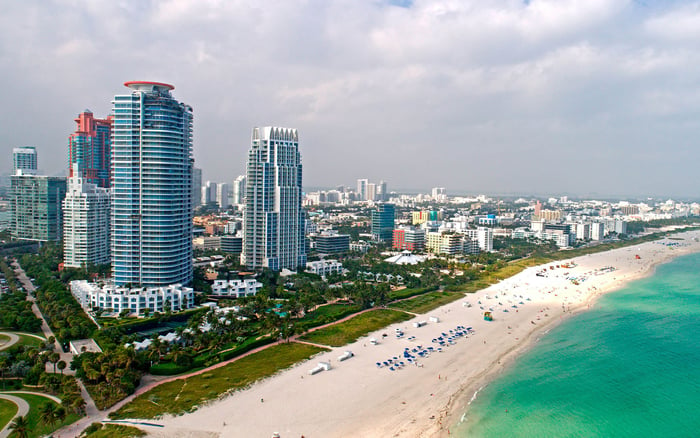
The most obvious crane is not always the most relevant source of sound. Ask your advisor to identify adjacent parcels, nearby redevelopment candidates, vacant sites, commercial work, roadway activity, and significant renovations inside neighboring buildings. In luxury condominiums, a private residence can also be affected by interior construction above, below, or along the same corridor.
Make the questions specific. What work is already active? What work is pending? Is the project in demolition, foundation, structural, facade, interiors, or final commissioning? Noise changes by phase. Early work can be percussive and intermittent. Vertical construction can bring repetitive equipment noise. Interior work may be less visible yet persistent, especially when it occurs within the same building.
This is where Bal Harbour buyers should be disciplined. Do not rely on a skyline glance from the balcony. Ask for a parcel-by-parcel conversation and request written materials when available. If a seller, developer, or association representative cannot answer, that does not necessarily end the discussion, but it should prompt deeper review.
A luxury buyer should ask three operational questions: when work occurs, how crews and materials arrive, and where staging is located. Work-hour expectations shape daily life. Delivery routes influence the experience of entrances, valet areas, sidewalks, pool decks, and terraces. Staging zones can determine whether noise feels distant or immediate.
Ask whether large vehicles are expected to pass near the building, whether loading zones sit near residential entries, and whether temporary barriers, generators, pumps, lifts, or trucks may remain in place for extended periods. Even when a residence has excellent acoustic performance with doors closed, the experience at arrival, on a terrace, or beside an amenity pool can be different.
This belongs in every serious buyer’s-guide conversation because construction noise is not just a decibel issue. It affects routine. Morning calls, children’s naps, in-residence fitness, staff schedules, entertaining, and second-home arrival patterns can all become relevant.
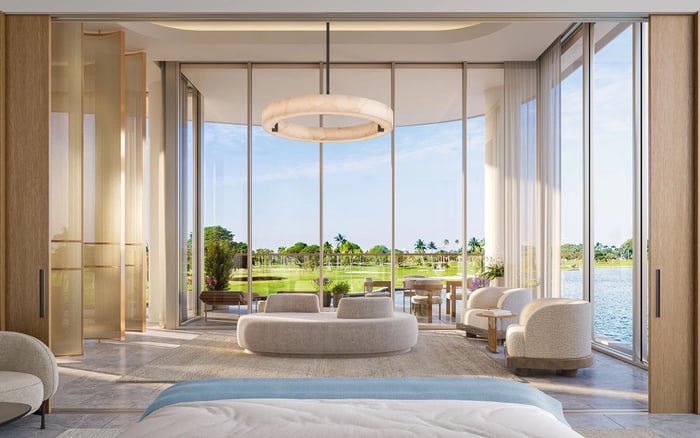
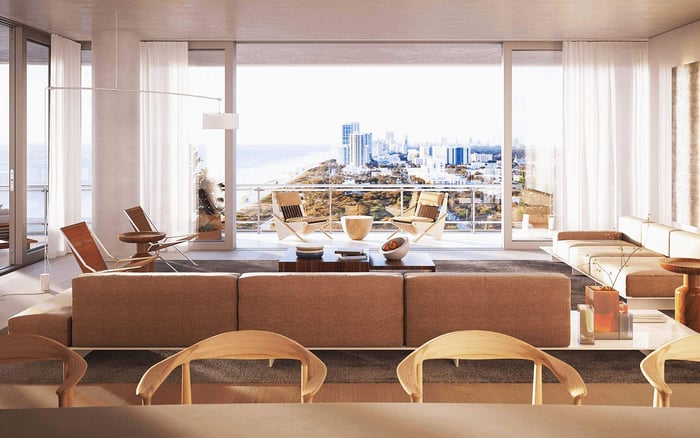
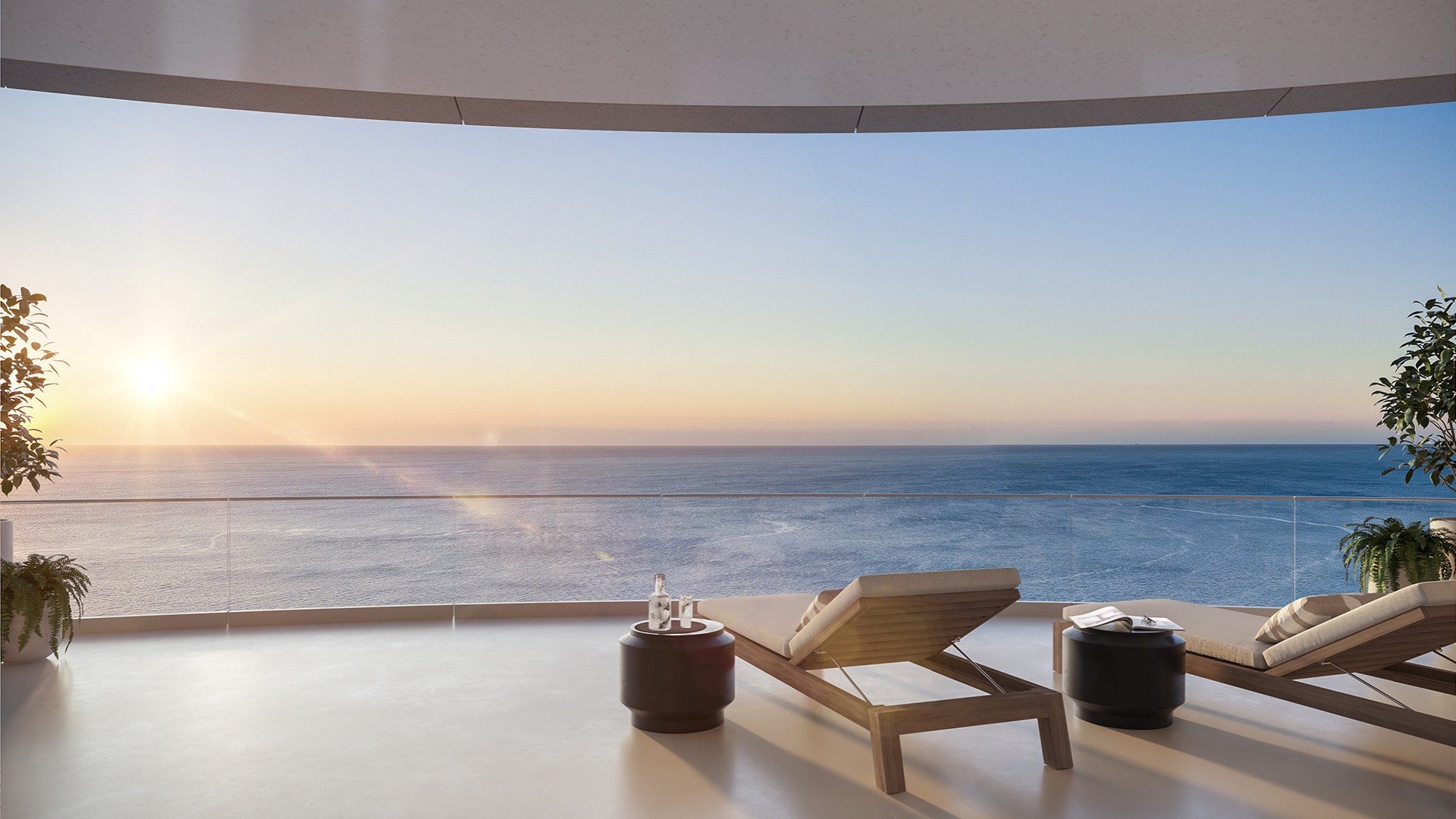
Waterfront residences often sell on openness: terraces, glass, light, breeze, and the feeling of distance. That same openness can make buyers more aware of sound. A residence may be exceptionally calm inside with impact glass closed, yet the terrace may carry construction noise in a way that matters if outdoor living is central to the purchase.
Ask to experience the home with doors closed, with doors open, and from the terrace. Stand in the primary suite, living room, kitchen, staff area, elevator vestibule, parking arrival, and amenity spaces. A residence that performs beautifully in one zone may behave differently in another.
Buyers looking across adjacent coastal markets should apply the same discipline. A Surfside comparison, such as The Delmore Surfside, or a Miami Beach comparison, such as 57 Ocean Miami Beach, can help clarify how different building positions, heights, setbacks, and surrounding activity influence perceived quiet. The exercise is not about ranking neighborhoods; it is about understanding how sound meets architecture.
A single showing is not enough. Request access at more than one time of day, preferably including a weekday morning or midday period. If you work remotely, test the room where calls will occur. If the terrace is a defining feature, spend time there without conversation. If you are sensitive to vibration, pay attention not only to audible noise but also to low-frequency sensations.
Bring a practical checklist. Can you hear trucks, reversing alarms, power tools, demolition, drilling, pumps, generators, or interior work? Does the sound fade when doors close? Does it enter through vents, corridors, elevator banks, or service areas? Is it constant, occasional, or sharp and unpredictable?
Do not overstate the precision of a casual visit. A tour captures a moment, not a full construction cycle. Still, repeated visits reveal patterns. They also give you a more reliable basis for deciding whether the exposure is acceptable, temporary, negotiable, or incompatible with your expectations.
Before contract, ask for any available disclosures regarding nearby construction, building work, amenity interruptions, capital projects, and known disturbances. In a condominium purchase, association materials and recent meeting minutes may provide useful context. In new development, request available information on anticipated construction, neighboring work, access conditions, and any rules governing build-outs.
Coordinate with counsel on how construction-noise concerns are treated in the agreement. Depending on the transaction, the discussion may involve inspection periods, disclosure acknowledgments, cancellation rights, closing timing, credits, representations, or post-closing risk allocation. The language should match the property and the exposure. A vague verbal assurance is not the same as a documented right.
If you are buying a trophy residence, the standard is not perfection. It is informed consent. You want to know what is reasonably foreseeable, what is speculative, and what remains unknowable.
Construction noise can be temporary, but luxury buyers often value the present tense. If you are purchasing for immediate occupancy, near-term disruption matters. If you are buying for long-term use, a temporary inconvenience may be acceptable if the residence otherwise satisfies your criteria. If you are buying as a second home, the relevant question may be whether noisy work overlaps with your seasonal use.
Price conversations should stay grounded. Do not assume every nearby project requires a discount, and do not assume prime inventory is immune from disturbance. Instead, evaluate severity, duration, certainty, and lifestyle impact. A buyer who rarely uses the terrace during work hours may feel differently from one who expects daily outdoor dining, quiet wellness routines, or frequent entertaining.
Bal Harbour remains compelling precisely because expectations are high. The best acquisitions are made with elegance, but also with precision.
Should I ask about construction noise before making an offer? Yes. Raise the issue before contract so disclosures, timing, and any protections can be addressed while you still have leverage.
Is a quiet showing enough to rely on? No. A single visit may miss weekday work, delivery activity, or interior construction in nearby units.
What times should I visit the property? Try to tour during a weekday morning or midday period, then compare that experience with a quieter evening or weekend visit.
Should I test the balcony separately from the interior? Yes. A residence can be calm with doors closed while the terrace experience is materially different.
What documents may help identify noise risk? Ask for available disclosures, association materials, meeting minutes, renovation rules, and any relevant construction communications.
Can nearby construction affect amenities? It can affect the perceived experience of pools, entries, terraces, valet areas, and outdoor lounges, depending on proximity and routing.
Is construction noise always a reason not to buy? Not necessarily. The decision depends on duration, intensity, lifestyle fit, pricing, and your tolerance for near-term disruption.
Should my attorney review construction-noise language? Yes. Counsel can help align contract language with the specific risks and disclosures in the transaction.
Does a higher floor always mean less construction noise? Not always. Height can change the character of sound, but exposure depends on direction, glazing, distance, and the noise source.
What is the most important question to ask? Ask what known or anticipated work could affect the home during the hours and seasons you expect to use it most.
When you're ready to tour or underwrite the options, connect with MILLION.
If branded residences are on your mind — as a home or as an allocation — we would be glad to share what we are seeing, privately.
Begin a quiet conversation