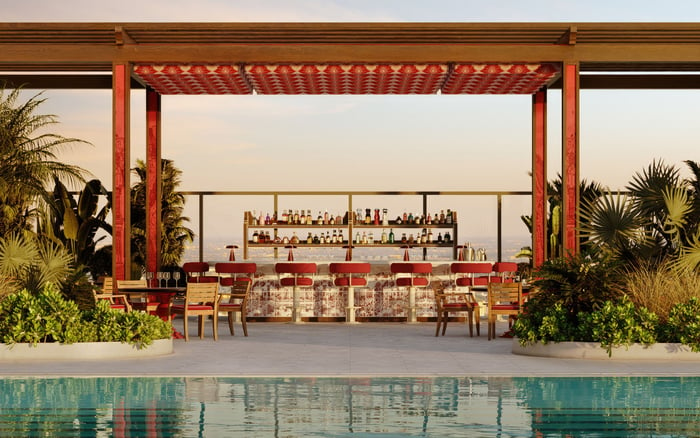
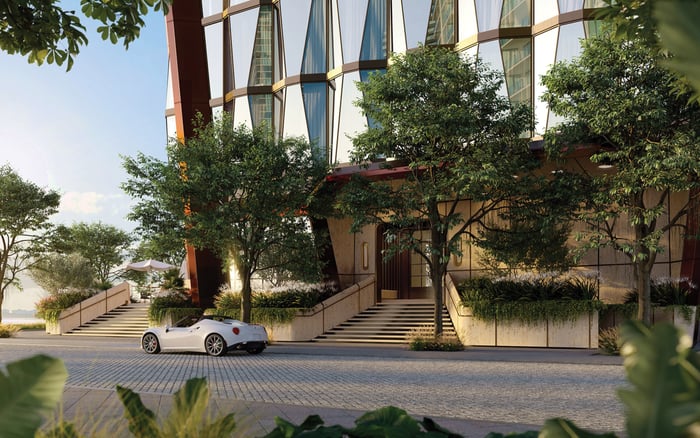
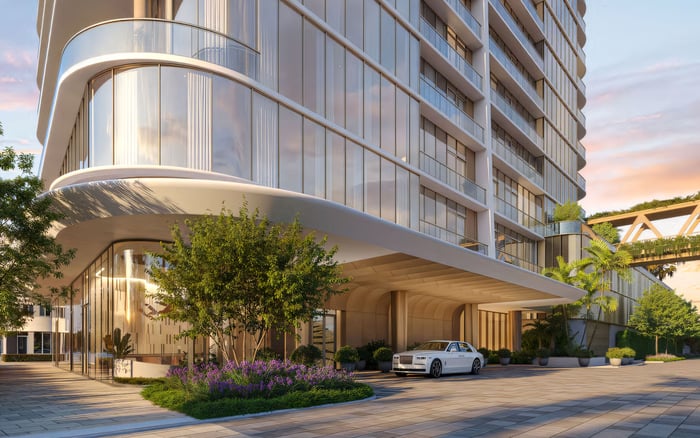
One Thousand Museum Downtown Miami sits at the intersection of Zaha Hadid architecture, private high-rise living, and cultural proximity in Miami’s urban core.
For a certain luxury buyer, the most meaningful residence is not simply large, well located, or richly serviced. It carries authorship. It has a point of view. It becomes part of a collection, not merely a place to house one. That is why One Thousand Museum Downtown Miami continues to hold a distinct position in the conversation around art collector living in Downtown Miami.
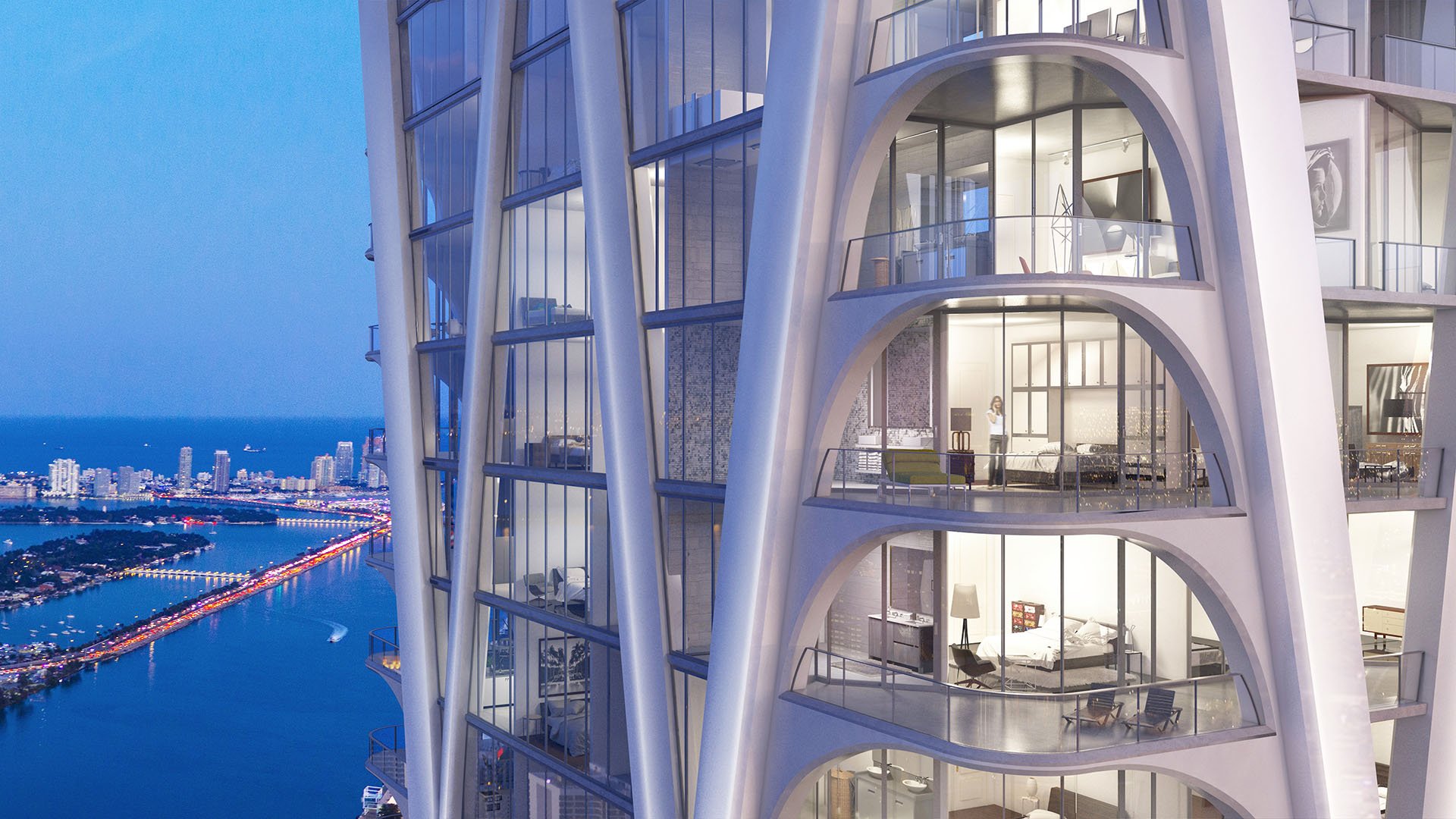
Conceived by Zaha Hadid, the tower is not a conventional condominium elevated by premium finishes. Its sculptural exterior and exoskeleton form give it the presence of an architectural object. For design-conscious residents, that distinction matters. The building communicates taste before one enters the lobby, and it does so in a language familiar to collectors: rarity, authorship, form, and cultural signal.
In South Florida, where luxury real estate has long been associated with waterfront leisure, One Thousand Museum advances a different model. It is urban rather than resort-first, architect-led rather than purely amenity-led, and closely tied to the cultural geography of Downtown Miami. For buyers whose lives include collecting, entertaining, design travel, and institutional patronage, that combination can feel more relevant than a traditional beach address.
Art collector living is often reduced to wall space, storage, or display logistics. Those practical considerations matter, but One Thousand Museum enters the conversation at a higher conceptual level. The building itself functions as a design statement. To live there is to inhabit a work shaped by a globally recognized architect, giving the residence an identity beyond square footage or views.
This is what separates the tower from many luxury properties. Its appeal is not only that it offers a private, highly designed environment. It is that the environment is legible as authored architecture. In the same way a collector may value provenance, edition, and creative signature, a buyer may see a Zaha Hadid-designed residential landmark as a form of collectible real estate.
That does not mean the residence replaces art. It means the setting participates in the same cultural language. The building’s exoskeleton, curves, and vertical silhouette make the exterior part of the owner’s lifestyle narrative. For residents who understand design as a marker of identity, the tower’s architecture becomes a daily expression of taste.
The Downtown Miami location is central to the story. One Thousand Museum is positioned near Museum Park, anchoring the tower within a civic and cultural setting rather than a purely beach-resort context. That proximity strengthens its relevance for residents who want access to museums and cultural institutions while living in a private, controlled high-rise environment.
This is where the building fits into a broader Downtown transformation. Luxury buyers increasingly weigh cultural connectivity alongside views, privacy, and service. In that setting, nearby residential names such as Aston Martin Residences Downtown Miami and Waldorf Astoria Residences Downtown Miami help frame Downtown as more than a business district. It is becoming a vertical luxury district with stronger ties to design, civic life, and high-rise residential identity.
For collectors, that distinction is important. Downtown Miami offers cultural access without requiring the more exposed rhythm of street-level creative districts. One Thousand Museum allows residents to live near the city’s cultural core while preserving the privacy and composure expected at the ultra-premium tier.
Design and architecture are not decorative themes at One Thousand Museum. They are the organizing principles. The tower’s form, interiors, amenity positioning, and overall residential identity support the idea of a curated design environment. This is why the building can feel especially aligned with buyers whose homes operate as social and cultural settings.
A collector’s residence is rarely only private. It is also a place for dinners, small gatherings, art conversations, advisory meetings, and moments of quiet presentation. One Thousand Museum’s positioning as a private, controlled, highly designed environment supports that mode of living. It suggests discretion rather than spectacle, yet it is not anonymous. The architecture ensures the address carries presence.
This is also why comparisons within the Downtown market are increasingly nuanced. Casa Bella by B&B Italia Downtown Miami speaks to design-oriented living through an Italian lens, while Faena Residences Miami Downtown Miami extends another strand of culturally coded urban luxury. One Thousand Museum’s differentiator is its architectural authorship and sculptural identity, placing it closer to the idea of a residential landmark than a lifestyle brand alone.
Miami’s creative geography is varied. Wynwood and the Design District offer more street-level engagement with galleries, design showrooms, murals, retail, and restaurants. One Thousand Museum represents a different model: vertical, private, architect-led collector living.
That contrast is useful for buyers. Some want to be inside the creative street scene. Others want proximity to culture from a residence that filters the city through privacy, service, and architectural calm. One Thousand Museum fits the latter profile. It does not need to perform as an art district. It offers a highly designed home base near Downtown Miami’s cultural core.
This is especially relevant for owners who entertain selectively. The building’s identity allows a resident to host within an environment that already communicates design seriousness. Views, scale, and services remain part of the luxury equation, but the deeper value is the convergence of signature architecture, Downtown location, privacy, cultural access, and residential programming.
A buyer evaluating One Thousand Museum should think beyond the usual checklist. The question is not simply whether the tower has the right floor plan or view corridor. The sharper question is whether the buyer values architecture as part of the asset itself.
For some, a waterfront resort setting will be the better match. For others, the appeal lies in living within a building that feels culturally situated and architecturally significant. One Thousand Museum’s relevance comes from that second camp. It is a residence for people who want their home to align with art, architecture, and collecting culture without sacrificing privacy.
In this sense, One Thousand Museum Downtown Miami is less about declaring that collectors need a specific building type and more about recognizing how collector lifestyles have evolved. The modern collector may want cultural proximity, design authorship, and a controlled residential environment in one place. One Thousand Museum gives that idea a recognizable Miami form.
Why is One Thousand Museum relevant to art collectors? Its relevance comes from Zaha Hadid’s architectural authorship, sculptural form, cultural proximity, and private residential positioning.
Is the building more about architecture or amenities? Architecture is central to its identity, while the residential environment supports privacy, entertaining, and a curated luxury lifestyle.
What makes the exterior distinctive? The tower’s sculptural exoskeleton gives it the presence of an architectural object rather than a conventional condominium facade.
Why does the Downtown Miami location matter? Downtown places residents near the city’s cultural core and close to Museum Park, rather than in a traditional beach-resort setting.
Is One Thousand Museum only for art collectors? No. It also appeals to design-conscious buyers who value authorship, privacy, urban access, and landmark architecture.
How does it compare with Wynwood or the Design District? Wynwood and the Design District are more street-level creative districts, while One Thousand Museum offers a private vertical model.
Does the tower function like collectible real estate? For many design-focused buyers, its Zaha Hadid pedigree gives it a collectible quality tied to architecture and identity.
Is this a resort-style Miami residence? It is better understood as culturally connected urban high-rise living with luxury programming and a strong design point of view.
What should buyers prioritize when evaluating it? Buyers should consider whether architectural authorship, Downtown cultural access, and privacy are central to their lifestyle needs.
Why is it important within Downtown Miami luxury? It helps define Downtown as a serious luxury residential district connected to arts, design, and civic culture.
For a discreet conversation and a curated building-by-building shortlist, connect with MILLION.
If branded residences are on your mind — as a home or as an allocation — we would be glad to share what we are seeing, privately.
Begin a quiet conversation