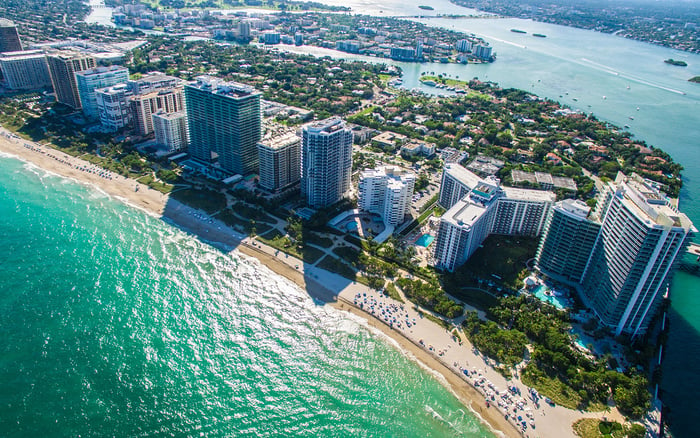
A discreet buyer’s guide to evaluating smart-home cybersecurity before purchasing luxury real estate in Bay Harbor Islands, with practical questions for developers, sellers, building management, and private technology advisers.

In Bay Harbor Islands, smart-home technology is no longer a novelty. It is part of the language of premium living: lighting scenes that soften at sunset, climate systems tuned by room, app-based access, discreet cameras, motorized shades, wellness settings, audio, elevators, garages, pools, and building services that respond with a touch.
For the most discerning buyer, however, the real question is not whether a residence is smart. It is whether the system is governable, private, resilient, and transferable. A beautiful interface can conceal a complex web of devices, accounts, installers, passwords, cloud services, remote-access permissions, and network dependencies. In a luxury transaction, cybersecurity deserves the same seriousness as title, structural condition, insurance, and association documents.
This is especially relevant in a boutique market where buyers may be comparing new residences, waterfront homes, and highly customized resale properties. A residence at Alana Bay Harbor Islands may invite one set of questions around developer-installed systems and turnover documents, while a deeply personalized private home may require a more forensic review of every connected device left behind by the seller.
The first question is deceptively simple: who owns and controls the smart-home environment today, and who will control it after closing?
Ask for a complete inventory of connected systems. That should include routers, wireless access points, lighting controls, thermostats, cameras, door locks, intercoms, alarm panels, garage controls, pool equipment, irrigation, appliances, entertainment systems, voice assistants, elevators, energy monitors, and any building apps tied to residence access. The point is not to become a technician. The point is to avoid inheriting a home where nobody can clearly explain what is connected, who can log in, and how access can be revoked.
For resale properties, ask whether the seller, a former owner, household staff, a contractor, a designer, or an integrator still has remote access. In a high-end home, multiple professionals may have been granted credentials during installation or maintenance. Before closing, those permissions should be mapped and removed or formally transferred.
For new-construction purchases, direct the questions to the developer, sales team, building manager, and technology contractor. At projects such as Bay Harbor Towers, buyers should ask what is delivered with the residence, what is optional, and which systems remain under building control rather than private owner control.
Smart-home systems create comfort, but each connection also creates responsibility. Buyers should ask whether the residence uses a dedicated network for smart-home devices, separate from personal computers, phones, work devices, guest Wi-Fi, and household staff access. Network separation is one of the simplest ways to reduce exposure if a device is misconfigured or compromised.
Ask whether guest Wi-Fi is truly isolated. Ask whether staff can be given limited access without seeing private devices. Ask whether the owner can disable access for a former housekeeper, nanny, vendor, or tenant without rebuilding the entire system.
For waterfront residences, the review may extend beyond interiors. Boat lifts, dock lighting, outdoor cameras, gates, pool systems, landscape controls, and exterior audio can all be connected. A Bay Harbor Islands buyer should understand whether these exterior systems sit on the same network as the family’s laptops, private documents, and phones.
In condominium and boutique building purchases, the residence may be only one layer of the technology environment. The building may have its own access control, package systems, cameras, elevators, amenity reservations, license-plate recognition, visitor management, Wi-Fi, and emergency communications. Ask what the association controls, what the owner controls, and where the two intersect.
The most useful questions are practical. Who grants access to the building app? How quickly can access be revoked after a sale, lease, staffing change, or lost phone? Are elevator permissions tied to individual residents? Can vendors receive temporary access rather than permanent credentials? Who can view camera footage? Is footage retained, and for how long? What happens if the building’s internet service is interrupted?
In a boutique environment such as La Baia North Bay Harbor Islands, buyers should also ask how building-level convenience is balanced with resident privacy. The best systems feel effortless because the operational discipline is hidden behind the scenes.
Luxury buyers often focus on privacy through architecture: setbacks, landscaping, tinted glass, private elevators, secured lobbies, and controlled arrival sequences. Digital privacy deserves the same attention.
Ask where cameras are located and whether any remain active inside the residence. Ask whether audio recording is enabled on cameras, doorbells, or voice devices. Ask whether smart televisions, speakers, appliances, and assistants are logged into the seller’s accounts. Ask whether any device stores video, audio, access logs, or usage history in the cloud.
Before closing, a buyer should require a clean handover. That may include factory resets, removal of seller accounts, updated administrator credentials, new owner emails, new passwords, new access codes, and documentation from the integrator confirming that old users were removed. For a buyer who values discretion, this is not technical housekeeping. It is personal security.
A polished walkthrough can be persuasive. Lights dim, music plays, shades move, the front door unlocks, and the residence feels perfectly choreographed. But demonstrations are not due diligence.
Ask for written documentation: device inventory, network map, administrator account list, warranty details, service contracts, software subscriptions, installer contact information, and instructions for changing credentials. Ask whether the system depends on a specific vendor. Ask whether the buyer is free to select a different technology adviser after closing.
The discipline is straightforward: a smart home should be legible. If the seller or developer cannot explain the system in writing, the buyer should pause before accepting it as a luxury feature. Complexity without documentation can become an expensive maintenance burden.
A cybersecurity review does not need to be theatrical. It should be measured, discreet, and aligned with the transaction timeline. A qualified smart-home or network specialist can inspect equipment, identify outdated components, check whether default passwords are still in use, confirm network separation, review remote access, and recommend a clean transfer plan.
This is particularly important for residences with extensive customization. A home near Bal Harbour or Surfside may have been designed over several years, with different vendors contributing lighting, security, audiovisual, climate, and outdoor systems. The final result may appear seamless, while the underlying administration remains fragmented.
For buyers evaluating Onda Bay Harbor and The Well Bay Harbor Islands, the review should distinguish between developer-delivered systems, owner-installed upgrades, and association-managed technology. Each category has different permissions, responsibilities, and handover requirements.
The cleanest approach is to raise smart-home cybersecurity before the contract becomes too rigid. Buyers can ask counsel to address technology handover in the purchase terms or closing checklist. This may include delivery of passwords, removal of prior users, transfer of warranties, cancellation or assignment of service agreements, confirmation of device resets, and access for the buyer’s consultant before closing.
The objective is not to make the transaction difficult. It is to prevent ambiguity. In the luxury segment, ambiguity can be more costly than a clear request made early. A seller who has invested in a sophisticated system should understand that documentation and secure transfer protect the value of that investment.
Before buying luxury real estate in Bay Harbor Islands, ask these questions in direct language:
Who is the current administrator for every smart-home system? Which devices connect to the internet? Are smart-home devices separated from personal and guest networks? Who has remote access today? Can all former users be removed before closing? Are cameras, microphones, locks, and access logs documented? What building systems collect resident or visitor data? Who maintains software updates? What happens during an internet outage? Which subscriptions, warranties, and service contracts transfer to the buyer?
A refined smart residence should not ask its owner to trade privacy for convenience. The ideal result is calm control: systems that enhance daily life, respect discretion, and remain understandable long after the closing dinner.
Why should cybersecurity matter before buying a smart home? Because connected systems can control access, cameras, lighting, climate, and personal data. A buyer should know who can reach those systems before taking ownership.
Should I ask for a device inventory? Yes. A complete inventory helps identify every connected component, from door locks and cameras to thermostats, routers, speakers, and pool controls.
What is the biggest red flag in a smart-home handover? Unclear administration is a major concern. If no one can confirm who has credentials or remote access, the system needs review before closing.
Do condominium smart systems require different questions? Yes. Buyers should separate private residence systems from building-managed systems such as elevators, access control, cameras, and amenity apps.
Should the seller reset all smart devices? In most cases, the buyer should request clean credential transfer, removal of prior users, and reset or reassignment of accounts before closing.
Can household staff have limited smart-home access? They should. The system should allow role-based or temporary permissions rather than shared master passwords.
Is guest Wi-Fi enough protection? Guest Wi-Fi helps, but buyers should also ask whether smart devices, work devices, staff access, and owner devices are properly separated.
Who should inspect the smart-home system? A qualified technology adviser, network specialist, or smart-home integrator can review the system and recommend a secure handover plan.
Should cybersecurity be addressed in the contract? It can be useful to include technology handover items in the closing checklist, especially for complex luxury residences.
What is the goal of a smart-home cybersecurity review? The goal is confident ownership: privacy, access control, reliable documentation, and a home that remains elegant without hidden digital risk.
For a confidential assessment and a building-by-building shortlist, connect with MILLION.
If branded residences are on your mind — as a home or as an allocation — we would be glad to share what we are seeing, privately.
Begin a quiet conversation