A buyer-focused look at why waterfront title review can reshape the true economics of a South Florida residence designed for household staff, service access, privacy and long-term ownership.

For a South Florida buyer, a waterfront residence is rarely a simple shelter. It is a privacy plan, a service plan, a boating plan, a family plan and, often, a legacy asset. When the home is staff-ready, the stakes become even more layered. A property may appear turnkey, yet the legal condition of the land, access, shoreline and ancillary spaces can reshape what the residence truly costs to own.
That is why title review should not be treated as a closing formality. It is a lens into what the buyer can use, restrict, improve, finance and eventually resell. In the ultra-premium segment, the most expensive surprise is not always visible. It can be a recorded exception that limits a dock, a shared access arrangement that affects service circulation, or an old encumbrance that complicates a future renovation.
For MILLION readers, this topic belongs squarely within Buyer's Guides because it translates legal review into lifestyle value. The question is not only whether title can be insured. The sharper question is whether the title condition supports the life the buyer expects to live on the property.
A staff-ready residence is more than a home with extra bedrooms. At the high end, it may include separate service entries, staff parking, catering access, laundry and back-of-house zones, guest-house functions, security paths, deliveries and discreet circulation. Those features may seem architectural, but they can depend on title details.
If a service drive crosses land affected by an easement, if a gate sits near a boundary condition, or if a guest structure relies on historical use rather than clean documentation, the buyer’s operating model may need adjustment. The result can be added legal work, redesign, renegotiation or a more conservative approach to future improvements.
New-construction residences can reduce some uncertainties, but they do not eliminate title review. A modern building may still sit within a framework of recorded covenants, utility rights, access restrictions, shoreline conditions and association documents. Buyers comparing a completed estate with a new condominium should not assume one category is automatically simpler. The diligence is different, not optional.
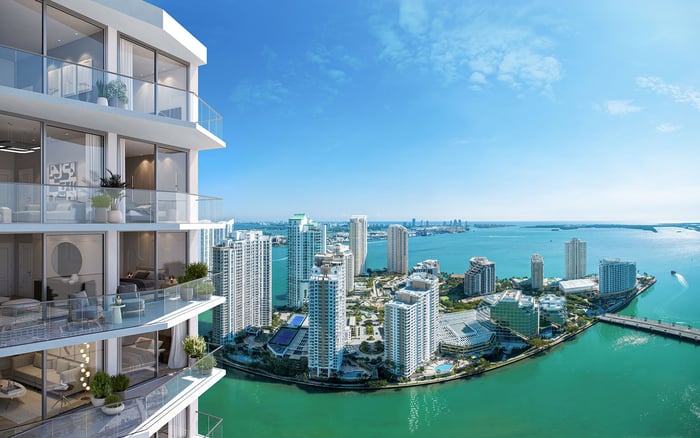
In South Florida, the visible luxury of a waterfront property is immediate: light, views, terraces, garden rooms and the emotional pull of water. The invisible luxury is control. Title review helps define that control.
For a Waterfront buyer, the review may include questions around boundary lines, recorded access, dock-related rights, utility easements, maintenance obligations and restrictions that touch waterfront use. Even where a home feels private, recorded rights can reveal who may cross, maintain, inspect or access portions of the property. In a staff-ready residence, that matters because household operations depend on predictable circulation.
Consider the difference between a home where deliveries arrive discreetly and one where access is constrained by shared arrangements or narrow legal rights. The second property may still be beautiful, but its daily operation can feel less private. That difference may affect staffing patterns, security planning and the price a sophisticated buyer is willing to pay.
Not every staff-ready waterfront purchase is a single-family estate. In Miami Beach, buyers may compare large condominium residences with staff suites, private elevator access and managed services. Projects such as The Perigon Miami Beach show how the modern luxury buyer often evaluates lifestyle, service and waterfront positioning together.
In a condominium setting, title review extends beyond the unit deed. The buyer’s counsel typically studies the declaration, easements, parking rights, storage rights, limited common elements, use restrictions and association framework. A staff-ready residence may rely on more than interior square footage. It may depend on assigned parking, service elevator protocols, storage allocation, delivery rules and the practical ability to move household staff, vendors and guests without compromising privacy.
In Fort Lauderdale, where water access and yachting culture shape many purchase decisions, the same principle applies in a different form. A residence at St. Regis® Residences Bahia Mar Fort Lauderdale may appeal to buyers who want a serviced waterfront environment rather than the maintenance profile of a private estate. The title and governing-document review still matters because it defines the rights beneath the lifestyle promise.
The real cost of title review is not the review itself. It is what the review reveals before the buyer is locked into ownership.
A title issue can change cost in several ways. It may require a cure before closing, a price adjustment, a credit, a holdback, a revised closing timeline or a narrower renovation plan. It may affect whether a lender is comfortable with the collateral. It may influence insurance conversations. It may also change a buyer’s appetite for the asset if the issue touches privacy, waterfront use or future resale.
For a staff-ready household, even small legal limitations can be expensive in practice. If staff parking is less secure than expected, a buyer may need a different operating plan. If a service entrance cannot be modified easily, the property may require interior redesign. If an easement affects a landscaped buffer, the buyer may lose part of the privacy experience that justified the premium.
This is where legal diligence becomes design diligence. The floor plan tells the buyer how the house wants to live. Title tells the buyer where the law may interrupt that plan.
The most successful waterfront buyers tend to sequence emotion and diligence carefully. They allow themselves to respond to the view, the arrival, the terrace and the water, then ask disciplined questions before converting desire into commitment.
For Estates & Single-Family properties, the title review should be read alongside the survey, site plan, permit history, association documents if applicable and any known maintenance or access arrangements. The goal is not to find reasons to avoid a purchase. The goal is to price the asset with clear eyes.
In Boca Raton, for example, buyers may weigh privacy, beach proximity, club access, schools, aviation convenience and family logistics. At the luxury condominium level, The Residences at Mandarin Oriental Boca Raton represents a different ownership format than a waterfront estate, but the same buyer discipline applies: understand what is individually owned, what is shared, what is restricted and what is merely convenient by custom.
Move-In Ready should not mean question-free. It should mean the home can be occupied without avoidable uncertainty about legal access, use, staffing flow and future adaptability.
Brickell is not usually framed in the same way as a private waterfront estate market, yet title review remains central for buyers who expect a staffed, lock-and-leave urban residence. Large residences in towers can include private elevators, service corridors, storage, valet use, parking rights and association-controlled amenities. Each of those items can shape the true experience of ownership.
At Una Residences Brickell, the waterfront context and residential scale make the legal framework part of the luxury equation. A buyer may love the views and floor plan, but the ownership package is still defined by documents. Parking, storage, service access and alteration rules can materially affect how a household functions.
The same is true for buyers considering branded or design-led towers across the urban waterfront. The more complex the amenity environment, the more important it becomes to separate marketing convenience from recorded rights.
A vague objection rarely moves a transaction. A specific title concern can.
When counsel identifies an issue, the buyer’s team can decide whether to request a cure, a credit, an endorsement, a closing extension or additional documentation. In some cases, the concern may be minor but still worth clarifying. In others, it may be serious enough to reshape the purchase price or the buyer’s willingness to proceed.
For ultra-premium buyers, discretion matters. The goal is not drama. The goal is quiet leverage. A well-documented title concern allows the buyer to negotiate from precision rather than anxiety. It also prevents a common mistake: accepting an elegant property without understanding the operational compromises embedded in its legal structure.
South Florida waterfront property rewards decisiveness, but it also rewards patience at the right moment. The period between contract and closing is where many of the most important ownership questions can still be answered.
A staff-ready residence should feel effortless after closing. That effortlessness is rarely accidental. It is produced by architecture, management, household planning and legal clarity. Title review is the part of the process that protects the last element. It helps ensure that the private drive, the shoreline, the service entrance, the storage, the parking, the elevator, the dock concept or the renovation dream is not undermined by a document nobody studied closely enough.
In the end, the buyer is not only purchasing a view. The buyer is purchasing control over the way life unfolds around that view.
Why does title review matter more for waterfront property? Waterfront value often depends on access, boundaries, use rights and restrictions that may not be visible during a showing.
Can a property be beautiful but still have costly title issues? Yes. A residence can present impeccably while recorded matters create future costs, delays or use limitations.
What makes staff-ready homes different in diligence? Staff-ready homes depend on service access, parking, storage, privacy and circulation, all of which may be affected by legal rights.
Should condominium buyers review title differently than estate buyers? Yes. Condominium buyers should review the unit title together with governing documents, parking, storage and shared-area rights.
Does Move-In Ready mean title concerns are unlikely? No. Move-In Ready describes physical readiness, while title review addresses legal control and ownership conditions.
Can title review affect the purchase price? It can. Specific concerns may support a credit, cure, holdback, extension or revised valuation.
What should a buyer ask about service access? Ask whether staff, vendors and deliveries can use the property as expected without relying on informal or unclear arrangements.
Is New-construction exempt from title complexity? No. New-construction can involve declarations, easements, shared facilities and association rules that require careful review.
Why is privacy part of title diligence? Privacy can be affected by access rights, easements, maintenance obligations and shared-use provisions.
When should title review begin? It should begin early in the contract period, while the buyer still has leverage to clarify, cure or renegotiate.
When you're ready to tour or underwrite the options, connect with MILLION.
If branded residences are on your mind — as a home or as an allocation — we would be glad to share what we are seeing, privately.
Begin a quiet conversation