South Florida’s most valuable homes often speak one of two architectural languages: Mediterranean Revival, with its heritage-coded arches and stucco romance, or tropical modern, with its climate-first minimalism and indoor-outdoor ease. For today’s ultra-premium buyer, the choice is rarely aesthetic alone. Heat, humidity, flood awareness, and lifestyle planning are pushing design decisions toward performance, while legacy neighborhoods and landmark precedent continue to reward timeless formality. Here is how to read both styles with a buyer’s eye.
In South Florida, architecture is rarely just architecture. It is social signal, climate strategy, and lifestyle choreography in one. Mediterranean Revival and tropical modern have become the two clearest luxury dialects for buyers who want a home that photographs beautifully, lives comfortably, and preserves value in a market where weather is part of the purchase.
Mediterranean Revival took hold during the 1920s Florida land boom, when coastal estates were sold with a European seaside villa sensibility. A century later, that heritage still informs what many buyers consider “classic” South Florida: stucco massing, red tile roofs, and arches that frame entries, loggias, and windows.
Tropical modern responds to a different brief. It is modernist minimalism tailored to tropical conditions, with an emphasis on climate-responsive form and planning. In practice, it favors shade, cross-breezes, operable openings, and indoor-outdoor rooms that feel designed, not improvised.
For a luxury buyer, the choice often comes down to this: do you want a home that feels as if it has always belonged, or one that feels engineered for the present?
Mediterranean Revival reads as established, ceremonial, and neighborhood-correct in many South Florida enclaves. The core identifiers, especially in Miami Beach, are straightforward: stucco walls, low-pitched red tile roofs, and prominent arches that add depth and shadow. That depth is not only visual. Recessed openings and covered arcades can also soften direct sun and improve day-to-day comfort.
The region’s “taste memory” for Mediterranean-inspired luxury remains powerful. Vizcaya Museum & Gardens’ Main House, built as industrialist James Deering’s estate between 1914 and 1922, is still an influential reference for formal Mediterranean composition. In Coral Gables, the Biltmore Hotel, completed in 1926, continues to signal early luxury architecture and the aspirational palette it helped popularize. In Miami Beach, Villa Casa Casuarina, widely known as the former Versace Mansion, sits in the public imagination as a Mediterranean Revival icon.
A buyer-oriented way to evaluate Mediterranean Revival today:
Mediterranean-style homes also remain a meaningful slice of the local mix. One recent snapshot reported Mediterranean-style homes at about 9.2% of listings in Miami, a notably high share nationally.
Tropical modern succeeds when it feels serene, not stark. The strongest examples pair clean geometry with warmth, often through natural materials such as timber, stone, terracotta, and woven textures. The goal is not austerity. It is calm.
Where Mediterranean Revival often leads with façade, tropical modern leads with section, airflow, and shade. Courtyards, breezeways, and shaded terraces are treated as primary architecture, not accessories. That matters as Florida heats up and designers revisit passive-cooling strategies that long predate ubiquitous air conditioning, including courtyards, shade trees, operable windows, and porous transitions between inside and out.
A useful benchmark has emerged in public discussions of passive design: research summarized by local reporting has cited that a single courtyard can reduce a building’s energy bill by about 7% on average. For a luxury buyer, the number is less about savings and more about intent. It signals that comfort can be designed in, rather than purchased later through mechanical overcompensation.
In Miami Beach, a widely covered illustration is the “Prairie House” by architect René Gonzalez, conceived as a porous courtyard-and-breezeway-driven design and elevated 14 feet to help avoid flooding while moving air under the structure. You do not need to buy that home to take the point: in South Florida, resilience and elegance are increasingly built from the same decisions.
Design conversations get sharper when buyers have options. A recent snapshot put Miami’s median list price at about $649,775 as of April 2025, with inventory reported around 7,918 homes and average time on market around 71 days. In practical terms, that suggests more leverage than during the recent boom years.
At the top end, demand remains meaningful. South Florida recorded 361 closed home sales of $10 million and above in 2025, the second-highest on record behind 2021. This is the crucial nuance for luxury buyers: broader market softening can coexist with continued velocity in the ultra-luxury segment. Architecture becomes a differentiator because the best buyers are still buying, but they are buying with discernment.
Nationally, Mediterranean-style homes were reported as up about 36.8% over six years but flat year-over-year in the cited period. That pattern also reads locally: long-run appeal, near-term selectivity.
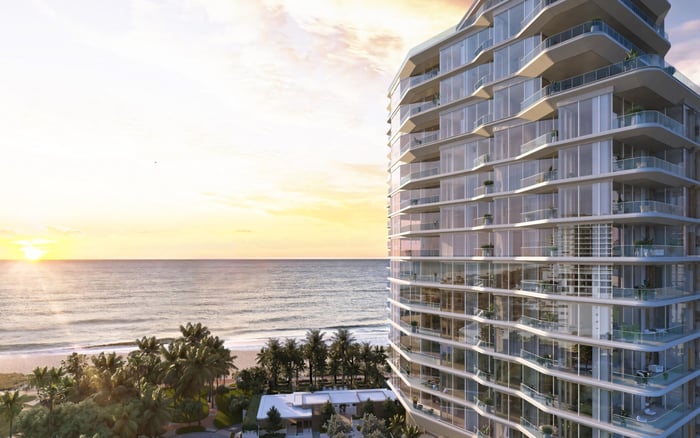
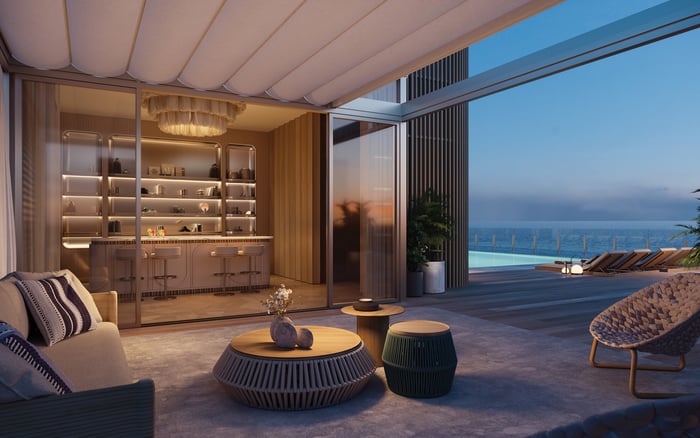
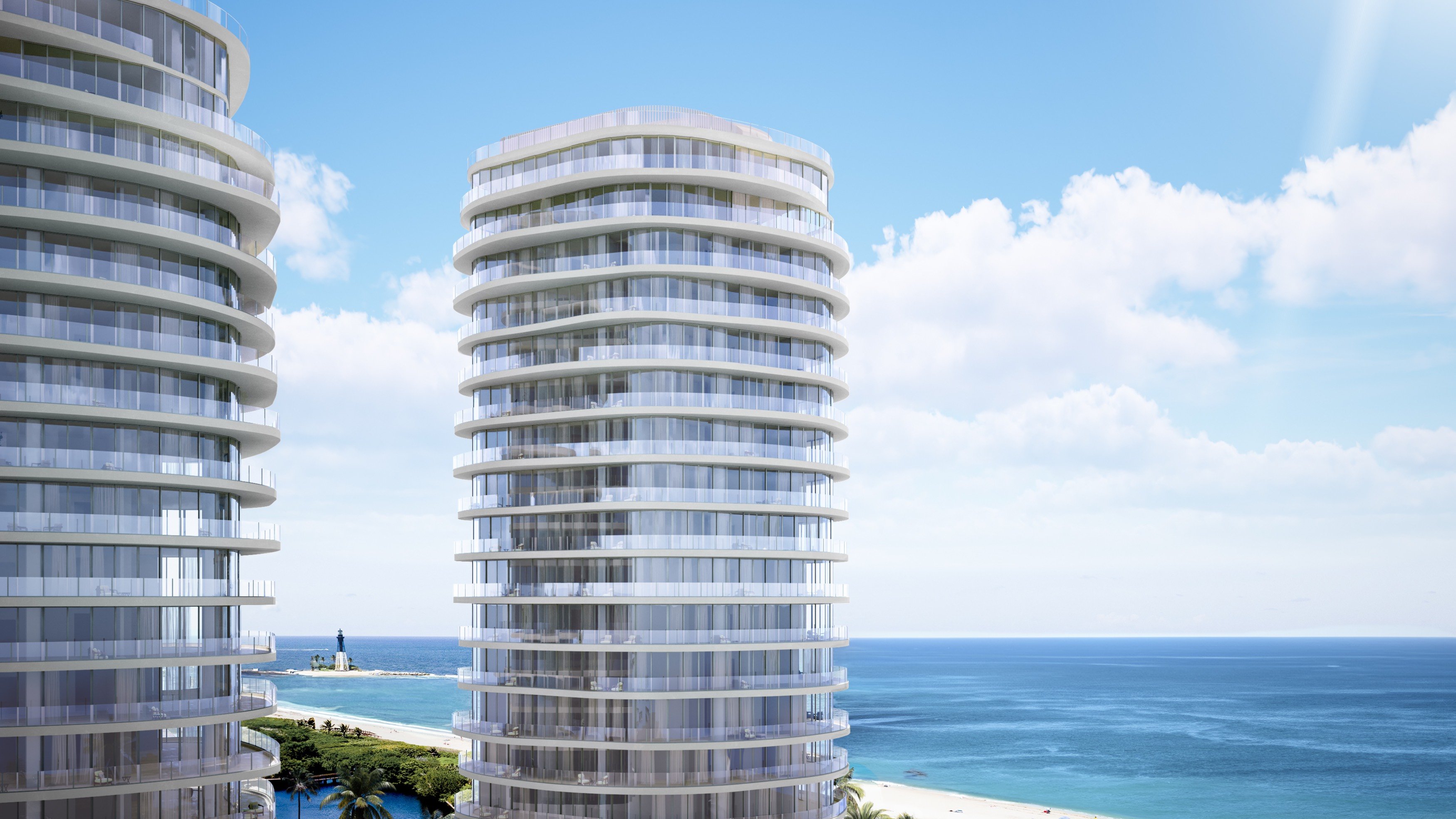
In Miami Beach, style is inseparable from how you intend to live with the ocean. Buyers who want a modern, view-forward lifestyle often gravitate toward residences where terraces and glazing function as daily architecture, not special-occasion space. 57 Ocean Miami Beach is marketed as an 18-story building with 81 residences, and its plans are described as two- to four-bedroom layouts with substantial terraces and floor-to-ceiling glazing designed to extend living space outdoors. That is tropical modern thinking translated into a high-rise format.
For buyers who prefer a heritage-coded narrative, branded hospitality can deliver old-world atmosphere with contemporary execution. Casa Cipriani Miami Beach speaks to the desire for discreet formality and a club-like sense of arrival, while still meeting today’s expectations of service and finish.
Miami Beach also holds a rare advantage: it can support high design without losing theatricality. Faena House Miami Beach is a useful reference for buyers who want modern living with an art-and-culture sensibility that feels intentional, not minimalism for its own sake.
A different buyer profile wants tropical modern clarity paired with a newer, park-and-bay lifestyle orientation. Five Park Miami Beach fits that conversation as a contemporary option where light, views, and amenity-driven living can shape purchase decisions as much as façade language.
In Coral Gables, Mediterranean Revival often reads as the native tongue. Even when interiors are renovated into a more modern register, the civic fabric and landmark precedent reward arched openings, stucco volume, and rooflines that feel settled. Buyers here tend to prioritize continuity, permanence, and a home that will not look dated because it was never chasing a trend.
In Brickell, the conversation shifts toward skyline performance and future-facing sustainability signaling. The Residences at 1428 Brickell positions sustainability as a visible design feature through a “Solar Backbone” with more than 500 photovoltaic panels integrated into the building’s façade. For buyers evaluating tropical modern values in a tower context, this is a clear expression of climate responsiveness becoming part of luxury identity.
Architecture should support routines, privacy requirements, and risk tolerance. Before committing to Mediterranean Revival or tropical modern, pressure-test the fundamentals:
The best outcomes are often hybrids: Mediterranean massing with modern apertures, or modern geometry warmed by texture and garden structure. The mistake is treating style as décor rather than as a whole system.
Mediterranean Revival is not going anywhere. It is embedded in South Florida’s luxury origin story, reinforced by landmark examples like Vizcaya, the Biltmore, and the enduring visual power of arched coastal estates.
At the same time, tropical modern benefits from a newer definition of prestige: not only how a home looks, but how intelligently it lives. Passive cooling, shaded transitions, and porosity have become signals of sophistication. In a region where climate is experienced daily, comfort becomes the ultimate finish.
For buyers, the most bankable move is to choose the language that aligns with your habits, then invest in execution. In South Florida, timelessness is less about picking the “right” look and more about choosing a home whose design logic will still feel correct a decade from now.
What defines Mediterranean Revival in South Florida? Stucco walls, low-pitched red tile roofs, and prominent arches are hallmark features, especially in Miami Beach.
Why did Mediterranean Revival become so common here? It was popularized during the 1920s Florida land boom, when European seaside villa imagery helped sell coastal living.
What is tropical modern architecture? It is modernist minimalism adapted to tropical conditions, emphasizing climate-responsive form, planning, and indoor-outdoor living.
Is tropical modern only for single-family homes? No. The same principles can translate to luxury towers through terraces, floor-to-ceiling glazing, and layouts that extend living outdoors.
Do courtyards actually help with energy use? Research summarized in local reporting has cited that a single courtyard can reduce a building’s energy bill by about 7% on average.
Which style tends to feel more formal? Mediterranean Revival often feels more ceremonial, with procession, symmetry, and arched loggias shaping arrival and entertaining.
Which style tends to feel more relaxed day-to-day? Tropical modern typically prioritizes flow, shade, and casual indoor-outdoor rooms designed for daily use.
Is Miami’s market still competitive for luxury buyers? Yes. Even with more inventory and longer time on market in the broader snapshot, $10M-plus sales remained strong in 2025.
How should multigenerational needs affect my choice? Prioritize flexible suites, privacy for guests, and plans that can adapt, regardless of exterior style.
Can a home successfully blend both styles? Yes. Many enduring residences pair heritage massing with modern comfort, light, and climate-smart planning.
For discreet guidance on South Florida’s best residences, visit MILLION Luxury.
If branded residences are on your mind — as a home or as an allocation — we would be glad to share what we are seeing, privately.
Begin a quiet conversation