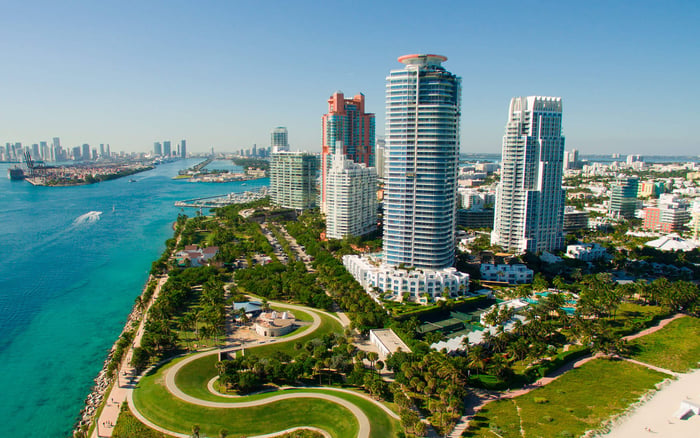
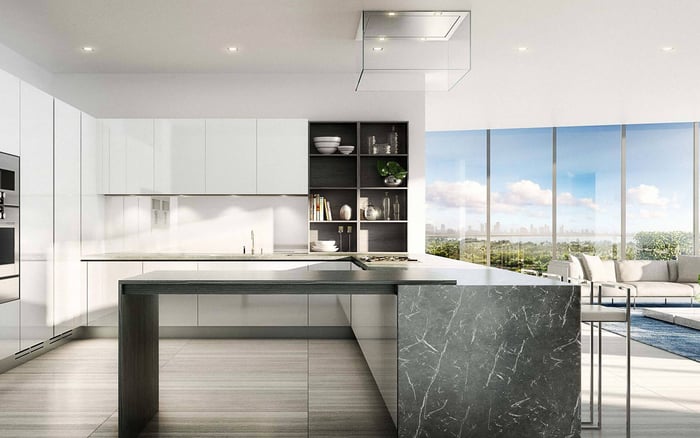
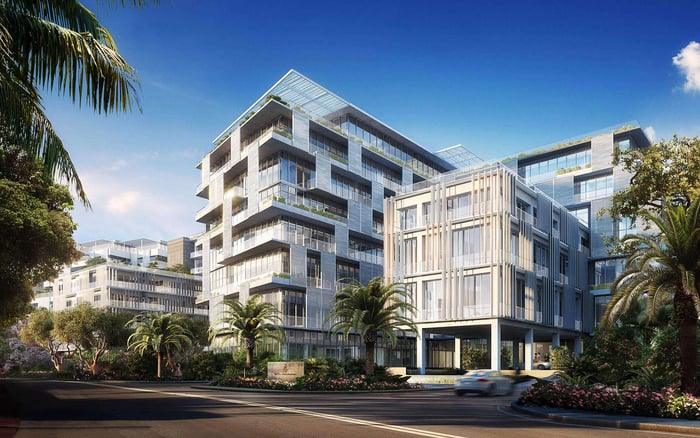
In Brickell, the most ambitious new towers are no longer competing on square footage alone. They are selling a private, service-driven version of the city: dining without reservations, wellness without crowds, and social space that feels curated rather than communal. Two branded concepts illustrate the shift clearly: Cipriani Residences Miami and Mercedes-Benz Places Miami. Both emphasize amenities as daily infrastructure, but they arrive there through different philosophies: one rooted in hospitality and dining, the other positioned as a multi-domain lifestyle ecosystem with park adjacency and brand-coded recreation. For buyers evaluating a primary residence, a pied-à-terre, or a long-hold asset in South Florida, the more useful question is not “Which tower has more amenities?” but “Which amenity model matches how you actually live?” The difference is subtle, and it is where the market’s next premium is being priced.
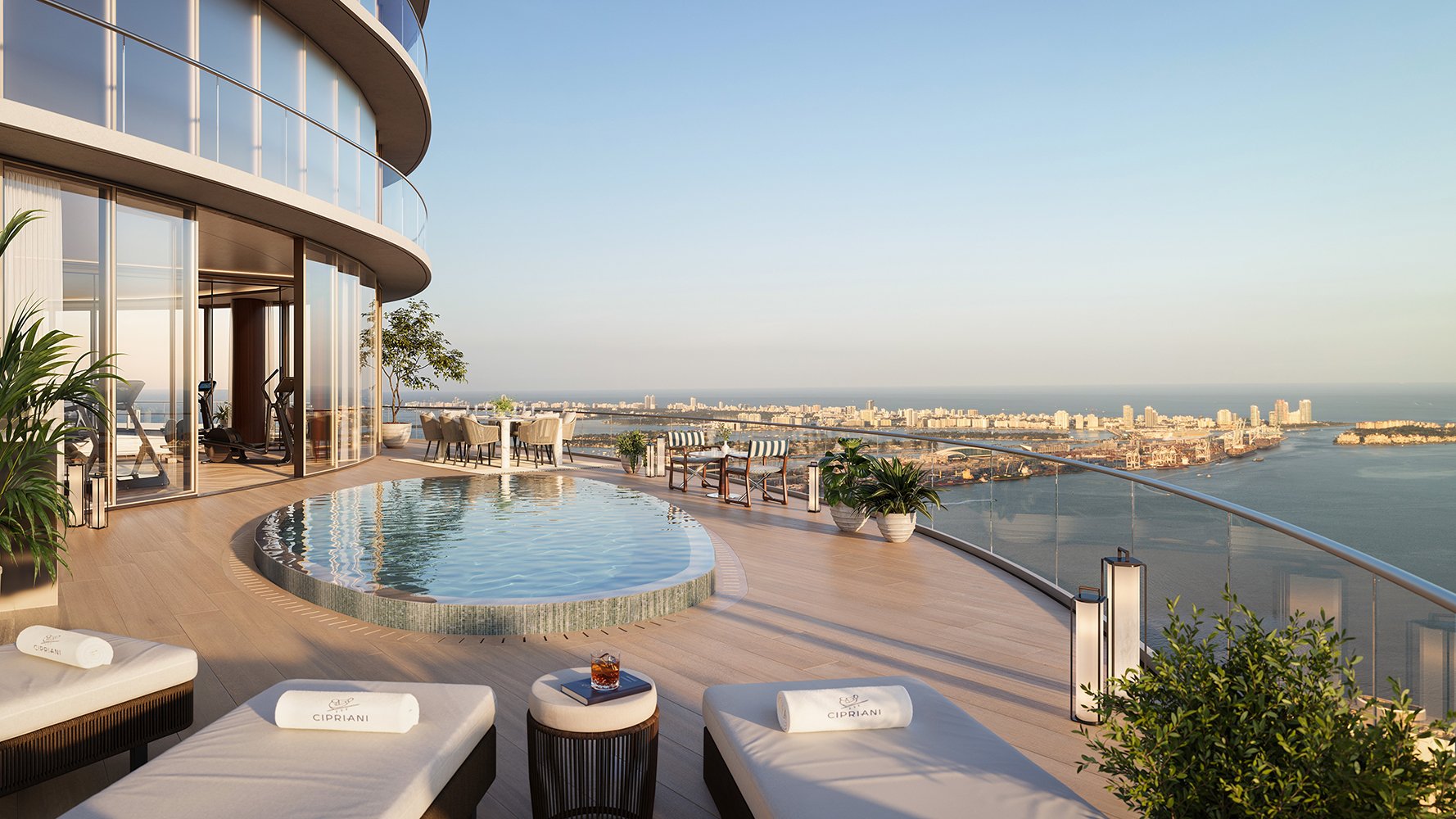
In Brickell’s current cycle of new construction, “luxury” increasingly reads like membership access: a predictable set of spaces, services, and privileges that compress the city into your building. The value is not simply a better gym or a more photogenic lounge. It is control over your day, fewer friction points, and fewer tradeoffs when schedules are tight.
That shift explains why amenity square footage has become a headline metric. It signals ambition, but more importantly, intent. The strongest programs position the tower as a self-contained lifestyle platform, not just a collection of residences with a pool.
Two projects clarify the shift: Cipriani Residences Miami, an 80-story tower planned with 397 residences, and Mercedes-Benz Places Miami, a mixed-use concept marketed as Mercedes-Benz’s first residential project in North America. Both are discussed for amenities, but their priorities differ in ways that matter to how you will actually live.
Cipriani Residences Miami is framed through a hospitality lineage. Public materials center the resident experience around food, beverage, and the social rhythm that follows. The project markets 50,000+ square feet of amenities, positioned as curated rather than expansive.
Mercedes-Benz Places Miami presents a broader lifestyle ecosystem. Official marketing describes 130,000+ square feet of amenities spanning social space, work-focused zones, wellness and recovery, and entertainment elements designed to read as brand-specific.
For buyers, the question is rarely which total is larger. The more useful lens is allocation: does the building prioritize quiet rituals and service, or variety and a wider day-to-night range? The answer typically predicts satisfaction more than any single amenity list.
The Cipriani approach reads as a refined extension of a private club. Publicly disclosed details include a residents-only restaurant and lounge, plus an in-residence dining and catering model marketed as available 24 hours. Here, dining is not a convenient add-on. It is presented as a pillar of daily life.
That emphasis carries a practical luxury implication: buildings that are serious about hospitality tend to attract residents who value discretion, consistency, and a dependable standard of hosting. The plan supports intimate entertaining, but it also supports the late meeting that ends at home, when the last thing you want is another decision.
In Brickell, where many buyers maintain demanding schedules and multiple addresses, that always-on service framing can separate one tower from another. For those tracking branded options in the neighborhood, Cipriani Residences Brickell is often discussed in exactly this context.
Mercedes-Benz Places Miami is marketed less as a single hospitality expression and more as a menu of environments. Official materials highlight multiple pool settings, including sun and garden pools, paired with service touches such as towel and food-and-beverage service. The signal is clear: the building wants to keep you on-site longer, across more scenarios.
Work and focus are built into the program via co-working and library-style areas. Entertainment also leans into brand identity, including marketing references to a Mercedes-Benz racing simulator. This moves beyond the traditional “media room plus games” formula and into experiential, signature-coded amenities.
For buyers who want a building to function as a hub for both personal and professional life, this is a strong proposition. It also explains why Mercedes-Benz Places Miami is positioned as more than a tower. It is pitched as a master-planned set of choices within a single address.
Across the luxury tier, wellness has evolved from performance to restoration. Cipriani’s public amenity descriptions reference a multi-level fitness and wellness concept with spa-style components, including elements such as sauna, ice plunge, and treatment rooms.
Mercedes-Benz Places pushes deeper into the language of ritual and thermal sequencing. Official marketing references a thermal and recovery suite with multiple sauna variants, steam, and specialty rooms. It also promotes an “onsen ritual circuit,” along with spaces such as a Himalayan salt room and an aromatherapy room.
The takeaway is not that one is objectively better. They speak to different routines. If your wellness practice is structured and private, a spa-forward stack with treatment rooms may align well. If you prefer variety, sequencing, and a broader menu of experiences, the ecosystem model can feel closer to a resort cadence.
A distinctive element in the Mercedes-Benz Places narrative is its relationship with Southside Park, described as a 1.9-acre public green space with recreation programming such as padel and basketball courts, plus family and pet amenities including playgrounds and dog runs.
For some buyers, adjacency to a thoughtfully designed park is the most valuable amenity available in a dense neighborhood. For others, the word “public” introduces a different set of considerations: peak-hour crowding, ambient noise, and the reality that your preferred outdoor moment is not fully controllable.
The best framing is to treat park integration as an enhancement, not a replacement, for private outdoor amenities. It can expand your lifestyle footprint and improve daily livability, but it should not be the only reason you expect the building to live like a resort.
Amenity square footage, service lists, and renderings can be persuasive, but they are not the same as a delivered, resident-only experience. Keep diligence grounded and buyer-oriented.
First, confirm what is resident-only versus shared across mixed-use components. Marketing totals can include multiple levels and common areas that may not be exclusive.
Second, ask how services are staffed, not just what is promised. A residents-only restaurant and lounge reads differently once you understand hours, reservation policies, and whether the venue is designed to be a quiet extension of home or a more social room.
Third, test wellness realism. Thermal suites and specialty rooms require maintenance, operational expertise, and consistent standards. Look for clarity on operations and rules of use.
Finally, track delivery momentum. For Cipriani Residences Miami, construction progress has been publicly reported as reaching the halfway mark in 2025, a point many buyers use when calibrating timing expectations.
Even when the goal is an urban Brickell address, many buyers still cross-shop Miami Beach for a different daily texture: ocean proximity, a more resort-leaning rhythm, and a distinct social scene.
That is where branded and design-forward inventory becomes part of a broader portfolio conversation. Depending on lifestyle and use pattern, buyers often compare the “city membership” of Brickell with the “coastal membership” of Miami Beach. Projects such as Five Park Miami Beach or The Ritz-Carlton Residences® Miami Beach can enter the consideration set for those who want a second base by the water.
The point is not interchangeability. It is sophistication in selection: the strongest buyers evaluate amenity strategy across neighborhoods, looking for complementary experiences rather than duplicates.
In today’s Brickell, the amenity premium is increasingly priced into the most credible lifestyle story. Cipriani’s hospitality emphasis prioritizes dining, service, and curated social space. Mercedes-Benz Places foregrounds variety, recovery-forward wellness, work-life integration, and park-adjacent programming.
The best decision is the one aligned with your actual week: how you host, how you recover, how often you work from home, how much you value public green space, and how strongly you want the building to read like a private club versus a full lifestyle campus.
What makes a branded residence different from a typical luxury condo? Branded residences typically align the building with a globally recognized brand and market a more service-oriented lifestyle, with standards and experiences designed to feel consistent.
Should buyers prioritize amenity square footage? Use it as a signal of ambition, then diligence what is resident-only and what is realistically usable in daily life.
What is publicly known about Cipriani Residences Miami? It is planned as an 80-story Brickell tower with 397 residences and branding tied to Cipriani hospitality.
What amenities are emphasized at Cipriani Residences Miami? Marketing highlights dining and hospitality, including a residents-only restaurant and lounge and in-residence dining and catering.
What is publicly known about Mercedes-Benz Places Miami? It is a branded mixed-use concept presented as Mercedes-Benz’s first residential project in North America.
What amenities are emphasized at Mercedes-Benz Places Miami? Marketing references a broad lifestyle program, including work areas, wellness and recovery spaces, and brand-coded entertainment.
How important is wellness programming in today’s luxury market? It is increasingly important, especially recovery-focused offerings that support consistent routines rather than occasional gym use.
What does park integration mean for daily living? A nearby public park can expand outdoor options, but buyers should consider privacy, peak-hour activity, and noise.
Are marketed amenity lists guaranteed at completion? Details can change before turnover, so buyers should confirm what is contractually promised and how it is intended to be operated.
How should buyers compare Brickell and Miami Beach options? Compare lifestyle patterns: Brickell for urban efficiency and proximity, Miami Beach for a coastal, resort-leaning cadence.
For tailored guidance on South Florida’s most design-forward addresses, connect with MILLION Luxury.
If branded residences are on your mind — as a home or as an allocation — we would be glad to share what we are seeing, privately.
Begin a quiet conversation