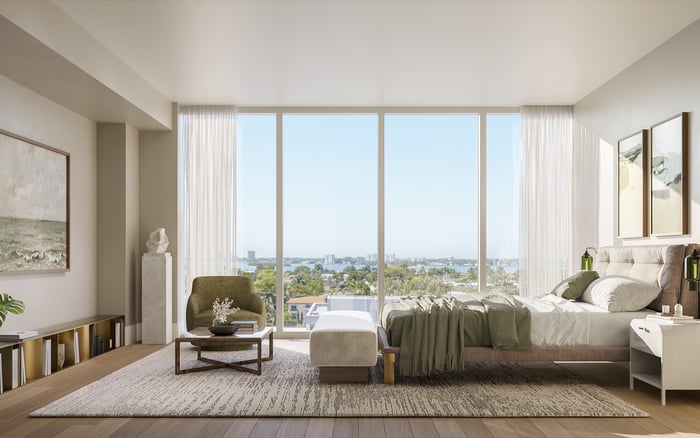
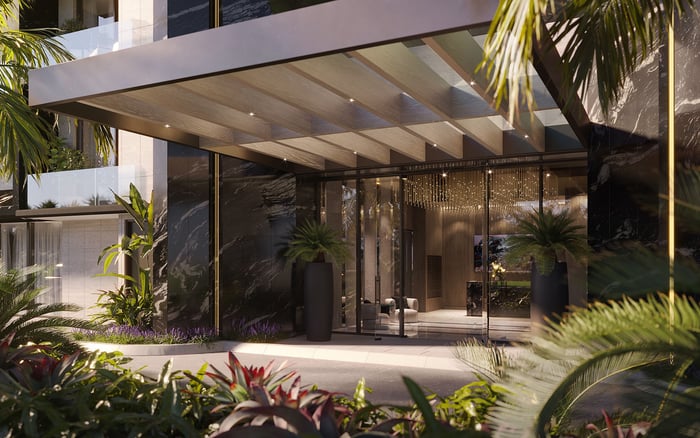
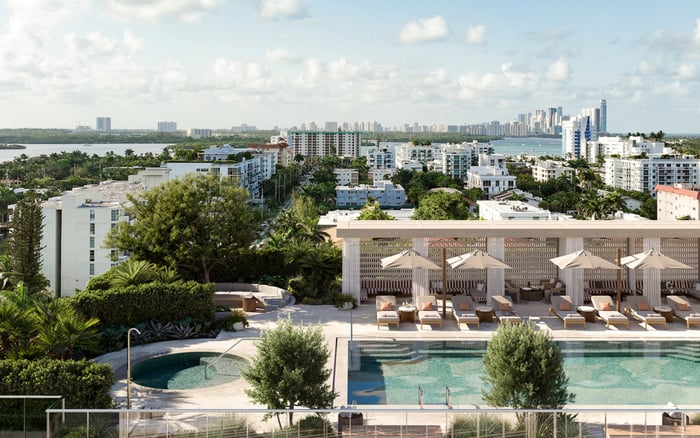
In Bay Harbor Islands, luxury has shifted from finish selections to measurable living performance. La Maré positions sustainability and material intelligence as daily comfort, while The Well frames the home as a health-forward environment with spa-level intent. For buyers deciding between the two, the right choice is less about which is "better" and more about which philosophy matches your routine, sensitivities, and long-term value priorities. This MILLION Luxury comparison maps the decision across three lenses that matter in South Florida: the air you breathe, the materials you touch, and the lifestyle ecosystem you actually use. It also places both projects within the broader Bay-harbor pipeline, where new construction is increasingly defined by wellness and restraint rather than excess.
Bay Harbor Islands has long attracted buyers who prefer discretion over spectacle: a village feel, water views, and proximity to Bal-harbour and Miami-beach without the full intensity of either. In this pocket of the market, the defining question is no longer just floor plans and finishes. It’s performance.
Within that shift, La Maré and The Well offer two distinct, highly contemporary answers. La Maré leans into sustainable materials and a quieter form of environmental intelligence-choices designed to reduce impact while elevating everyday comfort. The Well reframes luxury as a wellness platform, bringing a more medical-grade sensibility to the spaces where you sleep, bathe, recover, and reset.
If you’re weighing both, the most useful comparison isn’t a checklist. It’s a framework: how each vision shows up in the lived details you’ll feel daily, and how that aligns with your priorities-whether this is a primary residence, a second-home, or a longer-term hold in Bay-harbor.
Sustainable materials are often treated as an aesthetic. In premium buildings, they function more like a system. At their best, you experience sustainability through fewer harsh odors, more consistent comfort, and finishes that age gracefully instead of loudly.
La Maré’s appeal is restraint executed at a high level: a home where the materials feel deliberate and the visual field stays calm. For many buyers-especially those building a second-home routine-the most luxurious outcome is arriving to a space that doesn’t ask for attention. Sustainability-forward selections can support that, not by looking “green,” but by limiting unnecessary complexity and prioritizing longevity.
Boutique scale matters here. In Bay-harbor, smaller projects often allow for more curated material palettes and a tighter relationship between public areas and private residences. When a building’s identity is anchored in sustainable choices, that identity tends to read consistently from lobby to residence-rather than shifting between design gestures.
If you are cross-shopping other nearby new construction for context, La Maré Bay Harbor Islands sits naturally within a neighborhood conversation that also includes newer boutique offerings like Origin Bay Harbor Islands, where buyers are seeking design rigor more than sheer amenity volume.
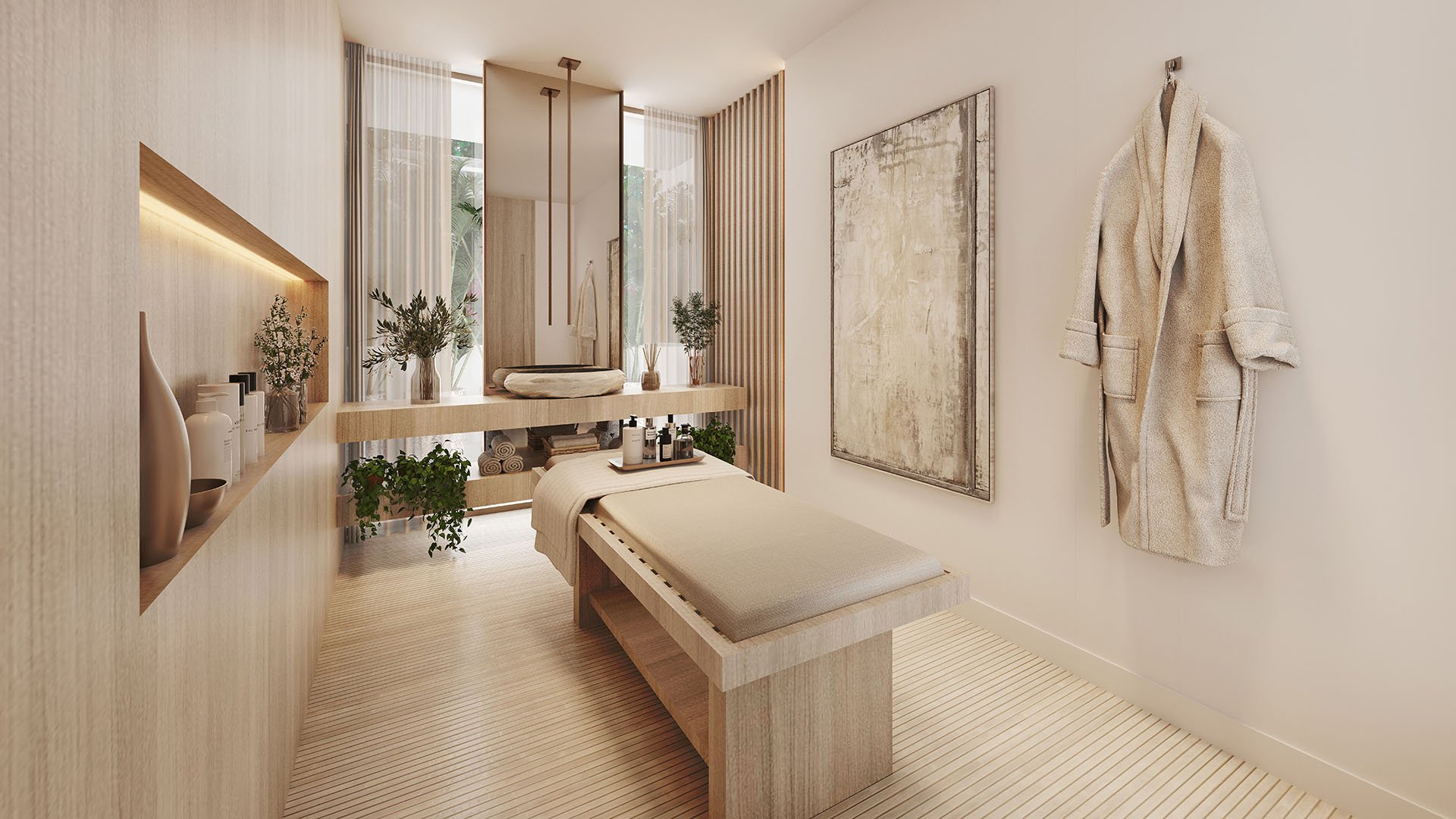
The Well’s proposition is more direct: the home as a health-forward environment. In practice, “medical-grade wellness” reads less like a mood board and more like a philosophy that touches the senses. The aim is for the building itself to feel like an extension of a wellness practice-not simply a place that happens to include a gym.
For certain buyers, that’s the differentiator. If your daily routine includes recovery work, structured training, or you’re sensitive to environmental factors, a wellness-first building can feel like a meaningful upgrade. Here, the language of wellness becomes architectural: lighting choices that support circadian rhythms, surfaces that feel clean and considered, and amenity programming that rewards consistency rather than occasional use.
This approach also fits Bay Harbor’s discreet energy. The point isn’t nightlife-adjacent luxury; it’s lifestyle infrastructure. While the neighborhood remains close to Miami-beach, a wellness-focused building supports a calmer cadence: morning protocols, mid-day resets, and evenings that feel restorative.
Buyers deciding between The Well and nearby boutique properties may also consider the broader “wellness neighborhood” effect. If you value a health-first brand identity, it can be helpful to compare the local interpretation at The Well Bay Harbor Islands with the broader concept in The Well Coconut Grove, where the surrounding lifestyle context differs.
This decision becomes clearer when you map it onto routine.
Sustainable materials tend to reward you passively. You notice them in the quiet, the steadiness, and a more timeless visual experience. The home feels composed. Over time, you may also value how well the palette ages-particularly if you’re furnishing with art, vintage pieces, or natural textures.
Medical-grade wellness rewards you actively. You engage with it through rituals and repetition: training, recovery, heat and cold cycles, bodywork, and intentional rest. The amenity experience isn’t just a perk; it’s central to the proposition.
A useful way to choose is to ask which benefit you want to “feel” without trying.
If you want the home itself to be the calming mechanism, sustainability and material integrity tend to win.
If you want the building to keep you accountable to a health practice, wellness infrastructure tends to win.
Neither is inherently more luxurious. They’re simply different definitions of luxury in a market that has matured.
La Maré often fits buyers who care about design coherence and long-term livability. They may invest heavily in interiors, art placement, and lighting design, and they value a residence that doesn’t fight those decisions. They also tend to prefer “quiet quality,” where the highest-end choices are the ones a guest can’t immediately name.
The Well often fits buyers who prioritize health metrics and personal optimization, or who want their home to reflect their values around wellbeing. They may travel frequently and appreciate returning to a consistent wellness environment. The wellness positioning can also resonate with buyers who view amenities as essential infrastructure rather than optional entertainment.
In Bay-harbor, both buyer types often share a third preference: boutique privacy. That’s part of why adjacent projects such as Alana Bay Harbor Islands continue to draw attention from purchasers who want new-construction polish without a mega-tower atmosphere.
In a market like Bay Harbor Islands, resale strength often tracks with clarity of concept. Buildings that know what they are-and execute that identity consistently-tend to stay legible to the next buyer.
Sustainable materials, when delivered at a luxury level, can read as timeless. The advantage isn’t only the ethical narrative; it’s aesthetic endurance. When finishes avoid trend-chasing, the building can feel current for longer, especially to buyers fatigued by high-contrast, fashion-forward interiors.
Wellness-branded luxury, by contrast, often trades on lifestyle demand. In South Florida, wellness is no longer niche; it’s increasingly a baseline expectation at the upper end. A building that feels purpose-built for wellness can create strong differentiation-particularly when wellness feels elevated rather than performative.
The practical takeaway: choose the concept you believe will remain desirable to the next buyer in your price tier. In Bay-harbor, that typically means selecting a building whose identity is expressed through permanent decisions, not temporary programming.
Bay Harbor Islands is defined by proximity: to Bal-harbour for luxury retail and dining, to Surfside for beachfront access, and to Miami-beach for culture-without requiring you to live inside it. For many residents, the value is the loop: calm at home, with the city available on demand.
If that loop is central to your life, the question becomes which building supports your version of “calm.”
La Maré’s sustainability narrative signals calm through materiality and atmosphere.
The Well signals calm through recovery and a wellness-first routine.
This is where utilization matters. If you know you won’t consistently use structured wellness amenities, paying for that identity may feel misaligned. Conversely, if your health routine is non-negotiable, a wellness-first building can feel like an upgrade you experience daily.
When you tour, focus on sensory truth.
For sustainable materials: notice how the spaces smell, how sound carries, and whether the finishes feel authentic rather than purely decorative. Look for coherence between the lobby, corridors, and the residence entry sequence; the strongest sustainability-led design reads as a continuous decision.
For medical-grade wellness: evaluate how the amenity experience is organized. Does it feel like a serious wellness environment-or a spa appended to the side? Notice whether transitions between training, recovery, and relaxation feel intuitive. The best wellness buildings make routine easy, not effortful.
Either way, ask yourself whether the building supports your life at its most ordinary. True luxury isn’t the grand opening moment; it’s a Tuesday.
Is Bay Harbor Islands considered a boutique luxury market? Yes. Its scale and residential character tend to favor lower-density, design-forward buildings.
What is the biggest difference between La Maré and The Well? La Maré emphasizes sustainability and material integrity, while The Well centers wellness as lifestyle infrastructure.
Which is better for a second-home buyer? It depends on usage: sustainability reads as effortless calm, while wellness benefits those with consistent routines.
Do wellness-focused buildings typically command a premium? Often, yes, because the concept can differentiate the product and increase daily amenity utilization.
Are sustainable materials mainly about environmental impact? Impact matters, but buyers also value comfort, durability, and a more timeless interior experience.
How do I evaluate “medical-grade wellness” when touring? Look for a serious, well-organized wellness flow and spaces that feel purpose-built, not add-on.
Is Bay Harbor close enough to Miami-beach for daily access? Yes. Many residents choose Bay-harbor for calmer living with Miami-beach within easy reach.
Should I prioritize amenities or residence design? Prioritize what you will use weekly; the best value comes from features that match your habits.
How does Bal-harbour factor into the lifestyle? It adds high-end shopping and dining nearby, supporting Bay Harbor’s discreet, convenient appeal.
What’s the simplest way to choose between the two projects? Pick the philosophy you want to feel every day: material calm at home or structured wellness support.
To compare the best-fit options with clarity, connect with MILLION Luxury.
If branded residences are on your mind — as a home or as an allocation — we would be glad to share what we are seeing, privately.
Begin a quiet conversation