A discreet buyer’s guide for New York founders evaluating whether a South Florida residence should prioritize waterfront prestige, weekday efficiency, or a carefully balanced version of both.
For New York founders, the South Florida residence has become more than a warm-weather escape. It is a pressure valve, a client-facing environment, a family base, and, often, a test of whether a life built around intensity can be made more fluid. The obvious question is whether to buy on the water or closer to the weekday engine. The sharper question is how the residence will actually be used.
Waterfront prestige carries a particular emotional authority. It signals arrival without having to explain itself. It offers the horizon, privacy, and the rare pleasure of returning from a demanding day to something visually restorative. Weekday practicality is quieter, but no less powerful. It is the difference between a residence that photographs beautifully and one that works beautifully on an ordinary Tuesday.
The strongest choices are not made by choosing glamour over function, or function over glamour. They are made by ranking the founder’s real operating rhythm: where calls happen, where children are settled, where visiting partners will be received, and where the owner can genuinely reset.
Waterfront living is most compelling when the residence is meant to be a true psychological counterpoint to New York. If Manhattan compresses the day, the water expands it. The appeal is not simply the view; it is the sense of removal. A founder who spends the week in negotiation, recruiting, capital strategy, or public visibility may value a home that requires no performance once the elevator doors close.
Oceanfront and bayfront settings can also serve a social purpose. They create an atmosphere for dinners, board-level weekends, and family gatherings that feels unmistakably South Florida. In that context, the residence is not just a private asset. It becomes part of the owner’s identity, a place that quietly communicates taste, patience, and permanence.
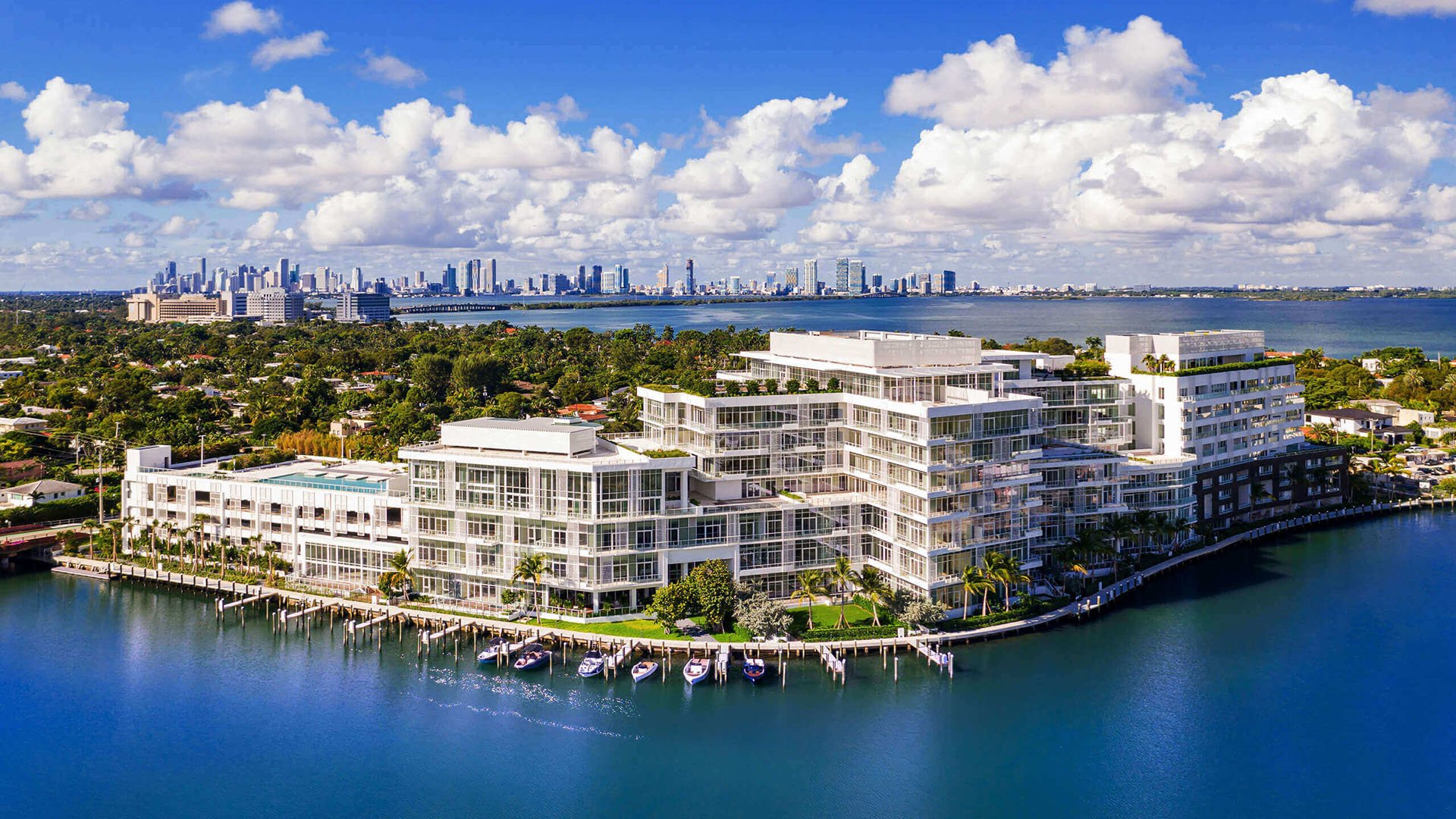
A Miami Beach address such as The Perigon Miami Beach belongs in this conversation because it represents the coastal side of the decision: a setting chosen for presence as much as convenience. The same logic applies to buyers who want their South Florida life to begin with light, water, and a sense of separation from the daily operating grid.
For some founders, the most luxurious feature is not the widest view. It is the removal of friction. If the South Florida residence is used during active workweeks, proximity to meetings, restaurants, services, fitness, schools, and recurring appointments may outweigh the romance of a more remote waterfront setting. The best home is the one that allows the owner to land, plug in, and keep moving without making every transition feel planned.
This is where Brickell often enters the conversation. The appeal is not abstract urbanity. It is immediacy. A residence such as The Residences at 1428 Brickell makes sense for the founder who wants the South Florida base to behave like a command center. The day can hold a breakfast, a private call, a family dinner, and an evening commitment without the residence feeling detached from the action.
Practicality also matters for spouses, children, staff, and guests. A founder may tolerate inconvenience for a view, but the household may not. The right purchase should support the entire ecosystem around the principal, not only the principal’s fantasy of escape.
Many New York founders do not fit neatly into either camp. They want the view, but they also want access. They want calm, but not isolation. They want a second home that can function as a primary home for stretches of the year without exposing every weakness in the plan. This hybrid buyer is often the most demanding, because the brief is not simply “best address.” It is “best address for how we live.”
Coconut Grove can be persuasive for this reason. It offers a softer residential cadence while remaining connected to the broader Miami lifestyle. A project such as Four Seasons Residences Coconut Grove may appeal to a buyer who wants discretion, greenery, and a more grounded day-to-day rhythm without abandoning the polish expected at the top of the market.
West Palm Beach can also be part of the founder map for buyers whose South Florida vision leans more composed than kinetic. A residence such as Forté on Flagler West Palm Beach places the discussion in a different register: less about constant motion, more about refinement, cadence, and the ability to build a quieter routine.
The most common mistake is buying for the version of life that happens least often. If the residence will be used primarily for long weekends, waterfront prestige may deserve the premium. If it will host real workweeks, school mornings, advisory calls, and recurring social obligations, practicality should carry more weight.
A disciplined buyer should ask five questions before committing. Will I use this home during working hours or mostly after them? Does the address make the household simpler or more complicated? Will guests understand the choice immediately, or will the experience require explanation? Does the view still matter if the week is full? Does the convenience still matter if the home fails to calm me?
The answers usually reveal the right direction. Prestige is not superficial when it produces daily restoration. Practicality is not a compromise when it protects time. The mistake is treating either one as universally superior.
At the highest end, value is rarely just price per square foot or brand recognition. It is coherence. A waterfront residence that is rarely enjoyed is less coherent than a practical one used constantly. A hyper-convenient apartment that never feels like an escape is equally incomplete. The founder’s advantage is the ability to define value personally, then buy with precision.
The best South Florida residence should reduce mental load. It should make the owner’s life feel more edited, not more ornamental. For one buyer, that means waking to water and accepting a less immediate weekday pattern. For another, it means choosing Brickell and letting the ocean be part of weekends rather than every morning. For a third, it means a balanced enclave where privacy, access, and identity meet without announcing themselves too loudly.
Waterfront prestige and weekday practicality are not opposites. They are instruments. The art is knowing which one should play louder.
Should a New York founder prioritize waterfront views in South Florida? Prioritize waterfront if the residence is primarily for restoration, privacy, and memorable hosting. If it must support active workweeks, balance the view against daily access.
Is Brickell better for founders who work while in Miami? Brickell can be compelling for buyers who want immediacy and an urban operating base. It is especially relevant when the residence must support frequent meetings and routines.
Does oceanfront always mean better long-term appeal? Oceanfront can offer enduring emotional appeal, but it is not automatically the best fit. The strongest choice depends on usage, household needs, and lifestyle coherence.
What makes Miami Beach attractive to New York buyers? Miami Beach offers a recognizable coastal identity and a strong sense of escape. It suits buyers who want their South Florida residence to feel distinctly different from New York.
Why consider Coconut Grove instead of a more obvious waterfront address? Coconut Grove can feel residential, discreet, and grounded. It may suit founders seeking calm without feeling removed from the broader Miami lifestyle.
Can a second home function like a primary residence? Yes, but only if it supports real weekday patterns. Buyers should test the address against work, family, wellness, and service needs before committing.
How should founders think about guests and entertaining? Consider whether the residence creates an effortless experience for visitors. The best homes make hosting feel natural rather than staged.
Is practicality a compromise in luxury real estate? Not at the highest level. Practicality can be the ultimate luxury when it protects time, focus, privacy, and family rhythm.
Should family routines influence the purchase as much as the founder’s schedule? Absolutely. A residence that works only for the principal may create friction for everyone else, which can undermine the value of the purchase.
What is the simplest way to choose between prestige and practicality? Identify how the home will be used most often, then buy for that reality. The right residence should feel both impressive and easy to live in.
If you'd like a private walkthrough and a curated shortlist, connect with MILLION.
If branded residences are on your mind — as a home or as an allocation — we would be glad to share what we are seeing, privately.
Begin a quiet conversation